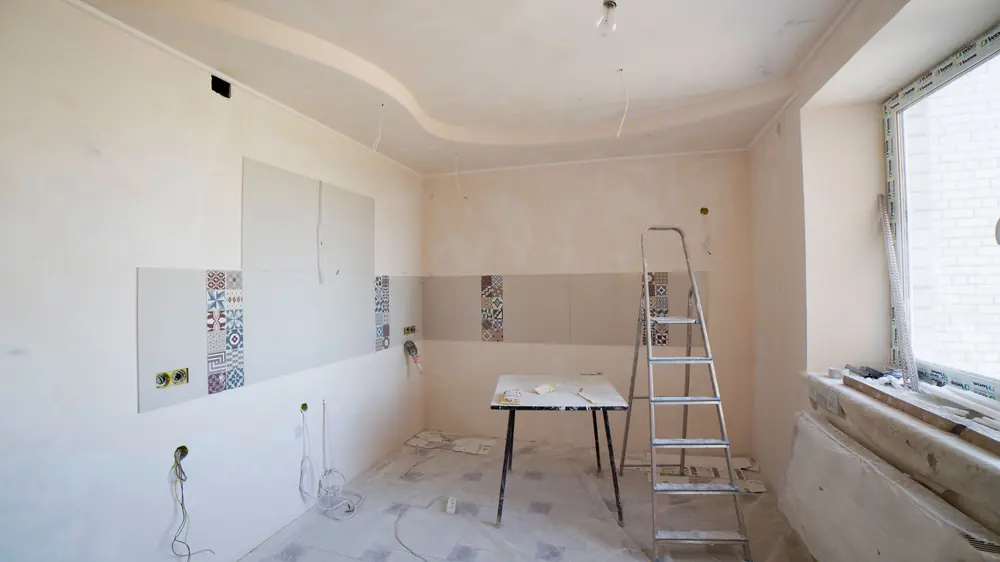
Home renovation in Varna, in the right order after a leak
Strip-out, plasterboard, skimming and painting in your flat or house, and repairs after a leak organised so they do not have to be done twice. We take on the whole job or one stage at a time, with one phone number for everything.
Our clients on video · all videos (in Bulgarian)
Home renovation in Varna with Kanal Varna covers strip-out, plasterboard, skimming and painting, tiling and floors in a flat or a house; the plumbing part is done by our plumber. You can hand us single jobs or the whole renovation, and the work is carried out by the craftsmen we work with: we organise it and stay your one phone number for everything. After a leak we work in the right order: the leak is stopped and the wall is measured first, then it is opened up, closed and painted. Electrics, gas and load-bearing walls are not ours. Call +359 52 993 333 or email info@kanalvarna.com — write to us in English and we reply in English.
Updated November 2026What renovation work we take on, and what we do not
We take on interior work in flats and houses in Varna: strip-out, plasterboard, skimming and painting, tiles and floors. Pipes and sanitaryware are done by our plumber. You can give us the whole renovation, from the first strip-out to taking the rubble away, or just one stage — only the bathroom, only the floors, only the walls. Either way the order is the same: water and pipes first, then the base, then the surfaces.
Interior renovation. Work on the walls, ceilings and floors of a home — strip-out, partition walls and linings, skimming, paint, tiles and floors — without touching the load-bearing structure and without a new electrical or gas installation.
Our main trade is finding leaks and measuring damp. That is why a renovation with us, especially after water damage, starts with one question: is the wall dry? Renovation itself is a newer line of work for us, so on the first call we tell you honestly whether and when we can take it on.
- Not ours: the 230 V electrical installation (that is for an electrician), gas (only a gas company with a licence), load-bearing walls, columns and floor slabs (they need a project and a structural engineer), roofs and outside work above the second storey.
- Small jobs that are not a renovation — flat-pack furniture, a TV or curtain rail on the wall — are on the handyman page.
Renovation after a leak: the right order
After a leak, the renovation starts with the cause, not with the paint. The leak is stopped, the wall dries and is measured, and only then is it closed and painted. Do it the other way round and the job is done twice: paint over a damp patch turns yellow again.
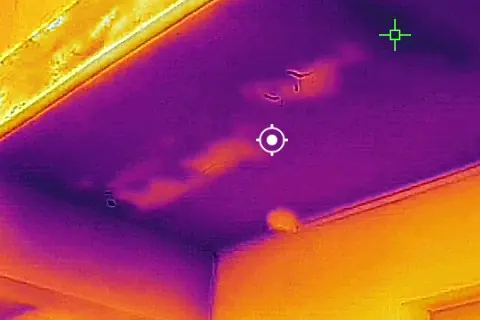
- The leak is stopped. If it is still dripping or the patch is growing, we first find where the water comes from — that is our core work, leak detection with a thermal camera, an acoustic detector and moisture meters. A pipe leaking inside the wall is opened and repaired now; an open wall also dries faster.
- Drying and measuring. The wall, ceiling or screed dries, and the moisture meter compares the wet spot with dry walls in the same home. How a home dries out is explained in drying after a leak; when it is dry is shown by a damp survey.
- Opening up. Only as much as the repair needs: blown plaster, hollow tiles, access to the pipe. Details on the demolition and strip-out page.
- The plumbing. The damaged pipe, joint or trap is repaired by our plumber — see plumbing repairs. The wall stays open until the repaired spot has been checked.
- Closing. The opening is closed with plaster or plasterboard. At taps and water meters an access panel is left, so nobody has to break the wall a second time.
- Skimming. Skimming goes onto a dry, sound surface; the old stain is sealed first with a suitable primer.
- Painting. Paint comes last. If a stain shows through again, the water is coming from somewhere — then we measure again instead of painting a third time.
Which job includes what, and where to read more
| Job | What it includes | Read more |
|---|---|---|
| Strip-out | Old tiles and adhesive, screed, plaster, non-load-bearing walls, opening up for pipes | Demolition and strip-out, bathroom strip-out |
| Plasterboard | Boxing in pipes and risers with an access panel, suspended ceilings, partition walls | Plasterboard |
| Skimming and painting | Preparing the wall, primer, skim, paint; leak stains only after measuring | Skimming and painting |
| Wallpaper and decorative plaster | Stripping old paper, preparing the wall; Venetian, travertine or sand finish after a sample | Wallpapering, decorative plaster |
| Noise from the neighbours | Wall lining on separate studs, a ceiling on resilient hangers, a floating floor | Soundproofing |
| Pipes and sanitaryware in the bathroom | New pipes and drains, fitting the sanitaryware — done by the plumber | Bathroom renovation |
| Waterproofing | A membrane under the tiles in the wet zone; moisture-resistant boards and paints do not replace it | Bathroom waterproofing |
| Tiles, grout and silicone | New tiles on walls and floors; crumbling grout and black silicone | Tiling, regrouting |
| Screed and floors | Cement screed or self-levelling compound; laminate, SPC, vinyl, parquet, microcement, epoxy | Floor screed, flooring |
| Bathroom ceiling | PVC, slats or plasterboard with an access panel to the pipes | Bathroom ceiling |
| Window reveals | Finishing around new windows: foam, skim, corner beads, window board | Window reveals |
| Electrics, gas, load-bearing walls | Not ours | An electrician, a gas company with a licence, a project and a structural engineer |
Further jobs have their own pages too: tile removal, wall removal, screed removal, concrete breaking, core drilling for round holes, laminate flooring, floor sanding, epoxy flooring, microcement, balcony repair, metalwork, builders' waste removal and the after-builders clean.
Tell us what needs doing and whether there is a leak right now — by phone we say which stage we take on, whether and when we can, and what the price depends on.
📞 +359 52 993 333Renovating a flat in a block: what to arrange first
Before work starts in a block of flats, let the building know and check its rules on noise, the lift and rubbish. That way the job does not stop halfway because of an argument on the stairs. If you live abroad, this is often easiest through the building manager.
- The owners. Tell the building manager what will be done and when; noisy work in a block is agreed with the owners' association and the building's rules.
- Quiet hours. Breaking out and drilling only in the hours the building's rules and the municipality allow. Ask before we fix the day.
- The lift. If it is small, or the rules do not allow building materials in it, everything goes up and down the stairs — that affects the time and the price.
- The rubbish. Building waste is not left next to the household bins. We take it away to a designated site — see builders' waste removal.
How a renovation with us goes
- The call. You tell us what needs doing, in what kind of home, and whether there is a leak right now. We tell you whether the job is for us, for the plumber or for another specialist.
- The visit. We look at the place, and after a leak we measure the damp — that shows what has to be opened and what only needs filling.
- The quote. The price and the scope come after a description or a visit. The quote says which stages we take on and which stay with others, for example tiles you are buying or the electrics.
- Work in stages. Each stage starts when the previous one is finished: the plumbing before the wall is closed, a dry wall before the paint.
We take on the job from the inspection to the removal of the rubble. If you are not in Bulgaria, tell us who can open the door for the visit and for the work, or where the keys are; photos and the address by email are a good start.
What the price of a renovation depends on
We give the price by phone after a short description, or after a visit. To make it accurate, tell us:
- which room, and roughly how many square metres of wall, ceiling or floor;
- which floor you are on and whether there is a lift;
- whether there is a leak now or it has been stopped, and since when;
- exactly what you want: just paint, a new ceiling, tiles taken off, several stages;
- whether you have photos — we tell you how to send them;
- whether you have already bought the materials.
The price depends on the area and the height, the state of the base, the number of stages, the floor and whether the home is furnished. We work on Saturdays and Sundays too, and we issue an invoice.
All renovation work
Old tiles, screed, plaster and non-load-bearing walls taken out only where needed Bathroom strip-out
Sanitaryware, water heater and tiles off walls and floor, ready for the plumber Tile removal
Wall and floor tiles taken off, with or without the adhesive, in any room Wall removal
Non-load-bearing walls, door openings and window-sill walls; load-bearing only with a design Screed removal
Old, cracked, hollow or wet screed taken out down to the slab, and old mosaic floors Concrete breaking
Yard slabs, paths, steps, fence and canopy bases and concrete floors on the ground Core drilling
Round holes in concrete, brick and panel walls for pipes, ducts and extractor hoods Plasterboard
Pipe boxing with an access hatch, suspended ceilings, stud walls, wet boards replaced Skimming and painting
Skim and paint walls and ceilings, also after a leak: dry wall first, stain-blocking primer Wallpapering
Hanging wallpaper on a dry, smooth, primed wall; damp measured before the paste Decorative plaster
Venetian, travertine and sand-effect plaster: damp and base checked, a sample on site first Soundproofing
Noise from neighbours: which fix is worth it, and when the money is wasted Bathroom ceiling
PVC panels, aluminium slats, plasterboard or paint: where the damp comes from first Tiling
Wall and floor tiles in bathroom, kitchen and hall, laid on a dry, flat, sound base Microcement
Jointless microcement for floors and walls: waterproofing under it, lacquer on top, base checked Floor screed
Cement screed or self-levelling compound: which one, and the moisture check before flooring Flooring
Which flooring for which room and base: damp, underfloor heating, height, what to check first Laminate flooring
Laminate and click-vinyl flooring: base and moisture check, underlay, gaps, skirting boards Floor sanding
Parquet floor sanding and varnish or oil: which floors can be sanded, damp checked first Epoxy flooring
Epoxy resin floor for a garage, cellar or workshop: moisture in the concrete is measured first Balcony repair
Loose balcony tiles, crumbling slab edge, drip edge, rusty railing: where the water gets in Metal fabrication
Carports, pergolas, railings, steel stairs and fences, made and fitted to measure Builders' waste removal
Rubble, tiles and plaster sorted, carried down and taken to a designated site, not left by the bins After-builders clean
The rough clean after builders: debris, building dust, mortar splashes and a check of the drains
Frequently asked questions
Can you take on a whole bathroom, from strip-out to the last tile?
Yes, with one phone number: the pipes, drains and sanitaryware are done by our plumber, and the strip-out, waterproofing, tiles, ceiling and paint by the craftsmen we work with. The order is described on the bathroom renovation page.
What can start while the wall is still drying?
Opening up — taking off blown plaster, hollow tiles or wet plasterboard — can often start straight after the leak, because it helps the wall dry. The pipe repair does not wait either. Closing, skimming and painting wait until the measurements show the wet spot no longer differs from the dry walls.
Who deals with the rubbish from the renovation?
Filling, carrying down and taking away the bags is part of our work: building waste goes to a designated site, not into the bins. More on builders' waste removal.
Can you work with materials we have bought ourselves?
Yes. Tell us by phone what you have bought. If a material is wrong for the place — ordinary plasterboard in a bathroom, or paint for dry rooms in a kitchen — we tell you before we start. Whether we can supply the materials ourselves is agreed with the quote.
Do you do the sockets and lights during the renovation?
No. Sockets, switches, lights in a suspended ceiling and everything on 230 V are connected by an electrician. We can leave an opening in the plasterboard or cut a chase along the route the electrician has marked, but the connection is not our work — book the electrician to come before the walls are closed.
I live abroad. Can you renovate the flat while I am away?
Often, yes. Send us photos and the address by email, tell us what you want done and who can let us in, and write to us in English and we reply in English. You get the price and the scope before anything starts.
Related pages
The first stage, only where it is needed Plasterboard
Boxing in, ceilings and partition walls Skimming and painting
The last stage, once the wall is dry Bathroom renovation: the plumbing
Pipes, drains and sanitaryware Drying after a leak
The wall must be dry before the renovation
Renovation after a leak, or a new wall in your flat?
Tell us what needs doing and whether there is a leak right now — by phone we say which stage we take on, whether and when we can, and what the price depends on.
📞 +359 52 993 333or email info@kanalvarna.com — write in English and we reply in English.
Send us a message
Leave your name and a phone number with the country code. Add your email if you prefer a written reply — write in English and we reply in English. We confirm the price before any work starts.