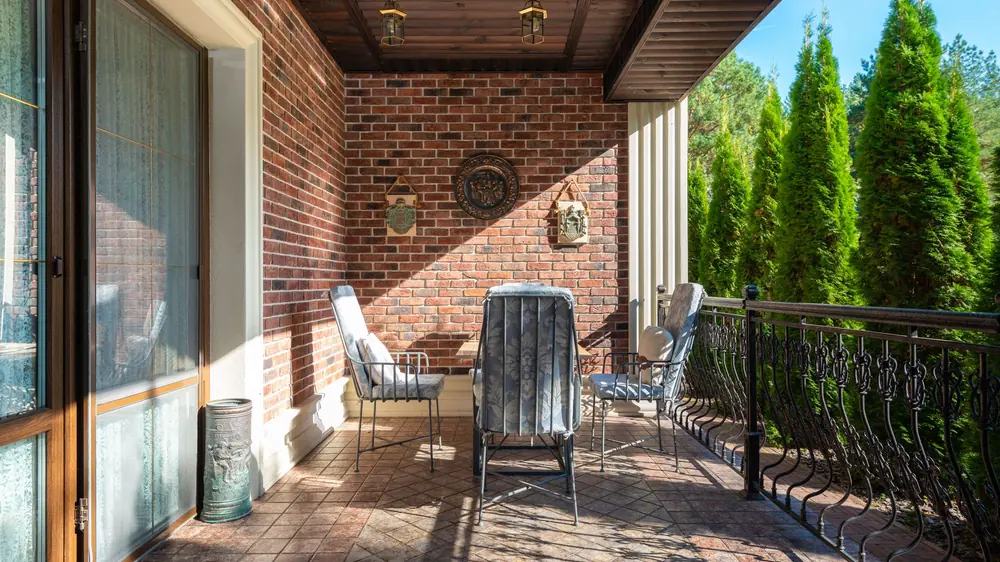
Balcony repair in Varna: tiles, slab edge and railing
Tiles that sound hollow and drop after winter, a crumbling edge, rust at the foot of the railing: nearly all of it comes from water under the tiles or along the edge. Our part is to find where the water gets in. The repair is done by a partner, in the right order.
Our clients on video · all videos (in Bulgarian)
Balcony repair in Varna covers the tiled surface, the skirting tiles, the slab edge, the drip edge and the railing with its anchors. Almost every fault comes from water under the tiles or along the edge, so we first find where it gets in, using a moisture meter and a thermal camera, and then a partner repairs in the right order. The partner gives his own offer after the visit, including the time needed. Renovation is a newer line of work for us; we organise the job and remain your one phone number. We give our price by phone after a short description and photos. Call +359 52 993 333 or email info@kanalvarna.com with photos; write to us in English and we reply in English.
Updated November 2026What balcony repair covers
It covers everything that sits on the slab and along its edge: the tiles with their adhesive and base, the skirting tiles and their joint to the wall, the slab edge, the drip edge and the railing with its anchors. It is one of the jobs within home renovation in Varna, and it is done by a partner. Our part is to establish where the water gets in before anything is stuck down.
Drip edge. A profile or groove under the front edge of the slab from which water drips freely, instead of running back along the underside and eating the edge. It may be a profile laid under the last tiles or a groove in the plaster below.
- Tiled surface: tiles, adhesive and the screed under them. Outside they get wet, hot and frozen.
- Skirting tiles: the strip along the wall; its joint with the floor must stay flexible, or a gap opens there.
- Slab edge: the front edge, visible from the front and from below; water and frost attack it first.
- Railing: the metal or brick parapet and the anchors that hold it to the concrete.
A terrace over a room and a cantilever balcony sticking out of the facade are repaired differently. Under a terrace there is a room and every mistake shows in its ceiling. A cantilever hangs outside, so the edge, the reinforcement and the railing matter most.
Where the water gets in, then the tiles
Hollow or fallen tiles, white marks in the joints and a crumbling edge usually come from water that reached the layer under the tiles or the edge. New tiles on a wet base fall off again after the first winter, so the inspection comes before the repair.
At the visit we tap the tiles and mark the hollow ones. A moisture meter compares wet places with dry ones, including the bottom of the wall by the door; there is more on moisture measurement. A thermal camera can show cooler wet areas on the floor and on the ceiling below, most clearly after rain or a water test and without direct sun on the tiles; each such spot is then checked with the meter.
- Is there waterproofing left under the tiles, and how is it restored? See balcony waterproofing.
- Which way does the water run and does it have an outlet? See balcony and terrace drainage.
- Is it already dripping onto the floor below? Then the point where it passes through is found first; see balcony leak.
If the floor below is dry and the base under the tiles is not wet, the repair may be limited to the tiles and the edge, and we tell you so.
Hollow tiles, crumbling edge, rust: sign and cause
| Sign | Likely cause | What happens |
|---|---|---|
| Tiles sound hollow or drop after winter | Water under the tiles freezes and lifts them; adhesive laid in dabs or not meant for outdoors | We tap, measure the moisture and look for where the water gets in; the partner then lays a new surface |
| White salts on the joints and the edge | Water passes through the adhesive and the concrete and carries salts out | Moisture readings on the floor and the edge, and a check of the fall and the edge |
| The edge crumbles, rusty reinforcement shows | No drip edge, so water runs along the edge; rust cracks the concrete | Inspection from below; if much is exposed, a structural engineer |
| Rust at the foot of the railing, the railing wobbles | Water stands round the anchors and eats them | The anchors are checked; do not lean on it until then |
| Water stands by the wall or in front of the door | Reverse fall or a blocked outlet | A water test; the outlet is settled before new tiles |
| A stain on the ceiling of the flat below | Water passes through the slab | We find the point first, see balcony leak |
Call or email with the floor, what crumbles or sounds hollow and whether there is a stain below; photos help. We tell you where we start and whether and when we can take the job on.
📞 +359 52 993 333The edge and the railing come first
A crumbling edge and a wobbling railing are repaired first, because concrete falls from them and people lean on them. Do not lean on a railing that moves, and warn everyone at home until it has been checked. If pieces are already falling from the edge, the ground below, such as a pavement, an entrance or a car park, is cordoned off and the building manager and the neighbours are told. Do not knock off the crumbling piece yourself while leaning over the railing.
- Crumbling concrete is chipped back to sound material.
- Rust is cleaned off the reinforcement.
- The metal gets a rust-protective coating.
- The edge is rebuilt with repair mortar for concrete.
- A drip edge is added so the water does not run back under the slab.
Rust takes up more room than the steel it came from, so it pushes the concrete from inside and splits it. A wobbling railing is re-fixed with new anchors in sound concrete, further from the crumbling edge; if the concrete round its feet is falling apart, that is repaired first. A new railing is made to measure and fitted after the concrete repair; see metalwork.
A new surface outdoors: what it has to withstand
The tiles must cope with water, frost and sun at the same time, so the adhesive, tiles and grout are chosen for outdoor conditions, not as for a bathroom. The laying itself is described under tiling. Here is what differs outside.
- Flexible adhesive for outdoor use, following the maker's instructions for terraces and frost.
- Full coverage: adhesive on the base and on the back of the tile. A hollow under the tile collects water, and water freezes.
- Frost-resistant tiles that are not slippery when wet.
- Movement joints along the walls and across a large terrace; without them the surface lifts in the heat.
- A flexible joint between floor and skirting tiles, not hard grout.
- A correct fall in the base. Tiles only copy it; a wrong fall is put right before laying.
Work is done in dry weather and within the temperature range of the adhesive, not in direct hot sun and not before a frost.
How the job goes
- Photos and a call. You send photos of the surface, of the edge from below and of the railing, and say which floor it is and whether there is a stain below.
- The visit. Where the water gets in, which way the fall runs, which tiles are hollow, and the state of the edge and the railing anchors.
- Plan and offer. The partner gives his offer after the visit. If waterproofing or a new outlet for the water is needed, it is settled now, by the craftsmen for those jobs.
- Removal and the base. The old surface comes off and the base is left to dry and measured before it is covered.
- Edge, drip edge, surface. The edge and the drip edge are repaired, then the new surface goes on with skirting tiles and movement joints.
- Water test. We water the terrace and watch whether the water goes to the outlet and does not stand by the wall.
What to tell us, and what the price depends on
We give our price by phone after a short description and photos, before any work starts. Tell us which storey it is on and whether it is a terrace over a room or a cantilever balcony, the approximate area and what covers it now, what crumbles or sounds hollow, whether a stain shows on the ceiling below and whether it appears after rain, whether the railing wobbles, and send photos from above, of the edge from below and of the facade under the balcony.
The price follows the area, how many layers must come off, the state of the edge and the reinforcement, the railing, whether a new fall or waterproofing is needed, the storey and the access from outside (scaffolding or abseilers). The partner's offer covers his repair; we invoice our own part. If you live abroad, email the address, the photos and who can open the door: a neighbour, a cleaner, the building manager. Payment is by cash, card or bank transfer after the work.
Frequently asked questions
Can the new tiles go over the old ones?
Outside this is rarely a good idea. Under old balcony tiles there is often water and hollow places, and a second layer raises the floor towards the door threshold without correcting a wrong fall underneath. It works only if the old tiles hold everywhere, the base is dry and the height allows. We decide after tapping and measuring.
How long will I be without the balcony?
It depends on how much comes off, how long the base takes to dry, the weather and the times the adhesive and grout need, as their makers state. If a new fall or waterproofing is needed, their time is added. The partner gives the time in his offer, after the visit.
Do I need the building's consent?
For the surface of your own balcony, usually not. The edge, the railing and the underside are part of the facade of the block, so ask the building manager, and a change to the look of the facade is also agreed with the municipality. If anything affects the structure of the balcony, an engineer's opinion is needed.
Can only the edge be repaired, without the tiles?
Yes, if the tiles hold, the base is dry and water does not reach the edge from under them. But if the edge crumbles because water runs out under the surface towards it, the repaired edge will crumble again. So we measure the floor right up to the edge first and then say whether the edge alone is enough.
I live abroad and let the flat out. Can you deal with it?
Yes. Email the address, photos of the balcony from above and from below, and the name and number of whoever can open the door. We tell you by phone whether and when we can come, the partner gives his offer after the visit, and you pay after the work.
Related pages
Tiles hollow or the edge crumbling?
Call or email with the floor, what crumbles or sounds hollow and whether there is a stain below; photos help. We tell you where we start and whether and when we can take the job on.
📞 +359 52 993 333or email info@kanalvarna.com — write in English and we reply in English.
Send us a message
Leave your name and a phone number with the country code. Add your email if you prefer a written reply — write in English and we reply in English. We confirm the price before any work starts.