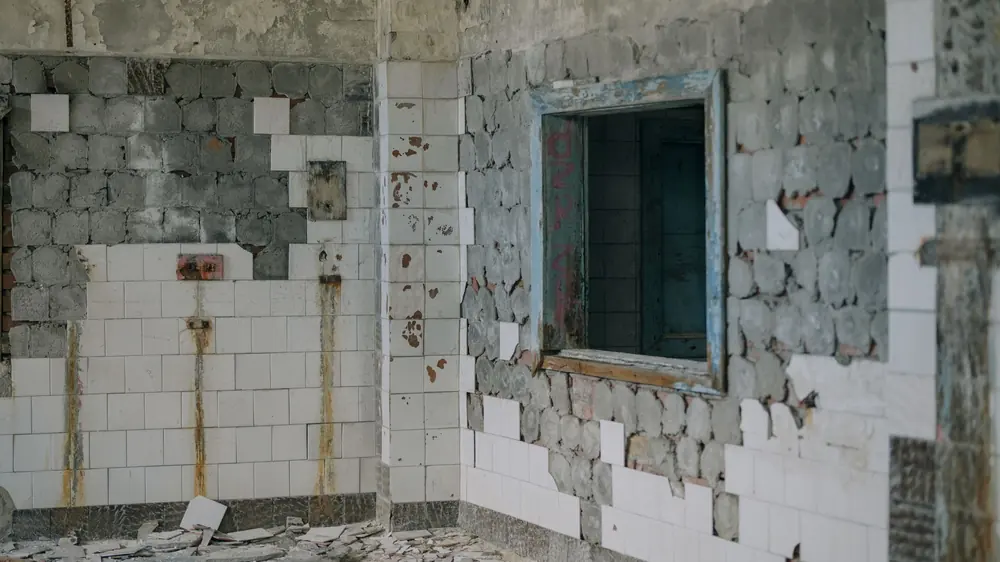
Bathroom strip-out in Varna: bare walls and floor, ready for the plumber
Toilet, basin, bath and water heater come out, the wall and floor tiles come off with their adhesive, and the room is left bare and ready for the plumber. Before the first blow the pipes are looked at with a thermal camera and the moisture under the bath is measured.
Our clients on video · all videos (in Bulgarian)
Bathroom strip-out in Varna means that at the end the room has bare walls, a bare floor and plugged drain openings: the toilet, basin, bath or shower tray and water heater are removed, and the tiles come off the walls and floor together with their adhesive. A cast-iron bath and the screed are separate items, and the pipework is left for the plumber who will fit the new installation. The strip-out is done by the craftsmen we work with; we organise it and stay your one phone number. We give the price by phone after a short description and photos, before the work starts. For the whole job, from the old bathroom to the new one, see bathroom renovation; the other strip-out jobs are under home renovation in Varna. Ring +359 52 993 333 or email info@kanalvarna.com — write to us in English and we reply in English.
Updated November 2026What a full bathroom strip-out includes
A whole bathroom means that afterwards the room has bare walls, a bare floor and plugged drain openings. If this is your first bathroom renovation, this is what actually comes out:
- The sanitaryware: toilet, basin, bath or shower enclosure, mirrors, cabinets and anything hung on the wall.
- The water heater, taken off the wall once it is disconnected from the power and drained.
- The wall tiles, with their adhesive, down to the plaster or the brick.
- The floor tiles, also with the adhesive, down to the screed.
- The screed, only if you choose: it comes out when it is cracked, wet, sloped the wrong way or the floor level has to go down. If it is sound it stays, which saves work and bags.
What is not included: the water and drain pipes, which are left for the plumber who will build the new installation and decides what to replace. A plasterboard ceiling, the door and its frame, light fittings and cables in the walls are priced after a look if they must also go. We do not touch the slab under the screed or load-bearing walls.
Before the first blow: thermal camera, moisture meter, water and power
Under the tiles of a bathroom runs much of the flat's installation: hot and cold water, the drain, sometimes underfloor heating or a riser serving the neighbours. So two checks come first.
- Thermal camera. The hot water is run, and the underfloor heating switched on if there is any, and the walls and floor are looked at through the camera. Warm pipes and heating loops show as light stripes, but only while they are warm, so please switch the heating on before we arrive.
- Moisture meter. We read the floor under the bath, around the trap and along the bottom row of tiles. After an old leak the screed there is often wet with nothing visible above it. Such a screed usually comes out, and the floor must dry afterwards; see drying after a leak.
To be fair, cold water and drains hardly show on a thermal image and cables do not show at all, so we follow the taps, traps, riser and sockets and open carefully where a route would logically run. The water to the bathroom or the flat is shut off, the taps are run to check, and the bathroom fuse is switched off; if it is not clear which one it is, or the heater is on its own line, the main switch goes off.
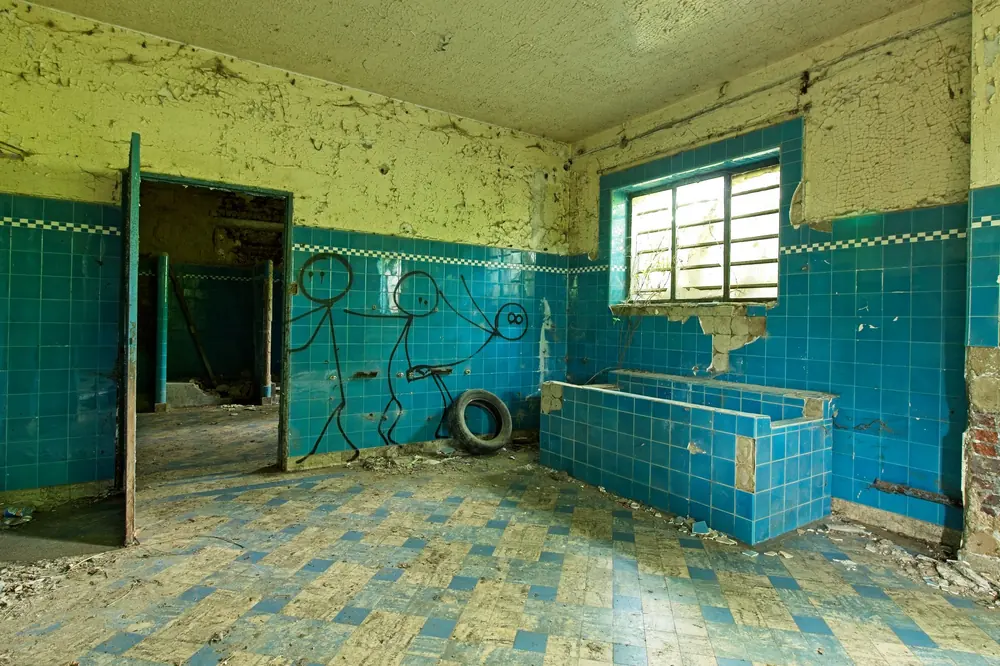
Plugged drains, and a look inside while the pipe is open
Once the toilet and traps are out, the drain openings sit exposed right where the tiles fall. They are plugged during the removal and stay plugged until the plumber comes, because a lump of adhesive or screed in the drain does not show and stops the water at the worst moment, after the new tiles are on.
An open pipe has one advantage: this is the easiest moment to inspect the drain. If you want, a drain camera can be passed in through the toilet or trap opening, as a separate service, to look for cracks, limescale, shifted joints and a wrong fall; see the CCTV drain survey. A cracked old pipe is better replaced now, while the floor is open anyway.
Taking out a bath, toilet and water heater
- Cast-iron bath: often over 100 kg. If the staircase allows, it goes out whole, with straps and several people; if not, it is broken up in the bathroom, which is loud and so happens only in the permitted hours. It is a separate item.
- Steel bath: lighter and comes out whole. It is usually walled in with brick and tiled at the front, so the panel goes first, then the bath.
- Acrylic bath and shower enclosure: taken apart or lifted out whole and counted as one fitting.
- Toilet with a cistern: comes off easily; the drain opening is plugged before the work moves on to the tiles.
- Concealed cistern frame: the steel frame is fixed to the wall and floor behind tiles or plasterboard. Whether it can stay for the new toilet is decided at the visit, together with the plumber.
- Water heater: emptied, disconnected and lifted off the wall; the brackets come out with the tile.
Old ceramics go with the rubble to the designated site; a water heater is an electrical appliance and is handed in separately for recycling. If you want to keep a basin, heater or mirror, tell us before the work so that it is taken down whole and put aside.
Send the floor area, the floor you are on and a photo — we tell you the price by phone before the work starts.
📞 +359 52 993 333How much rubble a bathroom gives, and how it gets to the lorry
The honest answer is that it depends: on whether there are two layers of tiles, whether the screed comes out, how thick it is and whether the bath is broken up on the spot. As a rough guide, for a bathroom with a floor of around four to five square metres, tiles with their adhesive on walls and floor come to roughly twenty to thirty bags; a thin screed adds about as many again, and a thick or reinforced one with a cast-iron bath in pieces adds more.
Bags are filled so that a person can carry them down the stairs, and they do not stay on the landing. With a lift they go down in it if the owners' association allows building waste in the lift; without one, they go down the stairs. The rubble is taken to a designated site, not to the bin outside the block, because builders' waste is not household waste. We do not take asbestos-cement; for that you need a specialist company. The paperwork and the options are on the page about builders' waste removal.
Neighbours, quiet hours and the owners' association
Blows in a bathroom carry through the slab and the riser straight to the neighbours above and below. So there is no breaking out between 14:00 and 16:00 or in the evening, and on Saturdays only by agreement with the owners' association. If the rules of your entrance are stricter, those apply.
- Put a note on the entrance door saying which days will be loudest.
- Ask the building manager whether the lift may be used for the bags.
- Mention a small child or a person in bed next door when you arrange the work, so the heaviest blows are planned around their day.
Dust is limited, not removed: the bathroom door is sealed, a wet-and-dry vacuum is used and the rubble is dampened. Most of it stays in the bathroom.
When you do not need the whole bathroom out
Not every bathroom has to go. Taking out only the walls or only the floor is priced after a look, without a package.
- Only the floor: the wall tiles are sound and you like them, the floor is cracked or needs a new fall to the trap. The bottom row of wall tiles usually comes off too, so the waterproofing can be done; see screed removal.
- Only the walls: the floor is new; it is covered and just the wall tiles are removed, see tile removal.
- Only black or crumbling grout: no strip-out at all, see regrouting.
Sometimes a partial strip-out costs almost as much as a full one and leaves visible patches. If that is the case, we say it plainly.
What follows a bathroom strip-out
- Plumbing. New pipes, drains and connections are done by our plumber; arrange this before the strip-out so the bathroom does not stand bare.
- Screed. If it came out, a new screed with a fall to the trap, which must dry before work continues.
- Waterproofing. A membrane on the floor and in the wet zones of the walls, see bathroom waterproofing.
- Tiles and fittings. Tiling on a dry, flat base, then the new fittings; see tiling.
The overview of all strip-out jobs is on the demolition and strip-out page.
Owners abroad: what to send us
Send the address, the floor and whether there is a lift, the floor area, photos of the walls and floor, and whether there is underfloor heating or a cast-iron bath. Say who can open the door: a neighbour, the building manager or whoever holds the keys. We tell you the price and whether and when we can start by phone. Payment is by cash, card or bank transfer after the work, with an invoice on request. We work every day from 06:00 to 23:00.
Frequently asked questions
How much does a bathroom strip-out cost?
It depends on the floor area, how many layers of tiles there are, whether the screed comes out, the type of bath, the floor you are on and how much rubble there is. We give the price by phone after photos or a visit, and before the work starts.
Is taking the rubble away included?
The rubble is bagged, carried down and taken to a designated site, and we organise that. We do not have a container, and what is counted as part of the job is agreed in the price we give you by phone; ask when you describe the bathroom. If you have your own transport you can ask for the strip-out alone.
What do I tell the neighbours?
When it will be loudest and when the bags will go down. There is no breaking out between 14:00 and 16:00 or in the evenings, and on Saturdays only by agreement with the owners' association. If the entrance has rules for renovation, tell us in advance.
What if the block has no lift?
The bags are carried down the stairs by hand. Tell us the floor when you call so that it is clear from the start.
Can the old screed stay?
Yes, if it is sound, dry and sloped towards the trap. Once the tiles are off, it is tapped and checked with the moisture meter. If it is hollow, cracked or wet under the bath, it is better to remove it now than to bury it under new tiles.
Can you take out a cast-iron bath?
Yes. It goes out whole if the staircase allows, or is broken up in the bathroom. It is a separate item. Steel and acrylic baths are lighter and come out as a fitting.
I let the flat out and live abroad. Can you do this without me?
Yes, if someone can open the door and show the stop tap and the fuse board. Email us photos and the address, write to us in English and we reply in English, and pay after the work by bank transfer if you prefer.
Bathroom to come out?
Send the floor area, the floor you are on and a photo — we tell you the price by phone before the work starts.
📞 +359 52 993 333or email info@kanalvarna.com — write in English and we reply in English.
Send us a message
Leave your name and a phone number with the country code. Add your email if you prefer a written reply — write in English and we reply in English. We confirm the price before any work starts.