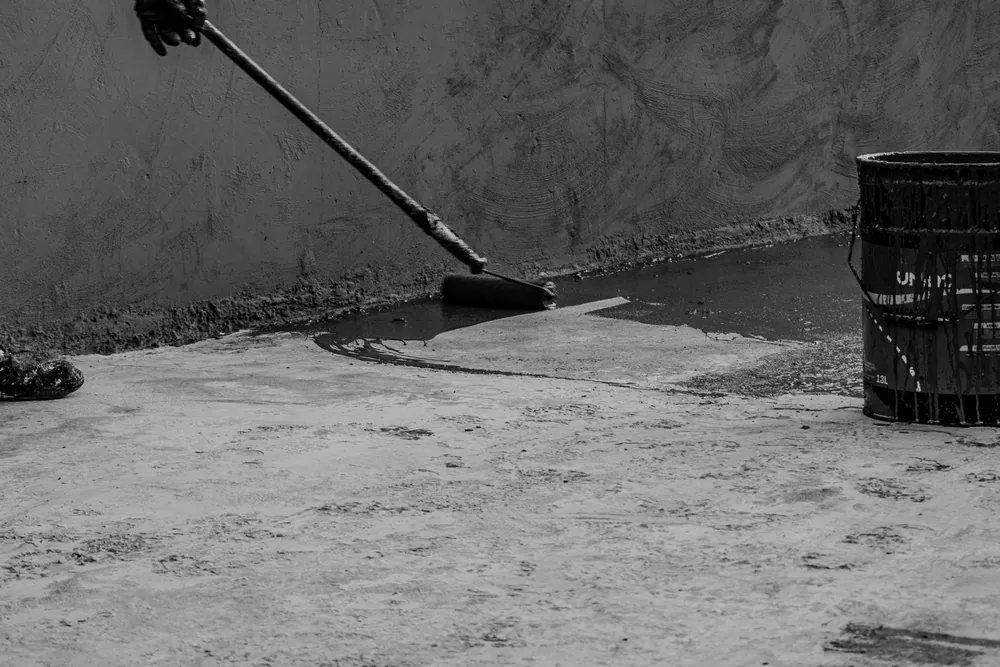
Waterproofing in Varna: bathroom, terrace, roof and basement
A stain on the ceiling under the terrace, a bathroom being retiled, a damp basement wall: waterproofing is the layer that keeps water out of concrete, brick and screed. We look at where the water gets in, choose the method for that surface and carry it out with the craftsmen we work with.
Our clients on video · all videos (in Bulgarian)
Waterproofing in Varna is not one product but four different jobs: a bathroom before the tiles go down, a balcony or terrace exposed to rain and sun, a flat or pitched roof, and a basement where water presses in from the ground. Kanal Varna inspects the surface, measures the moisture, finds the cause and proposes the system that suits it — liquid membrane, torch-on bitumen, PVC membrane or a cement-based coating — carried out with the craftsmen we work with. Bathroom waterproofing starts from €15 per m² and terrace waterproofing from €18 per m²; for roofs and basements we give the price after the inspection. We work every day from 06:00 to 23:00. Call +359 52 993 333 or email info@kanalvarna.com — write to us in English and we reply in English.
Updated November 2026Waterproofing in Varna: four different jobs
Without a waterproof layer, water works its way into concrete, brick and screed: the reinforcement rusts, plaster falls off, mould appears and the flat below gets a stain on its ceiling. On the coast the humid sea air makes all of this faster. There is no universal solution — a bathroom needs a different approach from a flat roof, and a terrace is sealed differently from a basement.
- Bathroom waterproofing — liquid or sheet membrane on the floor and walls before the tiles, so nothing leaks to the flat below. From €15 per m².
- Balcony and terrace waterproofing — a UV-resistant membrane, the right fall towards the outlet and properly treated movement joints. From €18 per m².
- Flat roof waterproofing — torch-on bitumen or PVC membrane on flat and pitched roofs.
- Basement waterproofing — protection against water from the ground: injection, drainage boards and pump systems, inside or outside.
When the trouble is water collecting around the building rather than a failed layer, start with drainage. When damp climbs up the walls from below, see rising damp. The order is always the same: first the water is stopped, then the room is insulated and finished.
First find where the water gets in
A wet patch is where the water shows, not always where it gets in. Water under a terrace can travel along the slab before it drips; a damp bathroom wall can be a leaking pipe rather than a failed membrane. That is why every job starts with an inspection: we look at the existing surface, the cracks and the drainage, and measure the moisture with a meter.
If the cause is a leaking pipe or a blocked outlet rather than the waterproofing itself, new waterproofing will not cure it. Then the right first step is leak detection — for example a leaking balcony or a roof leak — and only then the repair.
Materials: which one where
Liquid membrane. A one- or two-component polymer coating applied with a brush or roller that forms a seamless, elastic layer. It suits bathrooms, wet rooms and awkward shapes where sheet materials are hard to fit — with no seams, the water has nowhere to get through.
Torch-on bitumen. The classic material for roofs and terraces, laid with a torch to form a dense layer, usually 3 to 5 mm thick. Polymer-modified versions are more elastic and stand up better to sun.
PVC membrane. A synthetic sheet of 1.2 to 2 mm welded with hot air, best for large flat roofs and commercial buildings. It copes with strong sun and wide temperature swings.
Cement-based waterproofing. A cement mix with polymer additives that penetrates the pores of concrete and seals them from inside. It works against water pressing in from outside, can go onto a damp surface and is used in basements, foundations and tanks.
Tell us which surface it is and where the water shows, and send a photo if you can — we tell you what we will check on site.
📞 +359 52 993 333How a waterproofing job is done
- Inspection. We assess the surface, measure the moisture and establish the cause of the problem.
- Quote and plan. You get the quantities of material, the time needed and the price, with the method explained for your case.
- Preparation. Old waterproofing, dust and loose material are removed, cracks are filled and a primer goes on.
- Critical points. Corners, wall-to-floor junctions, pipe penetrations and drains get reinforcing tape and an extra layer — they are where most failures start.
- Application. At least two coats, each across the previous one, with the drying time between them respected. The wet thickness is checked: at least 1.5 mm in bathrooms and 2 mm on terraces and roofs.
- Water test. In a bathroom the drain is sealed, 3 to 5 cm of water is left on the floor, the level is marked and checked after 48 hours — only then do the tiles go on top.
Bathrooms and terraces: what owners ask most
In a bathroom renovation the membrane goes on the floor and up the walls to at least 20 cm, and in the shower area preferably up to the ceiling. Skipping it is the most common reason for a leak to the flat below a year after new tiles. If the whole bathroom is being redone, see bathroom renovation.
Terraces on the top floor are the classic case: rain gets through cracks in the old surface and leaves wet patches in the bedroom below. The old covering is removed where it has failed, the base is prepared and a new membrane is applied with reinforcement. The best season is April to October: most systems need at least 5 °C to be applied and 24 to 48 hours without rain to cure.
Roofs and basements
On a roof, new waterproofing can often go over the old layer if the base is sound. If the old layer is blistered or broken up, partial or full removal comes first, because a new layer on a bad base fails with it. Wet patches on the ceiling after rain mean the roof waterproofing needs repairing or replacing; a flat roof is worth having looked at every few years even without visible problems.
A damp basement — damp rising up the walls, mould, musty air — is the sign of missing or damaged waterproofing below ground. Depending on the cause it is treated from inside with a cement-based coating or injection, or from outside together with drainage around the house.
If the flat is yours but you live abroad
Many owners first hear about a waterproofing problem from the neighbour below or from the building manager. Send us photos of the stain and of the terrace or bathroom above it, the address and who can open the door. We inspect, tell you where the water gets in and what it will take, with a price, before any work starts. Bathrooms and terraces are best done in the dry months, so it pays to plan ahead of a letting season.
All services: waterproofing
Membrane under the tiles, a water test before tiling — from €15 per m² Balcony waterproofing
UV-resistant membrane, correct fall, treated joints — from €18 per m² Basement waterproofing
Damp basement walls and floor: injection, drainage boards, tanking, a pump pit Flat roof waterproofing
Torch-on bitumen or PVC membrane on a flat roof — repair or full replacement
Frequently asked questions
How much does bathroom waterproofing cost?
From €15 per m² for a liquid membrane. The final figure depends on the area, the number of coats and the material; we give it after the inspection.
Can new waterproofing go over the old layer?
Sometimes — if the old layer is firmly bonded and has no blisters. If it is badly damaged, it has to be removed first, because a new layer on a poor base will not hold.
When is the best time to waterproof a terrace?
From April to October, when temperatures are above 10 °C and there is no rain. Most systems need at least 5 °C and 24 to 48 hours without rain to cure.
Who carries out the work?
The craftsmen we work with. We do the inspection, find the cause, agree the method and the price with you and stay your point of contact until the job is done.
Which areas do you cover?
The whole of Varna — Chaika, Mladost, the centre, Levski, Briz, Asparuhovo, Vinitsa, Galata, Troshevo, Vladislavovo — and the area around it. We work every day from 06:00 to 23:00 and tell you by phone when we can come.
Water getting in?
Tell us which surface it is and where the water shows, and send a photo if you can — we tell you what we will check on site.
📞 +359 52 993 333or email info@kanalvarna.com — write in English and we reply in English.
Send us a message
Leave your name and a phone number with the country code. Add your email if you prefer a written reply — write in English and we reply in English. We confirm the price before any work starts.