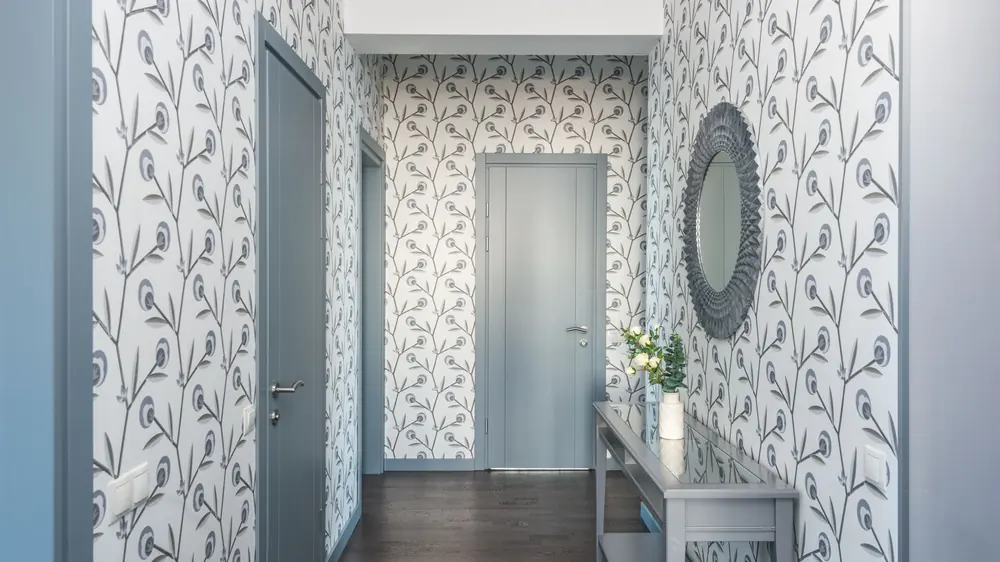
Wallpapering in Varna: wall preparation, damp check, hanging
New wallpaper, old wallpaper to strip, or black spots along the seams? We take the old paper off, prepare the wall and measure the moisture before the new paper goes up, because the wall under it decides whether the result stays clean.
Our clients on video · all videos (in Bulgarian)
Wallpapering in Varna starts with the wall: it must be dry, smooth and primed, and the old paper must come off completely. We hang paper, non-woven, vinyl and photo wallpaper. We are a damp-and-leak business, so before the new paper we measure the wall with a moisture meter, and when there are black spots or an old leak we look for the cause first, otherwise mould grows again under the new layer. The work is carried out by the craftsmen we work with; we organise the stages and remain your one phone number. We give the price by phone after a short description or photos. Wallpaper is one of the finishing jobs in a home renovation in Varna and comes after any repairs to the wall. Ring +359 52 993 333 or email info@kanalvarna.com — write to us in English and we reply in English.
Updated November 2026Hanging wallpaper: what we hang and what we do not
We hang paper, non-woven, vinyl and photo wallpaper, and glass-fibre cloth that is painted afterwards. Wallpaper is the last layer, so we start from the wall under it. Often it is one stage of a flat renovation, and then we set the order: wall, wallpaper, skirting boards, cleaning.
Non-woven wallpaper. A backing of cellulose and synthetic fibres. It does not stretch from the paste the way paper does, so the seams stay closed, and for many non-woven papers the paste goes on the wall instead of the paper.
- Paper. Breathable but it swells from the paste. It has to wait as long as the label says, otherwise it swells on the wall and blisters.
- Non-woven. It does not swell, goes up faster and often comes off in whole strips later. It does not straighten a crooked wall.
- Vinyl, on a non-woven or paper base. The plastic top layer wipes clean and stands up to rubbing, but it lets almost no steam through, which matters, see below.
- Photo wallpaper. A big picture on numbered panels; every lump and every mismatched seam shows.
- Glass-fibre cloth for painting. A dense mesh painted after hanging, which holds hairline cracks.
We do not hang wallpaper in the wet zone of a bathroom: round the shower and bath the splashes lift even vinyl. Textile wallpaper only if the paperhanger takes it on; we tell you by phone. For a wall without seams, see decorative plaster.
The wall under the wallpaper: dry, smooth, primed
Wallpaper shows the wall beneath it: every lump and nail hole comes out in the light, and damp underneath pushes it off. So we look at three things.
- Dry. We measure the outside wall, the corner behind the wardrobe, the wall next to the bathroom and the spot of any old leak with a moisture meter. The paste is water-based and brings water in by itself, and a damp wall under a new layer dries even more slowly.
- Smooth. Holes and the edges of old paint are filled and sanded; how a wall is levelled is on the skimming and painting page.
- Primed. Without primer a dusty or freshly skimmed wall drinks the paste, and the edges of the strips lift.
Plasterboard is a case of its own: the joints are skimmed and the whole board primed. Otherwise the paste grips the paper layer of the board, and when the wallpaper is next taken off, the card comes away with it.
Wallpaper after a leak, and mould under wallpaper
If there was mould under the old wallpaper, or the wall was wet from a leak, new wallpaper solves nothing: it hides the spot until the marks come out along the seams again. This is our core work, moisture in walls.
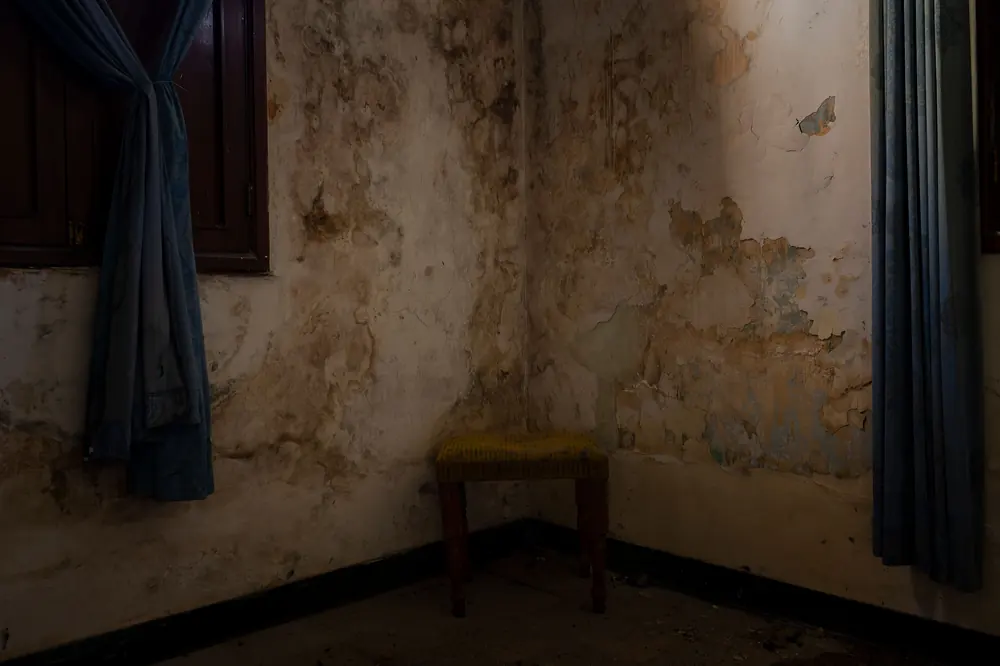
Damp from an old leak, from condensation or from outside comes out into the room when the wall can breathe. A vinyl layer stops it, so it stays underneath in the paper and the paste, which feed mould. That is why black spots appear first along the seams and in the corners of an outside wall, often behind furniture. Sometimes nothing shows, but the room smells like a cellar when the wardrobe is moved.
- The thermal camera shows the cold corner and the wet patch without tearing any paper, see thermal imaging.
- The moisture meter says how far it is wet compared with a wall that is definitely dry in the same flat.
- A trial strip taken off shows whether the mould is only on the back of the paper or has gone into the skim.
The order is: the cause, cleaning, new wallpaper. How the affected covering is taken off is on mould removal, and how to tell a leak from condensation is on mould and damp. On a cold outside wall a breathable paper, heating and airing help, and when they are not enough, interior insulation without gaps. If the water comes from above, the leak from the upper flat is sorted out first.
Call and tell us how many walls there are, what the old paper is and whether there has been a leak or mould. We tell you what we check first and how the wall is prepared.
📞 +359 52 993 333Stripping old wallpaper: what is left underneath
Stripping shows what the wall is really like: the paste, the crumbling plaster and the old stains under the paper decide how much preparation is needed.
- Soaking. Paper is wetted with warm water until the paste softens, then pushed off with a scraper. If the water does not soak in, the surface is first scored.
- Vinyl peels in two layers: the top is pulled off dry, and the backing stays and is soaked separately.
- Non-woven often comes off dry in whole strips if it was hung on a primed wall.
Under old paper there are often paste residues to wash off, flaking old paint, plaster that sounds hollow or crumbles, and old water stains. What is loose is taken off down to sound material, and stains get a stain-blocking primer before the skim. Call us and tell us how many walls there are, what the old wallpaper is and whether there has been a leak or mould, and we say what we check first.
Opening seams, bubbles, yellow stains, black spots: what they mean
Where and when a defect appears usually shows whether it comes from the hanging or from damp in the wall. The table is for wallpaper that is already up.
| Sign | Likely cause | What we do |
|---|---|---|
| Seams open all over the wall | The wall was not primed, or the paper shrank while drying | Seam adhesive; if there are many, prime and hang again |
| Bubbles even after drying | The paper was not left to soak long enough, or the paste went on patchily | A small bubble is cut and glued; many bubbles, a new strip |
| Yellow or brown stains show through | An old leak: salts and rust come through the paper | Measure; if dry, stain-blocking primer and a new strip |
| Black spots along seams and in corners | Condensation on a cold wall, or damp trapped under vinyl | Thermal camera and moisture meter, then cleaning and a more breathable paper |
| Paper swells from the bottom up | Damp rising from the floor and the base, or a pipe leaking | Measure at several heights and find the water before hanging |
| Strips fall with pieces of plaster | Crumbling plaster or old paint that does not hold | Take off what is loose, then primer, skim and hang again |
If a stain keeps growing or darkens after rain or after a neighbour's shower, we do not hang over it: the water is still coming.
Wallpapering step by step
We organise the stages; the hanging is done by the paperhanger we work with. The wall takes the most time.
- Measuring and photos. We measure the walls and look at the pattern. From the repeat we say how many rolls are needed.
- Stripping and preparation. Furniture is gathered in the middle and covered. The old paper comes off and the paste is washed away.
- Moisture reading. We measure the bare wall once it has dried from the soaking and washing, otherwise the meter shows the water of the stripping. If it is damp we stop and say why.
- Skim and primer. Holes and loose material are put right, the wall is sanded and primed as the manufacturer's instructions say.
- Hanging. The first strip is hung to a plumb line, not to the corner, because corners are rarely straight. The pattern is matched at every seam.
- Sockets and finishing. Socket and switch covers are taken off mechanically, with the fuse switched off and the cables left alone; moving a socket is for an electrician. Finally the paste is wiped off, and the old paper is taken away to a designated site, see builders' waste removal.
We tell you by phone whether and when we can start. In a block of flats noisy work is only in the hours the building rules and the municipality allow.
When you do not need new wallpaper
- One loose seam. It is stuck down with seam adhesive and pressed with a roller; the whole wall is not replaced.
- Black spots but no leak. If they are in a cold corner and only in winter, cleaning and airing come first. New wallpaper on top only covers them, and they come through.
- An old leak stain. Measure first: if it is dry, only the affected strip comes off and the stain is primed; if not, the water comes first.
- The bathroom. Tiles or moisture-resistant paint cope better there.
To price it, tell us how many walls or rooms and the ceiling height, what paper it will be and the size of the pattern repeat, what the old paper and the wall under it are, whether there was a leak or mould, and whether you have already bought the paper. If you live abroad, email us the address and photos of the walls and say who can open the door: a neighbour, the building manager or whoever holds the keys. Payment is after the work by cash, card or bank transfer, with an invoice.
Frequently asked questions
Can new wallpaper go over the old?
We do not do it. The water in the new paste soaks the old paper, it lifts off the wall and pulls the new one with it, so bubbles and open seams appear. There may also be stains or mould under the old paper that nobody has seen. The old paper comes off, the wall is looked at and measured, and then it is hung.
I have already bought the wallpaper. Will you hang it?
Yes, also paper that you bought. Check the labels first: the batch number must be the same on all rolls, because different batches can differ slightly in shade. Tell us the type and the repeat by phone, so we know whether the rolls will be enough.
Will mould come back under the new wallpaper?
It depends on the cause, not on the paper. If the leak has been stopped, the wall has dried and what was affected has been cleaned, the new paper usually stays clean. If the wall stays cold and damp, mould returns whatever you hang. That is why we measure first and say honestly if the wall is not ready.
Can wallpaper go in a bathroom?
Only away from the shower and bath, and only if the bathroom has a working extractor fan. Vinyl takes steam and wipes clean, but splashes and constant damp lift it along the seams and mould forms behind. For the wet zone, tiles or moisture-resistant paint are better.
Related pages
The order of stages, from the wall to the cleaning Skimming and painting
A smooth, primed wall before the paper Mould removal
When there are black patches under old wallpaper Damp survey
Whether the wall is dry before the paste Decorative plaster
A wall without seams instead of wallpaper
Wallpaper peeling, or stains under it?
Call and tell us how many walls there are, what the old paper is and whether there has been a leak or mould. We tell you what we check first and how the wall is prepared.
📞 +359 52 993 333or email info@kanalvarna.com — write in English and we reply in English.
Send us a message
Leave your name and a phone number with the country code. Add your email if you prefer a written reply — write in English and we reply in English. We confirm the price before any work starts.