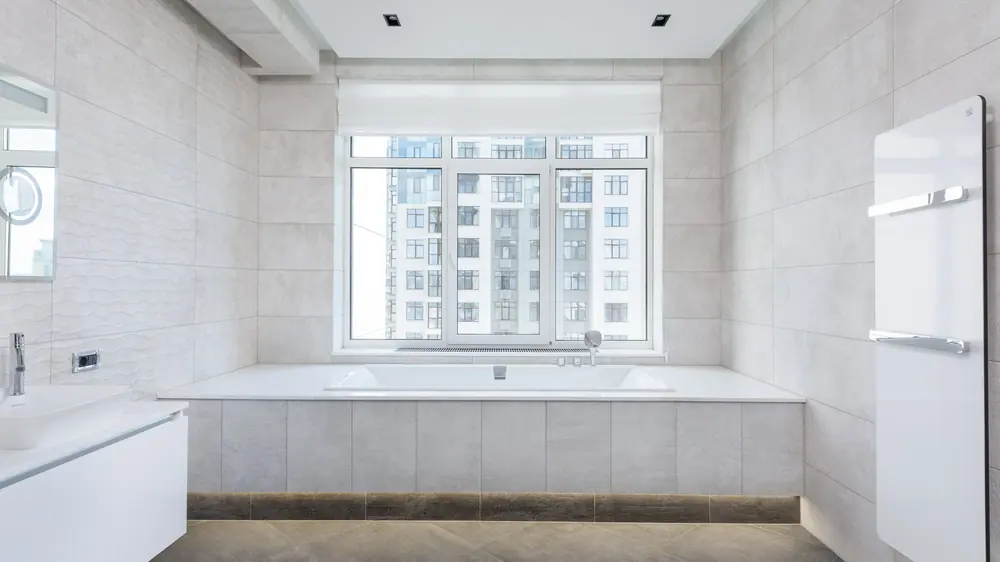
Bathroom ceiling in Varna: PVC panels, slats, plasterboard or just paint
First we say where the damp comes from: steam from below or water from above. Only then is the ceiling closed with PVC, slats or plasterboard, with a hatch to the valves and the riser, and the fan is checked to see whether it really takes the air outside.
Our clients on video · all videos (in Bulgarian)
A bathroom ceiling is chosen by what it does with steam. PVC panels and aluminium slats are not damaged by steam and can be repaired panel by panel, moisture-resistant plasterboard with paint gives a smooth surface, and sound dry concrete often needs only paint. Before we close a new ceiling we check where the damp comes from and leave an access hatch to the valves and the riser. The work is carried out by the craftsmen we work with; we organise it and remain your one phone number. The cables and the connection of lights are 230 V work for an electrician. We give the price by phone after photos. The rest of the bathroom — walls, tiles and floor — is listed under home renovation in Varna. Ring +359 52 993 333 or email info@kanalvarna.com — write to us in English and we reply in English.
Updated November 2026Which bathroom ceiling: PVC panels, slats, plasterboard or only paint
A bathroom ceiling is chosen by what steam does to it and how easy it is to repair, not by colour. A suspended ceiling, hung on profiles beneath the slab, is mainly one of three kinds: PVC ceiling panels, aluminium slats, or moisture-resistant plasterboard. Sometimes the old ceiling does not come down at all. In a flat renovation it comes after the damp and the pipes are sorted.
| Option | When it suits | Watch out for |
|---|---|---|
| PVC panels | A small or low bathroom; an easy repair, since a broken panel is replaced on its own | White PVC can yellow with heat from lamps. A leak from above does not show until the edge yellows or drips |
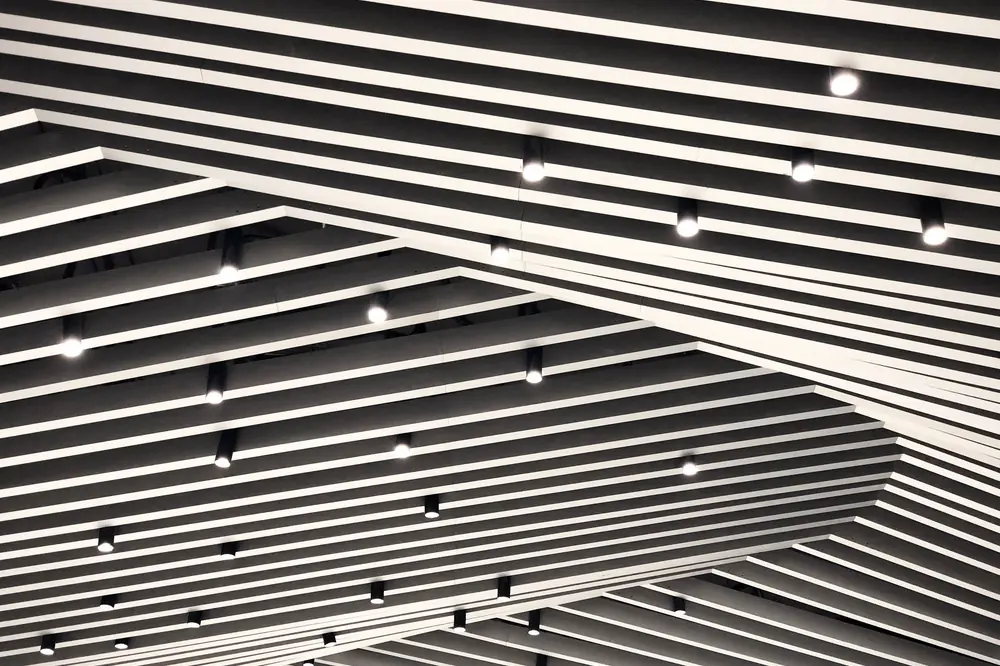
| Aluminium slats | A damp bathroom with frequent showers; metal does not rot or swell | The rails must be dead level or the rows look crooked. Light openings need accurate work |
| Moisture-resistant plasterboard and bathroom paint | A smooth ceiling like the other rooms, niches, recessed lights | After a leak the board goes soft and is replaced. It works only with a working extractor fan |
| Paint on sound concrete | The slab is dry and sound, with no stain that has an edge | No height is lost. If the stain comes back through the paint, the cause is water |
| Stretch ceiling | Done by specialist fitters; we do not take it on | The sheet can collect water in a leak and hide it. It still needs a hatch to the valves and the riser |
How the profiles, joints and skim of boards are done is on the plasterboard page. Here the point is which material to choose when the fan is weak or an old leak is possible above.
Above the ceiling: pipes, the riser and ventilation
Above a bathroom ceiling there is usually more than you see from below: stop valves, a water meter, a drain inspection point, the duct of the extractor fan, and sometimes an old leak that nobody has looked at.
Access hatch. A cover or a small door in the ceiling opposite a pipe, valve, meter or inspection point that will one day have to be reached. In PVC and slats it is a lift-out section, in plasterboard a small door in a frame.
A hatch goes opposite everything that will need reaching. Opposite the valves and the meter, if they are above the ceiling, and opposite the riser's inspection point, we leave an opening large enough to see the valve and turn it with a spanner. The riser is shared by the whole block, and in an emergency it has to be reached fast, not after cutting a new ceiling.
The second reason to look up is the fan. Its duct leads outside or into the shared shaft; it must not end in the space above the ceiling, because warm damp air cools on the cold slab and returns as drops and black spots. How to choose and fit the unit is on bathroom extractor fan; its supply is 230 V and belongs to an electrician. We also look up to see whether the concrete is dry and whether there are rusty streaks or limescale from an old leak. The thermal camera shows a wet patch or a cold bridge in the old ceiling before we take it down, but it cannot see through a panel, so we confirm with the moisture meter once we reach the slab.
Yellow stain, black dots, drips, sagging panels: what they mean
A stain with an edge on the ceiling is usually water from above; black dots in the corners are usually steam from below; for drips, it matters when they appear.
| Sign | Likely cause | What we do |
|---|---|---|
| A yellow or brown stain with a darker edge | A leak from above: a joint, a trap or a pipe in the flat over you. The edge means the spot got wet and dried at least once | Measure the slab and look with the thermal camera. If the leak is active it is stopped first, see a leak from the flat above |
| Black dots in a corner and round the lamp, with no edge | Condensation from steam and a cold bridge at the corner or outside wall | Check that the wall is dry, show the cold bridge with the thermal camera, then cleaning and ventilation; see bathroom mould |
| Drops after a shower on cold spots | Warm damp air cooling on the surface | Check the fan, the air supply under the door and the duct insulation |
| Drops even when nobody has showered | A leak, from the flat above or from a pipe just over the ceiling | Take down one element, look above and measure |
| Sagging panels or slats | The frame is wet or weak, screws or clips have come loose | Take down, see how far the damp has gone, replace the frame |
| Rust marks on profiles and screws | Damp or condensation on the metal for a long time | Replace the affected profiles and fixings; the cause of the damp is put right first |
Do not paint a stain before it has been looked at, because paint hides the trace that must be seen. Photograph it with a date and outline the edge in pencil so that it is clear whether it is growing. Call us, tell us what the ceiling is now, how long the stain has been there and what is above (a neighbour's bathroom, the roof or a room), and email us a photo of the ceiling and of the ventilation grille.
Call and tell us what the ceiling is now, how long the stain has been there and what is above it. A photo of the ceiling and of the ventilation grille helps us a great deal.
📞 +359 52 993 333Height, lights and access to the valves
Every suspended ceiling takes some height from the bathroom. How much depends on the frame, the lights and the ducts above. PVC panels and slats take the least, plasterboard with recessed spotlights more. If your bathroom is low, tell us by phone.
- We: cut the openings to your layout and leave room between the profiles for the lamp bodies and cables.
- An electrician: the cables, the supply, the connection of lights and fan. The electrician also decides which lamps are suitable for a damp room.
- You: the layout, how many lights and where, before the ceiling is closed. A new hole in a finished ceiling shows.
Every recessed light is a hole through which steam gets into the space above, so in a bathroom fewer, well-placed lights are better. Access to the valves is agreed at measuring. We close the ceiling only when the pipes above have been tested and do not leak.
How it goes, from the old ceiling to the hatch
- Talk and photos. You describe the ceiling, the stain and the fan and send a photo. We say what else to check and whether you need a new ceiling at all.
- Checking the old ceiling. The thermal camera shows a wet patch or a cold bridge, the moisture meter whether the slab is dry. If it still leaks above, we stop: the leak comes first.
- Taking down and taking away. The old ceiling is taken down in parts. Old boards that may contain asbestos are not broken by us: they need a specialist company. The waste is taken away, see builders' waste removal.
- A look above. Is the concrete dry, where are the valves and the inspection point, where does the fan duct go out? The electrical part is for an electrician: the cables are run before the ceiling closes, and by phone we say who that will be.
- Frame and cladding. The profiles are fixed to the slab and the walls to level, then panels, slats or boards go on. Openings are cut to the layout.
- Hatch and finishing. The covers to the valves and the riser are made, the corners closed with a trim, and the electrician tries the lights and fan. Leftovers are taken away.
Whether we work with materials you bought or tell you what to buy, we agree by phone. Noisy work is only in the hours that the building rules and the municipality allow. A new ceiling is not needed if the cause lies elsewhere: black dots with no trace of a leak usually need cleaning and a working fan, see mould removal; an old stain over a dry slab needs primer and paint, see skimming and painting; one yellowed panel is replaced alone; and if there is still a leak above, find it first with leak detection.
What to tell us, and what the price depends on
Tell us what the ceiling is now (painted concrete, PVC, plasterboard, slats), whether there is a stain, since when and whether it grows and whether there are valves, a meter or a riser inspection point above the ceiling. The price depends on the area and shape, the height, the material, whether the old ceiling comes down and goes away, the openings for lights and fan, the number of hatches, and whether the slab or frame needs repair after a leak. If you live abroad or let the flat out, email us the address and photos, and say who opens the door: a neighbour, the building manager or whoever holds the keys. Payment is after the work by cash, card or bank transfer, and we issue an invoice.
Frequently asked questions
PVC or plasterboard for a bathroom?
If the fan is weak or there is a risk of a leak from above, PVC or aluminium is the safer choice: damp does not spoil them and one element is replaced alone. Plasterboard gives a smooth painted ceiling with recessed lights, but a soaked board has to come down. It is decided by the ventilation and by what is above.
Will the new ceiling get mould?
Plastic and metal do not rot, but mould can take hold on them and on the joints between panels if they stay damp and dirty. The material is not the cause, the cause is steam that does not leave. Air supply and a fan with a duct to the outside help more than the choice of panel.
Can I have spotlights in a bathroom ceiling?
Yes, but lamps and cables are 230 V and are run and connected by an electrician, not by us. We cut the openings to the electrician's layout and leave room between the profiles. He also decides which lamps are suitable for a damp room, especially over the shower.
Will there be a hatch to the riser and the valves?
Yes, wherever there are any above the ceiling: opposite a valve, a meter and the riser inspection point. The cover is large enough to see the valve and turn it. Without it, at the first emergency the new ceiling is cut.
Related pages
The order of work, from the pipes to the paint Plasterboard
Profiles, joints and skim of boards Bathroom extractor fan
The duct and the draught before anything else Bathroom mould
Black dots in the corner of the ceiling Bathroom renovation: the plumbing
The whole order: pipes, tiles, ceiling
Bathroom ceiling yellowing, dripping or sagging?
Call and tell us what the ceiling is now, how long the stain has been there and what is above it. A photo of the ceiling and of the ventilation grille helps us a great deal.
📞 +359 52 993 333or email info@kanalvarna.com — write in English and we reply in English.
Send us a message
Leave your name and a phone number with the country code. Add your email if you prefer a written reply — write in English and we reply in English. We confirm the price before any work starts.