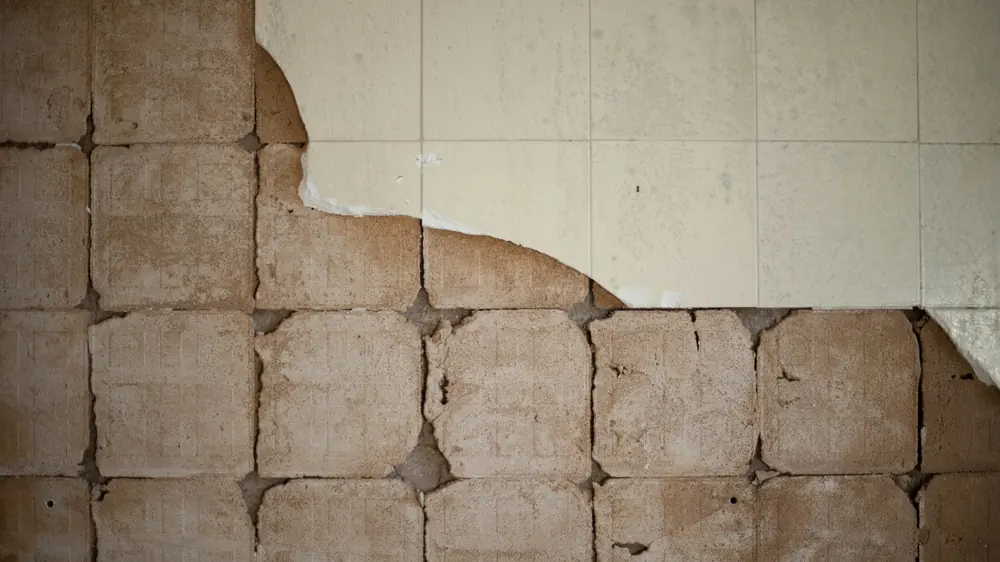
Demolition and strip-out in Varna: only where it is needed
Old tiles and the adhesive under them, screed, plaster, a partition wall in the way. Only the place the inspection has shown is opened up, the pipes and cables are traced before the first blow, and we organise the removal of the rubble.
Our clients on video · all videos (in Bulgarian)
Demolition and strip-out in Varna is the first stage of most renovations: old tiles with their adhesive, screed, old plaster, non-load-bearing partition walls and chases cut for new pipes. Before anything is hit we check where the pipes and cables run, because a drilled pipe is a new leak. The strip-out is done by the craftsmen we work with; we organise it, look after the rubble and stay your one phone number. Load-bearing walls and slabs are not touched without a structural design and a permit. We give the price by phone after a short description and photos, before any work starts. Each type of strip-out has its own page, listed under home renovation in Varna. Ring +359 52 993 333 or email info@kanalvarna.com — write to us in English and we reply in English.
Updated November 2026What demolition and strip-out covers
Strip-out is the stage that turns an old room into a bare one: tiles come off, old plaster and screed are removed down to a sound base, a partition wall that is in the way is taken down, and channels are opened for pipes. It is the first step of a renovation; plumbing, plasterboard, skimming and painting follow.
Strip-out. Taking out tiles, adhesive, screed, plaster or a wall down to a sound base or to the depth the next trade needs, without touching the structure of the building.
What we take on:
- wall and floor tiles together with their adhesive;
- screed, including old mosaic floors;
- old plaster that has gone hollow, cracked or damp;
- non-load-bearing partition walls of brick, aerated concrete or plasterboard;
- chases in walls and floors for new pipes, only along the route.
What we do not take on: load-bearing walls, columns, beams and slabs without a structural design and a building permit; cutting concrete is also not part of strip-out. If you need a round hole in concrete for a pipe or ventilation, read about core drilling, which we organise with a contractor who has the machine. Thick concrete outside or on the ground is a different job, see concrete breaking.
When you do not need demolition
Many people call us for a strip-out when the problem is smaller. We would rather say so on the phone than open a wall for no reason.
- A wet patch and nobody knows where the water comes from. Find the cause first, with leak detection; opening a wall blindly often opens the wrong wall.
- Only the grout is crumbling. The tiles stay and the grout and silicone are renewed, see regrouting.
- A dripping tap. The plumber can often reach the joint through a small opening instead of taking down the whole wall.
An old metal front-door frame is often built into the wall and comes out by breaking out around it; the new door is a separate job, see door fitting.
Pipes and cables first: what we check before the first blow
A pipe in the wall that gets drilled is a new leak, and a cut cable is a job for an electrician. So the first visit is spent looking, not hitting. For rooms with underfloor heating or hot pipes we run the hot water or switch the heating on a few hours ahead and look at the wall and floor with the thermal camera; warm pipes show as bright lines, but only while they are warm.
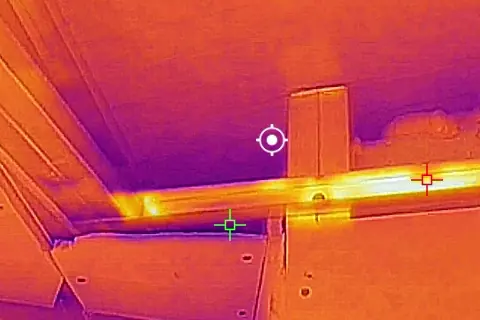
- Cold water and drains hardly show on a thermal image, so we follow the taps, the riser, the traps and the logical route of the pipe.
- Cables are followed from sockets, switches and junction boxes. A cable on another circuit can stay live, so if there is any doubt the main switch is turned off.
- The water to the room or the flat is shut off.
- Drain openings in the floor are plugged at once so that no piece of rubble falls in and blocks the pipe.
To be honest: we do not have a wall scanner, a device that shows cables and reinforcement inside a wall. Where there may be a pipe or a cable, small areas are opened carefully by hand. Cables that have to be removed are removed by an electrician before we start; electrical work is not something we do.
Which job: bathroom, tiles, screed or a wall
Each kind of strip-out has its own page, so this one stays short.
- A whole bathroom, with the toilet, bath and water heater: bathroom strip-out.
- Only the tiles, in any room: tile removal.
- The floor down to the concrete slab, including old mosaic: screed removal.
- A partition wall, a door opening or the wall under a window: wall removal.
- Steps, a path or a yard slab: concrete breaking.
The tiling that follows a strip-out is a separate page, tiling, and the new plumbing after a bathroom strip-out is described under bathroom renovation, where our plumber does the pipes.
Describe what has to come out, give the floor and send a photo — we tell you the price by phone before the work starts.
📞 +359 52 993 333Dust, noise and neighbours in a block of flats
Strip-out is always dusty and noisy; it can only be limited. The room door is sealed with film and tape, the corridor to the front door is covered, furniture in the next rooms is covered, and electronics are best taken out. Air conditioners and fans in the room are switched off so that they do not spread the dust. Building dust is dampened lightly and collected; an ordinary household vacuum is not made for it.
In a block of flats, noisy work is arranged with the owners' association and the building manager, and it happens only in the hours that the rules of the building and the municipality allow. Tell the neighbours beforehand which days will be loudest. If a baby or someone ill lives below, tell us and we plan the heaviest part for the hours that suit them best. Fine dust settles even after the work ends, so the main cleaning is done once the bags are down.
Rubble: bags, carrying down, a designated site
The rubble is collected in strong bags, carried down to the street and taken away, but not to the household waste bins: builders' waste goes to a designated site. The bags are filled only to a weight a person can carry on the stairs, because overfilled bags split. They go down the stairs, or in the lift if the building's rules allow it. We do not have a container; we organise the removal of the bags and the rubble. How many bags there will be depends on the job: a whole bathroom with its screed gives far more than one wall of tiles. Tell us the floor and whether there is a lift, because that changes how long carrying down takes.
What may not go in a bag, and the paperwork for handing waste in, are on the page about builders' waste removal. Old black bitumen adhesive under parquet may contain asbestos; we do not touch it, and a specialist company has to deal with it. Afterwards, the dust and the remnants have their own page, after-builders cleaning.
Owners abroad: what to send and who opens the door
If you own a flat near Varna and live elsewhere, send us the address, the floor, whether there is a lift, and photos of the walls and floor with something for scale. Tell us who can let us in: a neighbour, the building manager or whoever holds the keys. We tell you by phone whether and when we can start. Payment is by cash, card or bank transfer after the work, with an invoice on request. We work every day from 06:00 to 23:00, weekends included.
What the price depends on
We give the price by phone after a short description and photos, or after we have seen the place, and always before the work starts. To make it accurate, tell us:
- how many square metres, walls and floor separately;
- what comes out: tiles only, tiles with adhesive, screed, plaster or a wall;
- how thick the screed is, if you know, and whether there is underfloor heating;
- which floor you are on and whether there is a lift;
- how much rubble there will be to take away;
- whether there is a leak or a damp patch now;
- when the plumber or the tiler is coming, if that is already agreed.
The price depends on the area, on the layers under the tile (sometimes there are two layers of tiles), on the screed thickness, on the floor and the carrying down, and on the amount of rubble. An invoice is issued on request.
Frequently asked questions
Can only the tiles come off, with the screed left alone?
Yes, if the screed is sound, dry and sloped the right way. The tiles come off with their adhesive and the screed stays. If it turns out to be cracked, crumbly or wet underneath, we show you and you decide together with the plumber or the tiler whether to replace it.
Will you knock down a load-bearing wall for a bigger opening?
Not without papers. An opening in a load-bearing wall or slab needs a structural design, a permit from the municipality and, in a block, the consent of the owners where common parts are affected. Only non-load-bearing partition walls are taken down, once it is clear that they do not carry anything. See wall removal.
I have underfloor heating. Can the floor still be broken out?
Yes, but we first need to know where the pipes run. Switch the heating on a few hours before we come, we look at the floor with the thermal camera and mark the lines, and above them the work is done by hand in small pieces.
Do you also do the new pipes after the strip-out?
Yes. New pipes, drains and the connection of sanitaryware are done by our plumber, who also tells us exactly where to open so that nothing is broken twice. See plumbing in Varna.
I live abroad and let the flat out. Can you deal with it?
Yes. Email us the address, photos and the name and phone number of whoever can open the door; write to us in English and we reply in English. We agree what comes out and the price with you, and you pay after the work.
How much dust will there be in the flat?
A good deal; it cannot be avoided completely. How much leaves the room depends on the preparation: a sealed door, a covered corridor and switched-off air conditioning. Cover or remove clothes and bedding in the next room before the first day.
Who decides in a block of flats, me or the building?
Inside your own flat, non-load-bearing work is your decision, but noisy work follows the rules of the building and the municipality, and anything touching common parts (load-bearing walls, the facade, shared shafts and ducts) needs the owners' association. Ask the building manager first.
Related pages
Strip-out coming up?
Describe what has to come out, give the floor and send a photo — we tell you the price by phone before the work starts.
📞 +359 52 993 333or email info@kanalvarna.com — write in English and we reply in English.
Send us a message
Leave your name and a phone number with the country code. Add your email if you prefer a written reply — write in English and we reply in English. We confirm the price before any work starts.