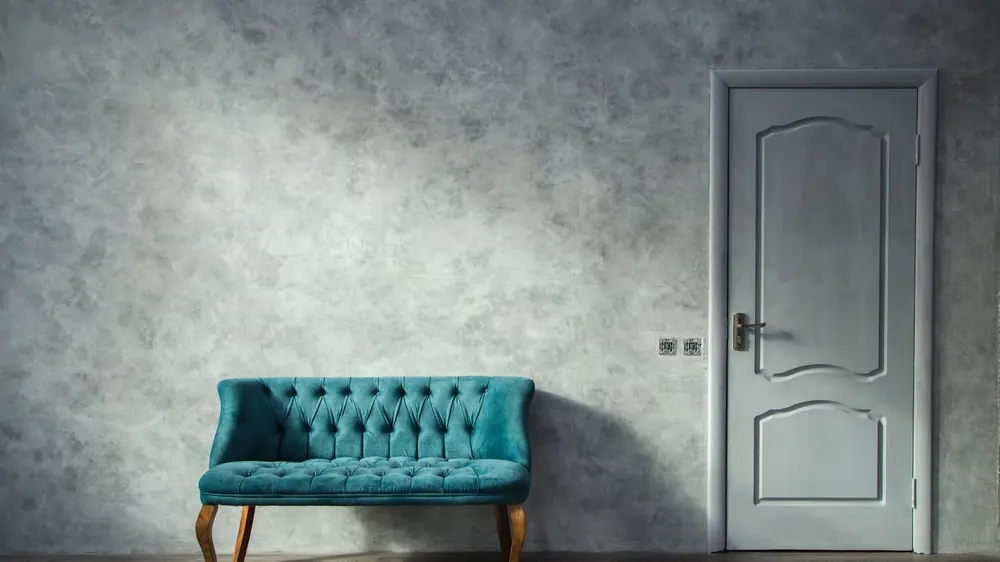
Decorative plaster and Venetian plaster in Varna
Venetian, travertine or sand effect: first we measure the moisture in the wall and check the base, then the decorator we work with makes a sample on the spot. The whole wall is done only once you like the sample.
Our clients on video · all videos (in Bulgarian)
Decorative plaster is a thin, hand-applied finish: Venetian plaster, travertine, sand or concrete effect. It gives a wall depth and sheen that paint cannot. It also shows every bump and every stain underneath, so we first measure the moisture and check the base. The effect depends on the hand of the decorator we work with, which is why a sample on the wall comes before the full job. The work is carried out by the craftsmen we work with; we organise it and remain your one phone number. We give the price by phone after a short description or photos. On a larger job it is the last finish, after the other stages of the home renovation. Ring +359 52 993 333 or email info@kanalvarna.com — write to us in English and we reply in English.
Updated November 2026What decorative plaster is and how it differs from paint
Decorative plaster is a thin coating that gives a wall a pattern, depth or sheen that paint cannot. In a flat renovation it comes near the end, after the plumbing, the electrics and the skim.
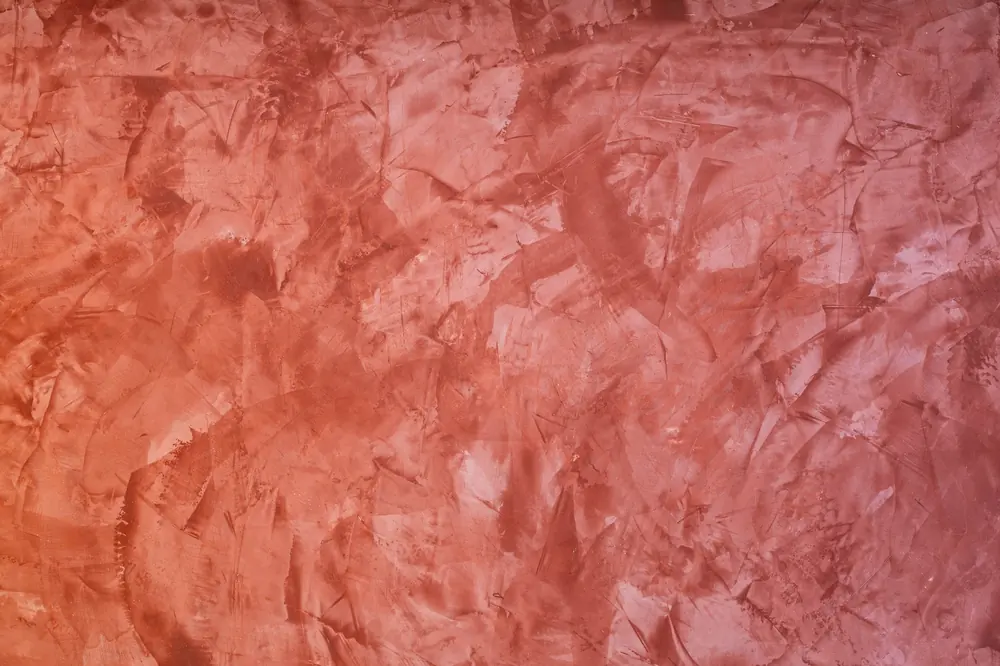
Decorative plaster. A finishing coat of lime, marble flour, mineral filler or a polymer binder, applied in thin layers with a trowel or a float. The pattern is not in the bucket: it comes from the movements and pressure of the craftsman's hand.
The difference is simple: paint covers, plaster paints a picture. With a roller two painters give almost the same wall. With a trowel, two decorators using the same material make two different walls. So the effect is first seen on a sample. It makes sense on a feature wall in a living room, in a hall, on a staircase or in a shop. For a pattern that repeats exactly, wallpaper is the better choice, see wallpapering.
Venetian plaster, travertine, sand and concrete effect compared
The types differ in how they reflect light and how much handling they take: Venetian plaster is smooth and shiny, travertine is matt and porous. So the choice starts from the effect and the room, not from a catalogue.
| Type | Effect | Where it suits | Watch out for |
|---|---|---|---|
| Venetian plaster | Smooth and deep, sheen like polished stone; sealed with wax | Living room, hall, a feature wall, a bathroom outside the shower | Needs an almost mirror-smooth base and shows every wave |
| Travertine | Stone texture: pores, veins and layers, matt or smoothed | Living room, staircase, the wall behind a fireplace or TV | Pores collect dust; the direction of the veins is agreed beforehand |
| Sand, silk, pearl | Fine sand or pearly particles that glint with the angle of the light | Bedroom, a niche, the wall behind a bed | Looks different by day and by evening, so never chosen without a sample |
| Concrete effect | Matt grey surface with cloud-like variation, like smooth poured concrete | Modern living room, office, a kitchen away from the hob | A wall finish; floors use other systems |
| Relief | A strong texture drawn with a trowel, a roller or a stamp | Hall, staircase, a shop | Hard to clean and repaint; the edges wear with rubbing |
We do not recommend brands: the decorator works with a system they know, and a sample tells you more than a catalogue.
The base: why decorative plaster shows every fault
Decorative plaster does not hide unevenness, it stresses it: the coat is thin, the sheen catches the light, and every wave in the wall casts a shadow. The strictest judge is raking light, from a window in the morning or a lamp shining down along the wall.
- Dry. We measure the outside walls, the spot under a window and the wall next to the bathroom with our moisture meter. An old leak stain comes through plaster as a dark halo, so even a dry stain is first sealed with stain-blocking primer. See damp survey.
- Flat. For Venetian plaster the wall is skimmed over its whole area, not in patches, and checked with a lamp held parallel to the wall. See skimming and painting.
- Sound. Crumbling plaster, chalky old paint that rubs off on a finger, and greasy marks come off, because the layer would peel from them.
- Evenly absorbent. Board and the skim on the joints absorb differently. Without primer over the whole board the joints show as duller stripes, and without tape as cracks. See plasterboard.
On an outside wall we also use the thermal camera: it shows a cold corner or a wet patch before the eye can. There the cause is dealt with first and the plaster comes after.
In a bathroom, a kitchen and a hall: where it holds up
Decorative plaster for a bathroom makes sense on the walls outside the shower and bath: waxed Venetian plaster takes damp air and splashes, but it is not waterproofing. Wax makes water bead, but under it the wall is still plaster. Where water stands daily, such as a shower without a tray or the edge of a bath, it gets through sooner or later. There the bathroom waterproofing goes underneath, with tiles over it.
- Bathroom: walls outside the shower; the ceiling only with a working extractor fan, because without one steam settles in the cold corners.
- Kitchen: round the table and above the units, yes. Behind the hob and sink, grease and water get at it, and tiles or glass belong there.
Call and send a photo of the wall and the effect you like. Tell us whether there has been a leak, and we say where to start.
📞 +359 52 993 333Stains, cracks, white bloom, uneven sheen: sign and cause
Most problems with decorative plaster come from the wall under it, damp, dust or a joint, not from the material.
| Sign | Likely cause | What we do |
|---|---|---|
| A dark patch that grows or returns | Water from inside: a pipe in the wall, a wet outside wall, condensation | Moisture meter and thermal camera to find the source; plaster is repaired only on a dry wall |
| White fluffy bloom, the layer crumbles | Salts brought out of the masonry by damp | Brushed off dry, measured, and the water source traced; repair after it stops |
| A straight crack along a plasterboard joint | No reinforcing tape in the joint, or the boards move | Open the joint, reinforce it, redo the area |
| The layer flakes off | Dust, chalky old paint or a missed primer | Taken back to a sound base, primed and applied again |
| Uneven sheen, matt patches | The base absorbs unevenly, or the wax was laid unevenly | Polish and wax again; if it comes from the base, the area is redone |
| Greasy marks or black dots in a corner | Kitchen grease, or mould from condensation in a cold corner | Degrease; black dots are cleaned and treated before a new coat |
A patch that grows after rain, or after a neighbour's shower, is not a matter of decoration; we begin with leak detection.
Sample, colour and light: how the effect is chosen
The effect is chosen on a sample made by the same craftsman, in the same material and your colour; a catalogue or an internet photo only shows the direction.
- On the wall or on a board. A sample on part of the wall itself is more honest, since you see it on your base.
- Colour is mixed for the job. A shade from a colour chart looks different in a layer with sheen. The material for a whole wall is mixed at once, so there is no difference between batches.
- One wall in one go. The craftsman works it from corner to corner without a break, because stopping in the middle leaves a line.
A repair on the spot is possible: a light scratch in the wax is polished out, and deeper damage is filled and smoothed. We do not promise that the join will be invisible, because the hand and the aged wax never repeat. After serious damage the wall is often redone.
How the plaster goes on, and when you do not need it
- Talk and photos. You send a photo of the wall and of the effect you like. We say whether it suits the room and its light.
- Moisture reading and base. We measure the wall, and look at cracks, old paint and where the light falls.
- Preparation. The floor and skirting boards are covered. Then scraping, skim, sanding and primer to the system's instructions.
- Sample. The decorator makes a sample in your colour. We continue when you approve it in daylight and under a lamp.
- Coats. Layer after layer, each one when the previous is ready as the manufacturer's instructions say.
- Wax or protection, and cleaning. Polishing, wax or varnish if the system has them. Then the packaging and leftovers are taken to a designated site.
How long it takes depends mostly on the preparation and the drying between coats, so we give them for your wall by phone. You do not need decorative plaster if the wall is damp or the leak has not stopped, if you want a quick, simple job (paint is the honest choice then), if the room is a child's room where walls get drawn on, if you will often drill the wall for shelves, pictures and a TV, or if you want a pattern that repeats exactly. Outside walls and facades are not part of this service. The contacts, switches and lights on the wall are for an electrician: 230 V is not ours. Old boards that may contain asbestos are for a specialist company.
What to tell us, and what the price depends on
Tell us the effect you want, with a photo you like, the size of the wall and its height, what the base is now (old paint, plaster, plasterboard, wallpaper), whether there have been leaks, stains or black dots, and whether you have already bought material. The price depends on the effect and the number of coats in the system, on the preparation, the area and height, and the corners and niches. If you live abroad, email us the address and photos and say who opens the door: a neighbour, the building manager or whoever holds the keys. Payment is after the work by cash, card or bank transfer, and we issue an invoice.
Frequently asked questions
Can decorative plaster go on old paint?
Yes, if the paint is sound: it does not flake, rub off on a finger or feel greasy. Gloss paint is sanded and primed with a bonding primer, and chalky paint comes off. Under Venetian plaster the wall is usually skimmed again, because old paint is rarely smooth enough. We decide after we have seen it, or from a photo taken in raking light.
Can Venetian plaster be washed?
Wax makes it resistant to a damp cloth and a mild cleaner: a fingerprint or a coffee splash usually wipes off. Do not scrub it with an abrasive sponge or strong cleaners, which dull the sheen.
Is it suitable for a bathroom?
For the walls outside the shower and bath, yes, if the bathroom is aired. We do not put it in the shower area itself: there a membrane goes underneath and a wet-zone finish on top. If the mirror stays misted and black dots come back, look at the bathroom extractor fan first.
I let the flat out. Is decorative plaster sensible for a rental?
Only on a feature wall, if at all. Walls in a rental are knocked, drilled and marked, and every mark in a sheen shows. Paint is easier to touch up between tenants. If you still want the effect, email us a photo and write to us in English; we reply in English.
Related pages
The order of work, from demolition to the last coat Skimming and painting
A smooth wall under the plaster, or just paint Microcement
A seamless finish for floors and the shower area Bathroom waterproofing
The membrane that wax does not replace Wallpapering
When you want a pattern that repeats
Want a wall with an effect, not just paint?
Call and send a photo of the wall and the effect you like. Tell us whether there has been a leak, and we say where to start.
📞 +359 52 993 333or email info@kanalvarna.com — write in English and we reply in English.
Send us a message
Leave your name and a phone number with the country code. Add your email if you prefer a written reply — write in English and we reply in English. We confirm the price before any work starts.