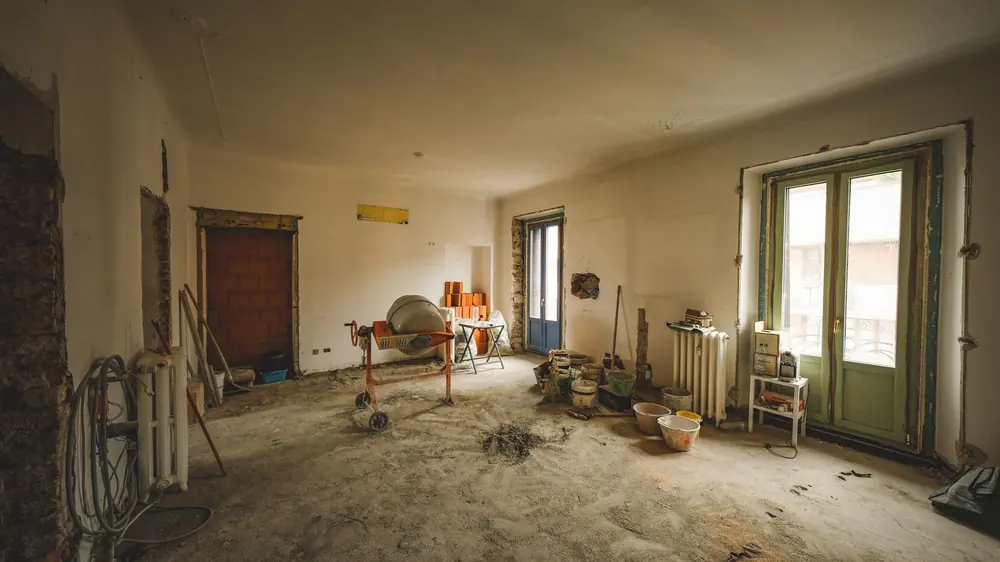
After builders cleaning in Varna: debris, dust and drains
The builders have gone, but the debris, the dust and the mortar splashes are still there. We do the rough part of the clean and check that the drains are not blocked with adhesive and grout. The fine cleaning is for a cleaning company; we are not one.
Our clients on video · all videos (in Bulgarian)
After builders cleaning in Varna is the rough part: taking out debris and packaging, filling the bags, gathering building dust, removing mortar and paint splashes and checking the drains for adhesive and grout. Fine cleaning, meaning windows and frames with cleaning products, polishing and washing upholstery, is for a cleaning company; we are not one. The clean is carried out by the craftsmen we work with, while clearing a blocked outlet is drain work, our core trade; we organise it all and remain your one phone number. We give the price by phone after a short description or photos. Call +359 52 993 333 or email info@kanalvarna.com; write to us in English and we reply in English.
Updated November 2026After builders cleaning: what the rough clean includes, and what not
The rough clean is everything the craftsmen leave behind that a mop and a glass cleaner cannot deal with: pieces of tile, plasterboard offcuts, empty adhesive tubs, film, tape, bags and a thick layer of dust. It is the last stage of home renovation in Varna. Fine cleaning is a job for a cleaning company: washing windows and frames with cleaning products, polishing, washing sofas and curtains. We are not a cleaning company and we do not pretend to be. The split works in your favour: nothing is washed twice.
Building dust. Fine mineral dust from sanding filler, cutting tiles, breaking out and drilling: gypsum, cement, lime and quartz sand. The particles are so small that they hang in the air and settle on surfaces for days after the work.
- We take on: leftovers and packaging, bags to the entrance, sweeping and vacuuming building dust, mortar, adhesive and paint splashes on floors and tiles, tape and protective film, ventilation grilles and a check of the drains.
- We do not take on: washing windows and frames with cleaning products, polishing floors and furniture, washing sofas and curtains, cleaning air conditioners. For those look for a cleaning company, and for the air conditioner a service company; by phone we tell you what to ask for, so you do not pay twice.
The bags are filled, brought down and taken to a designated site, as described on builders' waste removal. If the renovation has not begun yet and nothing has fallen, the first step is demolition and strip-out.
Surface by surface: how it comes off and what it damages
Each surface puts up with something different. A product that removes cement haze from porcelain dulls marble, and a metal scraper that lifts adhesive from a tile scratches a uPVC profile. So we look at what is under the stain first, and only then choose how to remove it.
| What is there | How it comes off | What it damages |
|---|---|---|
| Dust on walls, frames and ceiling | Dry, with a brush on the vacuum, from the top down; then a lightly damp cloth | A wet mop straight onto filler dust smears it into grey streaks |
| Cement haze on tiles | A haze remover as its maker directs, once the grout has set; the grout is wetted first, then rinsed; never together with bleach | The same product on marble, travertine or other natural stone leaves dull marks |
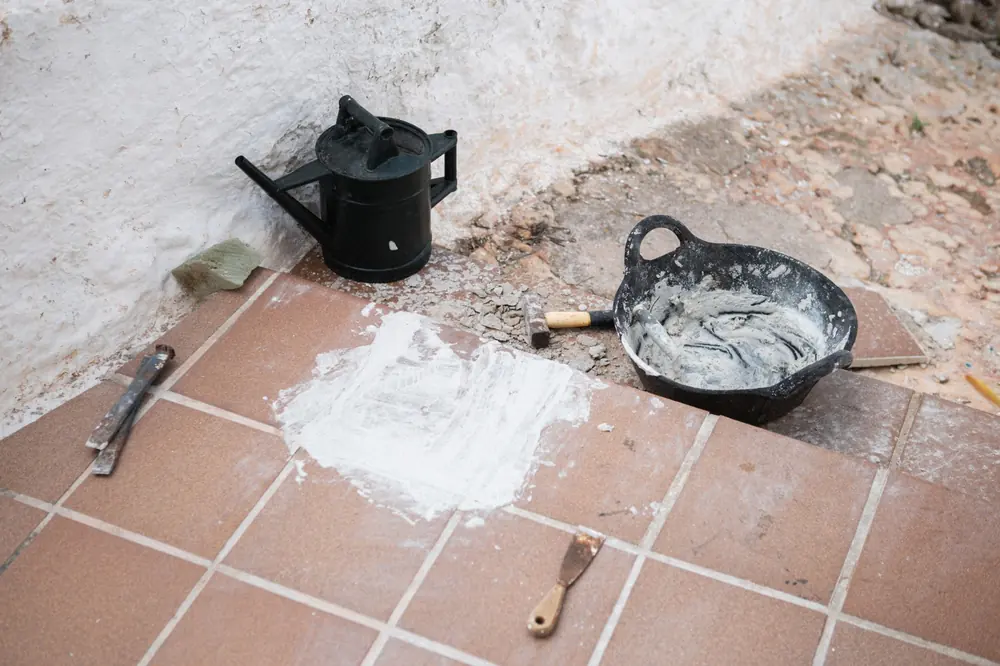
| Lumps of adhesive and grout | Soaking, then a plastic scraper at a low angle | A metal scraper or wire wool on glazed tile scratches the glaze |
| Latex and paint splashes on the floor | Fresh ones with water and a cloth; dried ones on tile with a scraper and a new blade | A solvent on laminate, parquet or vinyl leaves cloudy marks |
| Silicone and building foam on uPVC | Mechanically, by cutting away and a plastic scraper | Acetone and harsh solvents dull and yellow the profile |
| Tape and protective film | Taken off as soon as possible, slowly and at a sharp angle | Film left long in the sun bakes on and leaves adhesive on the profile |
| Dust in sockets and switches | Only on the outside, dry; covers stay on | A damp cloth or water in a socket; inside is for an electrician |
If grout crumbles when wiped, we ask when it was laid: fresh grout is not rubbed until it has set, and if it still crumbles after that it was badly done. Scratches and unevenness on the wall after the dust is gone are not cleaning; they are for skimming and painting.
The drains after the renovation: traps, floor drain and toilet
After a renovation people most often call us not about the dust but about a basin that drains slowly. The cause is almost always the same: buckets, trowels and rollers were washed in the basin, the shower or the toilet. Tile adhesive, grout, gypsum filler and cement do not wash away; they settle at the lowest point, in the bend of the trap, and set hard there. We are a drain clearing company, so a clean after renovation ends with a check of the outlets, not with polishing.
- Grey sediment as hard as stone: adhesive and grout settled in the bottle trap of the basin.
- White paste in the floor drain: filler and gypsum from washing rollers and trowels.
- A plug or rag in the drain, put there during the break-out so debris did not fall in, and forgotten.
- Pieces of tile and screed that fell into the toilet opening while it was off.
- Latex from brushes that clings to the pipe wall and holds back everything that follows.
The signs are slow draining, gurgling, a drain smell and water standing in the floor drain after a shower. Shop drain cleaners are made for hair and grease; set adhesive does not notice them. Water is run through every outlet (basins, shower, bath, toilet, washing machine) and where it stops, the trap is opened. If the blockage is deeper, the drain is cleared with a spiral or a cutter, and set cement sometimes cannot be shifted so a piece of pipe is replaced; see blocked sink and, if cement has reached the horizontal pipe, a CCTV drain survey. If the trap is cracked or the floor drain has shifted, see sink trap replacement.
Call or email with how many rooms, what the builders left and whether a sink or shower drains slowly. We tell you whether and when we can come, and give the price before any work starts.
📞 +359 52 993 333Building dust: why not with a household vacuum cleaner
Building dust is finer than a household vacuum's filter was made for: part of it passes through and comes out into the room, and the rest clogs the bag until the motor overheats. A vacuum cleaner for building dust with a suitable filter is used instead.
- From the top down. First the upper edges of the doors, frames, skirting boards and grilles, then the walls, last the floor.
- Dry, then damp. Wet on thick dust makes mud that dries in patches. If sweeping, the floor is only lightly sprayed so it does not raise dust, never flooded.
- Air. The window is open and the door to other rooms closed while the dust is collected.
- The air conditioner stays off to the end. If on, it draws the dust into its filters and blows it back. We do not clean air conditioners; if one ran during the work, its filters are for a service company.
- Grilles. Ventilation grilles in the bathroom and kitchen are taken down and washed; dust on them clogs and stops the air.
Cleaning after a renovation does not end with one pass. What was hanging in the air settles on the floor and the furniture the next day. So we do not promise "not a speck": we remove the main dust, and the fine layer that falls afterwards is for a cleaning company or for you with a damp cloth. The dustiest stages are floor sanding and sanding filler; the clean comes after them, not before. If the bathroom fan does not draw even when the grille is clean, see bathroom extractor fan.
How the clean goes
- Description and photos. You send photos of the rooms, the bathroom and the kitchen and say which floor it is. We tell you whether and when we can come.
- Carrying out and sorting. Debris, offcuts and packaging go into bags, the bags to the entrance. Tins with paint residue, solvents and old lamps do not go into the bags; they are handed in separately.
- Dust from the top down. Frames, skirting, grilles, walls and floor, with a vacuum for building dust, then a lightly damp cloth.
- Splashes, tape, film. Mortar, adhesive and paint splashes come off floor and tiles, and so do tape and film, with a tool suited to the surface.
- Checking the drains. Water is run through every trap and the toilet. Where it stops, we tell you what we see and how it is cleared.
- What is left. We show you what is done and what remains for the fine cleaning: glass, polishing, washing.
What to tell us, and what the price depends on
We give the price by phone after a short description or photos, before any work starts. Tell us how many rooms and what the renovation was (only painting, a new bathroom, walls taken out), roughly how much debris there is, which floor you are on and whether there is a lift, whether the bags also have to be taken away, whether a basin or shower drains slowly, what the floors and tiles are (porcelain, marble, laminate, parquet), and when the last craftsman leaves and when you move in.
The price follows the amount of debris and dust, the storey and bringing the bags down, the splashes that must come off by hand and whether a trap is blocked. Taking the bags away is included in the same job; a blocked trap after renovation is a separate task. If you live abroad, email the address, photos and who can open the door: a neighbour, a cleaner or the building manager. Payment is by cash, card or bank transfer after the work, and an invoice on request.
Frequently asked questions
Do you wash the windows too?
No. Washing glass and frames with cleaning products is fine work for a cleaning company. We take off what would get in its way: tape, protective film and mortar splashes on the sill. Then the cleaners start with the glass, not with a scraper in hand.
Will you remove cement haze from tile grout?
On porcelain and glazed tiles, yes, with a haze remover as its maker directs, then rinsing. On marble, travertine and other natural stone we do not use such a product, because it dulls them; there we first ask the tiler what the grout is. If the grout crumbles, it needs replacing, not cleaning; see regrouting.
My sink has drained slowly since the renovation. What should I do?
Do not pour more water or a drain product in. If the trap under the sink is a bottle trap, unscrew its lower part over a bucket. Grey sediment inside means adhesive or grout. If it is clean, the blockage is deeper, and that is worked on with a spiral or a cutter. Tell us which other outlets are slow, so we know whether it is only this trap or the shared pipe.
Do you clean the air conditioner after the renovation?
No, we do not touch air conditioners. If it ran while walls were broken out or filler sanded, its filters are probably full of dust: call an air conditioner service. While we clean, it stays switched off.
Related pages
The order of the stages, from strip-out to paint Builders' waste removal
The bags from the floor to the designated site Tile removal
Where the debris and the dust come from Skimming and painting
The last dusty stage before the clean CCTV drain survey
When cement has got deeper into the pipe
Renovation finished, dust and bags left?
Call or email with how many rooms, what the builders left and whether a sink or shower drains slowly. We tell you whether and when we can come, and give the price before any work starts.
📞 +359 52 993 333or email info@kanalvarna.com — write in English and we reply in English.
Send us a message
Leave your name and a phone number with the country code. Add your email if you prefer a written reply — write in English and we reply in English. We confirm the price before any work starts.