Bathroom waterproofing in Varna: tanking the shower and floor before the tiles
New tiles on a bathroom floor are only as watertight as the layer under them. We waterproof bathrooms, shower areas and wet rooms in Varna with a liquid or sheet membrane, treat the corners and pipe penetrations, and fill the floor with water for 48 hours before anyone lays a tile.
Our clients on video · all videos (in Bulgarian)
Bathroom waterproofing in Varna means a continuous membrane on the floor and the lower walls, and on the whole wall in the shower, laid under the tiles. Water gets through grout and tiles in any case, and without that layer it reaches the screed and the concrete slab, then the ceiling of the flat below. We use a liquid membrane in two coats or a sheet membrane, reinforce the corners, the pipe penetrations and the floor drain, and finish with a water test that stays 48 hours before the tiling starts. The work is carried out with the craftsmen we work with. Bathroom waterproofing starts from €15 per m². It is one part of a waterproofing job in Varna; if the membrane is sound and only the grout leaks, regrouting may be enough. Ring +359 52 993 333 or email info@kanalvarna.com — write to us in English and we reply in English.
Updated November 2026Why a bathroom needs waterproofing under the tiles
The bathroom is the wettest room in the home: splashes, steam and condensation every day. Tiles do not stop water, and grout lines and silicone joints certainly do not. Without a membrane under the tiles the water reaches the screed and the concrete slab, shows up as a stain on the ceiling of the neighbour below, and leaves mould behind the tiles.
If you let the flat out, that stain is the usual route to a quarrel with the downstairs neighbour and a repair bill, so it is the layer in the whole renovation that costs least to get right. If the membrane is sound and only the grout or the silicone is failing, you do not need all this: see regrouting. When there is already a wet patch below and you do not know where it comes from, find the source first with leak detection.
Shower waterproofing: liquid membrane or sheet membrane
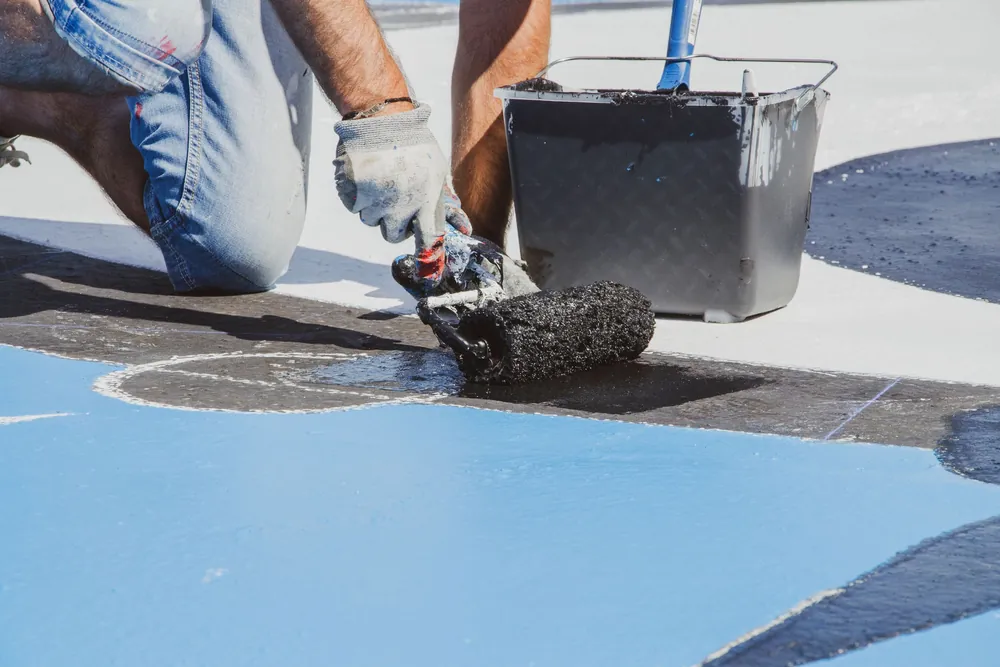
Liquid membrane. A polymer coating applied in two or three coats with a brush or roller. It forms a seamless elastic film that follows corners, pipe penetrations and uneven surfaces. Between coats it needs several hours to dry. For most flats we recommend it, particularly in small and medium bathrooms with awkward shapes.
Sheet membrane. Ready-made sheets that are glued or welded to the surface. They are thicker and take mechanical load better, so they suit big flat floors, for example a spacious bathroom or a wet room. The seams between sheets get extra treatment, because a seam is where a sheet system can fail.
The choice depends on the room. The price from €15 per m² refers to the liquid membrane applied in two coats. If you are unsure which you need, send us photos and the approximate size of the room.
Wet room tanking: which parts of the room get sealed
Sealing only the floor is the commonest mistake. Water splashes up the walls and runs behind the tiles. We seal the whole floor, turn the membrane up the walls, and take it to the full height of the wall around the shower or bath. With a walk-in shower without a glass screen, all the walls of the shower zone go up to the ceiling. Around the sink the splash area gets the same treatment.
- The floor: all of it, with no exceptions, and the membrane turned up the wall to form a shallow tray that holds water if the room floods.
- Wall-to-floor corners: the weakest point, so reinforcing tape goes in and an extra layer is applied.
- Pipe penetrations: a special sleeve or extra sealing around every pipe that passes through the membrane.
- The floor drain: a sealing flange, so the membrane joins the drain and not just stops short of it.
- The door threshold: the membrane is raised there too.
The same membrane goes under microcement. The finish on top is not waterproofing, only a coated surface.
Tell us the size, whether the tiles are coming off and whether there is a shower tray or a walk-in shower — we tell you the price before we start.
📞 +359 52 993 333How we waterproof a bathroom, step by step
- Preparing the base. We clear dust, old adhesive and bumps, and fill cracks with a repair mix. The base must be dry, clean, level and sound, with nothing loose.
- Primer. A deep-penetrating primer improves the bond between the base and the membrane.
- Reinforcing the corners. Tape goes onto every wall-to-floor corner, every pipe penetration and around the drain, so the membrane does not crack when the building moves.
- First coat. The liquid membrane is applied with a brush or roller to an even covering.
- Second coat, across the first. The second coat goes on at right angles to the first, to close any gaps.
- 48-hour water test. The drain is sealed and a few centimetres of water are left on the floor, the level is marked and checked after 48 hours. If it has not dropped, the membrane works and the tiling can begin.
How long it takes, and what happens with the tiles
For an ordinary bathroom of five to eight square metres, count about five working days from the start of the membrane to the point where tiling can begin: the first day for the base, the primer, the corners and the first coat, the second day for the second coat and the pipe penetrations, then the 48-hour water test. How fast it dries depends on the temperature and the humidity in the room. Do not speed it up with heaters, as that can crack the membrane. If old tiles have to come off first, allow a few more days.
Tiles go on only when the membrane is dry and the water test has passed. We coordinate with your tiler so that the schedule works, and the whole job from stripping out to the finished bathroom can be arranged with the craftsmen we work with; see bathroom renovation for the plumbing side.
Can it be done without removing the tiles? Not as a rule: the membrane belongs between the screed and the tiles. With an existing leak the sure way is to strip, seal and re-tile.
Where bathroom tanking goes wrong
- Only the floor is sealed, and the walls in the shower zone are left bare.
- The corners are skipped, with no reinforcing tape, so the membrane cracks at the first movement of the building.
- One thin coat instead of two crossed coats.
- No water test: if you do not test before the tiles, a fault is found only after them, which is far more expensive.
- The membrane is laid on a damp base, and it does not bond to a wet surface.
- Pipe penetrations left without a sleeve, which is a common cause of spot leaks.
A typical case in a block of flats: a panel-block bathroom with a leak to the flat below, where stripping the old tiles shows no membrane at all (common in older blocks), a cracked screed and a corroded floor drain. The screed is repaired, the base primed, two coats go on with tape in the corners, sleeves on the pipes and a new drain with a flange, and the water test shows no loss.
If you own the flat but live abroad
Send us the address, the floor, a few photos of the bathroom and the approximate size, and say whether the tiles are staying or coming off. We tell you the method and the price before we start, once you have described the job or sent photos. Someone has to open the door: give us the name and number of a neighbour, a cleaner or a manager. In a block of flats, let the building manager or the owners' association know when the work starts. Payment is after the work, by cash, card (Visa, Mastercard) or bank transfer, and we issue an invoice on request. Hours: every day 06:00–23:00.
Frequently asked questions
How much does bathroom waterproofing cost in Varna?
It starts from €15 per m² for a liquid membrane in two coats. The total depends on the area, the shower layout, the state of the base and the method. We tell you the price before we start, once you have described the job or sent photos.
Do I have to waterproof the whole bathroom?
The whole floor, yes. The walls get the membrane turned up from the floor, and the shower and bath zone is sealed to the full height. A walk-in shower without a screen needs all the shower walls up to the ceiling. The more is protected, the smaller the risk of a leak.
How long does it take to dry?
Several hours between coats and a longer wait after the last one, then the 48-hour water test. Overall, expect about five working days from the start to the point where tiling can begin. A cold room slows it down.
Can the tiles go straight on the membrane?
Yes, a membrane made for tiling takes tile adhesive directly. Use a flexible tile adhesive that suits it. We coordinate with your tiler, so the membrane is dry and tested before the first tile.
Do you waterproof a walk-in shower?
Yes. A walk-in shower needs more: all its walls up to the ceiling, a floor with a fall to a linear drain and an extra coat in the zone where the water runs. Tell us if there is a screen or not.
I'm not in Bulgaria — can you still deal with it?
Yes. Email us the address, photos and the approximate size, and the name and number of whoever can let us in. We agree the method and the price with you, and you can pay by bank transfer after the work.
There is already a leak to the flat below. Is this the first step?
Not necessarily. First find where the water comes from: it can be a pipe rather than the membrane. See leak detection and the waterproofing overview.
Related pages
Bathroom, terrace, roof and basement compared Balcony and terrace waterproofing
When the water comes through the slab outside Regrouting
When only the grout and silicone are failing Bathroom renovation
The plumbing and the whole job around it Shower leak
Finding where the water comes from
Bathroom to waterproof?
Tell us the size, whether the tiles are coming off and whether there is a shower tray or a walk-in shower — we tell you the price before we start.
📞 +359 52 993 333or email info@kanalvarna.com — write in English and we reply in English.
Send us a message
Leave your name and a phone number with the country code. Add your email if you prefer a written reply — write in English and we reply in English. We confirm the price before any work starts.