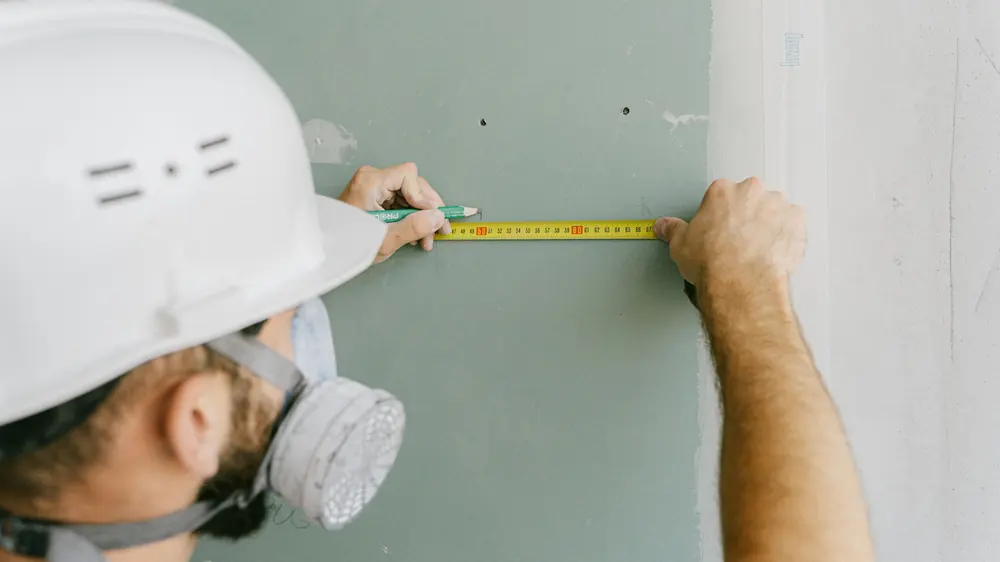
Soundproofing in Varna: noise from neighbours through walls, ceilings and floors
Voices through the wall, footsteps from above, a hum at night? We tell you where the noise most probably travels, which fix makes sense and when the money would be wasted, before a single board is bought.
Our clients on video · all videos (in Bulgarian)
Soundproofing works when the barrier is heavy, has no gaps and is not rigidly tied to the neighbour's structure. Against voices and TV, a lining on separate profiles or a ceiling on resilient hangers helps. Footsteps from above are stopped mainly in the floor of the flat above, and pipe noise by repairing the pipes. We do not do acoustic design and we promise no figure for how much quieter it will be. The work is carried out by the craftsmen we work with; we organise it and remain your one phone number. We give the price by phone after we understand the noise and see photos of the wall or ceiling. Other work on walls, ceilings and floors is on the home renovation page. Ring +359 52 993 333 or email info@kanalvarna.com — write to us in English and we reply in English.
Updated November 2026What noise is bothering you: airborne or impact
Soundproofing begins with one question: what kind of noise? Voices, a TV and a barking dog travel through the air. Footsteps, scraping chairs and a dropped toy hit the slab directly. The two take different routes and are stopped differently, so we first ask what you hear, when and from which side.
Airborne and impact noise. Airborne noise starts from a source in the air, such as a voice, music or a TV, and shakes the wall or ceiling like a drum skin. Impact noise starts from a blow to the structure itself, such as a footstep, stamping or drilling, and spreads through the slab and walls, sideways as well as down.
- Airborne (voices, TV, a dog): mass and density help: a lining on separate profiles, sealed gaps, a denser door.
- Impact (footsteps, chairs, stamping): stopped best in the floor that is walked on. From below only part of it can be caught.
- A third kind: a humming riser, a rattling pipe or a lift motor comes from the building's equipment, and a lining seldom solves it.
So we start with the path of the sound; the solution comes after.
What really stops noise: mass, airtightness, a separate structure
Sound insulation rests on three things together: a heavy barrier, a barrier with no gaps, and a barrier that is not rigidly tied to the neighbour's wall. One gap undoes the best barrier, and a rigid link undoes the added lining.
- Mass. The heavier and denser the barrier, the harder it is for sound to shake it. That is why two layers of plasterboard do more than one, and a brick wall more than a light partition.
- Airtightness. Sound goes wherever air goes. A gap round a socket, a radiator pipe or the joint between wall and ceiling lets speech through almost unhindered.
- A separate structure. The new lining does not touch the old wall rigidly: the profiles sit on a rubber strip, the ceiling hangs on hangers with a resilient part. Otherwise the neighbour's wall shakes your lining like a drum skin.
- Wool in the cavity. Mineral wool between the profiles absorbs sound in the air gap. On its own, without boards in front, it is not a barrier.
Polystyrene stuck to a wall, so-called soundproof wallpaper, spray foam, egg boxes and thin cork tiles hardly stop a neighbour's noise. They are light and glued rigidly: some make the echo in the room softer, but the neighbour's sound passes through them.
The wall to the neighbour: a lining on separate profiles
Against voices and TV through a wall, a separate lining helps most often: a new light wall on its own profiles, wool inside and two layers of boards in front. That is wall soundproofing with a real chance of being noticed.

- The profiles do not touch the old wall. They stand on the floor and the ceiling on a sealing strip. If a support is needed halfway, it goes through a resilient bracket, not a rigid plug.
- Two layers of board, the joints of the second staggered against the first. A narrow gap to the floor, ceiling and side walls is filled with a flexible sealant, not plaster.
- Sockets: a socket box is a hole in the lining, and an electrician moves it; 230 V work is not ours. If your neighbour's socket is exactly opposite yours, tell us, as back to back they are the weakest point.
Before we close the wall we measure the moisture. An outside wall, or a cold wall to the stairwell, closed with wool and board can stay damp behind and grow mould with nothing visible in front. With the moisture meter and the thermal camera we check whether the wall is dry and where the cold strips are. On an outside wall the lining is planned together with interior insulation. The boards and profiles are described on the plasterboard page.
Call and tell us what the noise is, when you hear it and in which room. We say where it most probably travels and whether soundproofing makes sense.
📞 +359 52 993 333Ceiling against the neighbour above, and the floor against impact noise
A suspended ceiling on resilient hangers helps against voices, music and TV from above, but against footsteps only partly: the blow from a neighbour's heel enters the slab and travels down and sideways, along walls the ceiling does not cover. A hanger with a rubber part dampens the vibration on its way, a rigid one passes it straight into the boards. As with a wall, wool goes in the cavity, two layers of board and a flexible seal round the edge. Every recessed light is a hole through which sound passes, so fewer openings keep the effect.
To be honest, the surest answer to footsteps is a floating floor in the flat above: an impact underlay beneath the screed, or at least a better underlay under laminate and rugs. If you are the upper flat and the neighbour below complains, this is your floor: an impact-sound underlay, an edge strip round the walls and a new screed that touches no wall, riser or door frame. One lump of mortar joining screed to wall is a bridge for sound. See floor screed and laminate flooring. If the neighbour above is about to renovate, talk to them about an underlay: it helps more than any ceiling in your flat.
When soundproofing does not help: where the noise really comes from
| What you hear | Where it travels | What helps | What does not |
|---|---|---|---|
| Footsteps and stamping from above | A blow to the slab, then down the walls | A floating floor above; below, a ceiling on resilient hangers, partly | Polystyrene on the ceiling, a ceiling on rigid hangers |
| Voices and TV through the wall | The wall and gaps round sockets and pipes | A lining on separate profiles with wool and sealed edges | Wallpaper, cork, foam on the wall |
| Humming, rattling or whistling in the wall | A riser, loose clips, pressure, water hammer | Repairing the cause; see riser replacement | A lining without fixing the pipe |
| Street, cars, a bar opposite | The window: seals, the joint round the frame, the glass unit | New window seals, adjustment or another glass unit | A lining on the wall under the window |
| Voices and the lift from the stairwell | The front door: a gap under the leaf, gaskets, the frame | A threshold with a seal, or a new front door | A lining on the wall beside the door |
| Low humming, felt in the floor too | A lift motor, pump or fan of the building | The building's maintenance, repair at the source | A lining in one room |
Low humming is the hardest: it passes through the whole structure and light linings hardly stop it. We then say straight out that the answer lies with the building manager. If you rent the flat out or live abroad, send us a short description of the noise by email, with photos of the wall, and tell us who can open the door.
How it goes, from the talk about the noise to the paint
- Talk. You describe the noise: voices or footsteps, at what time, which room. Often it is already clear whether it is a pipe, a window or a wall.
- Inspection. We listen on site and look for gaps round sockets, pipes and joints, and look at the door and the window. We measure the moisture of the wall and check cold areas with the thermal camera. If you want a figure, we measure the noise level with a sound level meter.
- Proposal. We say what makes sense and what does not, including when the money would be wasted. For a studio, a venue or a large building we advise an acoustic designer.
- Work. The craftsman fits the profiles, wool and boards, or lays a floating screed.
- Edges and openings. The joints to the floor, ceiling and walls, and round boxes and pipes, are sealed. This is where the effect is won or lost.
- Skim, paint, waste. Skimming and paint follow, see skimming and painting. Offcuts and packaging are taken to a designated site, see builders' waste removal.
In a block of flats, work inside your own flat does not usually go to the owners' association meeting, but ask the building manager about the rules of your building. Shared parts, such as the riser, the facade and the stairwell, are another matter. Load-bearing walls we do not touch: they need a structural engineer. Noisy work is only in the hours that the building rules and the municipality allow, so warn the neighbours and the building manager.
What to tell us, and what the price depends on
Tell us which wall, ceiling or floor bothers you and roughly how big it is, what the noise is and when you hear it, whether the building is panel, brick or poured concrete and what floor you are on, and what is on the wall now. The price depends on the area and the system, the number of openings and sockets, the preparation and height, the floor of the flat and the waste removal. Who buys the boards, the wool and the underlay, we say by phone. Payment is after the work by cash, card or bank transfer, and we issue an invoice.
Frequently asked questions
How much quieter will it be?
We promise no figure. We can measure the noise with a sound level meter, but we do not do acoustic design, and the result depends on the route of the sound. So we first see where the noise comes from and say honestly what you will feel and what you will not.
Does polystyrene stop noise?
Hardly. It is light and glued rigidly to the wall, so sound passes through it, and with some sounds glued polystyrene even makes things worse. Polystyrene is for heat, not for noise. Against a neighbour, heavy boards on separate profiles, wool in the cavity and sealed edges help.
Is a ceiling below enough against footsteps above?
Usually not. A ceiling on resilient hangers cuts part of the stamping, but the blow also travels through walls that it does not cover. The floor above helps most: an underlay beneath the screed, or beneath the laminate, and rugs where people walk. If the neighbour is renovating, now is the moment to talk to them.
Does it make sense in a panel block?
Yes, with realistic expectations. In a panel block footsteps and pipes are heard far away, because the slabs and walls are rigidly joined. Against a neighbour's voice a lining on separate profiles helps. Against impacts from above and a humming riser it helps far less. First we check the joints between panels and the gaps round pipes.
Related pages
Where soundproofing sits in the order of work Plasterboard
The profiles, boards and hatches of a lining Floor screed
The floating screed against impact noise Pipe replacement
When the riser hums, not the neighbour Window seal replacement
When street noise comes through the window
Hearing the neighbours through the wall or ceiling?
Call and tell us what the noise is, when you hear it and in which room. We say where it most probably travels and whether soundproofing makes sense.
📞 +359 52 993 333or email info@kanalvarna.com — write in English and we reply in English.
Send us a message
Leave your name and a phone number with the country code. Add your email if you prefer a written reply — write in English and we reply in English. We confirm the price before any work starts.