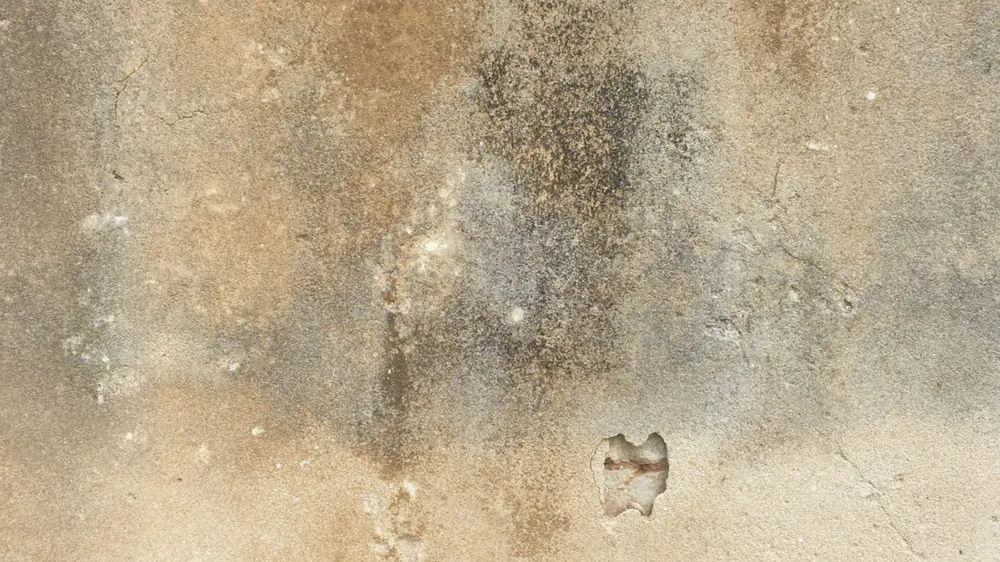
Signs of a water leak in Varna: what you see, what to check, who comes
A stain on the ceiling, a drip, a musty smell or a water meter that will not stand still. This guide goes by what you see, gives the first check you can do yourself, and then tells you which page, and which kind of tradesperson, deals with the cause. Nothing here needs a hammer.
Our clients on video · all videos (in Bulgarian)
The signs of a water leak usually show as a growing stain, a wall that will not dry, a musty smell, a meter that turns with every tap shut, or a bill that jumps. This guide sets them out by place, with a first check you can do yourself — most need only the water meter, a jug of water, a sheet of paper or a piece of plastic — and the page where the cause is explained. For the full picture of how we find a hidden leak without breaking walls, see leak detection in Varna. If the check gives no clear answer, if two signs appear together or the water does not stop, call +359 52 993 333 or email info@kanalvarna.com with photos — write to us in English and we reply in English.
Updated November 2026Signs of a water leak: how to use this guide
One sign can have several causes, and each is put right by a different person. So this page does not explain the causes — it takes you to the page that does.
Sign and cause. The sign is what you see, hear or smell. The cause is the place the water comes from: a pipe, a drain, the roof, a cold wall or damp air. Paint only hides a stain; the cause is what gets repaired.
- Find the sign in the tables below, which go by place. If you have two, start with the one where there is water.
- Do the first check in the middle column. Some need only your attention: when it appears, where exactly, whether it grows.
- Write down the result: a dated photo, the meter reading, the time it drips.
- Open the page in the last column. It has the other checks and says who deals with the cause.
Water stain on the ceiling and damp patches on walls
The commonest call is “it is wet and I do not know where from”. First find out when the water appears: all the time, after rain, after someone showers upstairs, or only in winter.
| What you see | First check yourself | Where it is explained |
|---|---|---|
| A ceiling stain that grows | Draw round its edge in pencil and write the date. If the edge moves after someone has showered upstairs, the water comes from above. | Leak from the flat above |
| A stain on the ceiling of the top floor | Only after rain: the roof. In dry weather too: in the corners on cold days it is more often condensation; in one spot and growing, water trapped in the roof or a pipe. | Roof leak |
| A wet wall that does not dry | Tape a sheet of plastic the size of A4 flat to the wet spot, sealed all round, for at least a day. Droplets on the room side: moisture from the air. Wet on the wall side: the water is in the wall. | Damp survey |
| A damp band low on the wall, with white salts | Does it stay at one height in dry weather too? On a ground floor or in a basement that is more often damp from the foundations than a pipe. | Rising damp |
Flaking paint means the water has been there a long time; a growing stain should not be left to wait.
Bathroom, kitchen and floor
In a bathroom water has many routes: pipes, traps, grout, silicone and the shower tray. The check is almost always the same — run one fitting at a time and look after each.
| What you see | First check yourself | Where it is explained |
|---|---|---|
| Wet around the shower or under the bath | Run the shower, the bath and the basin one at a time. Wet only while the water drains away, dry otherwise: more often the drain or trap than a supply pipe. | Shower leak |
| Grout going dark, and the neighbour below has a stain | Dry the floor and see whether the grout by the shower stays dark for hours after a shower. If it does, the water is under the tiles. | Leaking tile grout |
| Water on the floor, source unclear | Close the stopcock of the flat. If the water stops coming and nobody ran any, the leak is on the supply pipes; if it goes on, it is from a neighbour, the heating or outside. | Water under the floor |
Two wet places in neighbouring rooms often share one cause — a pipe or a drain running behind both. The water meter tells you whether to look in the supply pipes.
Pipes, appliances and the garden
A meter does not tell you where water runs, but it tells you whether it runs from the supply, and that splits the cases in two.
| What you see | First check yourself | Where it is explained |
|---|---|---|
| The meter turns with all the taps shut | Stop every appliance and watch the small wheel on the dial. If it moves, put dye in the cistern first; then note the reading in the evening and the morning without using water. | Leak detection |
| The cistern hisses or fills by itself | Put food colouring in the cistern and use no water for a quarter of an hour to half an hour. Coloured water in the pan: the flush valve leaks. Overflow into the overflow pipe: the fill valve. | Toilet cistern repair |
| A wet patch or puddle in the garden without rain | Switch everything off inside and close the stopcock at the entrance to the house, not the one by the meter. If the meter still turns, the leak is between the meter and the house. | Underground water leak |
Tell us what you see, since when and what the check showed. We say by phone whether a survey is needed, and what kind. Write to us in English and we reply in English.
📞 +359 52 993 333Drains and traps
A drain does not turn the meter and does not run all the time. Most of its signs come when you run water — slow draining, noise, water coming up somewhere else.
| What you see | First check yourself | Where it is explained |
|---|---|---|
| A sink that drains slowly | Is it only this sink, or the bath next to it too? One fitting only: the blockage is usually close to it. | Blocked sink |
| Gurgling when another fitting empties | Run the bath and listen at the basin beside it. Gurgling is often an early sign of a blockage further down the pipe. | Blockage or leak |
| A smell of drains | Pour a jug of water into a trap you rarely use — the floor drain in the bathroom or a basement sink. If the smell goes, the trap had dried out. | Drain smell |
A typical call: “when we run the sink the dishwasher fills, and then water appears on the parquet.” It looks like a leak, but it is almost always a blockage, because the water has nowhere to go. The drain camera shows where the plug is.
Air, windows and furniture
Not every damp patch is a leak. Steam from cooking, showers and washing condenses on cold surfaces, mostly in winter, and it lessens with airing.
| What you see | First check yourself | Where it is explained |
|---|---|---|
| Droplets on the glass in the morning | A room hygrometer reading high in the morning means air that is too damp, so air the room. A low reading with wet glass: cold glass or a bad seal. | Damp survey |
| The bathroom mirror stays steamed up | Hold a sheet of paper to the grille of the running fan, door shut, then ajar. It sticks only with the door ajar: no air comes in. It does not stick at all: the duct or the fan. | Bathroom extractor fan |
When it looks like one thing and is another
The costliest mistake is repairing the wrong place: a bathroom broken open without a leak, new grout when the pipe is leaking. These pairs are mixed up most often.
- A leak under the bath may be a drain: it is wet only while the water empties and the meter stands still. See blockage or leak.
- A leak in the wall may be condensation: it is on cold places, in corners and round windows, and lessens with airing.
- Plain damp air may hide a leak that your own dehumidifier is masking: the tank fills for weeks and the stain stays in one place.
- A leak from the flat above may be a shared riser, your own pipe in the wall or the roof. Ask the neighbour to close their stopcock for a day; if the stain grows anyway, it is not from their supply. See leak from the flat above.
- A faulty meter may be a leaking cistern: the meter turns slowly and stops when you close the cistern tap.
What to write down before you call
With these notes we can tell you more exactly by phone whether a survey is needed, and what kind.
- What you see and where exactly — room, wall, height — with two photos, one close and one from a distance.
- Since when it has been there and whether it grows; a dated photo beats memory.
- When it appears: all the time, after rain, after a shower upstairs, only in winter.
- What the meter showed with all taps shut.
- What you have tried already and who has been to look.
- The floor, flat or house, and what is above you — a flat, the roof or a terrace.
Do not break tiles to see. If the water does not stop, close the stopcock. If it is near a light, a socket or an appliance, switch the power off at the fuse board, but only if you can reach it without stepping into water; otherwise do not go in and call an electrician or 112.
Call between 06:00 and 23:00, every day. A drain we clean and check with our drain camera; a leak we find, and the repair is for the craftsmen we work with or one of your choice.
Frequently asked questions
I do not know what it is — which check first?
Start with the water meter. Stop all taps and appliances and see whether the small wheel on the dial moves. If it does, put food colouring in the cistern first, because that is a common cause; if that is fine, water is escaping from the pipes. If the meter stands still, a drain, rain, heating, damp air or the neighbour above is more likely.
The meter stands still and the wall is wet — so there is no leak?
Not necessarily. A still meter says the supply pipes after it are not leaking, but the water may come from elsewhere: a drain, the heating, rain through the balcony or facade, the neighbour above or condensation. Note when the water appears and compare with the tables above.
Do you come only to say what it is?
Yes, that is what a survey is for: we measure, look with instruments and tell you what we found and who puts it right. A blocked drain we clear ourselves.
I live abroad and the flat is let — can you deal with it?
Yes. Write to us in English and we reply in English. Email the address, photos and what the tenant has noticed, and tell us who will open the door — a neighbour, the building manager or a caretaker — and we say by phone whether a survey is needed and when we can come.
Related pages
How a hidden leak is found without breaking walls Mould and damp in Varna
Leak, condensation or a cold wall Blockage or leak
When it is not clear whether it is a drain Leak from the flat above
When the water seems to come from upstairs Loft insulation
A cold top-floor ceiling that sweats in winter
The check gave no clear answer?
Tell us what you see, since when and what the check showed. We say by phone whether a survey is needed, and what kind. Write to us in English and we reply in English.
📞 +359 52 993 333or email info@kanalvarna.com — write in English and we reply in English.
Send us a message
Leave your name and a phone number with the country code. Add your email if you prefer a written reply — write in English and we reply in English. We confirm the price before any work starts.