Underground water leak in the yard near Varna: found without digging up the whole garden
A water meter that keeps turning with every tap closed, a patch of grass that never dries, a water bill that has suddenly jumped — the pipe between the meter and the house may be leaking underground. We first establish where the leak is, then narrow it down, and dig only where we have narrowed it to a short section. Every day 06:00–23:00.
Our clients on video · all videos (in Bulgarian)
An underground water leak in the yard is checked with the water meter first: close every tap and anything that draws water, then watch the small wheel on the meter dial. If it turns, water is escaping somewhere after the meter. Close the valve where the pipe enters the house — if the meter keeps turning, the leak is in the pipe between the meter and the house. We then narrow it down section by section with valves and a pressure gauge, listen along the route, and dig only where doubt remains. Acoustic leak detection starts from €36, and we tell you the price of the survey before we come. We work every day 06:00–23:00. Call +359 52 993 333 or email info@kanalvarna.com — write to us in English and we reply in English. You pay after the job, in cash, by card or by bank transfer.
Updated November 2026Water meter first: is the leak in the yard or in the house?
The quickest way to know whether you have an underground leak is the water meter. When nobody on the property is using water, it should stand still. If it moves, water is escaping somewhere after it. The next steps tell you whether that is in the yard or inside the house.
- Stop everything that draws water. Taps, washing machine, dishwasher, automatic watering, a pool or tank being filled. Also check the toilet cisterns — is water trickling into the bowl?
- Look at the small wheel on the dial. Most mechanical meters have a small wheel next to the figures. It turns with even a tiny flow, long before the red figures for litres move.
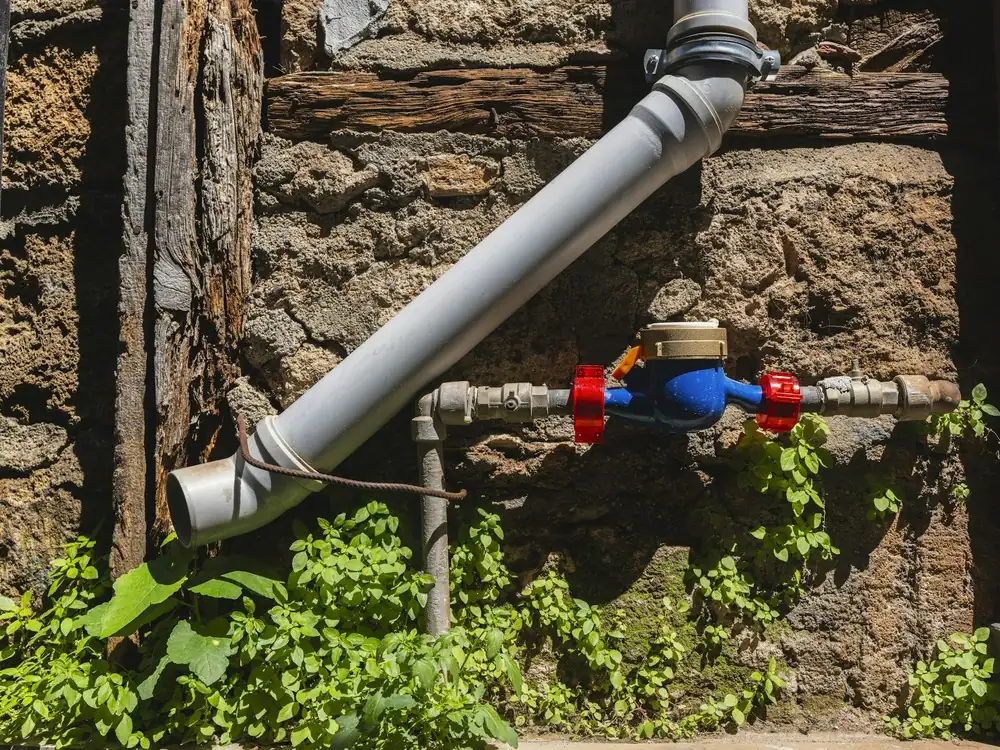
- Close the valve where the pipe enters the house. If the meter now stops, the leak is inside the house — see leak detection. If it keeps turning, the leak is in the pipe between the meter and the house, or in a branch from it: a garden tap, watering, an outbuilding. An old valve sometimes does not close fully, so on site we repeat the check with a pressure gauge.
- No valve at the entrance? Then we separate the yard from the house on site, by closing the line temporarily and testing the pressure.
If the meter stands still but dirty water comes up in the yard, it is a drain, not the water pipe: see blocked outside drains.
Whose leak is it — yours or the water company's?
The pipe after the water meter is normally the owner's. The section before the meter is most often the water company's (ViK Varna): if water comes out before the meter, report it to them, because that water does not pass through your meter. If you are not sure where the boundary lies at your property, ask ViK Varna.
Signs of an underground water leak
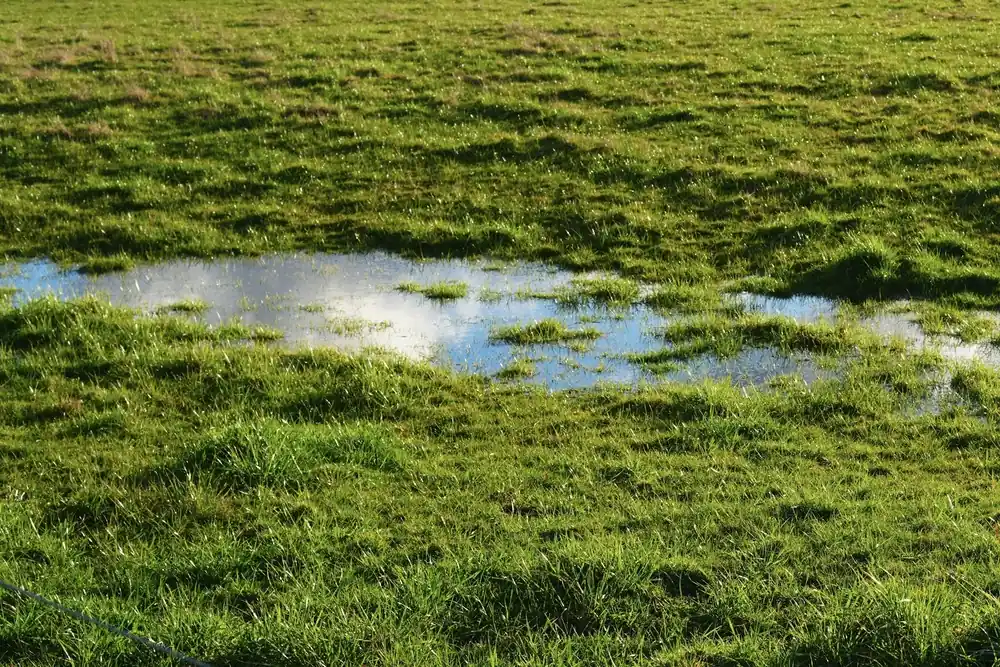
An underground leak is rarely visible where it actually is. The water follows the trench in which the pipe was laid and comes up at the lowest point, or where the soil lets it through. A wet patch shows the direction, but not necessarily the spot.
| What you see | Likely cause | First check |
|---|---|---|
| A wet patch that does not dry in dry weather | A leak on a nearby pipe or higher up the route; sometimes a cracked drain | The water meter with the taps closed; if it stands still, a camera inspection of the drain |
| A strip of greener grass in summer | The leak is watering the grass from below, along the pipe route | Compare the strip with the route of the pipe |
| Paving, a path or the lawn sinking | Water is washing the soil away under the surface | The water meter; do not walk or drive on the sunken area |
| Water in the meter chamber | A leak at the meter connections or in the pipe next to the chamber; sometimes rainwater or groundwater | Dry the bottom and watch where the water comes in from |
| The pressure pump starts by itself when nobody is using water | A loss on the pressurised pipes, or a non-return valve letting water run back to the well | Close the valve to the house and see whether the pump still starts |
Water that collects only after rain and disappears in dry weather, with the meter standing still, is probably not the water pipe.
How we search, step by step
First we prove the leak is in the yard, then we divide the pipe into sections and listen on the ground only where doubt remains, so any digging is small and in the right place.
- Look at the meter chamber. Meter, valves, connections, water on the bottom. Some leaks are still here.
- Meter test. All taps closed; we watch the meter wheel with the entrance valve open and closed.
- The route of the pipe. Where the pipe runs, what it is made of and when it was laid. Old building photos, valves and branches along the way, and the point where it enters the house all help.
- Dividing with valves. If there are branches — to a summer kitchen, a watering system, a second building — we close them one by one and watch the meter.
- Pressure test in sections. We close a valve, fit a pressure gauge and see whether the pressure falls in the closed section. Where it falls, the loss is in that section — provided the valves seal properly.
- Acoustic detector on the ground. In the narrowed area we listen for the sound of escaping water along the route. How this works is explained in acoustic leak detection.
- Thermal camera — only for hot water. If a hot-water pipe runs under the yard, for example to another building, the heat sometimes shows on the surface. On a cold supply pipe it usually does not help.
At the end we mark the spot or the section and give you a written report with photos and measurements. If you need a written report for your insurer, ask when you book.
Tell us what the meter does with all taps closed and how far it is from the house — we tell you the price before we start and when we can come.
📞 +359 52 993 333What makes the search harder: plastic pipe, depth and concrete
Not every underground leak can be marked to the centimetre. Plastic pipe carries the sound less well than metal, a deep pipe is harder to hear, and concrete or paving stops the water coming up. In these cases we narrow the area, and sometimes a trial hole is needed.
- Plastic (PE) pipe. Blue or black polyethylene pipe muffles the sound, so it is heard only close to the leak. Here we rely more on the pressure test section by section.
- Depth. The deeper the pipe, the weaker the sound at the surface — and the wet patch may appear far from the leak.
- Under concrete and paving. The water runs under the slab and often comes out at its edge, in a manhole or by the foundations. Sometimes the spot can only be confirmed by opening it up.
We suggest a trial hole only when the area has been narrowed to a short section, never along the whole route, and we say beforehand where, why and what we expect to find. If the spot is under concrete, we talk through whether it is more sensible to open it there or to lay a new line around it.
A shared supply, and what happens once the leak is found
Shared supply to several houses. Sometimes one meter serves several houses and the pipe crosses several gardens. We close the branches one by one, read the separate meters if there are any, and pressure-test where needed; the report shows which section is losing water. Who pays for the survey, the repair and the lost water is for you to agree between yourselves, ideally before the visit — we do not decide that. Make sure we can reach every meter chamber and valve.
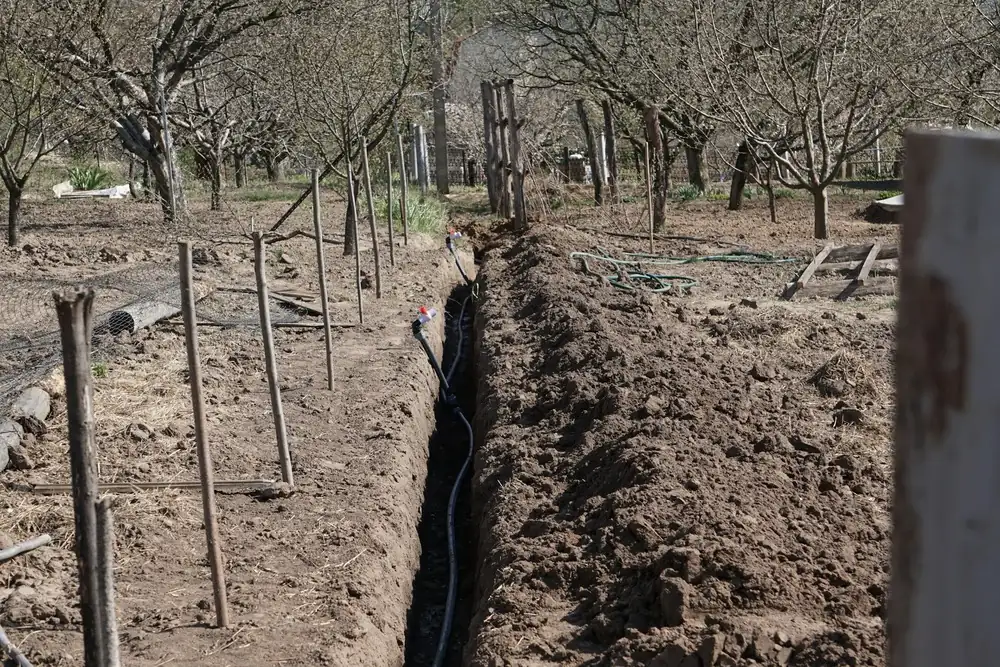
After we find it. Usually a small hole is dug, the damaged piece or joint is replaced, and the pipe is covered over again. Fixing a leak is from €40; for a bigger job we give you the price once we have seen it. Before the hole is filled in, the water is turned back on and the meter checked again — that shows whether there is a second leak. If the line is old, corroded, already patched, or leaks in different places, a new pipe on a new route can work out cheaper than more searching and digging on the old one. We give you that as an option, with the pros and cons, and you decide.
If you are not in Bulgaria
Many people who write to us in English own a house near Varna that stands empty for much of the year, and a meter that keeps turning while nobody is there is the clearest sign of an underground leak. Ask the person with the keys to photograph the meter with every tap closed, and again an hour later, and send us those photos with the address and their contact.
Someone has to be there to open the gate and the meter chamber. After the visit we let you know what we found, and you can pay by bank transfer. For a house that stands empty, a property check is worth considering.
What to tell us before we come
- Does the meter turn with every tap closed, and does it stop when you close the valve at the house?
- How far is the meter from the house, and does the pipe run under concrete, paving or a driveway?
- Is there a pressure pump, your own well, or a shared supply with other houses?
- A photo of the meter, of the meter chamber and of the wet area.
From this we decide how to search and tell you the price of the survey before we come. Acoustic leak detection starts from €36; the price list has the rest. We work in Varna and in the villages and holiday-home areas around it, such as Avren, Beloslav, Aksakovo, Kichevo, Zvezditsa, Topoli, Evksinograd, Trakata, Izvorsko and Priboy.
Frequently asked questions
The meter turns but nothing in the house is leaking. What do I do?
First check that nothing is drawing water — garden watering, cisterns, a tank filling. Then close the valve where the pipe enters the house. If the meter still turns, the leak is in the yard. If the leak is strong, close the valve after the meter until we arrive, and photograph the reading.
Will you dig up the whole yard?
No. We narrow the area first with the meter, pressure tests and listening on the ground, dig only where doubt remains, and tell you where and why beforehand. Under concrete, we discuss whether to open it or lay a new line.
I'm not in Bulgaria. Can you still deal with it?
Yes. Send us the address, photos of the meter and the contact of whoever can let us in. We arrange the visit with them, let you know what we found, and you can pay by bank transfer.
Can I contact you in English?
Yes — write to us in English by email at info@kanalvarna.com or through the form on this page, and we reply in English. The phone number is +359 52 993 333.
Water meter turning?
Tell us what the meter does with all taps closed and how far it is from the house — we tell you the price before we start and when we can come.
📞 +359 52 993 333or email info@kanalvarna.com — write in English and we reply in English.
Send us a message
Leave your name and a phone number with the country code. Add your email if you prefer a written reply — write in English and we reply in English. We confirm the price before any work starts.