Leak or blocked drain in Varna? Wet under the bath, gurgling, a stain in the flat below
Wet under the bath, a toilet that gurgles, a stain in the flat below? Before you break any tiles, notice when it gets wet. That tells you whether it is the water supply or the drain.
Our clients on video · all videos (in Bulgarian)
Leak or blocked drain? It comes down to one question: is it wet even when nobody uses any water? If yes, and the water meter turns with every tap closed, it is a supply pipe leak and needs leak detection. If it gets wet only after a bath, a wash or a flush, it is more likely the drain, either blocked or leaking at a joint. A drain pipe is from €49, a CCTV camera from €59, and thermal camera leak detection €52 for the first flat. Call +359 52 993 333 or email info@kanalvarna.com — write to us in English and we reply in English. We work every day from 06:00 to 23:00.
Updated November 2026Leak or blocked drain: one question decides it
Does it get wet even when nobody in the flat is using water? If the stain keeps growing while everyone is asleep and the water meter turns with every tap closed, the supply pipe is leaking. If it gets wet only after a bath, a wash or a flush, it is more likely the drain: blocked, or leaking at a joint. Sometimes it is a mixer tap or the grout under a shower that leaks only while the water runs.
The supply pipe is always full and under pressure, so a damaged pipe loses water all the time, even when no tap is open. The drain has no pressure: water passes through it only when you empty a sink, bath or cistern. So a drain leak comes in waves — wet after use, dry in between. For the supply pipe you need leak detection; for the drain, unblocking or a camera in the pipe. Other blockages are on the main blocked drains page.
The water meter test, which you can do yourself
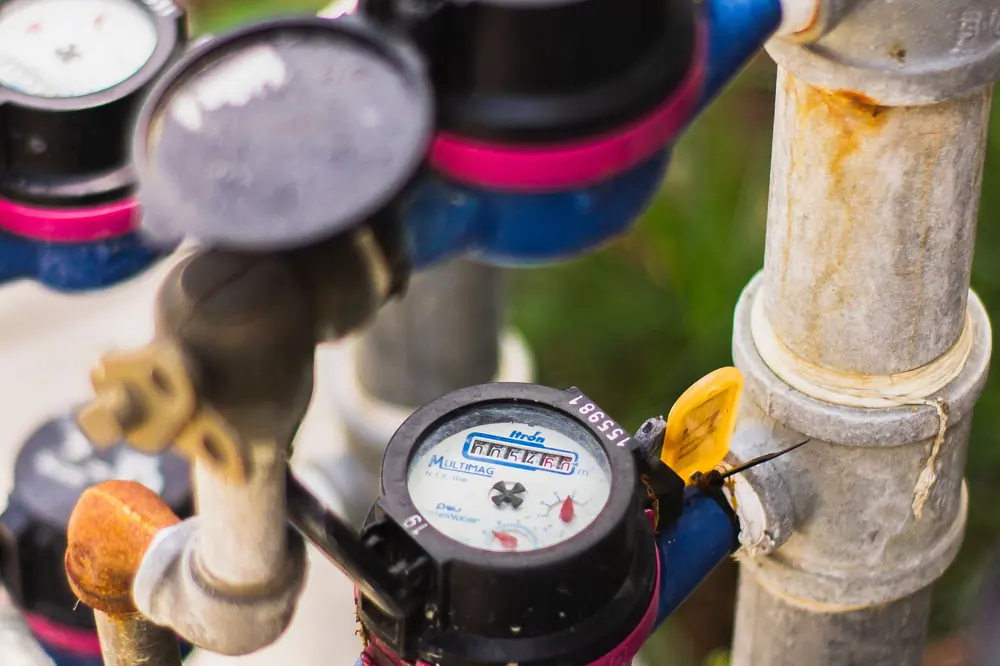
- Close every tap. Stop the washing machine and the dishwasher. If a cistern runs quietly into the bowl, the meter will turn without a leak in the wall.
- Photograph the dial. On most meters a small wheel turns even when the flow is barely visible.
- Use no water for at least half an hour. Photograph the dial again. If you have two meters, for cold and hot water, look at both.
- Compare. Different numbers mean the supply pipe is leaking. If they stay the same, check the drain. Heating is a separate system and the meter does not show its leaks.
Then the drain: dry the spot and use one fitting at a time — sink, shower or bath, cistern — checking after each one. If the wet only appears when two fittings run together, or when the washing machine empties, the blockage is further down, where the pipes join. If there are people living below, use only a little water.
A stain, a puddle or a drip: what each suggests
| What you see | More likely cause | What to do |
|---|---|---|
| Always wet, the meter turns | A leak on the supply pipe | Close the stopcock after the meter; you need leak detection |
| Drips at the neighbour's only while you shower | The floor drain, the shower trap or their link to the drain | Do not use the shower; see blocked floor drain |
| Wet under the bath after bathing | The trap, the overflow or the link to the floor pipe | Check through the access panel; a cracked trap is replaced |
| Water drains slowly and the pipe gurgles | A blockage further down the drain | Unblocking; if water comes up elsewhere, see drain backing up |
If the meter is still and the stain grows even on days when the bathroom is not used, the cause may be the heating, or the roof or a terrace above. Tell us when you write.
Wet under the bath: trap, overflow or pipe
Under a bath the water usually comes from one of three places: the trap, the overflow or the link between the trap and the pipe in the floor. When the water appears tells you which.
- Only with a full bath — water reaches the overflow below the tap and gets past its seal. Fill the bath to just under the overflow: if it stays dry, you have found the spot.
- Every time you empty it — dripping from the trap nuts or the connection to the drain. While water passes, the joint is under water and leaks; between emptyings it is dry.
- The bath drains slowly or water comes up in the floor drain — a blockage further down. Water rises in the pipe and finds the weakest joint.
You reach the area under a bath through the access panel in the tiling. If there is none, do not break tiles blindly: if it is the drain, we clear it first and test with water. See also blocked bath.
Gurgling and slow draining: what they say about the drain
Gurgling together with slow draining usually means a blockage, not a leak. In a narrowed pipe the water runs down as a solid plug and pushes air in front of it; the air comes back through the nearest water seal, so a toilet or floor drain gurgles when you run the bath. The blockage is further down than the trap you are using if a different fitting gurgles, several outlets are slow together, or water stands in the floor drain after the washing machine.
We clear these without breaking anything, through the trap, the toilet opening or an inspection hatch. If it gurgles only when the neighbours above run water, the stack ventilation is more likely: see drain smell. If only the toilet is affected, read blocked toilet.
Tell us when it gets wet — always, or only after using water — and what the meter showed. We tell you which check should come first.
📞 +359 52 993 333Water in the flat below: from the drain or from the supply pipe
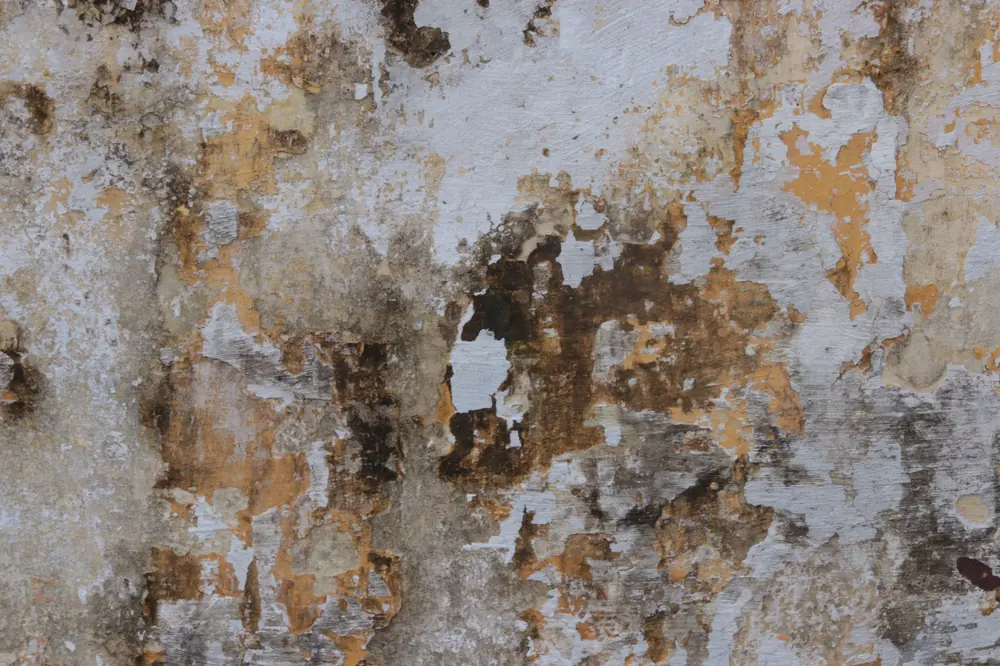
If your neighbour below sees drips only while you use the bathroom or kitchen, it is most likely the drain; if it drips when nobody is at home, the supply pipe is more likely. Check together: you run water at one point — shower, bath, cistern — and they watch the ceiling. A stain that darkens after a shower points to the floor drain; after the cistern, to the toilet's link to the drain. A stain that grows while no one upstairs is using water calls for the meter test and leak detection.
A drain leak to the floor below can come from a blockage, not a broken pipe: the water cannot get away and escapes through a joint that is otherwise dry. Sometimes the dripping stops after clearing; if not, a camera can show a displaced joint or a cracked pipe. If the leak comes from the stack, that is usually a shared part of the building and a matter for the building manager; if from a branch inside a flat, for that flat's owner. We do not decide who pays. If you need a written report for your insurer, ask when you book, and ask the insurer first which document they want.
What we can check: the drain and the supply pipe
We check both, with different instruments, so we first agree with you which check to start with.
- A camera in the drain — shows a cracked pipe, a displaced joint or standing water. See CCTV drain survey.
- Unblocking — through the trap, the toilet or a hatch, then a water test.
- The supply pipe — a thermal camera, moisture meters and an acoustic instrument find where it leaks. A separate service.
We ask when it gets wet and what the meter showed, look at the stain, the traps and the base of the toilet, and run water one fitting at a time. If it gets wet only when water is used and drains slowly, we clear the drain and test it; if it still leaks or returns, we look inside the pipe. If the meter turns, we arrange a leak check. A cracked pipe is a separate repair. We give you the price before we start.
Until you know which it is: do not break, seal or paint
- Do not break tiles blindly — the stain is often not above the place where the water escapes.
- Do not apply silicone around the area: it hides the trace and the water carries on underneath.
- Do not pour a drain cleaner into a pipe that leaks: it runs out with the water. If you have already poured something in, tell us what.
- Do not run the washing machine or fill the bath, and do not paint over the stain until it is dry and checked.
When it turns out to be the drain, and when you do not need us
Calls about a ‘leak’ that turn out to be the drain have one thing in common: it gets wet only after water has been used. A bucket emptied into the toilet and water coming out at the side looks like a leaking collar, but may be a blockage further down.
- The cistern sweats. In damp weather drops collect on a cold cistern and run to the base. Wipe it and watch, without flushing.
- The meter turns with every tap closed. You need a leak check, not unblocking.
If you own the flat and are not in Bulgaria
A typical message from an absent owner: the guest or the neighbour below reports water, and you cannot tell whether it is the drain or a pipe. Ask them for the two meter photos and a photo of the wet place, and tell us when it gets wet. Send them with the address and the name and phone number of whoever can open the door. We tell you which check should come first, arrange the visit with that person, let you know what we found, and you can pay by bank transfer.
Frequently asked questions
My insurer wants a report. What should I do?
Ask the insurer first exactly which document they want and from whom. While nothing has been touched, photograph the wet place, note when you noticed it and what the water meter shows. Do not paint or repair before the insurer has said whether they will inspect. For drain unblocking we issue an invoice; if you need a written report for your insurer, ask when you book.
How much does the check cost?
It depends which check is needed: a drain pipe from €49, a CCTV camera from €59, thermal camera leak detection €52 for the first flat and €26 for each further flat, and moisture meter readings from €30. We give you the price before we start. See our price list.
I'm not in Bulgaria. Can you still deal with it?
Yes. Send us the address, the meter photos and a photo of the wet place, and the contact of whoever can let us in. We tell you which check comes first, arrange the visit with them, let you know what we found, and you can pay by bank transfer.
Can I contact you in English?
Yes — write to us in English by email at info@kanalvarna.com or through the form on this page, and we reply in English. The phone number is +359 52 993 333. We work every day from 06:00 to 23:00 and do not go out after 23:00.
Wet, and not sure whether it is a leak or the drain?
Tell us when it gets wet — always, or only after using water — and what the meter showed. We tell you which check should come first.
📞 +359 52 993 333or email info@kanalvarna.com — write in English and we reply in English.
Send us a message
Leave your name and a phone number with the country code. Add your email if you prefer a written reply — write in English and we reply in English. We confirm the price before any work starts.