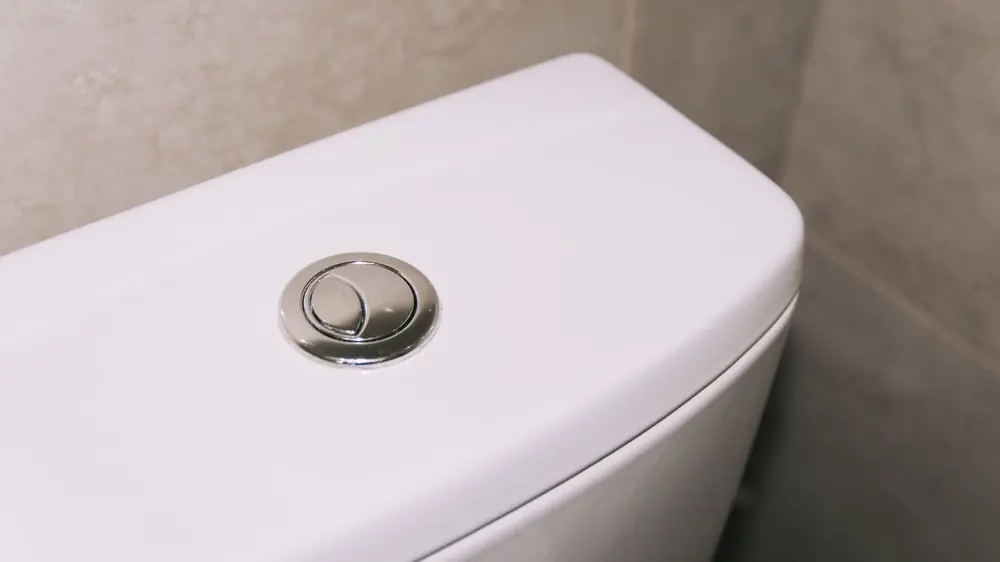
Toilet cistern repair in Varna: a toilet that keeps running or refilling
The toilet keeps running, the cistern refills by itself, or water trickles into the bowl? We find which part is letting water through and replace it. A concealed cistern is repaired through the flush-plate opening, without breaking the wall.
Our clients on video · all videos (in Bulgarian)
Toilet cistern repair in Varna is nearly always the replacement of one of two parts inside: the fill valve with its float, which will not stop the water, or the flush valve at the bottom, which does not seal and lets water seep into the bowl. Kanal Varna finds which one it is, and the plumbers we work with replace only the faulty part where that is enough, including in concealed cisterns, through the opening behind the flush plate and without breaking tiles, as long as parts exist for the model. We tell you the price of the part before it is changed. Call +359 52 993 333 or email info@kanalvarna.com — write to us in English and we reply in English. More jobs: plumber in Varna.
Updated November 2026A toilet that keeps running: which of the two valves is it?
A leaking cistern has almost always one of two causes. Either the fill valve does not shut off the water when the cistern is full, or the flush valve at the bottom does not close tightly and water seeps into the bowl. Telling them apart is half the repair.
The flush valve is the mechanism at the bottom that lifts when you press the button and lets the water into the bowl. It then drops back and its rubber seal plugs the outlet. The fill valve is where the water comes in. The float rises with the level and closes the valve when the cistern is full; if the valve does not close completely, the excess runs down the overflow pipe into the bowl. Water in Varna is hard, so limescale on the seals and seats is a common cause of both.
| What you notice | Likely cause | What we do |
|---|---|---|
| A thin trickle down the back of the bowl, almost silent | Flush valve does not seat: hardened or deformed seal, limescale, dirt | Clean it or fit a new seal; if the mechanism is worn, a new flush valve |
| The cistern "refills by itself" for a few seconds, though nobody flushed | The same: water seeps out slowly, the level drops and the fill valve tops it up | As above |
| Constant refilling, hissing, water pouring into the overflow | Fill valve does not shut: worn seal, limescale, a float that sticks or is set too high | Clean, adjust the level or fit a new fill valve |
| Will not flush, or flushes weakly | Broken or displaced lever, sticking button, water level too low | Adjust or replace the lever or the button |
| Water under the cistern, outside | Seal between cistern and pan, bolts, the cuff, the hose or the isolating valve | New seal and tightening; replace the hose or the valve |
| Cistern wet and dripping on the outside, but inside is fine | Condensation: cold water makes the cistern sweat in humid weather | Not a mechanism fault; ventilating the bathroom helps |
Exposed, close-coupled or concealed cistern
How the cistern is repaired depends on its type. With an exposed cistern or a close-coupled one you lift the lid and the mechanism is in front of you. A concealed cistern sits in the wall behind the tiles, and you reach it only through the opening behind the flush plate. So when you contact us, say which one you have.
- Exposed (wall-mounted). Hung on the wall above the pan and connected by a pipe and a rubber cuff, from the old high-level type with a chain to lower plastic ones. Water enters at the side or from below, which decides which fill valve fits.
- Close-coupled. The cistern sits on the back of the pan, bolted through a rubber seal. The mechanism inside is like the exposed type. If it leaks on the outside under the cistern, the seal or the bolts are the usual cause.
- Concealed. A plastic tank, normally in a metal frame behind the wall. Only the button, usually dual, is visible. The parts are specific to the maker and model, but they are designed to be taken out and replaced through the button opening.
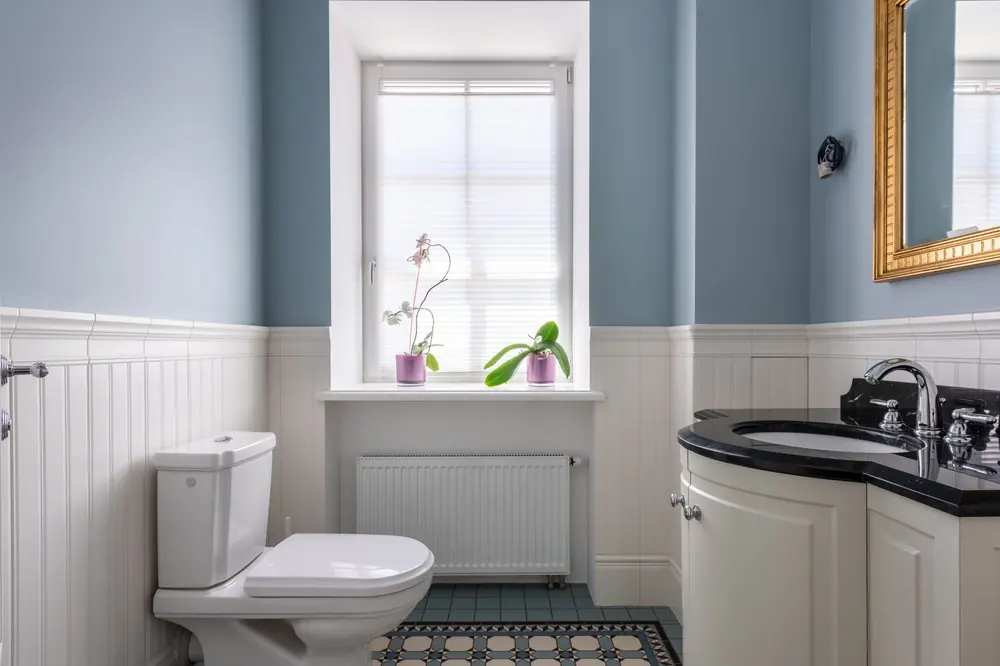
If you are replacing the whole toilet, or going from floor-standing to wall-hung, that is a different job: toilet installation.
Dye test: how to check which valve leaks
The simplest home check uses a bit of dye in the cistern. If the colour reaches the bowl without anyone flushing, the flush valve leaks. If there is no colour but water keeps running, look at the level: when it reaches the top of the overflow pipe and runs down it, the fill valve is at fault.
- Take the lid off. A porcelain lid is heavy and breaks easily, so put it somewhere safe.
- Put a few drops of food colouring into the cistern water, not the bowl.
- Do not flush. Wait 15 to 30 minutes.
- Look at the bowl. If the water in it is coloured, the flush valve leaks.
- If there is no colour, check the level. It should sit a little below the top of the overflow pipe. If it reaches the top and runs down, the fill valve does not shut.
A second test: close the isolating valve on the pipe to the cistern and mark the level. If it has dropped after an hour or two and the outside is dry, the water is leaving through the flush valve. A running toilet can also be what raises a water bill; if the meter turns when everything is off and the cistern is dry, the leak is elsewhere, and leak detection finds it.
Tell us what it does and what type of cistern you have. We tell you the price of the work before we come.
📞 +359 52 993 333Concealed cistern: repaired through the button opening
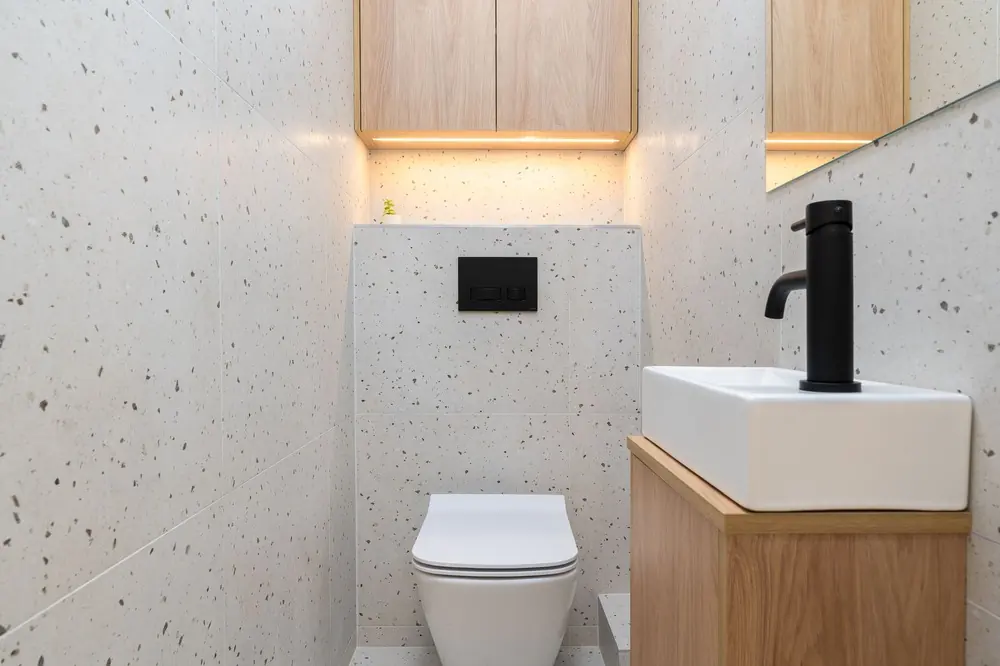
A concealed cistern is repaired from the front, through the opening behind the button, with no tiles or wall broken. The fill valve and the flush mechanism are designed to be taken out from exactly there. The condition is that spare parts exist for the model. The plumber removes the plate with the button and the frame behind it, closes the water, takes out the faulty part, cleans it or fits a new seal, puts everything back and flushes a few times to test.
If you are abroad, a photo helps us order the right part:
- a photo of the front of the button, since the shape often shows the make;
- if the plate comes off easily, a photo through the opening: there is often a label or marking on the model inside;
- what exactly happens: it runs into the bowl, refills constantly, or the button does not flush;
- roughly how old the cistern is, if you know.
If parts for an old or unknown model are no longer available, we tell you before we start and discuss the options. Sometimes a compatible part exists; sometimes the cistern has to be replaced together with its frame, and that means opening the wall.
Repair a part or replace the mechanism?
We change only the faulty part when that is enough: a seal, a float, a lever. We replace the whole mechanism when the plastic is cracked, when there are no parts for it, or when it is so worn that it will soon leak somewhere else after one repair. For exposed and close-coupled cisterns there are universal mechanisms.
- You describe it. Tell us what happens and what type of cistern you have. We tell you the price of the work before we come.
- Check on site. The plumber confirms which part leaks.
- Price of the part. It depends on the model, and we tell you before we replace anything. If a part has to be ordered, we tell you so beforehand.
- Repair. The faulty part, or the whole mechanism, is replaced.
- Check. Several flushes, the water level, dry joints on the outside. We issue an invoice on request; you pay after the work in cash, by card or by bank transfer.
If water also stands in the bowl and drains slowly, the problem is not the cistern but a blockage: see blocked toilet. And if the water heater in the same bathroom has a fault, ask for water heater repair at the same visit.
A running toilet in a flat you let out
It keeps running, often silently, so it can show up on the water bill before anyone notices it. If your guest or cleaner reports it, tell them to close the small isolating valve on the pipe to the cistern. If there is none, or it does not close, shut the water at the main stopcock of the flat. Then send us the address, a photo of the cistern or the button, and the contact of whoever can open the door. We agree the price with you first and you can pay by bank transfer.
Frequently asked questions
The cistern will not stop filling. What do I do right now?
Close the isolating valve on the pipe to the cistern. It is normally on the wall next to or under it; with a concealed cistern it is inside, behind the button. If it does not close or is missing, shut the water at the main stopcock of the flat. That stops the waste while you wait for the repair; the toilet can still be used by pouring a bucket of water into the cistern or straight into the bowl.
The cistern refills by itself every so often. Why?
Almost always the flush valve at the bottom leaks. The water seeps slowly into the bowl, the level falls and the fill valve tops it up for a few seconds. Put a few drops of food colouring in the cistern and look after 15 to 30 minutes: if the bowl is coloured, that is the cause.
Does the wall have to be broken to repair a concealed cistern?
Usually not. The fill valve and flush mechanism come out through the button opening. The wall is opened only if the tank itself is cracked or the model is so old that parts no longer exist.
Can I change the seal or the mechanism myself?
On an exposed or close-coupled cistern, often yes, if you buy a part that fits your model exactly and shut the water first. The hard bits are knowing which part you need and setting the level. On a concealed cistern the parts are specific to the model, so it is worth asking us first.
How much does a cistern repair cost?
It depends on the type of cistern and on the part. We tell you the price of the work before we come and the price of the part once we have seen the model and before it is replaced. Other plumbing jobs with starting prices are on the plumber in Varna page.
I'm not in Bulgaria. Can you still deal with it?
Yes. Send us the address, a photo of the cistern or button, and the contact of whoever can open the door. We agree the price with you before we start, and you can pay by bank transfer.
Can I contact you in English?
Yes — write to us in English by email at info@kanalvarna.com or through the form on this page, and we reply in English. The phone number is +359 52 993 333.
Toilet running or refilling?
Tell us what it does and what type of cistern you have. We tell you the price of the work before we come.
📞 +359 52 993 333or email info@kanalvarna.com — write in English and we reply in English.
Send us a message
Leave your name and a phone number with the country code. Add your email if you prefer a written reply — write in English and we reply in English. We confirm the price before any work starts.