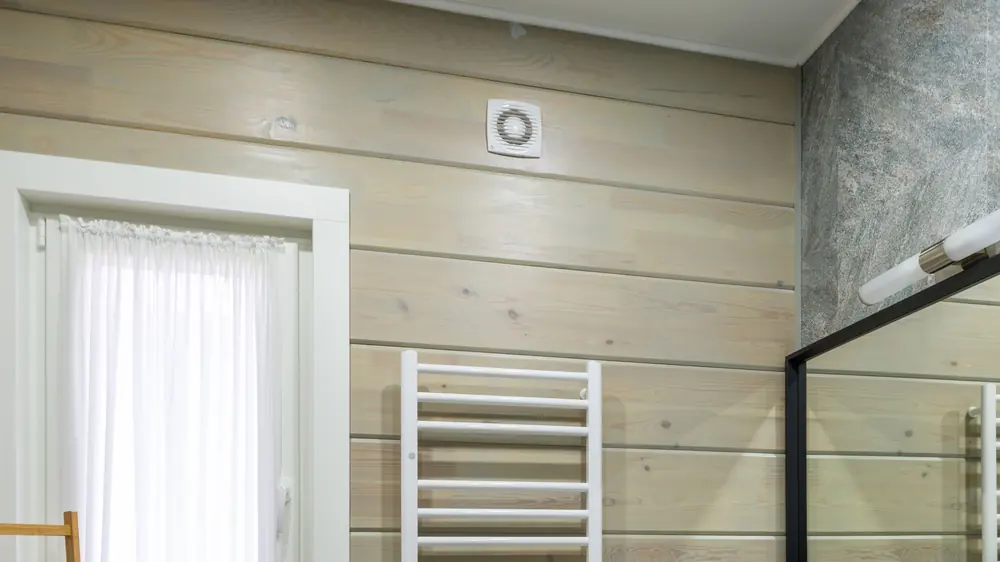
Bathroom extractor fan in Varna: the duct, the flap and the airflow come first
A fan only helps if the duct really leads outside and air can get into the bathroom to replace what it pulls out. We look inside the duct with a camera and test the airflow, then fit the housing, flap and grille. The wiring is done by an electrician.
Our clients on video · all videos (in Bulgarian)
Fitting a bathroom extractor fan in Varna starts with the duct: with a camera we check whether it is shared with the block, whether it is clear and where it leads, and we test the airflow. Then we fit the housing, a non-return flap and the grille. The electrical connection (switch, timer or humidistat) is done by an electrician. This is a new service for us — by phone we tell you whether and when we can take it on. We do not sell fans; we tell you what kind to look for. We give the price by phone after a short description or photos. If the real trouble is mould, see our mould and damp page. Call +359 52 993 333 or email info@kanalvarna.com — write to us in English and we reply in English.
Updated November 2026Fitting a bathroom extractor fan: what it covers
We fit a fan where the duct really leads outside: first a camera in the duct and an airflow test, then the housing, flap and grille. It is a new service for us, so by phone we tell you whether and when we can take your job on.
A non-return flap is a small cover or set of slats in the housing or the duct. It is opened by the air the fan blows out and closes when the fan stops, so air, smells and cold from a shared duct or from outside do not come back into the bathroom.
- inspection of the bathroom and the opening, and a check of the duct with a camera;
- choosing a fan to suit the duct — we do not sell fans, we tell you what to look for;
- widening an existing opening in plaster or plasterboard, a flexible duct, housing, non-return flap and grille;
- an airflow test once the unit is connected.
We do not do the electrical part: the cable, switch, timer, humidistat and the connection in the junction box. It is mains voltage and is done by an electrician. If you do not have one, ask us by phone how to arrange it. If the fan is to go above the bath or in the shower, the electrician decides whether that model suits the spot and how to power it safely. If the problem is one wet patch rather than steam, it may be a leak, and bathroom mould explains how to tell the two apart.
The duct first: a camera inside it and an airflow test
Before a fan is chosen we need to know where the air goes. In Varna bathrooms there are three usual situations.
- A shared ventilation duct in a panel block. Behind the grille is a vertical shaft serving several floors, which draws on its own without a motor. A fan goes in only with a non-return flap, and the housing and duct are not pushed into the shaft, because its cross-section is for all floors. Choose a moderate fan: a strong one can push air into a neighbour's bathroom if they have no flap.
- A duct of your own. In brick buildings and houses each bathroom sometimes has its own duct to the roof. We check that it gets that far and has not been blocked during a renovation.
- An opening straight outside. Through an external wall, most often in a house. Then the outside grille, the flap and the slope matter, described below.
With the camera and endoscope that we also use for drain inspections, we look inside the duct for a bird's nest, debris from an old renovation, a crushed flexible duct or a cover left behind when a grille was changed. A blocked duct is not cured with a stronger fan.
We test the airflow with the bathroom door shut and open. If it pulls with the door open and stops with it shut, the problem is the air supply, not the duct. Never connect a bathroom fan to a flue, a stove outlet or the vent pipe of the soil stack: it would push smoke or smell back into the flat. If there is a gas appliance in the bathroom, it is checked first (see the questions below).
Fogged mirror, noise, smells from neighbours: symptom and cause
Most complaints about a fan come from the duct, the flap or the door, not from the motor. The table shows where we start.
| Symptom | Likely cause | What we do |
|---|---|---|
| Mirror and tiles stay wet long after a shower | The fan is too weak for the duct, the duct is long with many bends, or no air comes in | Camera in the duct and a test with the door shut and open; for a long duct, a different type of fan |
| The fan hums but the grille hardly pulls | A blocked duct, a stuck flap or a crushed flexible duct | We take off the grille, look with the endoscope and clean or replace the part we can reach |
| Black spots on the ceiling and grout | Steam stays in the bathroom | Working ventilation first, then mould removal; a wet patch in one place means we measure for a leak |
| Smell of cigarettes or of other people's cooking | No non-return flap, or it sticks, in a shared duct | Fit or change the flap and seal the housing round the edge |
| Noise and vibration | The housing is fixed rigidly with no rubber mounts, worn bearings, or a duct that rattles | We check the fixing and the duct; a worn motor usually means a new fan |
If black spots return even with a working fan, see mould removal for what happens next.
Tell us whether you are in a block or a house and what is behind the grille, and send a photo — we tell you whether you need a new fan or the duct cleaned first.
📞 +359 52 993 333The opening: an existing one, in plasterboard, or a new one in concrete
It is easiest when an opening already exists: the fan goes straight in or with an adapter, with no drilling.
- An existing opening to a shared duct. If the diameter does not match, an adapter is used or the opening is widened in the plaster. The housing is sealed round the edge so that it draws from the bathroom and not from the gaps around itself.
- A plasterboard ceiling. The opening is cut in the board, the fan sits in the ceiling or further along the duct, and a flexible duct reaches the shaft. An access hatch is left for cleaning.
- A new opening in concrete or a panel. It is made by diamond drilling, done by a firm that has the machine; we do not have one. In a panel block most walls and slabs are load-bearing, so any new hole in a panel, or through the facade, first needs a structural engineer's opinion and a decision by the owners' association.
- An opening through an outside wall of a house. Outside goes a grille with a flap or a rain cap, and the duct slopes slightly outwards, so condensation and rainwater do not run back to the fan.
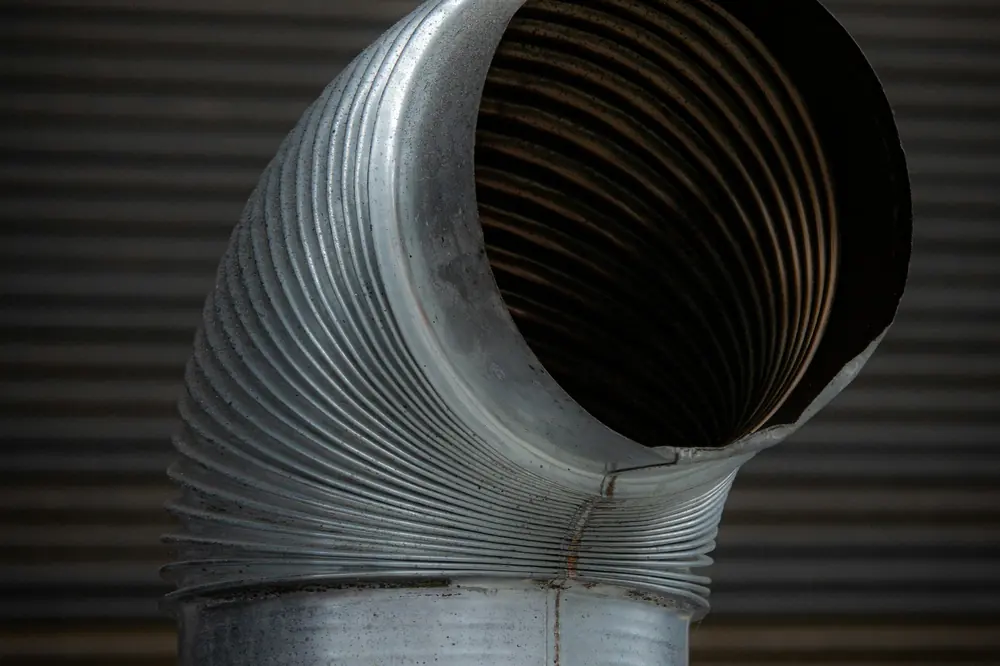
A duct that crosses a cold space, such as an unheated loft, is insulated. Otherwise damp air condenses inside and the water runs back to the grille. Every extra bend in the duct takes away airflow.
How the fitting goes
- A conversation and photos. From a photo of the grille, the ceiling and the opening we can tell whether there is a duct, how long it is and whether drilling is needed.
- A camera in the duct. On site we look along the duct with the endoscope and test the airflow without a fan. If there is a gas appliance in the bathroom, or the duct is shared with a flue, we stop and tell you who has to look at it.
- Choosing the fan. For a short opening in a wall an axial fan is usually enough; for a long duct with bends, a centrifugal or in-line fan holds the airflow against resistance. We look at the flap, the diameter and the noise: a bigger fan on low speed is usually quieter than a small one at full speed.
- Mechanical fitting. We fit the housing, flap, duct and grille, seal the edges and leave room for the cable agreed with the electrician.
- Connection and test. The electrician connects the switch, timer or humidistat. Then we test the airflow with the door shut and check that the flap closes when the fan stops.
The day of fitting and the electrician are agreed by phone once we have seen your photos. You pay after the work.
What to tell us, what the price depends on, and if you are abroad
We give the price by phone or email after a short description, so tell us: block or house and floor; where the grille leads; the diameter of the opening if you can measure it; wall or ceiling, and whether there is a suspended ceiling; whether there is power at the spot and an electrician of your own; whether there is a gas appliance in the bathroom; and close-up and wide photos of the bathroom.
The price depends on whether the opening exists or must be new, the length of the duct and number of bends, any suspended ceiling, the flap and the outside grille, and whether the duct first has to be cleaned. Drilling in concrete and the electrical part are paid separately, to whoever does them. An invoice is available on request. If you are not in Bulgaria, email the photos with the address and the contact of whoever can let us in; we reply in English.
Frequently asked questions
Do you connect the fan to the mains?
No. The cable, switch, timer and humidistat are mains voltage and are connected by an electrician. We fit the housing, duct and flap and leave room for the cable. If you do not have an electrician, tell us by phone and we say how to find one and how to coordinate the day.
A bathroom with no window and no duct — what can be done?
The air needs a way outside: a new opening through an outside wall, or a duct through a suspended ceiling to an existing shaft. A new opening in concrete needs diamond drilling by a firm with such a machine, and through the facade of a block also a decision by the owners' association. From photos and a plan of the bathroom we tell you what is realistic.
Timer or humidistat — which should I choose?
A timer keeps the fan running for a while after you switch off the light, which suits a fan wired to the lighting. A humidistat switches it on by itself when the humidity rises and off when it falls — useful if you dry washing in the bathroom. The choice is yours; the connection is the electrician's.
There is a gas water heater in the bathroom. Can I fit a fan?
Only after a check by a gas company. A fan draws air and can reverse the draught in the flue of the gas appliance, so combustion gases come into the bathroom. The gas company says under what conditions it is safe, and we do not fit a fan until that is clear.
Related pages
Mirror still fogged after the shower?
Tell us whether you are in a block or a house and what is behind the grille, and send a photo — we tell you whether you need a new fan or the duct cleaned first.
📞 +359 52 993 333or email info@kanalvarna.com — write in English and we reply in English.
Send us a message
Leave your name and a phone number with the country code. Add your email if you prefer a written reply — write in English and we reply in English. We confirm the price before any work starts.