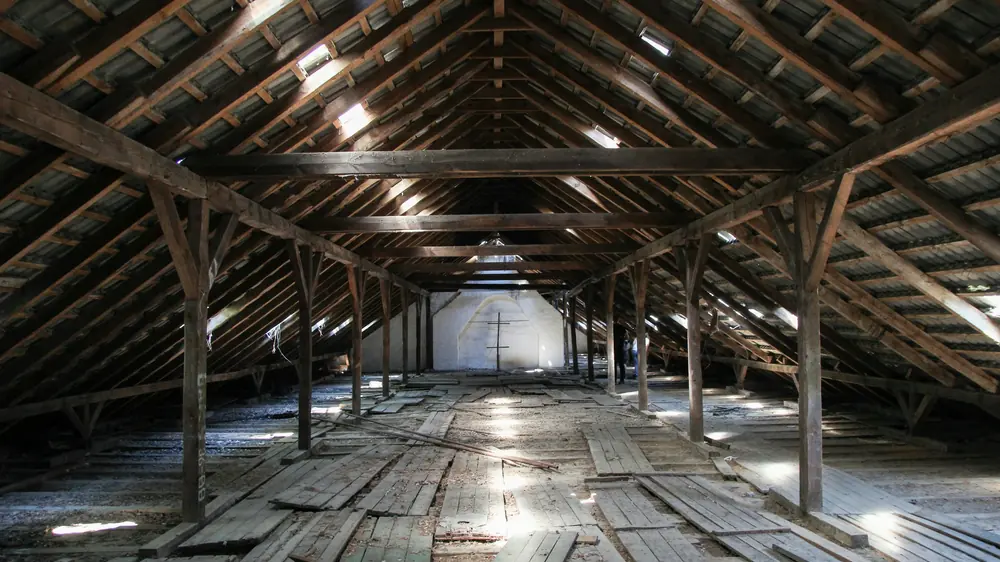
Loft insulation in Varna: top-floor slab and the space under the roof
Mineral wool or blown insulation over the slab above the top floor, or between the rafters of a loft that is lived in. Before anything goes in we look for water in the roof and beams, a contractor then does the insulating, and the thermal camera shows what has been missed.
Our clients on video · all videos (in Bulgarian)
Loft insulation in Varna means mineral wool or blown cellulose laid over the slab above the top floor, or between the rafters when the space under the roof is lived in. Our part comes before and after: we check the roof and beams for a leak, because wet wool does not insulate, and we photograph the ceiling with a thermal camera so that the gaps show. The laying and blowing is done by a partner contractor; we have no blowing machine. This is a newer line of work for us, so by phone we tell you whether and when we can take it on, and we give the price of our part after a short description. This page is part of insulation in Varna. Ring +359 52 993 333 or email info@kanalvarna.com with photos of the loft hatch and the roof timbers — write to us in English and we reply in English.
Updated November 2026Loft insulation: what exactly gets insulated
Insulating a loft means one of two things. If the loft is not heated, you insulate the slab, the concrete or timber floor over the top heated storey. If someone lives under the roof, the insulation goes between and under the rafters instead. Warm air rises and the loft is usually reachable from inside, so this is the easiest part of a house to insulate, and no scaffolding is needed.
Which to choose depends on how you use the space. If it holds only suitcases, insulate the floor: less area, less material, and the loft stays cold and ventilated. If it is a room, or will become one, the insulation moves up into the slopes and a vapour barrier goes on the room side.
A cold wall that cannot be touched from outside is another job, see internal wall insulation. In a block of flats the slab over the top floor belongs to all the owners, so the owners' association decides.
Mineral wool or blown insulation: how a loft is insulated
Rolls and slabs of mineral wool suit a roomy loft with a level slab. Blowing is for low or awkward lofts, an uneven slab and places crossed by many beams and cables.
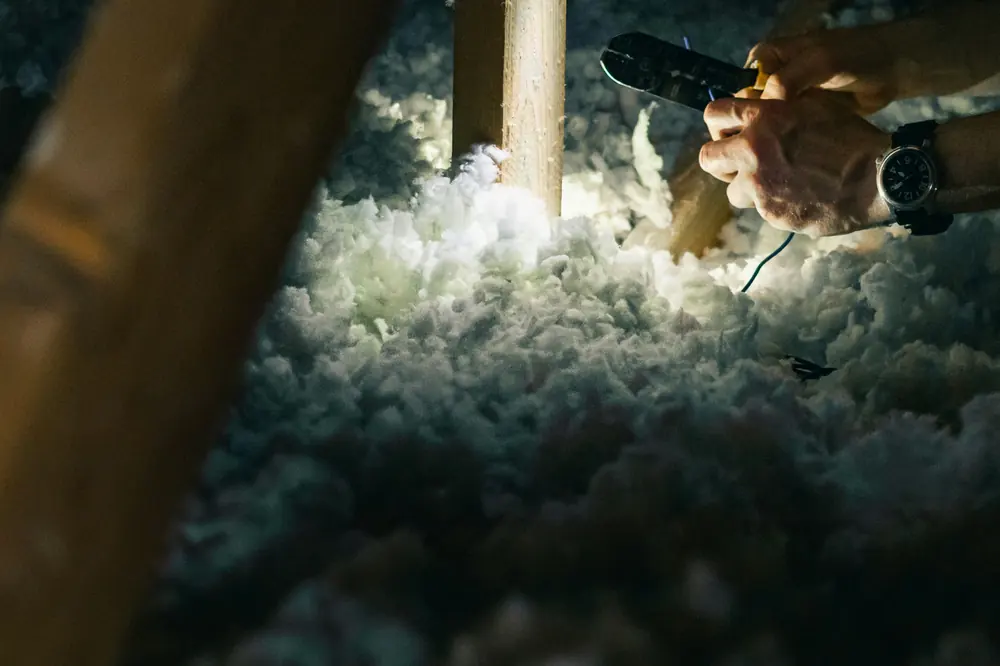
Rolls or slabs. Laid in two layers with the joints staggered so that no gaps remain. They need working room and you must not walk on them.
Blown cellulose or fibre. Loose material blown through a hose into corners and around beams that rolls cannot reach. Cellulose is recycled paper with additives against fire and mould.
Between the rafters. Wool between and under the rafters, a vapour barrier on the room side and a ventilated gap under the roof covering, so the wool never touches the tiles.
We have no blowing machine: blowing is the contractor's work with their machine. Loose fill settles if it is blown at a lower density than the maker specifies, so the contractor watches the depth and the quantity. The thickness is set by a design or a calculation, and we do not promise a thickness by phone.
Dry roof first: wet insulation does nothing
Insulating over a loft that drips is wasted money. Wet wool and cellulose lose much of their insulating ability, slump and hold moisture against the timber and the concrete. So we begin with our main trade, finding water. We look over the beams, boards and slab for dark streaks, measure with a moisture meter and photograph from below with a thermal camera.
If the traces lead to the roof, the spot is found through roof leak detection and the repair is flat roof waterproofing or a roofer's job. Tiles, a new roof and gutters we do not take on. The second reason for a wet loft is condensation: if the space is not ventilated, warm damp air from the flat cools under the roof and drips. The eaves vents stay open; insulation is never pushed into them.
- No dark streaks or mould on the beams and boards.
- No wet patches on the slab after heavy rain.
- No drops or frost under the roof on a cold morning.
- The eaves vents are not blocked by leaves, nests or old wool.
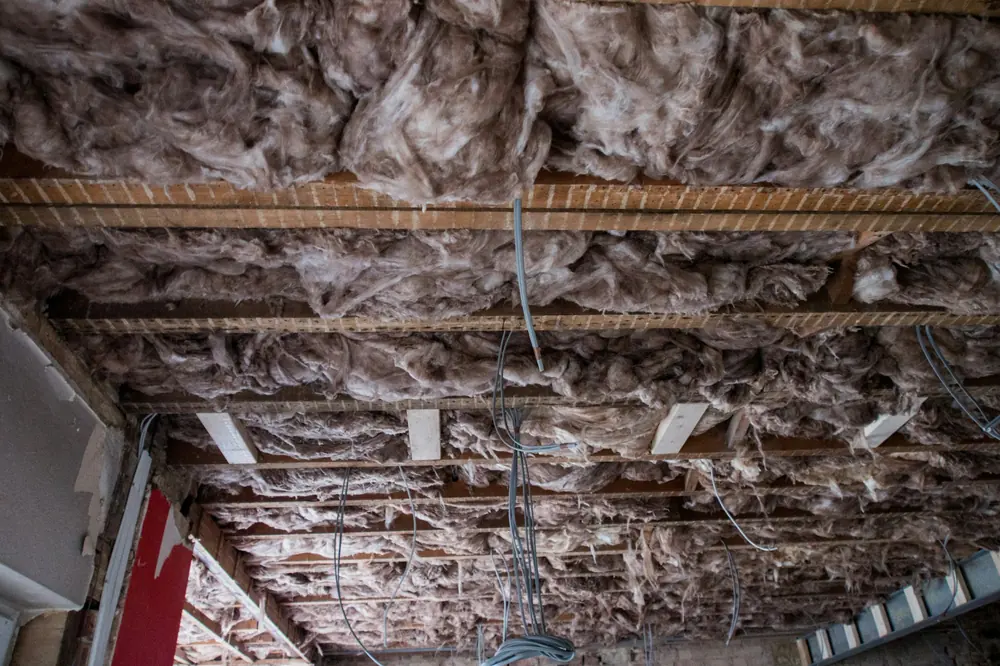
Old mineral wool between the beams with cables running through it is checked before new insulation: is it dry, and what stays? The cables are for an electrician.
Tell us how you reach the loft, whether there is old insulation and whether anything drips; we tell you what to check first and whether and when we can take it on.
📞 +359 52 993 333A cold top floor: sign, likely cause and what we do
| What you see | Likely cause | What we do |
|---|---|---|
| Cold ceiling and mould in the corners of the top floor | Missing or slumped insulation over the slab, a cold edge along the outside walls | Thermal image from below and moisture meter in the corners, then insulation of the slab; mould is dealt with after, see mould removal |
| A dark patch on the ceiling after rain | A roof leak, around the chimney or a roof window | We find where the water enters; insulation comes after the repair |
| Drops or frost under the roof | Closed ventilation and damp air from the flat | We check the eaves vents, the covers, the hatch and the vapour barrier |
| Hot top floor in summer | The slab heats up from the roof and gives the heat back in the evening | Insulating the slab helps in summer too, if the loft is ventilated |
| Old insulation in patches | Moved during repairs, slumped or damp | The thermal image shows the holes; dry wool stays and is topped up |
| Cold around the hatch to the loft | An uninsulated, unsealed cover | The hatch is insulated and sealed together with the slab |
Chimney, cables and access: safety and limits
Insulation is not piled up round a chimney, lamps or cables, because badly laid material there can start a fire or damage the wiring. A gap is left round the chimney with non-combustible material, following the instructions for that chimney, and cellulose and foil do not touch it. If the chimney has not been looked at for a long time, see chimney sweep first. Recessed lights in the slab are not buried, because they heat up, and junction boxes stay reachable.
Anything on 230 V, such as moving or extending a cable, is for an electrician qualified for the job; we do not do it. Where people walk, to the chimney, the water heater or the aerial, a boardwalk on supports goes over the insulation. Access is through a hatch or a ladder from inside. Work from outside above the second storey is for a contractor with scaffolding or rope access. Mineral wool irritates skin and airways, so the contractor wears gloves, long sleeves and a mask and keeps the hatch to the flat closed.
How loft insulation goes, from the call to the check
- Call and photos. You describe the loft: hatch or ladder, pitched or flat roof, old wool or none. You can email photos to us. As this is a newer line of work, we tell you in the call whether and when the contractor can take it on.
- Thermal image from below. In the cold months we photograph the top-floor ceiling from inside: cold patches show where insulation is missing.
- Leak and moisture check. We look over the beams and slab and measure with the moisture meter. If there is a leak, the roof is repaired first.
- Preparation. The loft is cleared, the hatch sealed, a vapour barrier laid if needed, and the chimney, lights and cables marked.
- Laying or blowing. The contractor lays the rolls in two layers or blows the loose fill to the agreed depth, leaving the eaves open.
- Check image. At the first frost we photograph again from below and compare. Missed corners and edges are topped up.
What to tell us and what the price depends on
The price depends mainly on the area, the access and the condition of the old insulation. We give it by phone after a short description or a visit. Tell us:
- how big the slab is, or how many slopes there are;
- how you reach the loft: hatch, folding ladder, a door;
- pitched or flat roof, and how high the loft is at its lowest;
- old insulation, and its condition;
- whether the loft is lived in or will become so;
- a chimney, built-in lights or cables;
- house or block of flats; in a block, whether the owners' association has decided.
If you let the property out or live abroad, tell us who will let us in and where the loft hatch is. We issue an invoice for our part: the thermal imaging and the moisture check. You do not need new insulation if the thermal image is even and the old wool is dry, dense and thick enough, or if the loft drips (then you need the leak found first), or if the mould is only in the bathroom under the loft, where the usual cause is damp air; see bathroom extractor fan.
Frequently asked questions
Do you blow cellulose insulation?
No, blowing is done by a contractor with their own machine; we have none. We check the loft for a leak and damp before, and photograph it with the thermal camera after. Whether cellulose or mineral fibre is used depends on the loft.
Can I walk in the loft after insulation?
Not directly on the wool or the loose fill, because it is crushed and insulates less. If you go up to the chimney, water heater or aerial, a boardwalk on supports goes over the insulation. If the loft is a store, the floor is raised on supports above the insulation.
Can the slab above the top floor of a block be insulated?
Yes, but the roof space and slab are common parts, so the owners' association must decide, and a renovation project is needed when it is part of one. We can photograph the top-floor flats with the thermal camera; the images help the meeting decide.
Is a vapour barrier needed?
Between the rafters of a lived-in loft, yes, on the room side, continuous and with taped joints. Over the slab of a cold loft it depends on the system and the design. The top of the insulation is never covered with airtight plastic: the moisture needs a way out.
Can new insulation go over old wool?
If the old wool is dry, with no mould and no rodent traces, it normally stays and is topped up. Wet, slumped or dirty wool is removed because it keeps moisture against the slab. That is why we measure the moisture first.
When will I see the effect?
On the thermal camera at the first frost, with the flat heated. The top floor usually feels different in the first winter. We do not promise how much you will save; it depends on the house, the heating and the windows.
Do you also insulate or repair the roof?
No. Roof, tiles and gutters are not ours. If the roof leaks we find where the water gets in with the thermal camera and moisture meter, and the repair is a separate job.
Related pages
Walls, loft and renovation: where to start Roof leak
Where the water gets in before you insulate Flat roof waterproofing
A dry roof, then dry insulation Thermal imaging survey
Cold patches on the ceiling before and after Bathroom extractor fan
When the damp comes from the air, not the roof
Cold top-floor ceiling?
Tell us how you reach the loft, whether there is old insulation and whether anything drips; we tell you what to check first and whether and when we can take it on.
📞 +359 52 993 333or email info@kanalvarna.com — write in English and we reply in English.
Send us a message
Leave your name and a phone number with the country code. Add your email if you prefer a written reply — write in English and we reply in English. We confirm the price before any work starts.