Rising damp in Varna: diagnosis first, then an injected damp proof course
A damp band low on the wall, white salts, plaster crumbling just above the floor? Before anyone injects anything, we measure moisture at several heights and rule out a leak, condensation and water from outside. Only then do we tell you whether a damp proof course will stop moisture coming up from the foundations.
Our clients on video · all videos (in Bulgarian)
Rising damp is water from the soil climbing through the pores of brick and stone when the base of a wall has no working horizontal damp proof course. It looks like a damp band low on the wall, strongest at the floor, with white salts and crumbling plaster. Kanal Varna first confirms it by measuring at several heights and with a thermal camera, to exclude a leak and condensation; if it is rising damp, we say whether an injected barrier would help. The injection itself is a new service for us — by phone we tell you whether and when we can take it on. We tell you the price of the diagnosis by phone after a short description. More on the causes: mould and damp in Varna. Call +359 52 993 333 or email info@kanalvarna.com — write to us in English and we reply in English.
Updated November 2026What rising damp is and what it looks like on a wall
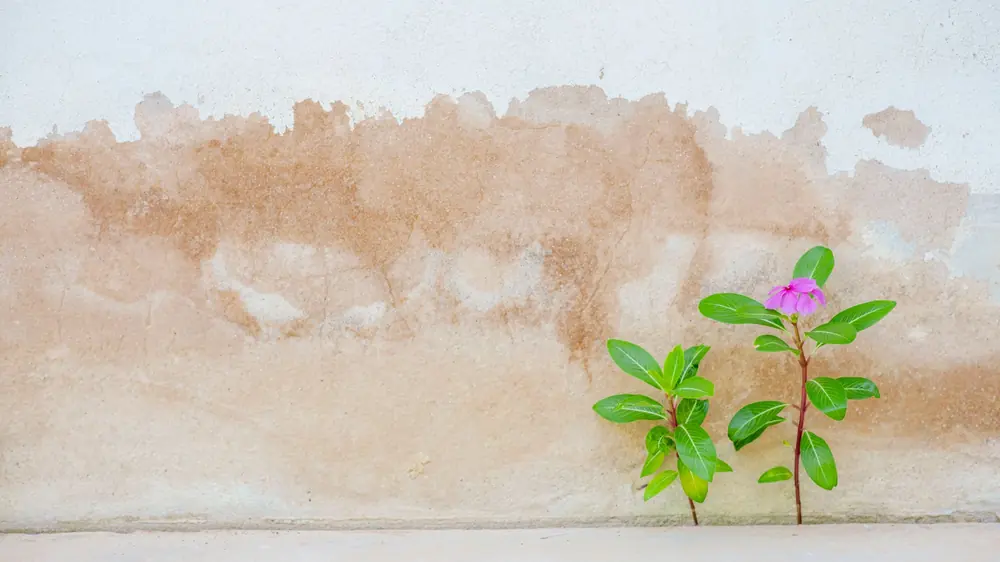
Rising damp is water from the soil that climbs up through the pores of brick, stone and mortar. It appears when the base of the wall has no horizontal damp proof course, or the old one has failed. It usually reaches a metre to a metre and a half above the floor, mostly in old buildings.
- A band with an uneven but visible upper edge, often with a line of salts. It is wettest at the floor and fades upwards.
- White salts: fluffy or crystalline deposits that crumble under the fingers.
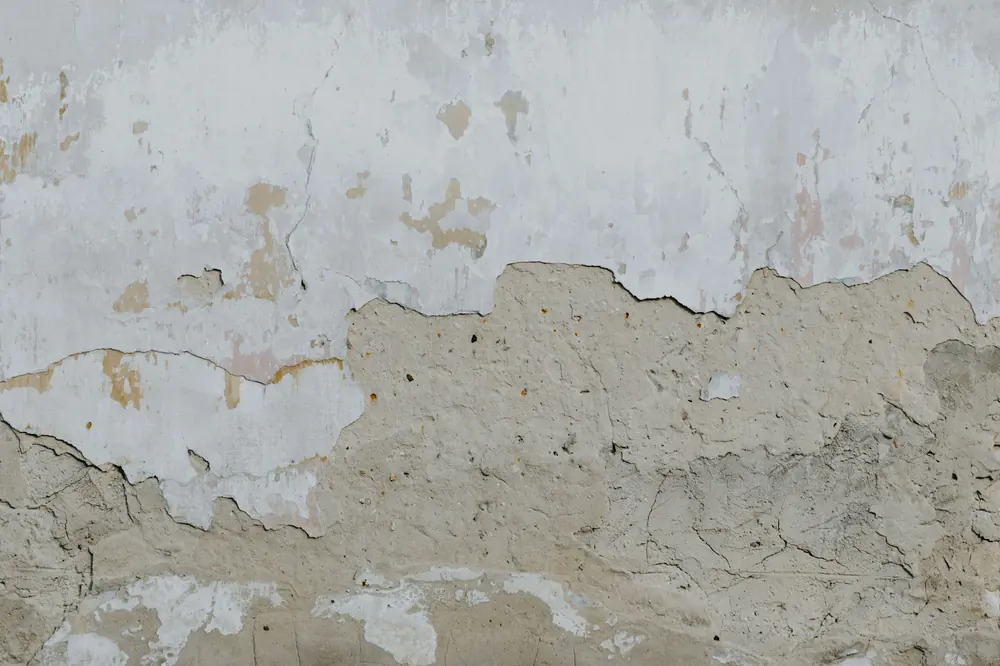
- Blistered paint and crumbling plaster, worst just above the floor or the skirting.
- Damp on the inner walls of a ground floor too, not just the outer ones. Rain does not reach them; water from the foundations does.
- Hardly any link to the weather: it does not disappear after a dry week, and in winter it can look worse because the wall dries more slowly.
How high it climbs depends on the material, the moisture in the ground and how easily the wall dries. Cement plaster, tiles or dense paint low on the wall stop evaporation, so the water climbs higher. Around Varna it is common in old village houses and older blocks with stone foundations.
Damp low on the wall: is it really rising damp?
Not every wet lower wall is rising damp. A leaking pipe, condensation and rain splashing on the plinth all give a similar picture and are fixed in quite different ways.
| What you see | Likely cause | What we do |
|---|---|---|
| An even damp band along the whole wall, with white salts, on a ground floor or in an old house | Rising damp: the horizontal course is missing or broken | Measure at several heights; if moisture falls with height, we discuss an injected barrier |
| A wet patch in one place that grows and stays wet in dry weather | A leak from a water, heating or drain pipe in the wall or floor | Thermal camera and meter along the pipe route, then leak detection |
| Mould in corners, behind the wardrobe and around windows, worse in winter | Condensation on cold surfaces | Thermal camera on the cold zones; see mould and damp: leak or condensation |
| Damp only on the outer wall, worse after rain | Splashing rain, paving above the plinth, an overflowing gutter | We look outside at gutters, downpipes, paving and the slope of the ground |
| A basement wall below ground that runs with water after rain | Water under pressure from outside or ground water | Not for an injected barrier — this needs waterproofing of the basement |
Diagnosing rising damp: we measure by height
Rising damp is recognised by measuring, not by eye: it is highest at the floor and falls going up. We do that diagnosis now, with a pin meter, a non-contact meter and a thermal camera.
- A profile by height. Points one above another from the floor up, in several places. If the values fall with height and the band is even, it looks like moisture from below.
- A dry spot for comparison. A higher part of the same wall, or a wall on the upper floor, gives the value to compare against.
- Non-contact and pins. The non-contact meter shows the zone quickly without drilling; the pins read a specific point, including in the joint.
- Thermal camera. It shows colder zones, which are often wet, and where hot water or heating pipes run. A patch that follows a pipe is not rising damp.
- Outside. We look at the level of paving and outside tiles against the plinth, the slope of the ground and where the downpipes discharge.
One number is not enough: salts in old walls raise the meter reading, and on brick and stone the instruments give relative values. So we look at the difference between points and at the height, not at a single figure. How the instruments work is described on our damp survey page. The written record (photos, thermal images, readings by height) comes by email and shows whether a barrier makes sense and how long the affected stretch is.
Call or write and we tell you what to prepare for the visit and, after the measurement, whether it is rising damp and what comes first. We give the price of the diagnosis by phone.
📞 +359 52 993 333Injected damp proof course: a horizontal barrier against moisture from the foundations
An injected barrier stops rising damp by creating a water-repellent band low in the wall. The ground below stays wet, but water no longer passes up through that band. The injection itself is a new service for us: by phone we tell you whether and when we can take the site on. The diagnosis we can do now.
- Before drilling, we check where pipes and cables run. A row of holes is drilled in the horizontal mortar joint, low above the floor. The height depends on the floor level inside and the ground outside.
- Spacing and depth follow the instructions of the material's manufacturer. Typically the holes are about 10–12 cm apart and go almost through the thickness of the wall, without drilling out the other side.
- A water-repellent cream or liquid with a silane or siloxane base goes into the holes. It spreads around each hole and the zones of neighbouring holes merge into a continuous band.
- The holes are filled with mortar.
In very thick walls, or when the wall can be reached from both sides, the barrier is made from both sides or in two rows, as the manufacturer says. The wall material changes the approach: solid brick takes the material well, hollow brick needs a separately chosen method, and in dense stone the holes usually go in the mortar between the stones. Poured concrete rarely draws water like brick; damp concrete in a basement usually means water from outside, which is a different job.
After the injection: plaster, drying and a control measurement
The barrier stops new water, but the wall does not dry at once. Water already in the masonry leaves slowly, and the salts stay in the plaster. We tell you how far the plaster must come off and when the wall is ready for new plaster.
- Salt-laden plaster comes off with a margin above the visible damp band — often about half a metre is quoted. Otherwise the salts keep drawing moisture from the air and the stains return.
- The wall is left to dry. This takes months, and longer with thick stone walls. We do not promise a time: it depends on thickness, material, heating and ventilation.
- New breathable plaster: a renovating plaster that lets vapour through and holds the salts in itself. No cement plaster, tiles or paint that blocks vapour. It is applied as the manufacturer instructs, and the wall is painted only when it has dried.
- A control measurement at the same points, compared with the first record, shows whether the moisture is falling.
If there is mould on the wall already, it is cleaned once the damp has been stopped — see mould removal. Your own dehumidifier can make the room more comfortable while the wall dries, but it does not stop water coming from the foundations.
When an injection will not help — check these first
An injected barrier stops only water that rises through the pores from below. If the damp comes from the side, from above or from a pipe, it will not help.
- A basement below ground level into which water enters: the walls run in rain, or water collects on the floor. That is water from outside and needs basement waterproofing.
- A wet patch that grows in one place: first look for a pipe leak.
- Mould in corners and around windows, worse in winter: almost always condensation, not damp from the foundations.
- Paving, tiles or soil above the plinth, an overflowing gutter, a downpipe discharging by the foundation: these are fixed outside, sometimes with drainage around the house.
- A cracked plinth or facade letting rain in: repair the outside first.
Check for yourself: are the inner walls damp too, is it worse after rain, do pipes run in that wall?
What the price depends on, and sending it from abroad
We tell you the price of the diagnosis by phone after a short description, so it helps to know where the damp is (house, ground floor of a block, basement), how high the band reaches and on which walls, what the wall is made of if you know, whether the floor inside is below the ground outside, and whether it changes after rain. The price depends on the number of rooms and the length of walls measured, on whether you want a written record, and on distance. For the barrier, the thickness and material of the wall and the length of the stretch matter.
If you live abroad, email photos of the wall near the floor, close up and from a distance, and the address; we arrange the visit with whoever can open the property. You pay after the work, by bank transfer if you prefer.
Frequently asked questions
Can I just put cement plaster or waterproof paint on the inside?
It is not a good idea. A dense coating stops evaporation while the water from below keeps coming, so it climbs higher and appears above the new plaster. The salts collect under it and it blisters again. First the moisture from below is stopped, then breathable plaster goes on.
How long does the wall take to dry after injection?
Usually months, longer in thick stone walls. We do not promise an exact time; it depends on thickness, material, heating, ventilation and the salts in the plaster. That is why we measure at the same points as in the diagnosis and compare, so you can see whether it is really drying.
Do you do the injection yourselves?
We do the measuring, the thermal camera check and the written record now. The barrier is a new service for us; when you call, you learn whether and when we can take your site on. If the measurements show it is not rising damp, we tell you plainly instead of proposing a barrier that will not help.
The damp is only on the outer wall. Is it still rising damp?
It may be, but often it is not. If inner walls on the same floor are dry and the outer one is wetter after rain, first look outside: paving against the wall, an overflowing gutter, a downpipe discharging at the base, a cracked plinth. Rising damp usually reaches the inner walls as well, because they stand on the same foundations.
What do I get after the diagnosis?
A record with photos, thermal images and readings by height, sent by email, saying what the likely source of the moisture is and what we recommend first. After a barrier we measure at the same points and compare.
Damp low on the wall? Let us measure it first
Call or write and we tell you what to prepare for the visit and, after the measurement, whether it is rising damp and what comes first. We give the price of the diagnosis by phone.
📞 +359 52 993 333or email info@kanalvarna.com — write in English and we reply in English.
Send us a message
Leave your name and a phone number with the country code. Add your email if you prefer a written reply — write in English and we reply in English. We confirm the price before any work starts.