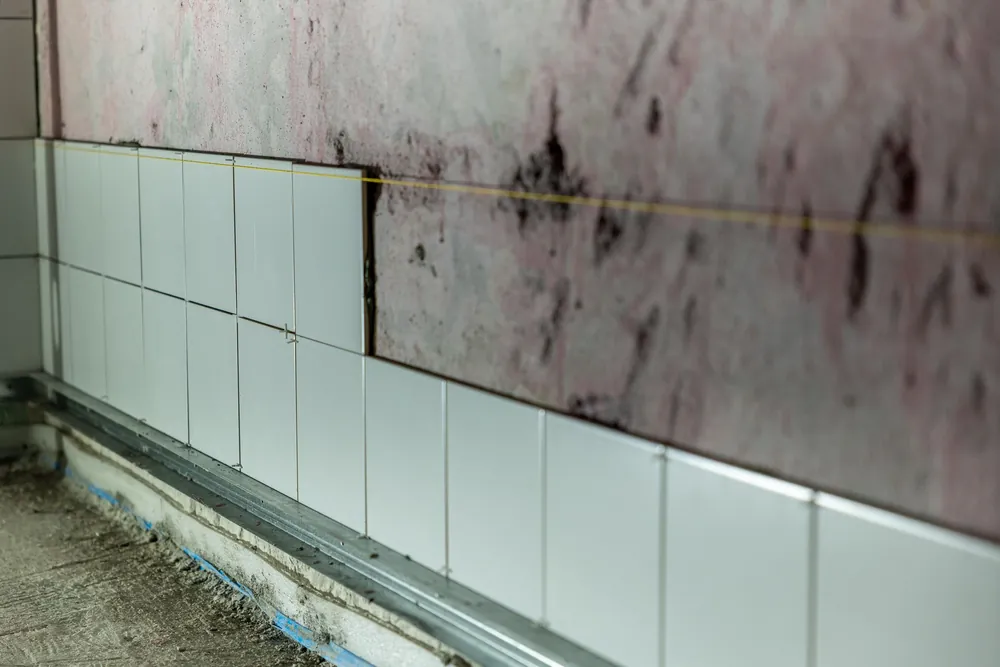
Leaking grout in Varna: when water gets through the tile joints
A damp patch in the next room, mould behind the shower, or a neighbour below with a stain on the ceiling, and no pipe seems to be leaking? The cause may be the grout. We check the pipes first, then find where the water gets through the tiles, without breaking any. Every day from 06:00 to 23:00.
Our clients on video · all videos (in Bulgarian)
If you suspect leaking grout — water getting through the tile joints in your bathroom in Varna or on the coast — Kanal Varna first rules out a leaking pipe with a pressure test, then locates the damp zones with a thermal camera and a moisture meter, without breaking tiles. Thermal camera diagnosis is €52 for the first flat and €26 for each further flat; we tell you the price of any repair before we start. We work every day from 06:00 to 23:00, weekends included. Call +359 52 993 333 or email info@kanalvarna.com — write to us in English and we reply in English. You pay after the job, in cash, by card or by bank transfer.
Updated November 2026How a leak through grout happens
Grout between bathroom tiles looks like a cosmetic detail, but it is really a second line of waterproofing. When a cement or silicone joint cracks or dries out, the water you use in the shower or bath goes through it and collects under the tiles or in the wall beside them. The pipes can be in perfect condition and you still have a leak.
This kind of leak is slow and silent. Nothing drips noisily; water simply wets the surroundings. The usual signs are a stain in the room next to the bathroom, mould behind the tray, swollen laminate in the next room and, most often, a complaint from the neighbour below.
What to look at yourself first
- Look at the silicone round the tray, bath and basin. If it is black, shrunk or lifting from the tile, water gets behind it.
- Look closely at the grout lines in the shower. Cracked, crumbling or missing grout is a likely way in for the water.
- If the water pools in the shower, check the drain: slow draining is a blockage, not grout. See blocked floor drains.
- Check the water meter: if it keeps turning with every tap and appliance off, water is escaping from a pipe, and the grout is probably not the main cause — see leak detection.
- Do not smear silicone over cracked grout. It peels off within a few months; a proper repair means taking the old grout out.
- Photograph the stains, the mould and the grout, and write down when you noticed them.
Why grout stops keeping water out
- Old silicone. Silicone round the tray, shower enclosure and basin lasts three to five years. After that it dries, shrinks and lifts from the tile.
- Cracked cement grout. Caused by the floor settling, temperature changes or poor mix. Even a hairline crack lets through enough water to make the next room damp.
- No waterproofing under the tiles. If there is no membrane, the grout is the only barrier, and the smallest defect becomes a leak.
- Poorly fitted shower enclosure. Silicone laid on a wet surface never bonds properly, so water soon starts getting through.
- Mould in the grout. Black growth is not only cosmetic: it breaks down cement grout into a porous mass that does not stop water.
- Thermal shock. Hot showers on a cold floor cause tiny movements in the tiles and joints, and over the years the cracks add up.
Tell us where the damp or the stain is — we tell you the price and when we can come.
📞 +359 52 993 333How we check, and why we start with the pipes
- Check the visible joints. We identify dried silicone, cracks, crumbling grout and mould.
- Thermal camera. Damp walls and floors show as cooler patches on the picture. Nothing is broken to find them.
- Moisture meter. It measures how saturated the plaster or plasterboard is, to tell whether the damp is active or left over from an earlier leak.
- Pressure test of the pipes. If we are not sure the grout is the only cause, we pressurise the water pipes (usually to 6 bar) and watch whether the pressure drops over 30 minutes. If it holds, the pipes are sound and the problem is in the grout or the waterproofing.
- Decision. We say whether new grout and silicone are enough or the bathroom needs proper waterproofing. You hear the price before we start.
The pressure test matters. Many people replace tiles and grout, and a week later the damp comes back, because the real cause was a pipe. The test saves you paying for the wrong repair. If you want a written report with thermal images for the neighbour or your insurer, ask when you book.
Grout or silicone: which one, where
| Material | Typical life | Where it suits |
|---|---|---|
| Cement grout | 5–8 years with normal use | Dry rooms or well-ventilated bathrooms; it absorbs water after long contact and can grow mould |
| Epoxy grout | 15 years or more | Showers, around baths and on terraces; it does not let water through and does not grow mould, but is harder to apply |
| Silicone | 3–5 years | Joints that move, such as tile to tray, enclosure or basin; neutral-cure silicone is right for bathrooms |
Replacing grout is enough when the leak is slow and the tiles are sound. If the bathroom has no waterproofing, or the damp keeps returning, new grout is a temporary cure and the bathroom needs proper waterproofing. If the water seems to come from the shower enclosure itself — the tray, the door seals, the glass profiles or the mixer — see our page on shower leaks. For the mould that follows, see mould and damp.
A flat you let out, or one you are away from
Grout leaks are exactly the kind that nobody notices in a holiday flat. Guests shower for a week, water seeps in slowly and the stain appears in the flat below when you are not there. Send us the address, the name and phone number of whoever can open the door, and the photos of the stain.
We check the pipes and the joints, you get our findings and what needs doing without having to be there, and you can pay by bank transfer. In a block of flats, the neighbour and the building manager (domoupravitel) will want to know where the water comes from; a written report with thermal images shows them.
Frequently asked questions
How much does it cost to find out if grout is leaking?
Thermal camera diagnosis is €52 for the first flat and €26 for each further flat. Moisture meter readings start from €30, and combined diagnostics with a written report from €55. The price of the pressure test or of any repair is agreed with you before we start. See the price list.
Will you have to break the tiles?
Not to find the leak. The thermal camera and moisture meter work from the surface, and the pressure test works on the pipes. If the repair needs the tiles lifted, we tell you before we do anything.
How do you know it is the grout and not a pipe?
By testing the pipes. We put pressure on the system and watch whether it drops. If it holds, the pipes are sound and the water is getting in through the joints or the waterproofing.
Is it enough to regrout the shower?
Sometimes. If the leak is slow and the tiles are sound, new grout or silicone is enough. If there is no waterproofing underneath or the damp keeps returning, it is not.
I'm not in Bulgaria. Can you still deal with it?
Yes. Send us the address and the contact of whoever can let us in. We arrange the visit with them, let you know what we found, and you can pay by bank transfer.
Can I contact you in English?
Yes — write to us in English by email at info@kanalvarna.com or through the form on this page, and we reply in English. The phone number is +359 52 993 333.
Water through the tiles?
Tell us where the damp or the stain is — we tell you the price and when we can come.
📞 +359 52 993 333or email info@kanalvarna.com — write in English and we reply in English.
Send us a message
Leave your name and a phone number with the country code. Add your email if you prefer a written reply — write in English and we reply in English. We confirm the price before any work starts.