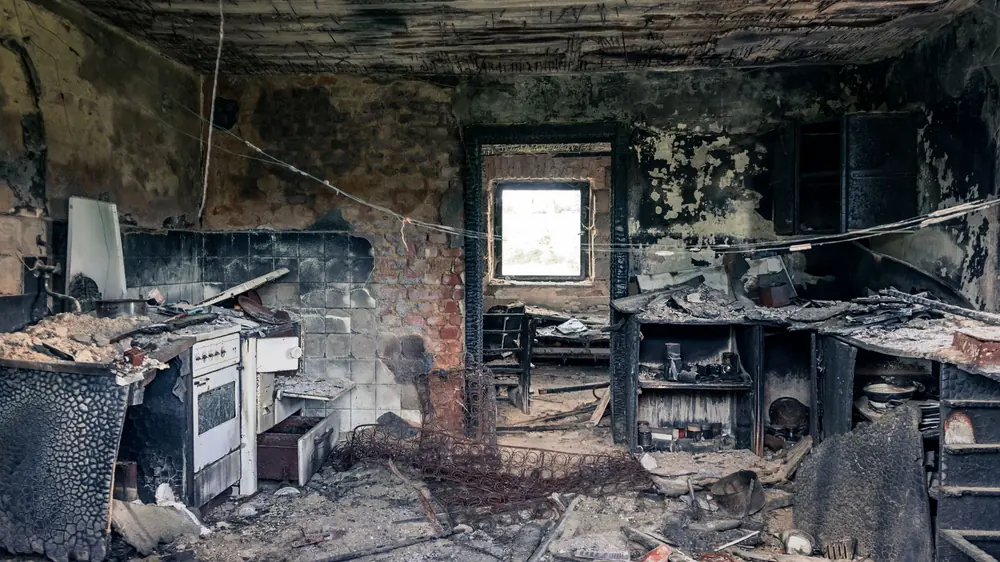
Fire damage cleaning in Varna: soot, water from the hoses and the smell of smoke
The fire brigade has gone, and what is left at home is black walls, the smell of burning and water on the floor. We describe the damage, carry out what has burnt, pump out the water, wash off the soot and finally treat the smell of smoke, with our people and our ozone generator. We clean; we do not rebuild.
Our clients on video · all videos (in Bulgarian)
Fire damage cleaning in Varna is the work between the fire brigade leaving and the repairs starting: a written record with photos for the insurer, carrying out what has burnt, pumping out the water from the firefighting, washing off the soot and, last, treating the smell of smoke. First, the power stays off until a qualified electrician has checked the wiring, the gas until a gas company has, and nothing is thrown away before the insurer has said what it needs. Pumping out the water starts from €150; for everything else the price is given by phone after we have seen it or from your photos. It is part of our work on mould and damp. Call +359 52 993 333 or email info@kanalvarna.com — write to us in English and we reply in English.
Updated November 2026Fire damage cleaning: what the work covers
The fire is out, but the home has black walls and ceilings, puddles and foam, ruined furniture and a smell of burning everywhere. Cleaning is the whole job between that moment and the repairs: describing the damage, carrying out what has burnt, pumping out the water, cleaning the soot and removing the smell of smoke.
Soot. The fine black dust and greasy film that smoke leaves on walls, ceilings, furniture and fabric, and inside cupboards, even in rooms the flames never reached. Dry soot (from wood, paper, cloth) comes off with a sponge and vacuum. Greasy soot (from oil, cables, rubber, synthetics) smears at a touch and needs a degreaser.
We work with our people, our ozone generator, a moisture meter and a thermal camera, so that we can take the whole job from the visit to the last measurement and not one part of it. We clean; we do not repair or rebuild.
First steps after a fire: power, gas, insurer, photos
Go through these in order before you reach for a bucket.
- Go in when the fire brigade or police release the home. If it is sealed or the cause is being established, wait. We do not go in before then either.
- Leave the power off. Do not switch the circuit breakers back on or turn on lamps and appliances until a qualified electrician has checked the installation — wires in the wall may be burnt, and boxes and sockets may be full of water.
- Gas: only a gas company. If there is a gas installation or a bottle, the valve stays shut until a gas company has checked it.
- Structure: an engineer first. A cracked slab, charred beams or a collapsed ceiling or roof — do not go in or clean until an engineer or builder says you may.
- Call the insurer. If the home is insured, tell them as early as you can and ask what they want: a visit from their person, a document from the fire brigade, photos, a list of what was destroyed.
- Photograph everything before anything leaves the home. Every room from the door and close up, the ceilings, floor, furniture, appliances and the model plates. What has been thrown out cannot be photographed afterwards.
If you are allowed in and the windows are intact, open them: airing from the first day reduces the smell. Take out papers, medicines and valuables if they are easy to reach without stepping on an unsafe floor.
If you need it, on the visit we describe the damage in a written record with photos and moisture readings: what is burnt, smoked and wet, and how far. It is not a damage assessment — the insurer does that — and you can see what such a record looks like on our page about a leak report for insurance.
What we do, and in what order
The order matters: wash before the burnt things are carried out, or treat the smell before the soot has gone, and part of the work is done twice.
- Visit, photos and record. We go through every room, photograph, measure moisture and use the thermal camera to see how far the water has gone.
- Carrying out what has burnt. Burnt furniture, soaked mattresses, carpet, wet plasterboard and anything agreed with the insurer go out and are taken away; see basement clearance and builders' waste removal.
- Water from the firefighting. We pump out the standing water, draw up the rest with a wet vacuum and check under the flooring, in neighbouring rooms and towards the flat below.
- Soot. Dry cleaning first, then washing, from the ceiling downwards, including the inside of cupboards.
- Drying. The materials are dried until the moisture meter shows dry; how that is done is on the page about drying after a leak.
- The smell of smoke. Last, we treat the empty, clean and dry room with ozone.
- Final measurement and handover. We measure again, walk round with you and say what is left for the repairs: skim coat, paint, flooring, wiring.
Cleaning soot from walls, ceilings and furniture
Soot is the biggest part of the job and the easiest to spoil. A wet cloth on dry soot smears it into the paint and plaster and leaves grey streaks that nothing then removes.
- Dry cleaning. A vacuum with a fine filter and dry soot sponges that lift it without rubbing it in, from the ceiling down.
- Wet cleaning. Then ceilings, walls, window frames, tiles and cupboards are washed with a suitable cleaner, the cloths and water changed often.
- Greasy soot. In a burnt kitchen the film is sticky and is washed with a degreaser, in several passes. We wipe the insides of cupboards and drawers too.
If the paint is old, limewash or cracked by the heat, or the soot has gone deep, washing only leaves the wall grey and patchy. Then the affected layer is scraped off, the wall is given a stain-blocking primer and painted — that is repair, see skimming and painting; burnt or soaked plasterboard is replaced, see plasterboard. After the visit we say which walls need only washing and which need repainting. Do not throw anything away before the insurer has seen the damage; papers and jewellery that we find while carrying out are put aside for you.
Tell us what burnt, when, how many rooms and whether there was water from the firefighting. Email photos if you can, and we say what is needed, in what order and what it will cost. Write to us in English and we reply in English.
📞 +359 52 993 333Water from the firefighting, and the neighbour below
A lot of water, sometimes foam, goes into a home during firefighting. It runs under laminate and parquet, soaks the screed and the furniture, and often goes through the slab to the neighbour below. It is dirty water too, mixed with soot and ash, so it leaves black marks everywhere.
- Standing water is pumped out, and the rest drawn up with a wet vacuum.
- How far it has gone we check with the moisture meter and thermal camera, on floors, walls and ceilings, and in neighbouring rooms. That decides what comes out and what stays.
- The neighbour below: if there are stains on their ceiling or it drips, tell them and the building manager; where needed we also describe their damage. See leak from the flat above.
- Water under the flooring: see water under the floor; left there, it soon smells of mould as well as smoke — see mould removal.
The same cleaning after a burst pipe or a storm, where the water is clean or muddy and there was no fire, is flood cleanup.
The smell of smoke and burning
The smell of burning lasts weeks, because it sits in the soot, paint, fabrics and wet materials, not only in the air, so air fresheners and airing do not remove it. It goes by doing the work before it: carrying out what has burnt, cleaning the soot, and washing the textiles.
Last, when the room is empty, clean and dry, we treat it with ozone to neutralise what is left. With a strong smell the treatment is repeated after a day or two; if it has got into the plaster, the walls are primed and painted. As a guide, ozone treatment takes a few hours, followed by airing.
What the price of fire damage cleaning depends on
Every fire clean-up is different: a smoky kitchen and a burnt flat with water in the screed are not the same job. So we give the price for the whole job after we have seen it or from your photos, before we start. The one figure we can give in advance is the pumping out of the water from the firefighting, from €150.
- The area of walls and ceilings with soot.
- How greasy the soot is.
- How much water is left, and how far it has gone.
- Repairs afterwards — skim coat, paint, flooring, wiring — are priced separately.
Call +359 52 993 333 or email photos to info@kanalvarna.com. We work every day 06:00-23:00 and issue an invoice; payment is by cash, card or bank transfer. If you live abroad or let the home, tell us who has the keys or can open the door, and write to us in English and we reply in English.
What you can do yourself, and what we do not do
A small fire — a pan, a hob, a smoky corner of the kitchen — can often be cleaned without us: mask with a filter, gloves and goggles, windows open, children and pets out, dry first and then wet, from the top down. We work with the same precautions. If soot is all over the flat, there is water in the floor or the smell is still there after a week of airing, call us.
- Electrics: checking and repairing is for a qualified electrician. We do no electrical repairs and do not restore the power.
- Burnt appliances: do not plug them in; they go to a repair service, and we do not repair them.
- Structure: a cracked slab, burnt beams or a roof — an engineer or builder says first what is needed and when you may go in.
- A damage assessment: that is done by the insurer and its assessor; we describe what we saw and measured.
- A chimney or fireplace, if the fire started there: see chimney sweep.
Frequently asked questions
Who pays for the cleaning — the insurance?
If the home is insured, fire is usually a covered risk, but what exactly is covered and up to what sum is in your policy. Call the insurer before work starts and ask what they want: a visit, a document from the fire brigade, photos, invoices. We issue an invoice and, if you need it, describe the damage with photos and moisture readings.
How long does the smell of smoke last, and how is it removed?
Without work, for weeks, because it sits in the soot, fabrics, paint and wet materials. It goes when what has burnt is carried out, the soot cleaned, and the textiles washed; last we treat the empty room with ozone.
Can the power be switched on again after the fire?
Not before a qualified electrician has checked the installation in the affected rooms. Wires in the wall may be burnt and the boxes and sockets full of water from the firefighting. We do not do electrical repairs and do not restore the power.
I live abroad and the flat is let — can you take this on?
Yes. Write to us in English and we reply in English. Email the address, photos and what the tenant or neighbour has told you, and say who will open the door. Whether we go in depends on the fire brigade or police having released the home; we tell you by phone whether and when we can come.
Related pages
The hub for damp, leaks and what comes after them Flood cleanup
When the water comes from a neighbour or a storm, not a fire Drying after a leak
How walls and floors are dried until the meter shows dry Leak report for insurance
What a written record with photos looks like Skimming and painting
When soot will not wash off the wall
Had a fire and not sure where to begin?
Tell us what burnt, when, how many rooms and whether there was water from the firefighting. Email photos if you can, and we say what is needed, in what order and what it will cost. Write to us in English and we reply in English.
📞 +359 52 993 333or email info@kanalvarna.com — write in English and we reply in English.
Send us a message
Leave your name and a phone number with the country code. Add your email if you prefer a written reply — write in English and we reply in English. We confirm the price before any work starts.