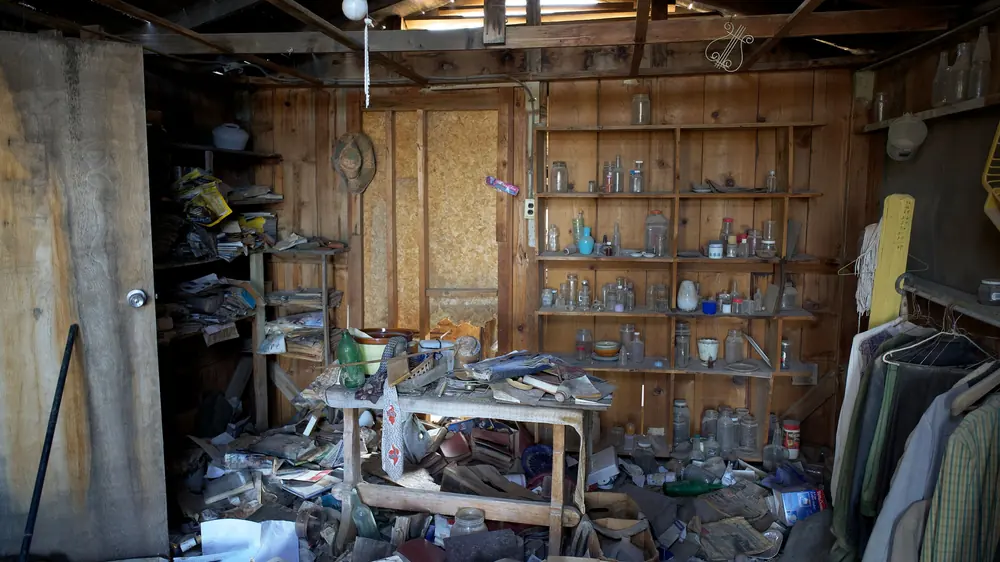
Basement clearance in Varna: sorting, carrying out and a look at the bare walls
A cellar full to the door, a loft with boxes from three generations, a garage the car cannot enter. We sort with you, carry the rubbish out, and look at the bare walls for damp before you fill the space again.
Our clients on video · all videos (in Bulgarian)
Basement clearance in Varna means clearing, not washing: the junk is sorted with you, carried out, handed in where each thing belongs, and the floor is swept. The same goes for a loft, a garage or a whole flat. Documents and photos stay with you in a box; paint, batteries and lamps are set aside. In the empty cellar the walls are measured with a moisture meter, and we say whether it looks like a leak, damp from the ground or condensation. The work is done by the craftsmen we work with; we organise it and stay your one phone number. It is one of the small jobs on the handyman page. Call +359 52 993 333 or email info@kanalvarna.com — write to us in English and we reply in English.
Updated November 2026What basement clearance includes: clearing, not washing
For us, clearing a cellar, loft or garage means the junk is sorted, carried out and handed in, and in the end the floor is swept. We do not wash walls, and we do not do a deep clean — the aim here is space, not shine.
Basement clearance. Emptying a room of accumulated belongings in four steps: sorting with the owner, carrying out, handing each thing in where it belongs, and sweeping the empty floor.
A cellar fills up over years and is cleared on an occasion: the flat is being sold, a new tenant is coming, the garage is needed for the car, or the door no longer opens fully. Most space goes on things nobody remembers: boxes inside boxes, broken chairs, bed frames, old doors, jars without lids.
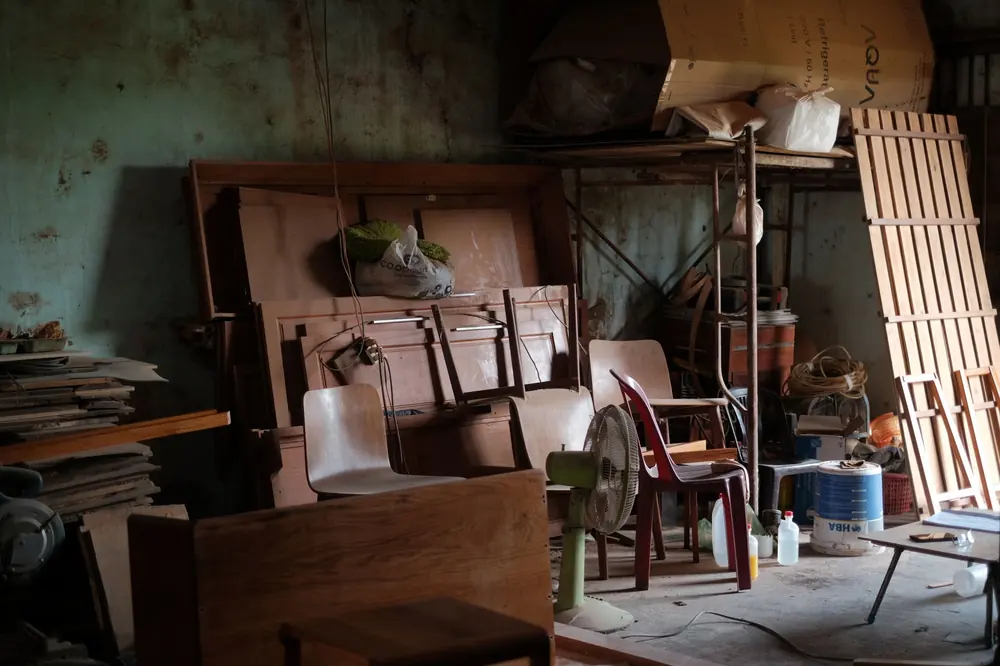
If the floor is covered with mud and silt after a downpour or a burst pipe, that is a different job, with shovelling out and washing — see flood clean-up.
Sorting: what stays, what goes and what is kept apart
Sorting is the slowest part, and it is done with you or someone you trust: we bring things out and show them, you say "keep", "give away" or "throw out". The fourth pile is ours to set aside — the things that must not go into the common rubbish bag.
| Found | What happens | Watch for |
|---|---|---|
| Paint, varnish, solvents, oil | Set aside closed, in their own tins and containers | Not poured into a drain or on the ground, and not mixed |
| Car batteries and batteries | Separately, the car battery upright | A cracked car battery leaks acid: gloves and goggles |
| Fluorescent tubes and energy-saving lamps | Whole, in a box, away from glass | They contain mercury — not to be broken in a bag |
| Asbestos-cement sheets, old pipes | We do not touch them; they stay where they are | Only a specialist company; never broken or swept dry |
| Fridge, freezer, cooker | Carried out whole and handed in separately as waste electrical equipment | A fridge is not cut or broken: it holds refrigerant |
| Documents, photos, letters | Kept for you in a separate box | Nothing on paper leaves without your say-so |
| Signs of rodents | If rodents are alive we stop — we do not do pest control | Not swept dry: the dust should not be breathed in |
One rule saves the most time: the decision is taken at the cellar door, not upstairs in the flat. What is carried up "to look at later" often goes back down a year later. Wardrobes, sofas and old appliances from the flat have their own page — old furniture removal.
A cellar in a block, a loft and a garage: access and shared areas
How hard the clearance is depends more on the way out to the street than on the quantity: a narrow cellar corridor in a block, a steep loft ladder or a car in the garage change the whole job.
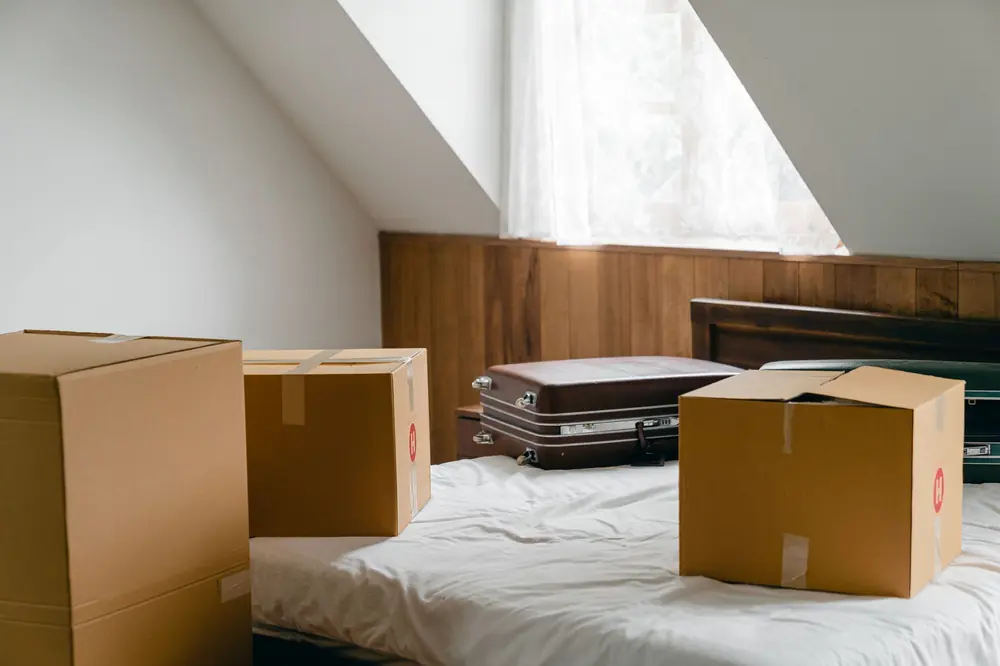
- Cellar in a block: the storerooms are side by side, the corridor is shared and the light often does not work. Nothing is left in the corridor — it blocks the neighbours. The lift is used by the building's rules and protected.
- Loft: the hatch and ladder decide what passes. Step on the joists, not between them, where there is often only insulation and the ceiling of the room below. Pigeon droppings and dust are collected damp, never swept dry, with an FFP3 or at least FFP2 mask and gloves.
- Garage: oils, antifreeze, fuel cans, gas cylinders and old tyres are set aside first, with no flame or sparks nearby. Metal shelving is taken apart, not dragged across the floor.
A shared cellar by the entrance, the landings and the space under the stairs do not belong to one person: they are cleared only on a decision of the owners' association, after everyone has taken their own things. If you are the building manager, see what we do for building managers.
Tell us whether it is a cellar, loft or garage, which floor it is on and how full it is. Send a photo from the door by email, and we tell you whether and when we can come.
📞 +359 52 993 333A whole flat: after a tenant, before a sale, after an inheritance
When a whole flat is emptied, the order is: you take the valuable and personal things first, then we sort and carry out the rest, and at the end the empty rooms are swept. Nothing important goes into a bag by mistake.
- After a tenant: bags, clothes, a broken clothes airer, food in the fridge are left behind. Photograph every room before we start — if the deposit is disputed, you have the photos.
- Before a sale: a buyer wants empty rooms and an empty cellar. The cellar is often left to the last week, and it is exactly where the buyer will look at the walls.
- After an inheritance: there is no hurry. We sort in your order, in labelled boxes, and stop when you say. Documents, photos, letters and jewellery never go into a bag, even when they look unimportant.
Window and bathroom cleaning and washing furniture are for a cleaning company, not us. If a renovation starts after the clearance, the rough clean afterwards is described under after-builders clean. If you are abroad, tell us who will let us in — a neighbour, the building manager or whoever holds the keys — and send photos by email.
The empty cellar: damp, mould or a leak?
An empty cellar shows its walls as they are, and that is the moment to find out where the damp comes from, before it is filled again. We are a leak and damp company: after the clearance the walls are measured with our moisture meter, and where needed we also look with the thermal camera.
- A wet patch in one place — around a pipe, under the bathroom or by the riser. Probably a leak. The meter shows where it is wettest; finding the source is leak detection.
- A dark band low on all the walls, white salts, crumbling plaster. Most often damp rising from the ground; see basement waterproofing.
- Drops and patches on cold walls and the ceiling, more in warm months. That is condensation: humid air from outside meets cold concrete. See mould and damp.
- A puddle on the floor after rain, or water from the floor drain. That is water in the cellar — flooded basement.
Mould on the back of boxes and cupboards says things stood against a wet wall. If you put things back, leave air between them and the wall, lift them onto a shelf or rack and do not block the vents. If you need recorded readings for a buyer, an insurer or the neighbour upstairs, we do a dated damp survey with photos.
How the clearance goes
- Photos and a call. You send photos from the door by email, tell us the floor and the route to the street. By phone we tell you when we can start.
- A path and light. What stands by the door goes first, so there is room to step and sort. If the cellar has no electricity, lighting is arranged beforehand.
- Sorting with you. Four piles: keep, give away, throw out, set aside. Documents and photos go into a box for you, and the doubtful things are photographed until you decide.
- Carrying out and handing in. Bags are filled by weight, heavy items go with two people. Large items are handed in as bulky waste by the municipality's rules, and the rest at a designated site.
- Sweeping and the walls. The empty floor is swept, the walls are measured, and we tell you what we see: dry, a leak, rising damp or condensation.
If the cellar also holds bags of old plaster, tiles or concrete from a renovation, those are builders' waste with different rules — see builders' waste removal.
When you do not need us, and what the price depends on
- A few boxes and an old chair: the municipality's places for bulky items may be enough — check what they accept on the Varna municipality website.
- Mud after a flood: that needs shovelling out and washing, not clearing.
- Live rodents or cockroaches: first a pest-control company with a licence — we do not do that work.
- Asbestos, or a material you suspect: only a specialist company.
- A thorough clean with windows and bathroom: a cleaning company.
We give the price by phone after a short description or photos. Tell us whether it is a cellar, loft, garage or whole flat and in which district; the floor, the lift and the loft ladder; how full it is; whether there are paints, batteries, tyres, asbestos or old appliances; whether you will be there for the sorting or we decide from photos; and whether you want the walls measured afterwards. The price depends on the volume and kind of items, the way out, the time for sorting with you, the items to set aside and where everything is handed in. We organise the transport to suit the quantity, and an invoice is issued on request.
Frequently asked questions
Do you throw everything out at once, or do we sort together?
We sort together unless you say plainly "everything goes". Even then we set aside documents, photos and anything that looks personal, and leave them in a box for you. If you cannot be there, we show you the doubtful items in photos and wait for your answer before carrying them out.
What do you do with documents and photos we find?
Nothing is thrown out. Title deeds, letters, notebooks, albums and negatives go into a separate box that stays with you or with the person you name. In old cellars documents are often in shoe boxes or between the pages of books, so books are leafed through before they go on the give-away pile.
Can you clear it without me being there?
Yes, if we have agreed beforehand what stays. It is easiest with a short list and photos: "the cupboard stays, the boxes of books are for giving away, the rest goes". Anything not on the list we photograph and ask. Who unlocks and where the key stays, we agree by phone.
Related pages
The small jobs at home in one place Old furniture removal
Wardrobes, sofas and old appliances from the flat Builders' waste removal
Plaster, tiles and concrete from an old renovation Flooded basement
Water in the cellar: pumping out and where it comes in Damp survey
Are the walls of the empty cellar dry?
A cellar full to the door?
Tell us whether it is a cellar, loft or garage, which floor it is on and how full it is. Send a photo from the door by email, and we tell you whether and when we can come.
📞 +359 52 993 333or email info@kanalvarna.com — write in English and we reply in English.
Send us a message
Leave your name and a phone number with the country code. Add your email if you prefer a written reply — write in English and we reply in English. We confirm the price before any work starts.