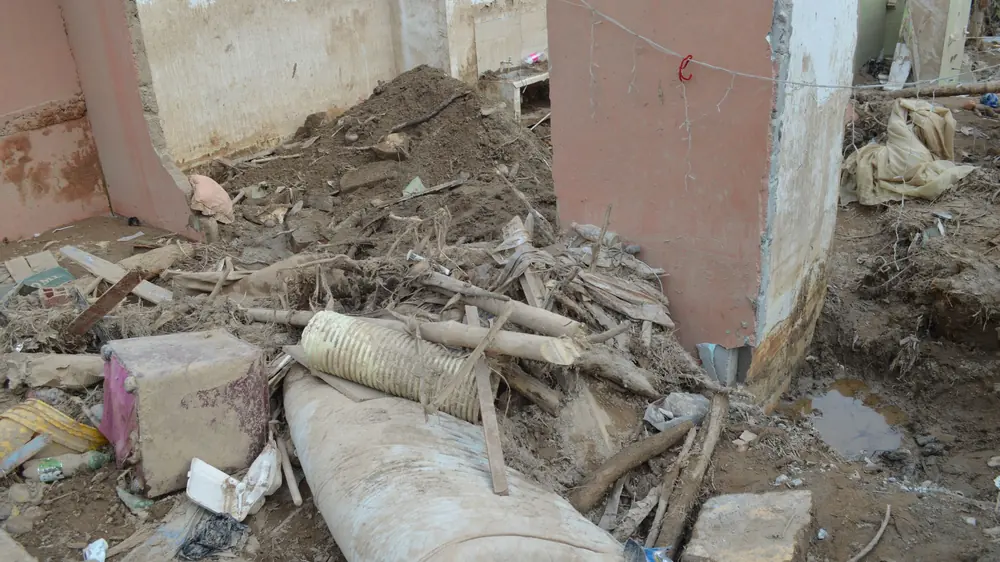
Flood cleanup in Varna: mud and silt out of a cellar, garage or yard
The water is pumped out, but the floor is under a layer of silt and the walls are brown up to knee height? The mud is shovelled out, the floor and walls are washed, the dirty water is pumped away with a submersible pump and a moisture meter shows how far the damp goes. Pressure washing is a new service for us, so we tell you whether and when we can take it on.
Our clients on video · all videos (in Bulgarian)
Flood cleanup in Varna is the step between pumping the water out and drying the building. The mud and silt are shovelled out, the floor and the lower part of the walls are washed with water under pressure, the dirty water is pumped away with a submersible pump, and a moisture meter shows how far the damp goes. Pumping and measuring are services we already provide; pressure washing is new, so we tell you whether and when we can take it on once you have described the job. We tell you the price before we start, after a short description or photos. Drying comes next — see drying out after a leak — and the whole topic is on our mould and damp page. We work every day from 06:00 to 23:00. Call +359 52 993 333 or email info@kanalvarna.com — write to us in English and we reply in English.
Updated November 2026What flood cleanup includes
Flood cleanup starts when the water has been pumped out and ends when the floor and walls are clean and you know how far the damp goes. A pump removes water, but not what the water brought with it: a layer of silt on the floor, mud in the corners and on the steps, and a brown tide line on the walls at the height the water reached. If water is still standing, start with the pumping — we do that with a submersible pump.
Silt is fine mud of clay, sand and organic dirt that the water leaves behind when it stops moving. Wet, it is as slippery as soap; dry, it sets into a crust that cracks into plates. A pump will not take it — it either blocks the strainer or stays on the bottom.
- Mud out first. Mud and silt are shovelled and raked into bags while the floor is still wet. Washing before shovelling only thins the mud and smears it.
- Wash. Floors and the lower part of the walls are washed with cold water under pressure, from the top of the tide line downwards, floors towards the lowest point.
- Pump away the dirty water. The submersible pump runs while we wash. Otherwise the cellar fills again, this time with thin mud.
- Photos and moisture. We photograph the same places as before and measure the walls and floor with a moisture meter, comparing with a dry spot.
Pumping and moisture measuring are services we already provide. Pressure washing is new: when you describe the job, we tell you whether and when we can take it on.
Safety first: power, sewage water and photos
In a flooded cellar you think about the electricity before the mud. Nobody goes in until the power to the room is switched off.
- Power. Switch off the cellar or garage circuit at a fuse board in a dry place. If the board was in the water, or can only be reached through water, do not go in; wait for an electrician to switch off and check the supply. Appliances that stood in water are not switched on before an electrician has checked them.
- The pressure washer goes into a dry socket outside the cellar on an RCD-protected circuit, never into an extension lead on the wet floor.
- Sewage or river water. If it smelled of drains or the water came from a stream, the mud may carry waste water. Work at low pressure in wellies, gloves and goggles, because a strong jet throws dirty spray at your face. Keep children and pets outside and throw away food the water reached.
- Photos before anything else. The water level on the wall with a tape measure beside it, the mud, damaged belongings and appliances, before anything is shovelled or carried out. The photos are what an insurer asks for.
- Do not mix cleaners. Bleach and an acid cleaner together give off a dangerous gas that collects in a low cellar. Pressure washing is with water only; if you use a cleaner afterwards, use only one and air the room.
Cellar, garage, yard: what is washed and what is thrown away
The material decides: concrete and brick tolerate water, plasterboard and chipboard do not.
| What is there | What we do | Why |
|---|---|---|
| Concrete floor with a layer of mud | Shovel out first, then wash and pump away | Washing first only smears the mud |
| Brick or concrete walls | Wash up to the tide line and a little above it | Water climbs up in the plaster above the visible line |
| Old lime plaster | Low pressure, or a hose and a brush | A strong jet crumbles lime plaster down to the brick |
| Soaked plasterboard, chipboard furniture, mattresses | Carried out after the photos, not washed | They swell and hold dirty water inside |
| Garage with an oil film on the water | The oil is collected separately, not washed to the drain | It must not reach the surface water drain |
| Yard with paving and mud | Shovel, then water for the thin layer, and check the gratings | Mud blocks gullies and sand traps |
Plasterboard that stood in water is usually cut out above the wet and replaced once the wall behind it is dry.
Where the mud goes, and where it must not
Shovelled mud is waste. It goes into bags or buckets and is handed over under the municipality's rules, not tipped into the drains, a street gully, a river or the sea. The commonest mistake after a downpour is to hose the mud towards the street: it settles in the street drain, and at the next rain the water has nowhere to go and comes back into the yard or a neighbour's cellar. The same happens inside a building — silt sent down a floor drain settles in the horizontal pipe and returns weeks later as a blockage.
- A little mud: in bags, handed over according to local rules — ask in your area how.
- A lot of mud: a firm with a waste permit, using a skip or a lorry. Who will haul it, we agree when you describe the job.
- Wash water is left to settle and pumped from the top into the property's own drains, not onto the street. The sediment is shovelled out.
- Oil, fuel and paint from a garage or cellar go separately, not with the mud and not into the drain.
If a sink or toilet in the cellar drains slowly afterwards, silt has got into the pipe — that is unblocking a drain, a service we already provide.
Tell us how much water and mud there is, whether the power is off and whether it smelled of drains — we tell you the price before we start and whether and when we can come.
📞 +359 52 993 333After cleanup: drying, smell and mould
A swept cellar looks clean, but the walls and floor are wet — washing adds water, and drying begins only now. Brick, concrete and plaster soak up water for days and give it back slowly. How to dry the room (airing, heating, your own dehumidifier) is a plan for that room; the general order is in drying out after a leak. Whether it is dry cannot be seen from the colour: our moisture meter compares the wet spots with a dry spot of the same material and shows whether the difference is shrinking. The smell of silt usually fades along with the damp.
- Do not close up wet. Shelves against the wall, cartons, fresh paint on damp plaster — mould shows within days. See mould and damp.
- Air when it is drier outside. In damp weather keep the windows closed and, if you have one, run your own dehumidifier.
- Flooring. If the water reached laminate or parquet on a lower floor, see water under the floor.
What to tell us, and what the price depends on
We tell you the price after a short description or photos. Please tell us:
- cellar, garage, yard or ground floor — and roughly what area;
- how much water is still there and how deep the mud is;
- whether the power is off and where the fuse board is;
- whether it smelled of drains, or the water came from a yard, stream or street;
- whether there is lime plaster, plasterboard and furniture to be carried out;
- whether you need photos and a record of the damage for an insurer.
The price depends on how much water has to be pumped, how much mud there is and how far it is carried, on the area to wash, on access — a narrow stair or a low cellar — and on whether you want moisture measurements. We issue an invoice.
When you do not need us for flood cleanup
If the mud is thin and the water was clean, you can often manage alone: a thin layer over a small area needs a shovel, hose, brush and cloth, and the wash water goes to the cellar's own floor drain, not the street. You also do not need us if the water came from a burst pipe in the house — it is clean and there is no mud, so what you need is a repair and drying; or if the water is still coming — find out where from first, or you will clean twice. If a shared cellar of a block is flooded, the owners' association decides about the shared areas, so ask the building manager to contact us. Clearing out old junk from a cellar is a different job.
If you are not in Bulgaria
A neighbour or caretaker calls to say the cellar is full of mud after a storm. You do not need to be here: send the address, photos of the water level and the mud, and the name and phone number of whoever can open the door. We tell you whether and when we can come, and the price first.
Frequently asked questions
Do you pump out the water too, or only clear the mud?
We pump out the water as well, with a submersible pump, and that is a service we already offer. The pump stops where the silt begins, and the last layer is shovelled by hand, so it is convenient to have pumping, mud and washing in one visit. Whether and when we can also take on the pressure washing, we tell you when you describe the job.
How soon after the flood should the cleanup be done?
The sooner the easier. Wet silt can be shovelled and washed off, while dry silt sets into a crust that grips concrete and plaster. Walls do not start to dry while mud is on them. But power and photos come first — they matter more than a few hours.
Does the insurer want photos from before cleaning?
Usually yes, and the more the better. Photograph the water level on the wall with a tape measure beside it, the mud, and every damaged item before it is carried out. Ask the insurer whether they want to see the belongings or send an assessor before you throw anything away. If you need a document with moisture readings, tell us when you write.
Will the smell go away?
The smell of silt and wet concrete usually fades once the mud is out and the room has dried. If it stays after the meter shows dry, the cause is elsewhere — mud under a shelf, wet insulation or the drain. Tell us and we look for the source instead of masking it.
I'm not in Bulgaria — can you still deal with it?
Yes. Send us the address, photos and the contact of whoever can let us in. We tell you whether and when we can come, agree the price with you first, and you can pay by bank transfer. You can write to us in English and we reply in English.
Cellar full of mud after a storm?
Tell us how much water and mud there is, whether the power is off and whether it smelled of drains — we tell you the price before we start and whether and when we can come.
📞 +359 52 993 333or email info@kanalvarna.com — write in English and we reply in English.
Send us a message
Leave your name and a phone number with the country code. Add your email if you prefer a written reply — write in English and we reply in English. We confirm the price before any work starts.