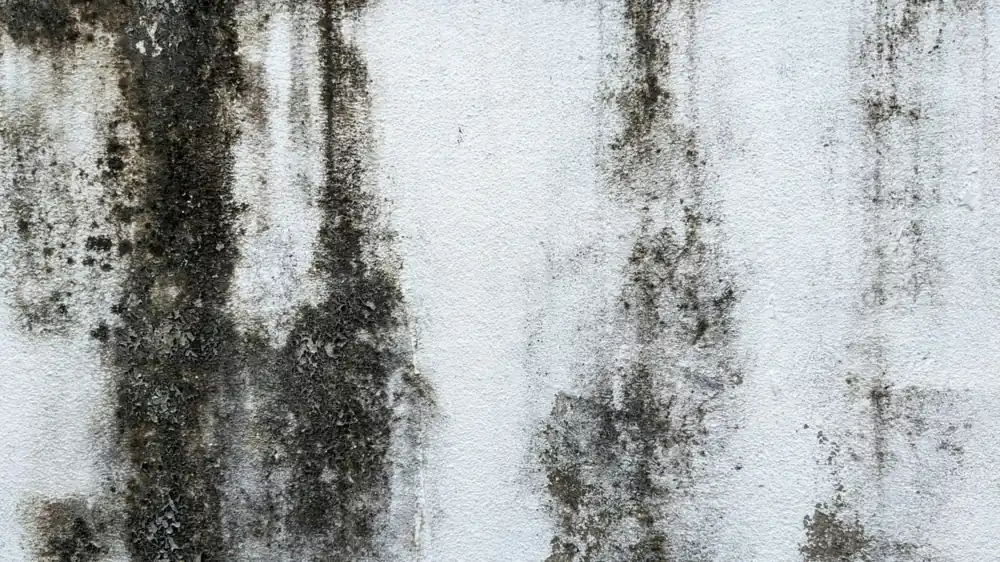
Mould removal in Varna: find the damp first, then clean or replace
Cleaning without finding the cause only postpones the next patch. First we measure where the moisture comes from; then we tell you how the mould should come off and which covering has to be replaced. Black mould treatment starts with the wall, not with the spray.
Our clients on video · all videos (in Bulgarian)
Mould removal in Varna works only if the moisture feeding the mould is stopped. Kanal Varna measures with a thermal camera and a moisture meter to find out whether the cause is a leak, condensation or damp from the foundations. Small patches are cleaned wet and treated with an anti-mould product; on a large area the affected covering is taken off, the wall dries, and new plaster follows. Treating small areas is a new service for us — by phone we tell you whether we can take it on and when. We tell you the price by phone after a short description. Start from the mould and damp hub if you are not sure of the cause. Call +359 52 993 333 or email info@kanalvarna.com — write to us in English and we reply in English.
Updated November 2026When mould removal lasts
Mould comes off for good only if you stop the moisture that feeds it; otherwise the cleaned spot darkens again. Mould spores are in the air almost everywhere. They grow where a surface stays damp for long: from a leak, from condensation on a cold wall, or from moisture rising from the ground.
An anti-mould treatment means cleaning the surface and applying a product that works against mould, after the source of the moisture has been found and stopped. If the mould has gone deep into plaster, wallpaper or plasterboard, treatment is not enough: the affected layer is removed and replaced.
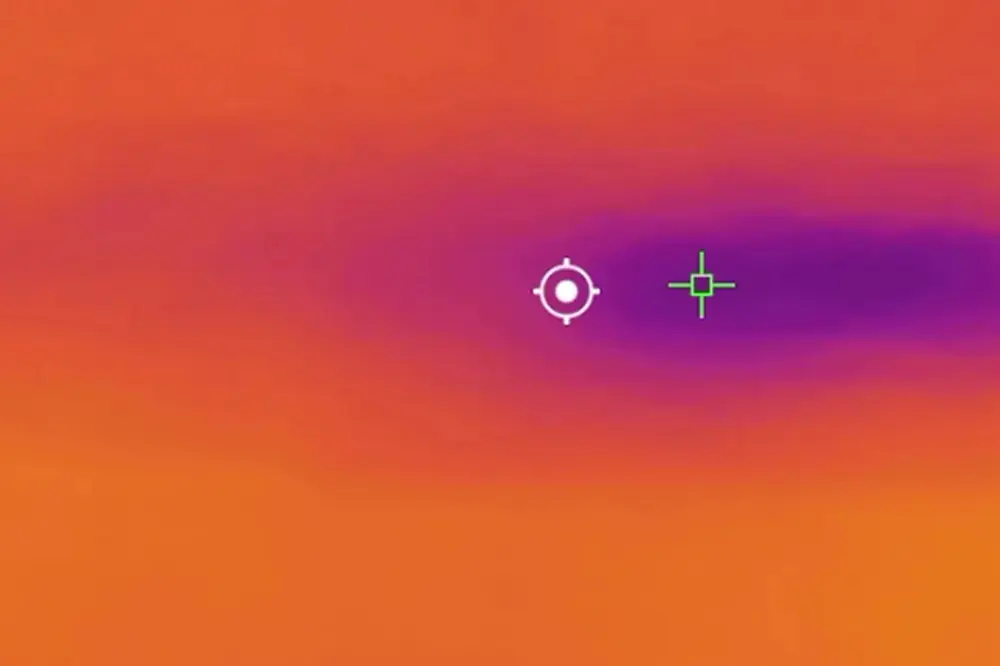
So we do not start with the spray. We look at the cold and wet zones with a thermal camera and measure how far the water has gone with a moisture meter, which tells us which of the three causes of mould and damp you have. If you need dated readings for a neighbour, the building manager or an insurer, see the damp survey. Anti-mould paint behaves the same way: on a wall that still gets wet, it only postpones the next patches. If the stains are on a cold outer wall and return every winter, think about condensation behind any internal insulation too.
Before cleaning: has the damp been stopped?
Cleaning makes sense when the wall no longer gets wet. The place of the stains suggests what has to be stopped first. The table is a guide; the measurements on site give the real answer.
| Where the stains are | What has to stop first | When and how it is cleaned |
|---|---|---|
| Around the window and on the reveal | Condensation on the cold reveal, or a leaking joint round the window frame | Thermal camera and meter on the reveal; cleaning once the reveal is dry |
| Ceiling under a bathroom or terrace above | A leak from above — pipe, trap or waterproofing | We find where the water comes from; see a leak from the flat above; cleaning only after the repair |
| The lower wall of a ground floor or basement | Moisture rising from the foundations | We measure by height; the answer is on our rising damp page, not in a spray |
| Grout and sealant round the bath or shower | Water that stays in the grout, and poor ventilation | Blackened sealant is replaced — see regrouting |
| Walls and floor after a leak or flood | Wet plaster, screed or plasterboard that has not dried | Measuring, drying after a leak, then replacing the affected covering |
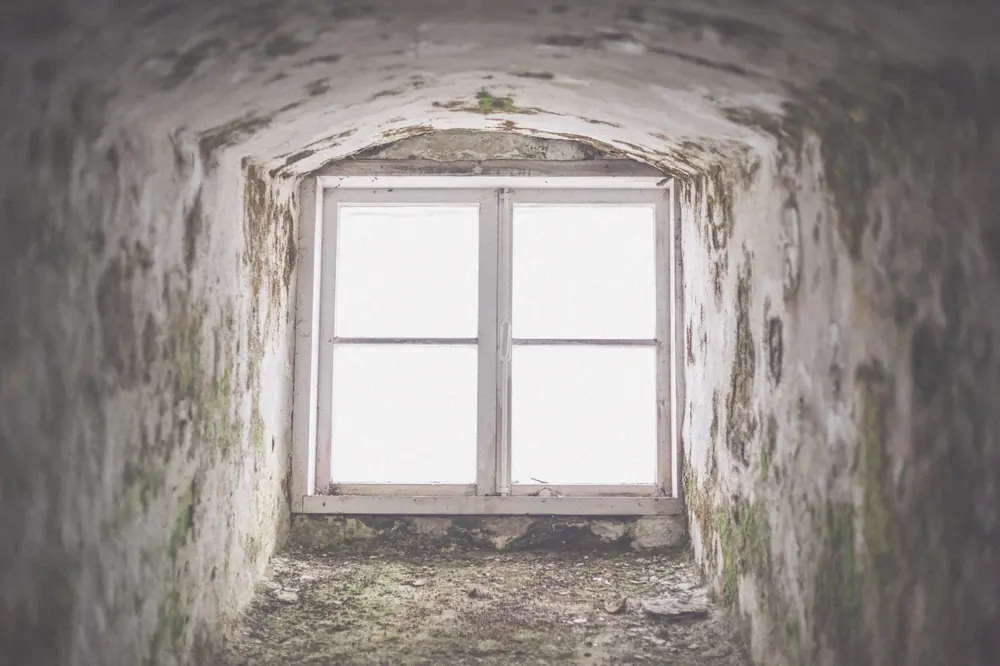
If the stains are in several places, there may be two causes — for example condensation in a corner and an old leak in the ceiling. We separate them with measurements so each is dealt with properly. When the moisture is steam in the bathroom, a working fan comes first: see bathroom extractor fan.
How mould is cleaned from a wall, step by step
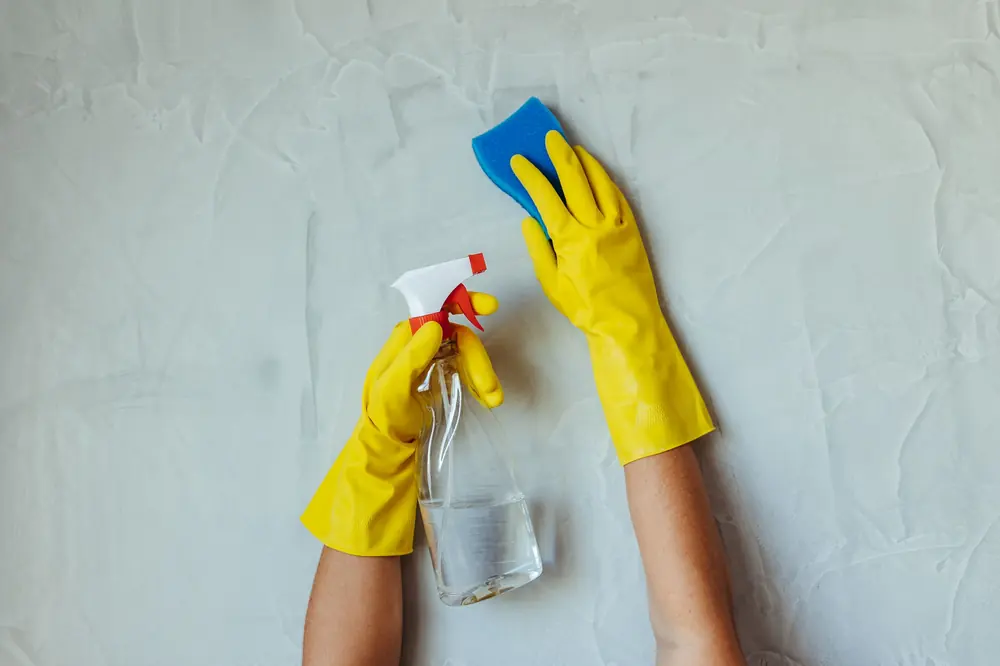
Small patches on a painted wall, ceiling or grout are cleaned wet and treated with an anti-mould product, provided the cause is clear and the damp has stopped.
- Prepare the room. Open the window, close the door to the other rooms, move or cover textiles. Wear gloves, goggles and a mask with a fine-dust filter.
- Do not scrub dry. Wet the patch with the product first, otherwise the brush or cloth spreads the spores around the room.
- Apply an anti-mould product. Use a product that works against mould and follow the maker's instructions on dilution, contact time and airing.
- Wipe and throw away. Wipe with a sponge or cloth that you then throw out. Dry the surface.
- Let it dry. If the stain shows through, the treatment is repeated once it has dried.
- Paint last. Filler and paint only when the wall is dry in depth, not just to the touch.
Bleach whitens, but in porous plaster, filler and gypsum it does not reach the roots, and the mould often shows through again in the same place. Never mix bleach with products containing ammonia or acid, such as vinegar or limescale removers. People with asthma or allergies, pregnant women and small children should not do the cleaning or stay in the room while it is done. We do not give medical advice: if you have symptoms, ask a doctor.
Treating small areas is a new service for us. By phone we tell you whether we can take it on and when. The inspection and the measurements we already do.
Call or write — we tell you whether an inspection is needed, what it costs and when we can come.
📞 +359 52 993 333A large area, or after a leak: the covering is replaced
When stains cover a whole wall, sit under wallpaper, behind plasterboard or on the back of furniture, cleaning the surface is not enough. The affected covering is taken off and replaced once the cause is fixed. Wallpaper and plasterboard with mould behind them are usually not worth saving.
- The cause is stopped. A leak repaired, waterproofing done, ventilation improved or the cold area insulated.
- The affected layer comes off. Wallpaper, filler, crumbling or darkened plaster, wet plasterboard. It is done wet, with a filter mask, goggles and gloves, the door closed and furniture covered.
- The base is treated. Cleaning and an anti-mould product on the bare masonry or concrete.
- The wall dries. No hurry and no paint on top. After a leak or flood, see what drying walls and ceilings means.
- Control measurement. The meter shows whether the wall is dry in depth, not only on the surface.
- New plaster, primer and paint. According to the wall; for damp from the foundations, usually materials that let vapour through.
What we do is tell you exactly which covering to remove and how far, marked on photos and thermal images in a written record that we send you by email. Plastering and painting can then be done by a builder or painter of your choice, who knows from the record where to start and where to stop, or ask us: filling and painting is a new service for us, and by phone we tell you whether and when we can do it. If the cause is a leaking pipe, a plumber repairs it; if it is condensation or damp from the foundations, we tell you what the solution is and who carries it out.
How the work goes
- Phone or email. You say where the stains are, since when, and whether they grow. Photos by email help. We tell you the price and when we can come.
- Inspection. Thermal camera and moisture meter find where the moisture comes from and how far it has gone. We look at the neighbouring walls, the ceiling and the floor, not only the stain.
- Record and plan. You get photos, thermal images and readings by email, with a clear order: what is repaired first, what is cleaned and what is replaced.
- Cleaning or replacement. Small patches are cleaned and treated once the damp has stopped. On a large area the affected covering comes off and the wall dries.
- Control measurement. After drying we measure again at the same points. Only then is it sensible to fill and paint.
We work every day from 06:00 to 23:00 in Varna and the villages around. If you are abroad, send the address and the contact of whoever can open the flat; you pay after the work, by bank transfer if you prefer.
When you do not need us: check yourself first
Not every stain needs an inspection. If the cause is obvious and the stain is not growing, airing and cleaning are often enough.
- Black dots only on sealant or grout: clean them. If they come back fast, the sealant is replaced; that is not damp in the wall.
- Corner stains only in winter that shrink with airing: air briefly with windows wide open several times a day, move the wardrobe off the outer wall and do not dry washing in the room.
- A fresh leak and a growing stain: stop the water first and look for the leak; cleaning is the last step.
- Mould on clothes, textiles or furniture: we do not treat those; we deal with walls, ceilings and floors.
- Stains in the bathroom: check whether they come from steam, sealant or water behind the tiles — see mould in the bathroom.
Frequently asked questions
Does bleach remove mould from a wall?
Bleach lightens the stain, so it looks as if it has gone. In porous plaster, filler and gypsum it does not reach the roots, and the mould often returns in the same place. An anti-mould product used as the maker says is more suitable. If you do use bleach, never mix it with ammonia or acids.
Do vinegar and baking soda work on mould?
On light stains on smooth surfaces that do not soak up water — tiles, glass, window frames — home remedies sometimes do. In plaster and plasterboard they act poorly because they do not reach deep. Whatever you use, the stain returns if the wall keeps getting wet.
Will the mould come back after cleaning?
We cannot promise it will not; it depends on the cause. If the leak is repaired, the cold area insulated or the ventilation improved, the chances are much better. If the damp stays, the stains return whatever was used. The control measurement shows whether the wall has really dried.
When can I paint after cleaning?
When the wall is dry in depth, not just on the surface. After a leak or on a large area this can take weeks, and longer with thick walls. A meter shows it more reliably than a hand. Paint on a damp base holds the moisture in and the stains often return under it.
How do I get rid of the mould smell?
The smell comes from damp materials in which the mould grows: plaster, wallpaper, plasterboard, textiles. Air fresheners only cover it. It goes when the damp stops, the affected materials are cleaned or replaced and the room is aired well. If it smells and you see no stains, mould may be behind furniture or in the wall.
Can you give me a document if the mould comes from the neighbour's leak?
Yes. In the written record we describe where the stain is, what the thermal camera and meter show and where the water probably comes from, with photos and a date, and send it by email. It makes talking to the neighbour, the building manager or the insurer easier, and the neighbour's plumber knows where to look. See also a leak from the flat above.
Related pages
Stains keep coming back? Let us find the damp first
Call or write — we tell you whether an inspection is needed, what it costs and when we can come.
📞 +359 52 993 333or email info@kanalvarna.com — write in English and we reply in English.
Send us a message
Leave your name and a phone number with the country code. Add your email if you prefer a written reply — write in English and we reply in English. We confirm the price before any work starts.