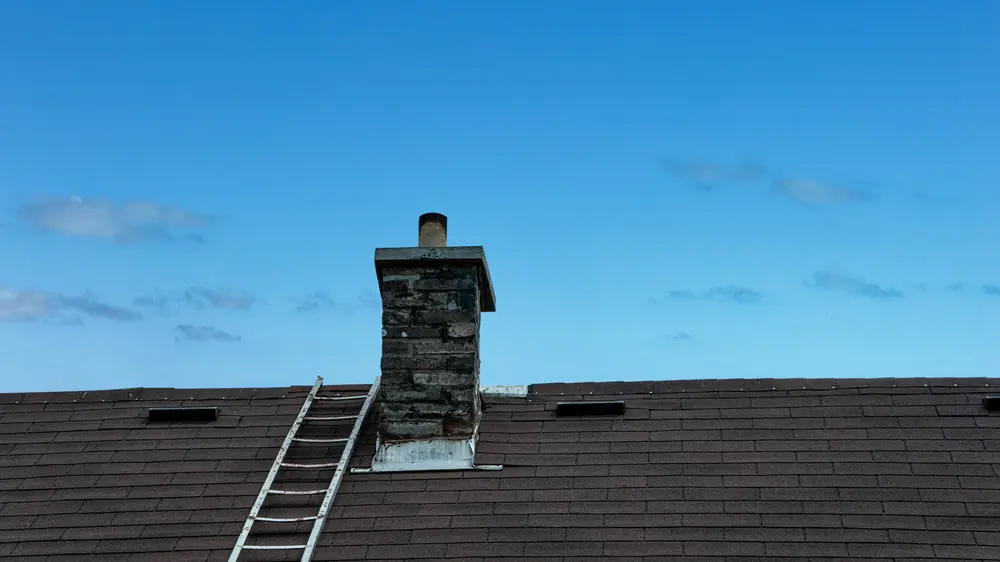
Chimney sweep in Varna: soot and tar brushed out before the first fire
A wood burner, open fire or solid-fuel boiler in a house or villa near Varna, and a flue that has not been swept since last winter. The soot and tar are brushed out, the floor and furniture around the stove are covered, and we tell you what we saw in the flue. It is a newer service for us, so we say by phone whether and when we can take your job.
Our clients on video · all videos (in Bulgarian)
A chimney sweep in Varna brushes the soot and tar off the inside of the flue serving a wood burner, open fire or solid-fuel boiler, so that smoke goes up the chimney and not into the room. A flue like that is swept at least once a year, best before the first fire of the heating season. This is a newer line of work for us: by phone we tell you whether and when we can take the job, whether the flue is swept from the top or from below, and whether a camera inspection is possible. Chimneys are a separate service from the small jobs on our handyman page. Call +359 52 993 333 or email info@kanalvarna.com — write to us in English and we reply in English.
Updated November 2026Chimney sweep: what the cleaning includes
The soot and tar are taken off the inner walls of the flue, from the stove or fireplace up to the cap. Afterwards smoke leaves freely again and far less is left in the flue that could catch fire. Hard, shiny tar often does not come off completely with a brush — then we tell you what follows.
Creosote (tar). A sticky black or brown deposit that builds up inside a flue when wood burns slowly or is damp. It is what ignites in a chimney fire, and it is harder to remove than dry soot.
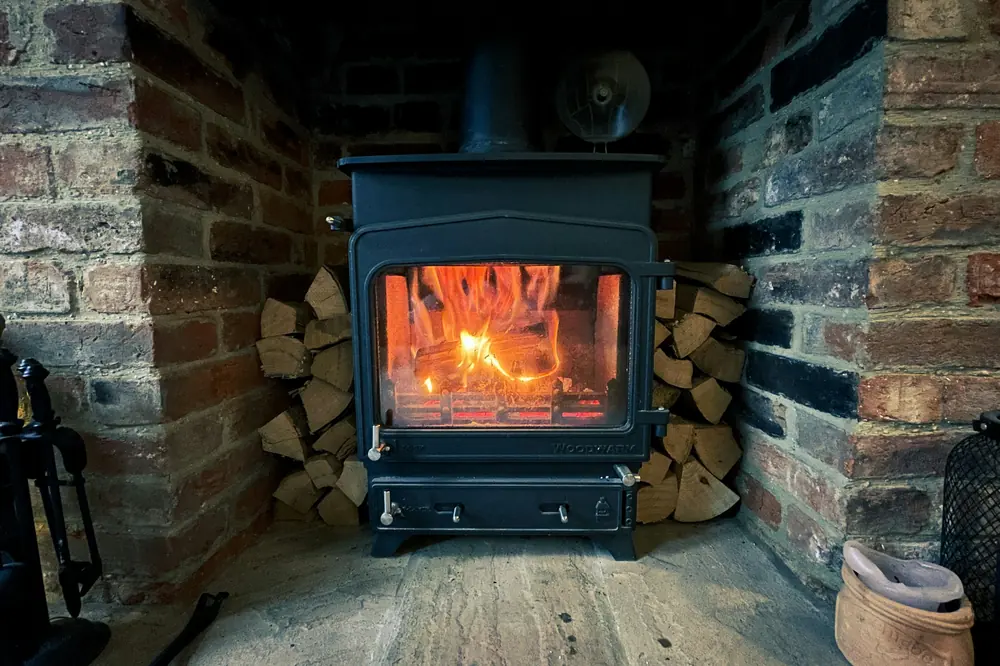
- Soot, tar and blockages are brushed off the flue walls with a brush.
- The bottom of the chimney, the cleaning hatch and the pipe between the stove and the chimney are cleaned out.
- The soot is collected into bags, and the floor and furniture are covered against dust.
- The draught is checked, and we briefly describe what we saw in the flue.
Whether the flue is swept from the top or from below, through the soot door or the fireplace, we clarify by phone, because it depends on the chimney. The stoves, boilers and pellet appliances themselves we do not repair.
How often a chimney needs sweeping, and why soot matters
The flue of a wood burner, open fire or solid-fuel boiler is swept at least once a year, best before the heating season. More often if you burn damp or resinous softwood, or keep the fire low with the air supply half shut — tar builds up faster that way.
- Weak draught. Soot narrows the flue. The stove burns badly, the glass of the fireplace goes black quickly and smoke comes into the room when you light it.
- Chimney fire. Tar burns. If it ignites, the chimney gets very hot, roars and throws sparks from the cap, and the fire can reach the timber of the roof.
- Carbon monoxide. A blocked flue sends the combustion gases back into the home. Carbon monoxide (CO) has no colour and no smell, and you cannot sense it.
Fit a CO alarm in the room with the stove or fireplace and near the bedrooms, as the maker's instructions say. If it sounds, or you get a headache, dizziness or nausea while a fire is burning, open the windows, get everyone outside and call 112. For any health complaint, see a doctor.
Signs that a chimney needs sweeping or inspecting
The commonest sign is smoke coming back into the room when you light the stove. The table sets out the signs, the likely cause and what we do.
| Sign | Likely cause | What we do |
|---|---|---|
| Smoke comes back into the room | A blocked or narrowed flue, a nest, fallen bricks; sometimes a cold chimney or strong wind | Cleaning and inspection along the whole height; do not light the fire until then |
| Weak draught, the fire burns lazily | Soot and tar on the walls, damp wood, air leaking in at the hatch or the stove pipe | Cleaning, and a check of the soot door and the pipe connection |
| Smell of smoke or tar when no fire is lit | Built-up tar; in damp weather the smell comes down the chimney into the room | Cleaning, and advice on the wood and on the chimney cap |
| Black or brown stains on the chimney in the loft or room | Tar and condensation coming through the masonry; possibly a crack | Inspection along the whole length; for a crack we point you to a bricklayer |
| Damp and brown marks around the chimney after rain | Water getting in through the cap or the roof around the chimney | That is a roof leak — we look for where the water comes in |
Tell us what you heat with and what the chimney is like. We say by phone whether and when we can come, and what it costs. Write to us in English and we reply in English.
📞 +359 52 993 333Chimney inspection with a camera
A camera inspection shows the inside of a flue where a torch does not reach, over the whole height, including the stretches hidden in walls and the loft. It goes into a cold chimney, from the top or through the cleaning hatch, much as with a drain camera. Whether it is possible for your chimney, we clarify by phone.
- Cracks in the inner wall or the clay liner, fallen bricks and crumbling joints.
- Nests, leaves and other blockages.
- A thick layer of soot, and hard shiny tar that a brush hardly removes.
- Displaced or rusted joints in a metal flue.
An inspection is not needed with every sweep. It makes sense when the chimney is old, when tar has burned in it, when there are stains or falling pieces, or when you are buying a house with a stove or fireplace. If there are cracks the chimney is repaired, not swept again, and we tell you what we saw so that you know what to ask a bricklayer. The thermal camera is something else: it shows unusually warm spots on the wall around a chimney in use, and it is the same instrument we use for thermal imaging surveys.
How a chimney sweep visit goes
- A phone call. We ask what you heat with, what the chimney is like and how it is reached. If we can take the job, we agree a day and tell you the price.
- A cold chimney. Do not light the stove from the evening before: a hot chimney is not swept.
- Protecting the room. The floor and furniture around the stove or fireplace are covered and the openings into the room are closed so dust does not escape.
- Sweeping. The brush goes over the whole height. From the top or from below, through the hatch or the fireplace, depends on the chimney and is settled by phone.
- Taking out the soot. Soot and tar are removed from the bottom of the chimney and the hatch and carried out in closed bags.
- Draught and what we saw. We check that smoke now draws away normally and tell you what we noticed — a crack, a crumbling joint, a rusted cap.
If you live abroad and let the house, say who will open the door — a neighbour, a caretaker or whoever holds the keys. Someone needs to be there for the visit, and the stove must not have been lit the evening before.
Before you call: what to check, and when you need someone else
Poor draught does not always mean a dirty chimney. Sometimes the cause is the wood or the air in the room.
- Is the wood dry? Damp logs smoke, burn badly and build up tar. Two dry logs ring when knocked together.
- Is there air in the room? With tight windows and the kitchen extractor on, the room can be short of air. Open a window a little and light the fire again.
- Is the damper fully open? If the stove or chimney has one, check it.
- Does it smoke only in a certain wind? Then the cause may be the cap or the height of the chimney, not soot.
- Are you burning painted wood, chipboard, plastic or rubbish? Please do not — it builds up tar and gives off foul fumes.
If smoke comes back, do not light the fire. Do not add wood, let the fire burn down and air the room, and do not light it again until the chimney has been checked. If the chimney roars and sparks or flames come out of the cap, get everyone outside and call 112.
Some jobs belong to someone else. A gas boiler, gas cooker and their flues are checked by a gas company; if you smell gas, call the gas emergency service or 112. The burner, fan and controls of a pellet stove or boiler are for the maker's service. A cracked chimney, a new cap or a liner is work for a bricklayer or a roofing firm, and we tell you what we saw so you can ask for the right thing. Water running down a chimney in the loft is a roof leak; for a flat roof see flat roof waterproofing, and for overflowing gutters gutter cleaning. Insulating a loft that a chimney passes through is a different job — see loft insulation.
What the price of chimney cleaning depends on
We give the price by phone after a short description. The more exactly you describe the chimney, the more exactly we can say what it costs and how long it takes.
- What you heat: wood burner, open fireplace, fireplace with an insert, wood or coal boiler, pellets.
- The property: a house, villa or part of a house, and how many storeys.
- Whether there is a cleaning hatch at the bottom and how the chimney is reached.
- When it was last swept and what you burn.
- What worries you: smoke in the room, weak draught, stains, noise, birds.
- Where the property is: Varna or a village around it.
It also depends on how much soot and tar there is and whether a camera inspection is needed. We work every day from 06:00 to 23:00 and issue an invoice. You pay by cash, card or bank transfer.
Frequently asked questions
How often should a chimney be swept?
At least once a year — best at the end of summer or in autumn, before the first fire. If you burn all winter, burn damp or resinous wood, or notice the draught weakening, have it checked mid-season too. A chimney not used for several years should be checked before it is lit for the first time.
Do I have to stop using the stove first?
Yes. The chimney must be cold, so do not light it from the evening before. A hot chimney is not safe to work in, and a camera does not go into one.
Do you sweep chimneys for gas boilers?
No. Gas boilers, gas cookers and their flues are checked by a gas company, where the safety rules are different. If you smell gas, do not light a fire or switch electrical appliances on or off; air the place, go outside and call the gas emergency service or 112.
Do you repair or rebuild chimneys?
No. Repairing a cracked chimney, a new cap, a liner or rendering are jobs for a bricklayer or a roofing firm. After an inspection we tell you what we saw and what to ask them for.
I let the house and live abroad — can you arrange it?
Yes. Write to us in English and we reply in English. Email the address, what the house is heated with and a photo of the stove and chimney, and tell us who will open the door; we say by phone whether and when we can come.
Related pages
The small jobs at home; chimneys are a separate service Roof leak
Water coming in around the chimney after rain Flat roof waterproofing
The flashing around the chimney on a flat roof Gutter cleaning
Wet marks under the eaves that come from gutters Loft insulation
Insulation near a chimney passing through the loft
Chimney smoking, or not swept since last winter?
Tell us what you heat with and what the chimney is like. We say by phone whether and when we can come, and what it costs. Write to us in English and we reply in English.
📞 +359 52 993 333or email info@kanalvarna.com — write in English and we reply in English.
Send us a message
Leave your name and a phone number with the country code. Add your email if you prefer a written reply — write in English and we reply in English. We confirm the price before any work starts.