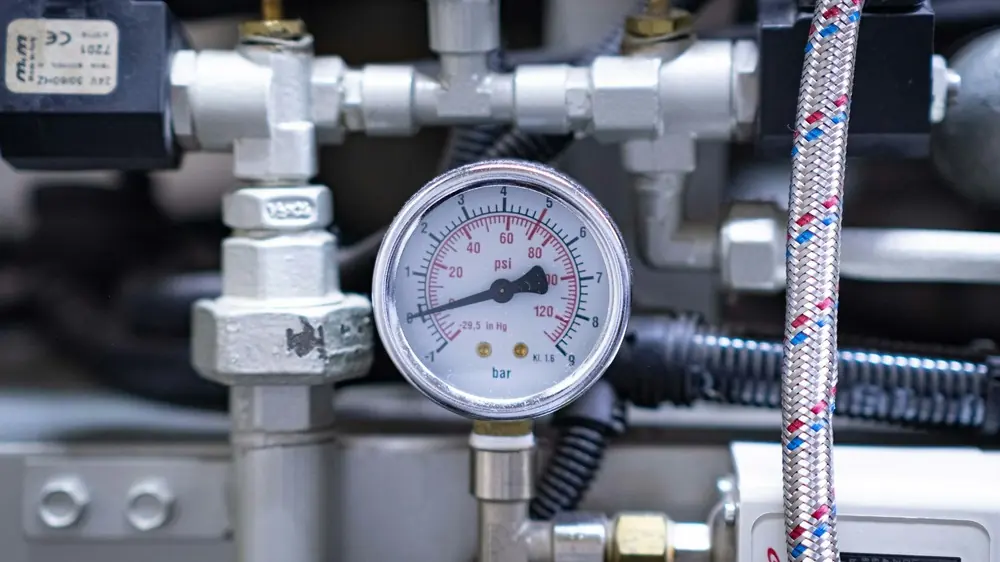
Water booster pump in Varna: finding the cause of low water pressure first
Weak water on the top floor, in the villa or in the evening? We measure the pressure and look for the cause first. Then the plumber we work with repairs, sets or fits a booster pump, and if the pressure turns out to be much too high, a pressure reducing valve.
Our clients on video · all videos (in Bulgarian)
Low water pressure does not always need a pump. We first check the aerators, the filter, the taps and the pipes, then whether there is a leak, and measure the pressure with a gauge. If the water arrives weak from the mains, the plumber fits a water booster pump: a pump with an expansion vessel and pressure switch, or a variable-speed pump, and for a supply that cuts out, a buffer tank as well. We also repair booster pumps that start too often, do not stop or leak. If the pressure is too high instead, we fit a pressure reducing valve. We tell you the price before we come, once you have described the problem or sent photos. This is one of the repairs on our plumber in Varna page. Write to us in English and we reply in English: info@kanalvarna.com or +359 52 993 333.
Updated November 2026Low water pressure: find the cause first
A pump makes sense when the water arrives weak from the mains itself — on a high floor, in a high part of the city or in a villa area with a weak network. Very often, though, the cause is in the flat: a blocked aerator or filter, a tap that is not fully open, old pipes narrowed by limescale, or a leak. If the water has stopped completely, see no water.
| What you notice | Likely cause | What to check |
|---|---|---|
| Weak at one tap or one shower only | Blocked aerator or shower head, worn mixer cartridge, half-closed angle valve | Clean the aerator, which blocks often with Varna's hard water; then the cartridge and the valve |
| Hot water only is weak | The water heater or its connections: tap, non-return valve, limescale | Compare with cold at the same mixer; see water heater repair |
| Weak everywhere, getting worse slowly | Blocked filter after the meter, a main tap not fully open, old galvanised pipes narrowed inside | The main tap and the filter; with old pipes a pump helps only a little, see pipe replacement |
| Pressure fell suddenly and the meter turns with the taps closed | A leak after the meter, in the flat or in the yard | Find the leak first: underground water leak or leak detection |
| Weak in the evening, in summer, on upper floors or in the villa — also for the neighbours | The network does not give enough pressure to that height or at those hours; in villa areas it sometimes cuts out | A gauge at different hours; a booster pump is the solution |
Five things to check before you buy a pump
- The aerators and the shower head: unscrew, rinse and soak in vinegar if limescale has built up.
- The main stop tap and the angle valves under the sinks: open all the way?
- The filter after the meter, if there is one: it blocks with sand and rust.
- The meter with all taps closed: if the small wheel turns, water is escaping somewhere; see water meter replacement if you think the meter itself is at fault.
- The neighbours on your riser: is it weak for them too, and at what hours? If theirs is strong, the cause is most likely in your own installation.
The plumber measures the pressure at the entrance of the flat twice, at rest and with a tap open. In a home it is usually around 2 to 4 bar. If it is good at rest and drops sharply when a tap opens, a narrow point in the pipes is more likely; if it is low even at rest, the mains does not give enough, and a pump makes sense.
Water booster pump: classic, variable-speed or buffer tank
When the mains does not give enough pressure, the remedy is a booster pump: a classic one or a variable-speed pump. Where the supply is weak or intermittent, the pump draws from a buffer tank and not directly from the main.
| Type | How it works | Good to know |
|---|---|---|
| Classic: pump, expansion vessel and pressure switch | The switch starts the pump when the pressure falls to the lower limit and stops it at the upper limit; the vessel holds a little water under pressure so the pump does not start at every tap | Simple and repairable: switch, diaphragm and seals are replaced separately. The vessel needs the right air pre-charge, or the pump starts too often |
| Variable-speed pump | Electronics change the speed to match the demand and keep the pressure almost constant | Starts softly and is usually quieter, with a small vessel. Dearer to buy, and the electronics are harder to repair on site |
| Buffer tank | Fills from the mains through a float valve when there is water, and the pump draws from it | For villas and houses where the water drops or stops at certain hours. The pump then needs dry-run protection |
Which one you need depends on the height, the number of points used at the same time and the pressure the mains already gives. So we do not suggest a model before measuring.
Installing a pump: place, noise, power and the water company
Four things are decided when a pump is installed: where it stands, how much it is heard, how it gets water and power, and whether the water company has to agree. If one of them is wrong, the pump can be noisy, run non-stop or lower the pressure for the neighbours.
- Place. Dry, ventilated, protected from frost, with room to service it.
- Noise. Rubber pads under the pump and flexible connections to the pipes.
- Water. Before the pump, a stop tap, a filter and a non-return valve; after it the vessel, the pressure switch and a gauge. A bypass line supplies water from the mains while the pump is stopped for repair.
- Power. The pump needs a suitable protected supply. If a new line is needed from the fuse board, we say so in advance — that is work for an electrician.
- In a block. A pump on the common riser can take water from the neighbours; if the pressure is low for the whole entrance, a shared solution with the owners' association is more sensible.
A pump directly on the street main can lower the pressure for the neighbours and run dry where the mains is weak, and the water company may have requirements. So before fitting we check whether an agreement is needed and whether a buffer tank is better.
Tell us where it is weak and since when, and whether you already have a pump — a photo of its label helps. We tell you the price before we come.
📞 +359 52 993 333Booster pump repair: starts too often, will not stop, leaks
Most faults show in how the pump behaves. The cause is often not the pump itself but the air in the expansion vessel, the pressure switch, a seal or a leak in the installation. Before touching anything, switch the pump off at the socket; if there is water around the pump or the socket, cut the power at the fuse board first.
| What you notice | Likely cause | What the plumber does |
|---|---|---|
| Starts at every tap and stops after seconds | The vessel has lost its air, or the diaphragm has split | Checks the pre-charge with the vessel empty and restores it. Water from the vessel valve means a split diaphragm: it or the vessel is replaced |
| Starts by itself with nobody using water | A dripping cistern or tap, a leak in the installation, a non-return valve that does not hold | Closes the sections one by one and watches the gauge; for a cistern see toilet cistern repair |
| Does not stop | Upper switch limit above what the pump can reach, a worn pump, air in the suction line, an empty tank | Measures what the pump reaches, adjusts the switch, bleeds the air. If it runs dry, it is stopped at once |
| Hums but gives no water | Air in the pump, a seized impeller, an electrical fault | Switches it off and checks the pump and the power supply |
| Leaks from the pump or its joints | A worn shaft seal or joint seal | Replaces the seal; a casing split by frost usually means a new pump |
Frequent starting wears the pump and the switch, so do not leave it. The price of parts depends on the model and is given in advance.
When a pump is not the answer
- A leak. If the meter turns with the taps closed, find the leak first.
- Too high, not low. A dripping water heater safety valve, banging pipes or swelling hoses: see pressure reducing valve.
- Pressure in the heating. If the boiler and radiator pressure drops, that is a different system: see circulation pump.
- Wells and boreholes. We do not install or repair pumps for wells and boreholes. This page is about pressure from the mains.
How a repair or installation goes, and the price
- Talk or email. Where is it weak, since when, and do you already have a pump? A photo of the pump and vessel labels tells us which parts may be needed.
- Measuring. A gauge at the entrance of the flat, at rest and with a tap open. With an existing pump, at what pressure it starts and stops.
- The cause. Aerators, filter, taps, the meter, so no pump is fitted where the problem is elsewhere.
- Proposal. Repair, setting, a new pump, a buffer tank or a pressure reducing valve, with the reason.
- Work. Fitting or repair, setting the pressure switch or the valve, a check of the joints for leaks.
The plumbers we work with do the work. You pay after the work, in cash, by card or by bank transfer; an invoice is available on request. We tell you the price before we come, or once we have seen the property.
If you are not in Bulgaria
Low pressure in a holiday flat or villa is often noticed first by guests. Send us the address, a short description (which tap, which hours, which floor), a photo of the pump label if there is a pump, and the name and phone number of the person who can open the door. For a villa that stands empty in winter, ask the plumber how to drain the pump, vessel and pipes: frozen water can split a pump casing.
Frequently asked questions
What water pressure is normal in a flat or a house?
In a home it is usually around 2 to 4 bar. Below that the shower and appliances work weakly, especially with two points in use. Above about 5 to 6 bar mixers, hoses and the water heater are strained, and a pressure reducing valve is normally advised. Only a gauge at the entrance, at rest and with a tap open, tells you what you have.
The pump starts every time I open a tap. Is it broken?
Most likely not. Usually the expansion vessel has lost its air or its diaphragm has split, so the pump has no buffer. The plumber checks the pre-charge with the vessel empty and restores it; water from the vessel valve means a split diaphragm. Frequent starting wears the pump, so do not leave it for long.
We are on the top floor of a block and the water is weak. Should we fit a pump?
First check whether it is weak only for you or along the whole riser. If only you, the cause is probably in your flat: aerators, taps, filter, old pipes. If all the upper floors have it, a pump in one flat can take water from the neighbours; a shared solution agreed with the building's owners' association is more sensible.
I'm not in Bulgaria. Can you still deal with it?
Yes. Email us photos, the address and who can open the door; write to us in English and we reply in English. You pay by bank transfer after the work.
Weak water, or too strong?
Tell us where it is weak and since when, and whether you already have a pump — a photo of its label helps. We tell you the price before we come.
📞 +359 52 993 333or email info@kanalvarna.com — write in English and we reply in English.
Send us a message
Leave your name and a phone number with the country code. Add your email if you prefer a written reply — write in English and we reply in English. We confirm the price before any work starts.