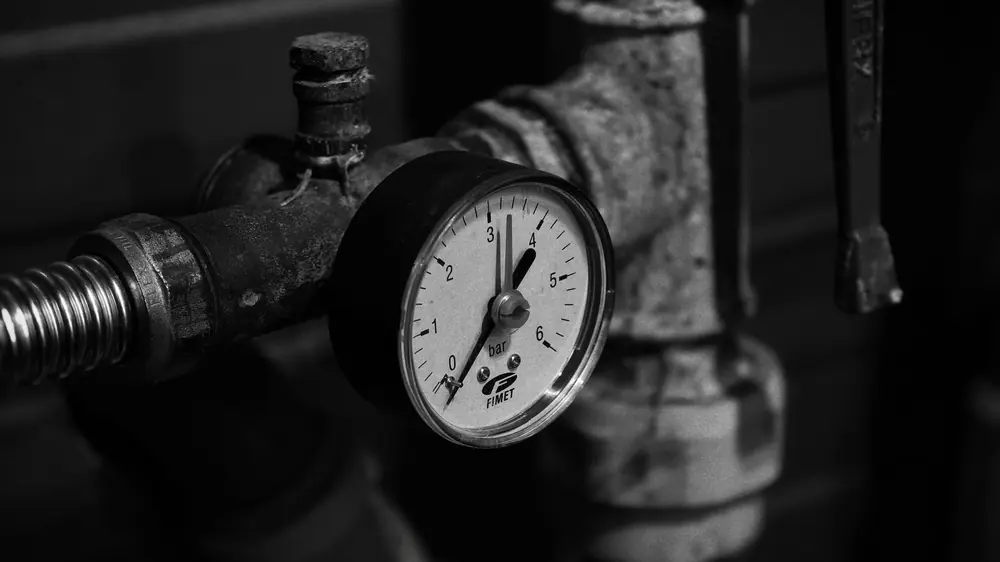
Pressure reducing valve in Varna: measuring high water pressure and fitting the valve
When the pressure in the pipes is higher than your taps, hoses and water heater can take, they start to drip and split. We measure first, then fit a pressure reducing valve after the water meter and set it. The work is done by the plumbers we work with.
Our clients on video · all videos (in Bulgarian)
If the safety valve on your water heater drips all the time, the pipes bang when a tap is shut or flexible hoses are swelling, the water pressure may be too high. We measure it with a gauge first. If it is high, a pressure reducing valve (also called a pressure regulator or PRV) is fitted after the water meter and the filter, before the first branch, and set to suit your installation. We take on the whole job with the plumbers we work with, and we tell you the price before we start: it depends on the space after the meter and what else has to be changed around the valve. Our other planned jobs are on the plumber in Varna page. Call +359 52 993 333 or email info@kanalvarna.com — write to us in English and we reply in English.
Updated November 2026What a pressure reducing valve does, and why it sits after the meter
A pressure reducing valve lowers the water pressure after itself and holds it near the value it is set to, whatever the mains is doing before it. The pressure in the street main is not the same everywhere or at all hours. In the lower parts of the city, close to a pumping station or after work on the network, it can be much higher than one flat needs, and late in the evening and early in the morning, when few people use water, it usually rises further. Taps, flexible hoses, cisterns, the washing machine and the water heater put up with that for a while, then start to drip and split.
A design rule of thumb is that a regulator is fitted where the pressure at the taps would exceed about 5 bar. A PRV does not help with low pressure; it only reduces. If the water is weak, especially on upper floors or with two taps open, the cause and the remedy are different: see booster pump.
Signs that the pressure is too high
No single sign proves it, but two or three together are worth measuring:
- The safety valve on the water heater drips constantly — also when the heater is not heating, not only while it warms up.
- Pipes bang when a mixer tap is shut sharply or when the washing machine or dishwasher stops filling.
- Flexible hoses under the sink and by the toilet swell or split, and joints begin to sweat.
- The cistern fills noisily and overflows; taps drip soon after the washers were changed.
- Water sprays hard even when the tap is barely open.
- It all started suddenly, after a burst or work on the street network.
A typical call: a residential complex in Varna a few days after a burst on the network. The pressure is very high, filters rattle and flats already leak. We measure at the building entrance and in the flats first; if the pressure is constantly high, a valve after the common meter usually helps. The surge itself should also be reported to ViK Varna, and any damaged fittings are put right.
First we measure: gauge on the supply, at rest and with a tap open
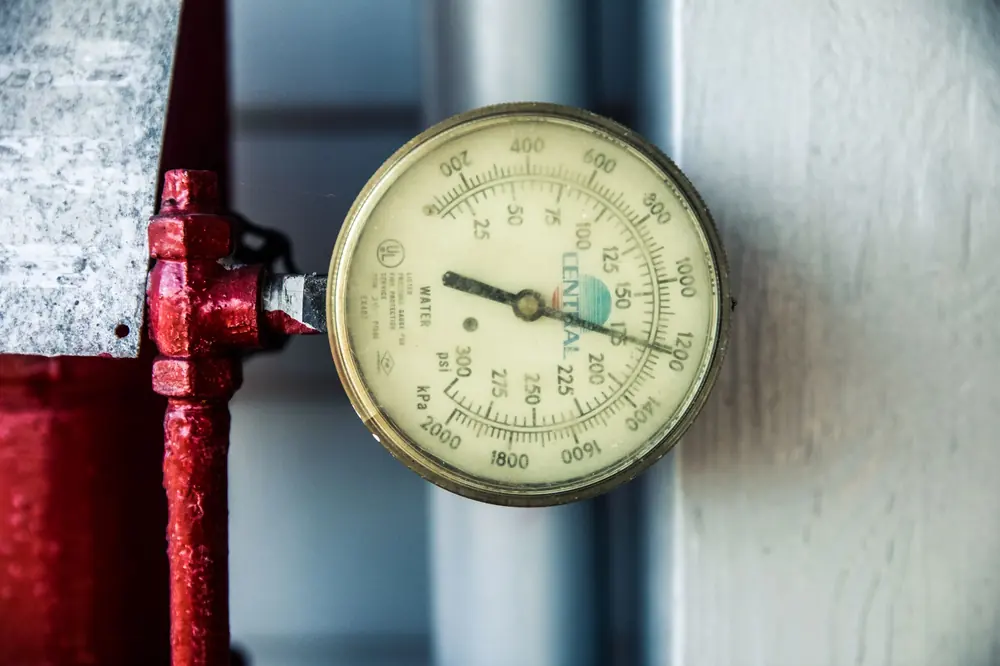
The plumber fits a gauge as close as possible to the water meter — on the washing machine tap, on a mixer connection or on a special fitting — and reads two values: with all taps closed and with a tap open. It also helps to see how the pressure behaves late in the evening and early in the morning, when the network is less loaded. A single reading at lunchtime can look normal while the early hours are much higher.
After measuring we know what to do: either the pressure is high and a valve is the answer, or it is normal and the problem is elsewhere — the water heater valve, a worn washer, the expansion vessel. We do not fit a valve just because that is how it is done.
Where the valve goes
The valve protects everything after it, so its place is at the start of the flat's installation. In the direction of the water, the usual order is:
- Water meter and stop tap. Where the water enters the flat or the house. The seal of the meter is not touched; the valve goes after the meter assembly.
- Filter. In front of the valve, so that sand and rust do not reach its seat. Many valves also have a built-in strainer.
- The valve itself. With the arrow in the direction of the water, and with access to the adjusting screw and the strainer cap.
- Gauge and second tap. A gauge after the valve or on it, so you can see the setting, and a stop tap after it so the valve can be removed without draining the installation.
- The first branch. Only after the valve, so that the water heater, the toilet and the washing machine all get the reduced pressure.
In a flat this is normally the niche by the riser, after the flat's own meter. In a house it goes after the meter chamber, inside the building or somewhere it cannot freeze; see also water meter chamber. If the pressure is high for the whole entrance, one valve after the common meter protects every flat. That is a decision for the owners' association; after the common meter the installation belongs to the owners. If they cannot agree, a valve can still be fitted in just your flat.
Tell us what is happening — does the water heater drip, do the pipes bang, when did it start — and whether it is a flat or a house. We tell you the price before we start.
📞 +359 52 993 333Setting the valve, and the water heater
Most valves come with a factory setting, which is not necessarily right for your home. The plumber picks the value after measuring: how many floors and water points there are after the valve, what the appliances require and at what pressure the water heater's safety valve opens, which is written on the valve itself. The setting must stay clearly below that figure, or the valve will drip again. The adjustment is made with the screw under the cap while watching the gauge; a tap is opened and closed a few times to see that the pressure returns to the same value and does not creep up with the taps closed.
When a water heater heats, the water in it expands. Its safety valve has a non-return part, so the extra water goes out through the valve, and a few drops while it heats are normal, with or without a PRV. Constant dripping is not. Lower pressure after the valve usually reduces the dripping. If it still drips hard at every heating, the plumber considers whether the heater needs an expansion vessel for drinking water and whether the safety valve is sound. The safety valve is never plugged.
Filter and maintenance: pressure creeping up, or too low
| What you notice after fitting | Likely cause | What we do |
|---|---|---|
| Water gets weaker gradually | Blocked strainer in the valve or the filter before it | Clean or replace the strainer and the filter |
| Pressure creeps up with the taps closed | Worn seat or seal; or the expansion of hot water if the heater is heating | Repair kit or a new valve |
| Pressure drops sharply when a tap is opened, or jumps when it closes | Worn diaphragm or the wrong valve | Check, repair or replace |
| Weak water at one point only | The problem is at that point — an aerator, a mixer, a hose | Fix that point; the valve is left alone |
| Water around the valve | The connection or the body | Seal the connection or replace the valve |
The filter is cleaned when the pressure after it weakens, and whenever work is done on the installation. Old rusty pipes fill it faster; see pipe replacement.
How we work, and what the price depends on
We take on the whole job, from measuring to the check after fitting. The plumbers we work with do the work; you talk only to us, and you call us if something is wrong. We talk first about what is happening, since when, flat or house and where the meter is; then measure and look at the fittings after the meter; then propose valve, filter, gauge and stop taps where missing, with reasons; fit with the water off, set the valve and check every joint; and finally check the water heater and its safety valve. You pay after the work, in cash, by card or by bank transfer.
The price depends on how much room there is after the meter and what else has to be replaced around the valve. We tell you before we start, after you have described the job or sent photos. Our other planned work is on the plumber in Varna page.
If you are not in Bulgaria
Typically the symptom is noticed by a guest or the cleaner: a drip under the sink, a burst hose, a water heater that never stops dripping. Email us a photo of the area around the meter and of the water heater valve, the address, and the name and phone number of the person who can open the door. A hose that bursts while nobody is there can do a lot of damage before anyone notices, so it is worth sorting out before the season.
Frequently asked questions
What water pressure is too high?
Design standards call for a regulator once the pressure at the taps and appliances is above about 5 bar. Whether that is the case in your flat is shown by a gauge near the meter, at rest, with a tap open and in the evening, when the network is less loaded.
My water heater valve drips. Do I need a pressure reducing valve?
Not always. If it drips only while the heater is heating, that is normally the expansion of the water and is not a fault. If it drips constantly, the cause may be high pressure or a worn valve. We measure first, and then it is clear whether you need a valve, a new safety valve or both.
Will the water be weaker afterwards?
The pressure will be lower, but with a correctly chosen and set valve the shower and the appliances work normally. If the water gets weaker gradually after fitting, the strainer in the valve or the filter before it is usually blocked, and it is cleaned.
The pressure is high in the whole block. Who fits the valve?
If the problem is for the whole entrance, one valve after the common meter protects every flat. That decision and its cost belong to the building's owners' association, because after the common meter the installation is the owners'. ViK Varna is responsible for the connection with the meter assembly. If no common decision is reached, a valve can be fitted in just one flat.
I'm not in Bulgaria. Can you still deal with it?
Yes. Send photos and the address by email and name the person who will open the door — write to us in English and we reply in English. We tell you the price before we start and you can pay by bank transfer after the work.
Related pages
Pressure too high?
Tell us what is happening — does the water heater drip, do the pipes bang, when did it start — and whether it is a flat or a house. We tell you the price before we start.
📞 +359 52 993 333or email info@kanalvarna.com — write in English and we reply in English.
Send us a message
Leave your name and a phone number with the country code. Add your email if you prefer a written reply — write in English and we reply in English. We confirm the price before any work starts.