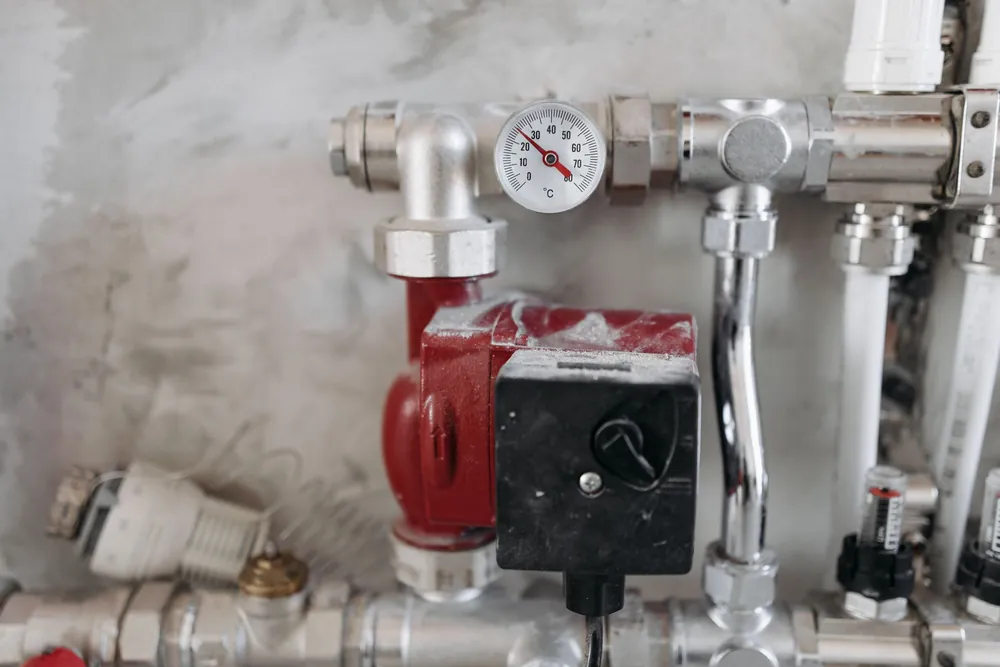
Circulation pump in Varna: cold radiators, noisy pipes, pressure that keeps dropping
Radiators stay cold while the boiler is firing, the pipes knock, or the pressure gauge drops every few days: behind all three there is often a heating circulation pump or an expansion vessel at the end of its life. We find out which, then replace it.
Our clients on video · all videos (in Bulgarian)
A circulation pump (the central heating pump) moves hot water from the boiler round the radiators; the expansion vessel absorbs the extra volume when water heats up and keeps the pressure steady. When one of them fails, radiators stay cold, pipes knock or the gauge keeps dropping. Kanal Varna diagnoses which part it is and the plumbers we work with replace it on the heating system in your flat or house in Varna. We tell you the price before we start. Describe the symptoms by phone on +359 52 993 333 or by email to info@kanalvarna.com — write to us in English and we reply in English. A visible leak is more urgent: see burst pipe. Other jobs are on the plumber in Varna page.
Updated November 2026Circulation pump or expansion vessel: which one is failing?
These are the two parts of a wet heating system that nobody notices until they stop doing their job. The pump drives water through the boiler and the radiators. The expansion vessel takes up the volume that water gains as it heats and holds the pressure steady in a closed system. They fail in different ways, so it pays to tell them apart before anyone orders a part.
| Pump | Expansion vessel | Boiler itself | |
|---|---|---|---|
| Problem with | Circulation: the water does not move | Pressure: it cannot be held steady | Usually a sensor, a vessel built into the unit or a circuit board |
| Typical signs | Cold radiators, silence or knocking from the pump body | Frequent top-ups, dripping safety valve, boiler switching on and off in short cycles | Pump hums and pressure is steady, but still no heat |
| Pressure | Usually stays steady | Keeps falling | Normal |
Signs that the heating pump is faulty
- Cold radiators while the boiler runs. The boiler fires normally but the hot water does not reach the radiators, especially the ones furthest from the boiler.
- No faint hum. A working pump gives a slight vibration and a quiet sound along the pipe next to it. Complete silence suggests the rotor is not turning.
- Knocking or whistling from the pump itself. Worn bearings or air in the pump housing.
- Seized rotor after a long break. A common reason for a "silent" pump at the start of the heating season, after standing idle all summer. For a flat that stands empty, that is worth knowing before the first cold week.
- A leak from the shaft. A worn shaft seal lets water out around the axis of the rotor. Damp or rust around the pump housing is a sure sign.
Signs that the expansion vessel is the cause
- Pressure keeps falling. If you top the system up every day or two and the gauge is low again, the membrane inside the vessel has probably split and it no longer absorbs the expansion.
- The safety valve drips now and then. When the vessel cannot take the extra volume, the pressure goes above the valve's limit and it lets water out to protect the boiler.
- Water when you shake the vessel. A sound vessel has only air on one side of the membrane. If you hear sloshing on the side that should be dry, the membrane is punctured.
- The boiler cycles on and off often. A vessel that gives too little buffer makes the boiler start and stop more than it should.
If the low pressure is in your cold mains water rather than in the heating, see booster pump instead. And if the gauge falls and you find damp on the floor, the problem may be a leaking pipe in the heating circuit — for wet underfloor systems see underfloor heating leak.
Describe the symptoms and send a photo of the pump or gauge. We tell you the price before we start.
📞 +359 52 993 333How the replacement goes
- Look and diagnose. Pressure, the sound of the pump, the state of the vessel and the direction of flow are checked before anyone touches the system.
- Isolate and drain. The shut-off taps around the part are closed and only the affected section is drained, not the whole system, where the layout allows.
- Remove and fit. The old pump or vessel comes off and the new one goes on with a compatible flange or thread. For a vessel the air pre-charge is set to the right value.
- Fill and bleed. The system is topped up slowly, the radiators are bled and the new joints are checked for leaks.
Changing a stand-alone circulation pump is usually a short job if the isolating taps on both sides work. A vessel also needs its pre-charge checked with a special pump before it is reconnected: a wrong setting brings the pressure drop straight back.
When it cannot wait
A visible leak from the pump shaft or from the vessel connections is urgent. The water can keep running and damage the floor, the plaster or the flat below. So is a pressure that collapses over a few hours, because the system can draw in air and stop circulating. A pressure that falls slowly over weeks can usually wait for a planned repair.
If you are unsure, describe the symptoms and we tell you whether it needs an emergency plumber or can be a planned repair. Switch the boiler off if water is leaking onto electrics, and close the isolating taps by the pump or vessel if you can.
Price, and if you are not in Varna
The price depends on whether it is the pump or the vessel, on the model, and on how easy it is to isolate. We give you the figure before we start, once we know the symptoms and have seen a photo of the part. A photo of the pump, its label and the pressure gauge is the most useful thing you can send. If you own a flat near Varna but live abroad, send the address and the contact of whoever can let us in; you can pay by bank transfer after the work.
Frequently asked questions
How do I know if it is the pump or the expansion vessel?
If radiators go cold while the boiler runs and you cannot hear the faint hum of the pump, it is probably the pump. If the pressure drops often and you have to add water every day or two, check the expansion vessel: its membrane may be split.
Can I change a circulation pump myself?
The job means draining the system in the section around the pump, taking the old pump out, fitting a new one with the same flange or thread, and bleeding the system. Without experience there is a risk of leaking joints or fitting the pump the wrong way round for the flow.
When is a pump or vessel problem urgent?
A visible leak from the pump shaft or the vessel, a pressure that collapses over a few hours, or loud knocking and vibration that could loosen the joints around it.
How much does it cost?
It depends on the part and the model, so we do not quote a figure before we know what is failing. We tell you the price once you have described the symptoms and sent a photo, and before we start. Other jobs with starting prices are on the plumber in Varna page.
I'm not in Bulgaria. Can you still deal with it?
Yes. Send us the address, a photo of the pump or the pressure gauge, and the contact of whoever can open the door. We agree the price with you before we start, and you can pay by bank transfer.
Can I contact you in English?
Yes — write to us in English by email at info@kanalvarna.com or through the form on this page, and we reply in English. The phone number is +359 52 993 333.
Radiators cold or pressure dropping?
Describe the symptoms and send a photo of the pump or gauge. We tell you the price before we start.
📞 +359 52 993 333or email info@kanalvarna.com — write in English and we reply in English.
Send us a message
Leave your name and a phone number with the country code. Add your email if you prefer a written reply — write in English and we reply in English. We confirm the price before any work starts.