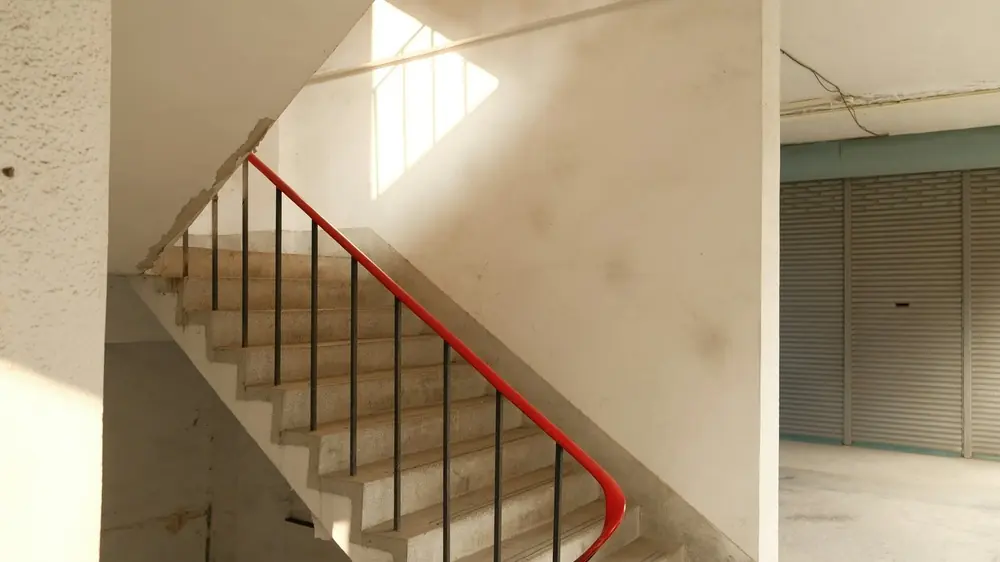
Plumbing for blocks of flats in Varna: one contact for the building manager
You manage a block of flats, or you are the owner who ended up dealing with the problem: a leak in the stairwell, a communal drain that backs up into the basement, water standing under the building. We find the cause with instruments first, then you get a written record for the owners' meeting, a quote and an invoice.
Our clients on video · all videos (in Bulgarian)
Plumbing for blocks of flats in Varna: Kanal Varna deals with the shared parts of the building — basement, risers, water meter area and shafts, leaks between floors, a blocked communal drain and water in the basement. We first find out with instruments whether the problem is in the shared pipework or inside one flat, then write a record with photos for the owners' meeting, a quote, and an invoice to the owners' association or the management company. Checks for individual flats and houses are on the property check in Varna page. Call +359 52 993 333 or email info@kanalvarna.com — write to us in English and we reply in English.
Updated November 2026Plumbing for blocks of flats: one contact instead of several tradesmen
If you are the building manager, the chair of the owners' association, or an owner who has been asked to sort out a problem in the block, you do not want to chase three different tradesmen. The shared pipework of a block is hidden in the walls and in the basement, and nobody looks at it until it leaks. We take the problem from the first inspection to the re-check: we look at the shared parts, find where the water comes from or where the drain is blocked, write a record, and the repair is done by the plumbers we work with. The invoice goes to the owners' association or the management company.
This suits buildings with a manager or a board, and companies that manage buildings professionally. It also works for planned maintenance: an inspection of the shared parts shows rusty sections, stopcocks that no longer close and cracked drain joints before they leak into someone's flat; for a riser that leaks in several places, see riser pipe replacement. We work in Varna and the villages and holiday areas around it.
Shared riser or one flat: where is it leaking from?
The most common argument in a block of flats is whether a leak comes from the shared installation or from a particular flat. We establish technically where the water comes from and write it into the record with photos and measurements. Who pays and how the owners vote is not for us to decide — that is a matter for the owners' meeting and, if there is a dispute, for a lawyer.
A typical case: water comes through the ceiling of one flat, and the owner above says everything is dry on their side. We check the riser and the connections floor by floor, measure moisture in walls and ceilings and, with access, look at the upper flat's bathroom and kitchen. The patch is not always right under the source: water can run along a pipe or the slab.
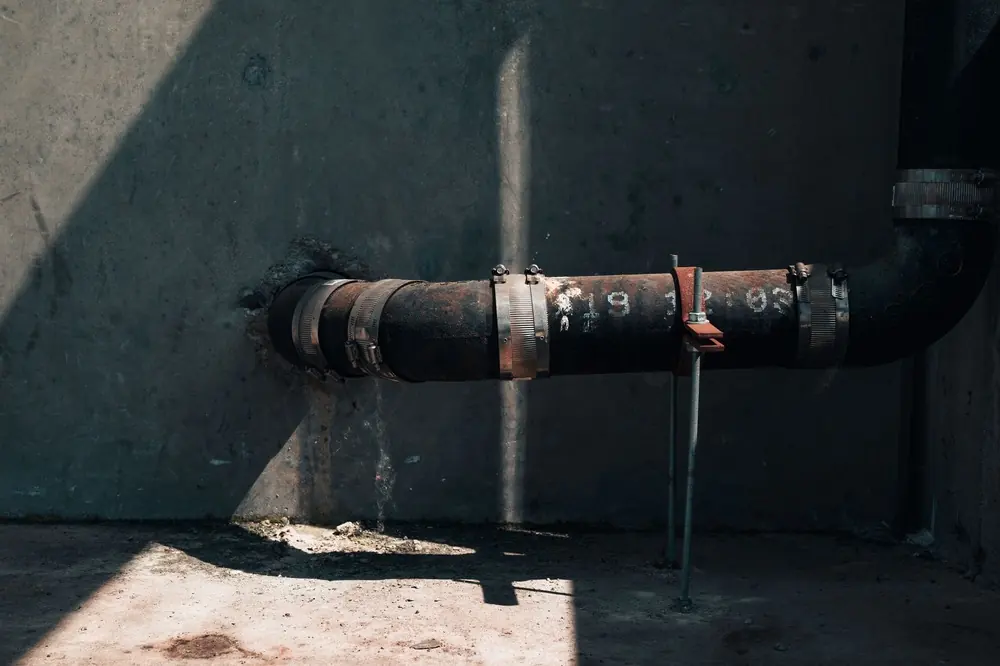
Without access to the flat the conclusion is weaker; if an owner does not let us in, the record says what we could not check. If the leak turns out to come from a flat, its owner can call us for the diagnosis and the repair inside the flat — see a leak from the flat above and, when the flat is let, a leak in a rented flat.
Tell us what is happening in the shared parts and when the owners' meeting is. We tell you the price of the inspection before we come, and afterwards you get a record, a quote and an invoice.
📞 +359 52 993 333A blocked drain in the block: the basement pipe and the stack
When the communal drain of a block blocks, the water comes out at the lowest point: through the floor drain in the basement, through an inspection hatch, or in the sinks and toilets on the ground floor. We clear it with a machine through the hatches, then run a camera to see why it blocked. In older buildings with basements there is another case: in heavy rain water comes back from the street sewer although the building's own drain is clear — then clearing does not help, and the answer is a non-return valve. The step-by-step side, and what to tell the residents, is on blocked drains in blocks of flats.
- Ask the residents whose flats are on that stack not to run water until we have cleared the pipe — otherwise it comes out on the lower floors.
- Arrange a key to the basement and check that the inspection hatches are reachable, not buried or bricked in.
- Note when it started and whether it coincided with heavy rain — that helps us tell the two cases apart.
The written record for the owners' meeting
The record is the document you take to the meeting: what we inspected, with which instruments, what we found and what we propose. With it the owners vote on a specific repair, not on “something is leaking in the basement”. We send it by email together with the quote.
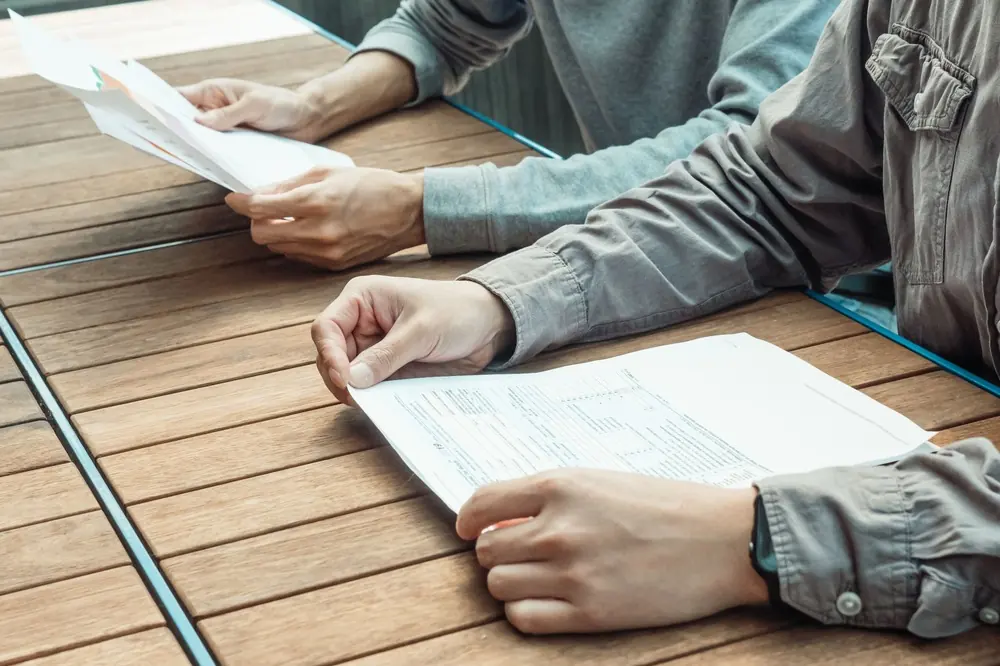
- Date, address of the building and who ordered the inspection.
- What we inspected — basement, risers, water meter area, shafts and the flats we had access to.
- Which instruments we used.
- Photos, thermal images and moisture readings by point.
- The conclusion: where the water comes from or where the blockage is — in the shared installation or in a flat, if established.
- What could not be checked, and why.
- A recommendation: what must be repaired now and what can be planned.
The record also serves later: if an owner does not fix a leak in their flat, the building holds a dated document with photos. It is a private technical record, not a legal expert opinion. If the damage in the flats will be claimed from an insurer, see a leak report for insurance.
How it works: from the first message to the re-check
- Tell us what is happening. What you see, since when, on which floor, and whether we can get into the basement and the flats. Photos by email help.
- Inspection. We check the shared parts with the instruments the situation calls for: thermal camera, moisture meters, acoustic device, pressure gauge, drain camera. We tell you the price of the inspection before we come.
- Record and quote. You get both by email — for the meeting, or to pass to the residents. The price of the repair is in the quote, after we have seen the problem.
- The repair. After the owners have decided, the plumbers we work with do the repair on an agreed day and time, so you can warn the residents if the water has to be shut off.
- Re-check and invoice. We check that the leak has stopped or the drain runs freely, and after a leak we measure moisture again at the same points. Then the invoice is issued to the association or the management company, on the details you give us. Payment is by cash, card or bank transfer, after the work.
When we are not the right contact
We are not the right choice for legal questions between neighbours, for the lift or for the street water network. Our part stays technical: where the water comes from and what has to be repaired.
- Who pays and how the owners vote. That is for the owners' meeting and, in a dispute, for a lawyer.
- The street network. If the problem turns out to be in the street sewer or the street water main, report it to the local water company (ViK Varna).
- The lift. Its mechanics are for the lift maintenance company; we deal with the water.
If water is running right now, close the stopcock on the riser or the building's main stopcock if you know where it is, and contact us — the record and the quote can wait. Our emergency plumber page covers that situation.
Frequently asked questions
Can you issue the invoice to the owners' association?
Yes. We issue it to the owners' association, to the association's representative or to the management company, on the details you give us. Tell us when you arrange the inspection so that we can put them into the record and the quote if you will show them to the meeting.
Can you send the record and the quote before the owners' meeting?
Yes. We send them by email so that you can show them at the meeting or pass them to the residents. Tell us when the meeting is, so that we can arrange the inspection in time. The record says what we found; the quote says what we propose to do and at what price.
The common water meter shows more than the flats together. Do you check for a hidden leak?
Yes. We watch the common meter in an hour when the flats use almost no water: if it still turns, there is a hidden leak, and we look for it along the shared pipes. If there is no leak, the cause may be in the readings.
Does someone from the building need to be there?
It helps. Someone has to unlock the basement and the shafts and tell us when the problem started and what has been done so far. If we need to get into flats, arrange access with the neighbours in advance, so that a second visit is not needed just for that.
How much does an inspection of the shared parts cost?
It depends on the building and on what has to be checked: just the basement, one riser, or the whole shared installation. We tell you the price before we come; the repair price is in the quote, so the meeting decides with a clear figure.
I own a flat in the block but I'm not in Bulgaria — can you still deal with it?
Yes. The manager can arrange the visit with us, and you send the address and the name and phone number of whoever opens the flat. Write to us in English and we reply in English. We tell you what we found, and you pay after the work, by bank transfer if you prefer.
Related pages
Checks on flats and houses while you are away Riser pipe replacement
When the shared pipe leaks in several places Leak report for insurance
When damage in the flats goes to an insurer Blocked drains in blocks of flats
Blocked communal drain in the basement and the stack Leak from the flat above
When the leak turns out to be from a neighbour
Need a plumber for the shared parts of your block?
Tell us what is happening in the shared parts and when the owners' meeting is. We tell you the price of the inspection before we come, and afterwards you get a record, a quote and an invoice.
📞 +359 52 993 333or email info@kanalvarna.com — write in English and we reply in English.
Send us a message
Leave your name and a phone number with the country code. Add your email if you prefer a written reply — write in English and we reply in English. We confirm the price before any work starts.