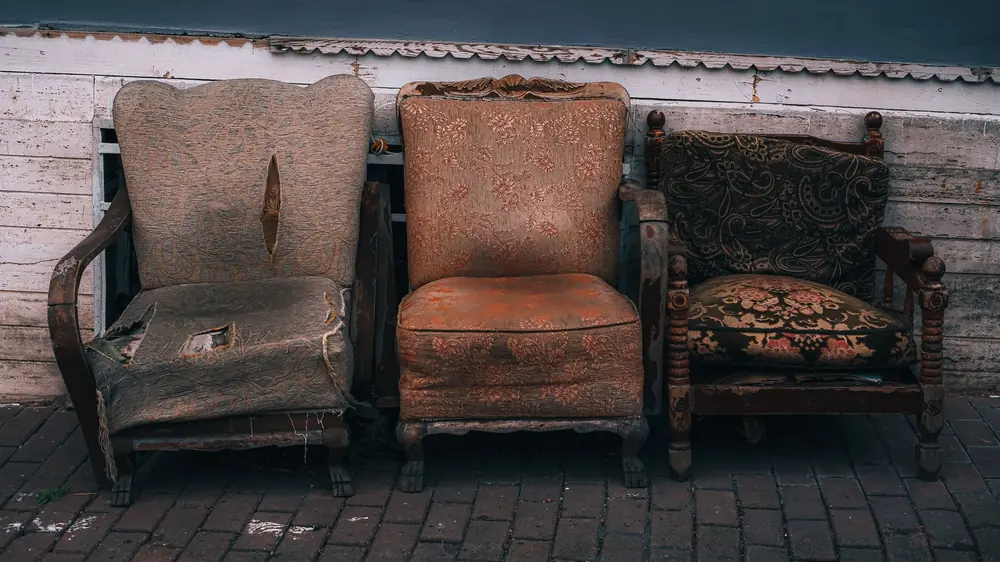
Old furniture removal in Varna: taking apart, disconnecting and carrying out
A wardrobe that will not go through the door, a kitchen still tied to the water, a fridge on a high floor with no lift. First look at what the municipality offers for bulky waste; when that is not enough, the pieces are taken apart, disconnected and carried out.
Our clients on video · all videos (in Bulgarian)
Old furniture removal in Varna starts with one question: is the municipality's bulky-waste scheme enough? If it is not — a high floor with no lift, a built-in wardrobe, a kitchen connected to the water, a deadline or a lot of items — the furniture is taken apart, disconnected, carried out and taken to a place that accepts bulky waste. Our service is paid; the price is given by phone. The work is done by the craftsmen we work with; we organise it and stay your one phone number. It is one of the small jobs on the handyman page. Call +359 52 993 333 or email info@kanalvarna.com — write to us in English and we reply in English.
Updated November 2026What old furniture removal covers, and what it does not
Furniture removal is more than carrying: a wardrobe has to come apart, a kitchen has to be disconnected from the water, and everything has to come down without scraping the stairwell.
Bulky waste. Large household items that do not fit the ordinary rubbish bin: furniture, mattresses, carpets, doors. They are collected separately from household rubbish and are never left beside the bins.
- wardrobes, chests of drawers, shelving units and cupboards — built-in ones too, if they are screwed together and not built into the wall;
- beds, frames, storage boxes and mattresses;
- sofas, armchairs, tables and chairs;
- kitchen units, worktops and sinks, once the kitchen has been taken out;
- carpets, fitted carpets and old internal doors with their frames;
- fridges, washing machines and cookers — see the appliances section below.
What we do not take:
- pianos, safes and heavy stone worktops — they need special straps and more people;
- asbestos-cement sheets and old pipes — we do not touch asbestos, only a specialist company does;
- paint, solvents, oil, car batteries, batteries and fluorescent lamps — these are handed in separately;
- bags of household rubbish — they are for the ordinary bin.
The municipality's scheme: when it is enough and when it is not
The first place to try is the municipality. The law obliges municipalities to provide places where households hand in bulky and some other waste without paying. Which places these are in Varna and on what terms, check on the Varna municipality website or at the district administration; the details change, so we do not repeat them.
Handing the items in costs nothing. If the scheme requires them to be brought down to the entrance or taken to the site, that work stays with you — and it is the hard part.
- The municipality is enough when there are few items, they come apart with a screwdriver, you have a lift, a car or a helper, and you are not in a hurry.
- You need us when the floor is high and there is no lift, the kitchen is tied to the water, the wardrobe is built in, there is a deadline or there are many items.
Our work is paid: you pay for the taking apart, the disconnecting and the carrying out, and we give the price by phone.
Taking apart: a wardrobe, a bed and an old kitchen
A big piece usually leaves in parts, because whole it will not pass the door or turn on the landing. A wardrobe comes apart from the top down: doors and mirrors first, then shelves, back and carcass. Old chipboard does not survive a second life, so a piece going for disposal is cut into parts that are easy to carry, with a mask and only in the hours the building allows for noisy work. Nails and staples stick out of the backs, so gloves are worn.
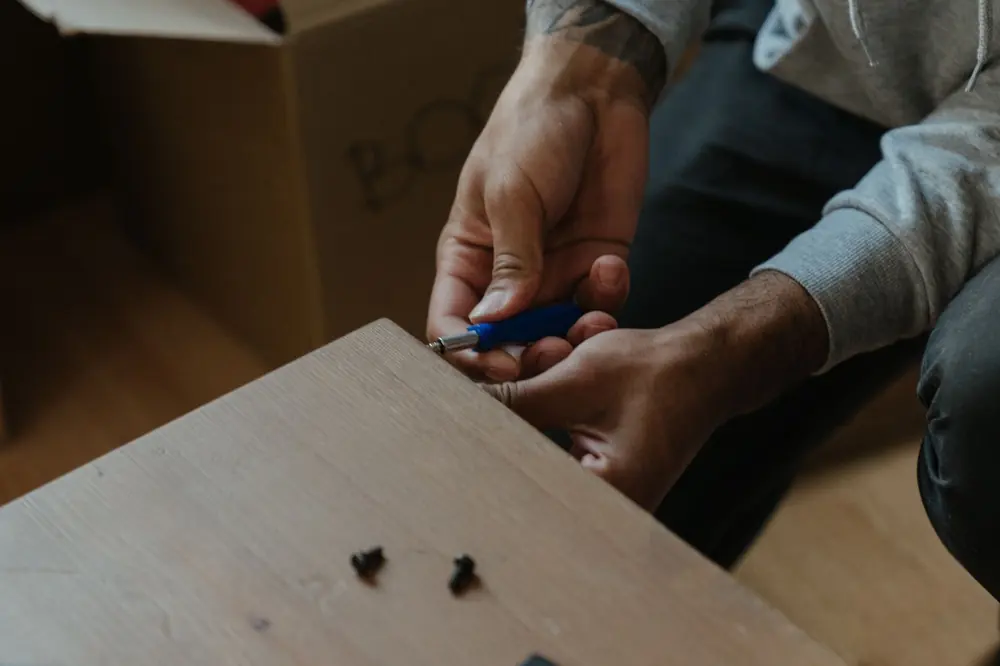
Taking out a kitchen is the most delicate part, because a kitchen is tied to the water, the drain, the electrics and sometimes the gas. The order:
- the water under the sink: shut the isolating valves, disconnect the flexible hoses, the trap and the dishwasher hose, cap the valves, because old ones drip even when closed, and plug the drain pipe so no smell comes up and nothing falls in;
- if a valve does not close, leaks or has seized with limescale, it is not forced — our plumber replaces it;
- the hob and oven are connected to the electrics, the hob often by its own power cable — an electrician disconnects them, and we do not touch cables;
- a gas hob or cooker only by a gas company; a gas cylinder is not waste and does not go with the items;
- then the wall units, one held from below, the worktop with the sink, and last the base units.
Under an old sink there is often what nobody has seen for years: a swollen cabinet floor, a black patch on the wall, a trap full of grease. A swollen floor and mould mean it has dripped for a long time. With a moisture meter and the thermal camera we check whether the wall is dry before the new kitchen comes — see leak detection. The tiles behind the worktop stay where they are; if you want those off too, that is tile removal. The new kitchen is then built as described under flat-pack furniture assembly.
Carrying down the stairs and in the lift
Well-carried furniture leaves no trace: the door is whole and the stairwell wall has no new mark. So the door, the landing and the turn of the stairs are measured first, and only then do we decide what leaves whole and what in parts.
- the room door is taken off its hinges if it is in the way — that gains a few centimetres;
- the lift is used by the building's rules, with the walls and floor protected and no overloading; if the rules do not allow furniture in it, we carry by the stairs;
| Item | How it leaves | Watch for |
|---|---|---|
| Wardrobe | In parts: doors, shelves, back, carcass | The mirror wrapped and separate; nails in the back |
| Kitchen | Units one by one, worktop by two people | Water shut off, drain under the sink plugged |
| Fridge | Whole, not cut | The pipes at the back are not bent or pierced |
If you are also replacing internal doors, the old leaf and frame can leave with the furniture; see internal door fitting for the new ones.
Tell us what has to go, which floor you are on and whether there is a lift. Send photos of the room and the stairwell by email, and we tell you whether and when we can come.
📞 +359 52 993 333Old appliances: fridge, washing machine, cooker
Old appliances are not furniture and are not left by the bins. They are handed in separately, as waste electrical equipment.
- Fridge and freezer. Not cut and not broken: the pipes and the compressor hold refrigerant that must not escape. Switch it off and defrost it beforehand, or the water from the freezer runs down the stairs.
- Washing machine. The tap is closed, the hoses for water and drain are disconnected and what is left is drained through the filter into a bowl. It has a concrete weight inside, so it is heavy for its size.
- Cooker and oven. Electric ones are disconnected by an electrician, gas ones by a gas company. We carry them out once they are disconnected.
How the removal goes
- List and photos. You tell us what has to go and send photos of the rooms and the stairwell by email. We say whether and when we can come, and what transport is needed.
- Your part. Empty the cupboards and drawers, defrost the fridge, put away documents and valuables, and show us which piece stays.
- Disconnecting and taking apart. The water under the sink is shut, the drain plugged and whatever does not pass whole is taken apart. The hob and oven are already disconnected by an electrician or a gas company.
- Carrying out. The frames and the lift are covered, heavy items go down with two people, and everything is brought to the entrance.
- Transport and handing in. The items do not stay by the bins. They are taken to a place that accepts them, agreed beforehand.
- Sweeping. Screws, nails and chipboard crumbs are gathered up.
If you let the flat and are abroad, tell us who will open the door — a neighbour, the building manager or whoever holds the keys — and send photos by email. In a block, carrying and the noise of taking apart follow the building's rules for noisy work.
When you do not need us for old furniture
- The furniture is sound and clean: offer it to neighbours or friends or in the local giveaway groups — often someone comes with a car and carries it away.
- The furniture is wet after a leak: first stop the water and dry the room — see drying after a leak.
- Bags of plaster and tiles after a renovation are not bulky waste but builders' waste — see builders' waste removal.
- A cellar or loft full of junk besides the furniture is a different job: basement clearance.
What to tell us, and what the price depends on
We give the price by phone after a short description or photos. Our work is paid; the municipality's scheme is the only route where handing in costs you nothing. It helps to know:
- what has to go and how many pieces — a wardrobe with how many doors, beds, a sofa, a kitchen with how many units;
- what has to be taken apart, and whether any piece is built in or fixed to the wall;
- whether there is a sink, dishwasher, hob or oven to disconnect, and whether the electricity and gas are already disconnected;
- which floor, whether there is a lift, the width of the stairwell and how far one can park from the entrance;
- by when the flat must be empty — for a sale, a new tenant or a renovation.
The three most useful photos are the room, its door and the stairwell. An invoice is issued on request.
Frequently asked questions
Doesn't the municipality take old furniture without charge?
Handing in bulky items at the places the municipality provides costs households nothing — that is set by law. Which places there are in Varna, whether anyone collects from the address and on what terms, check on the Varna municipality website or at the district administration. Our work is different — taking apart, disconnecting and carrying out — and it is paid.
Do you take the old fridge and washing machine?
We carry them out whole — a fridge is not cut or broken, because the pipes at the back hold refrigerant. Switch it off the evening before and leave the door open to defrost. Appliances are handed in separately from furniture. If you are buying new ones, ask the shop first whether it takes the old one.
Can I just leave the sofa by the bins?
It is not a good idea. A sofa by the bins has not been handed in: it blocks the neighbours and the rubbish lorry, and the municipality has its own scheme for bulky items. If you cannot carry it down yourself, call — we say by phone whether we can help.
Do you take out the kitchen with the sink?
Yes. The valves under the sink are closed, the trap disconnected and the drain plugged; if an old valve will not close, our plumber replaces it. An electric hob and oven must be disconnected by an electrician, a gas hob by a gas company.
Related pages
Old furniture in the way of the new?
Tell us what has to go, which floor you are on and whether there is a lift. Send photos of the room and the stairwell by email, and we tell you whether and when we can come.
📞 +359 52 993 333or email info@kanalvarna.com — write in English and we reply in English.
Send us a message
Leave your name and a phone number with the country code. Add your email if you prefer a written reply — write in English and we reply in English. We confirm the price before any work starts.