Window seal replacement in Varna: when the draught is the seals
Cold air along a closed window, seals that have gone hard, cracked or flat, and a cold sill on a windy evening. Before any seal is replaced we find out where the air really comes in, because it is not always the rubber.
Our clients on video · all videos (in Bulgarian)
Window seal replacement in Varna helps when air comes in along the closed sash and the seals have hardened, cracked or been squashed flat. The old seal is pulled out of its groove and a new one of the same profile goes in, without being stretched. Before that we check two things that look the same from inside the room: a sash that has dropped and no longer presses on the top, and a cold joint between the frame and the wall. Only the first is cured by seals. New seals are one of the jobs under window and door repair in Varna, and often go together with an adjustment. The work is carried out by the craftsmen we work with; we organise it and remain your one phone number. Call +359 52 993 333 or email info@kanalvarna.com — write to us in English and we reply in English.
Updated November 2026A draught from the window: seal, sash or joint around the frame?
When a window lets in air, the cause is in one of three places: in the seals, in a sash that does not press, or in the joint between the frame and the wall. New seals help only in the first case, so the first job is to establish where the draught comes from.
Window seal (gasket). The elastic rubber running round the sash and round the frame. When the window is shut the seal on the sash lies against the frame and the seal on the frame against the sash, and together they stop air, water and noise. It is replaced on its own, usually without taking the sash off. The rubber round the glass, under the glazing beads, is a different seal.
- The seal. You feel the draught along the whole length of one or more sides, and the rubber is hard, cracked or does not spring back when you press it with a finger.
- The sash. The air comes in at one corner, mostly the top, and the rubber looks sound. Then the sash needs setting, not a new seal: see window adjustment.
- The joint round the frame. It is cold on the wall beside the frame, on the sill or under the roller-shutter box although the sash is shut tight. That is an installation matter.
Often it is both, and then the sash is set and the seals replaced in the same visit.
How to see where it draughts, and what the thermal camera adds
You can find the draught at home with simple tests, and in cold weather also with a thermal camera, which shows the chilled streak along the frame.
- Wet hand. Moisten your hand and run it slowly past the closed sash on a cold, windy day. Wet skin feels even a weak draught.
- Sheet of paper. Shut the sash on it and pull. Where it slides out freely, the pressure is weak.
- A thin strip of tissue held near the gap flutters where air moves. Do not use a naked flame for this.
- Cooker hood. Run it with the windows shut and repeat the tests; the air moves harder through the gaps. If there is a gas appliance or a fireplace in the home, do not do this one: the draught can push smoke back into the room.
The camera does not see the air itself but the surface it chills. Where cold air enters beside the sash, a cold streak or tongue shows on the frame. The picture is clear when it is roughly 10–15 °C colder outside than inside; with a smaller difference it tells us little, and we say so honestly and fall back on the tests above. A slightly cooler edge round the glass is normal, because that is where the spacer of the unit sits. A draught looks different: a cold trail running from the gap between sash and frame. For a whole home see our thermal imaging survey. If the weather allows, we photograph all the windows during the visit, because the cold often comes in where you have not noticed it.
What you see, the likely cause and what is done
| What you notice | Likely cause | What is done |
|---|---|---|
| Seal is hard, cracked or flattened and does not spring back | An old seal, hardened by sun, cold and years | Replaced with a seal of the same profile |
| Air only at the top corner, rubber looks sound | The sash has dropped and does not press at the top | The sash is adjusted; the seals stay |
| Cold between the frame and the wall, a cold sill | Crumbled or unprotected fitting foam, cracked reveal | New foam and reveal from inside; seals do not solve this |
| Black deposit on the bottom seal and in the corners | Condensation running down the glass and sitting on the rubber | Cleaning and a search for the source of the damp; see mould removal |
| Seal has jumped out of its groove in one place | It was stretched when fitted, or torn at the corner | Pressed back in, or a new seal if stretched along its length |
| Water between the glass and the glazing bead | Worn seal round the glass | A separate job on the glass unit; by phone we say whether we can take it on |
A black deposit alone does not mean the seal is finished: clean it and press the rubber, and if it is elastic, it stays.
Tell us how many sashes there are and what the seals look like; a photo helps. On the phone you find out whether and when we can come and how the price is made up.
📞 +359 52 993 333Window seal replacement, step by step
The work on one sash is simple, but it starts before the visit, with choosing the right rubber.
- A sample of the profile. A photo of the seal in section, or a piece of the old one, decides which new one fits: seals of different systems differ in shape, and a wrong profile either does not go in or does not press. We keep no stock of seals, so the rubber is bought for your system. Thickness matters too: too thick and the sash is hard to close, too thin and the air still gets through.
- Removing the old seal. It is pulled out of the groove along its whole length. If it is glued at the corners or comes away in pieces, everything is taken out and no remnants stay.
- Cleaning the groove. Dust, sand and old fragments are removed, and black deposit with a suitable cleaner. The new rubber has to lie in a clean, dry groove.
- Fitting without stretching. It is pressed in by hand, starting in the middle of the top side, and at the corners it is allowed to bunch slightly instead of being pulled round them. The ends meet at the top, where water does not reach.
- Check and re-setting. The sash is closed and the handle and the pressure are checked all the way round. A new seal is taller than a squashed old one, so the cams often have to go back to a lighter setting.
If the frame has seals too, they are best replaced together with those on the sash, otherwise one side presses and the other does not. Silicone is not a seal: in the gap it stops the draught briefly, then peels or tears, and it glues the sash and blocks the drain slots. Any silicone already there is removed first. To keep the rubber supple, wash it once or twice a year with soapy water and treat it with a silicone-based rubber care product or glycerine; machine oil, cooking oil and petroleum jelly make it swell.
Old timber windows: sealing without replacing the window
An old timber window can be sealed without being replaced: with a strip stuck to the frame, or with a profile seal pressed into a groove routed along the edge of the sash.
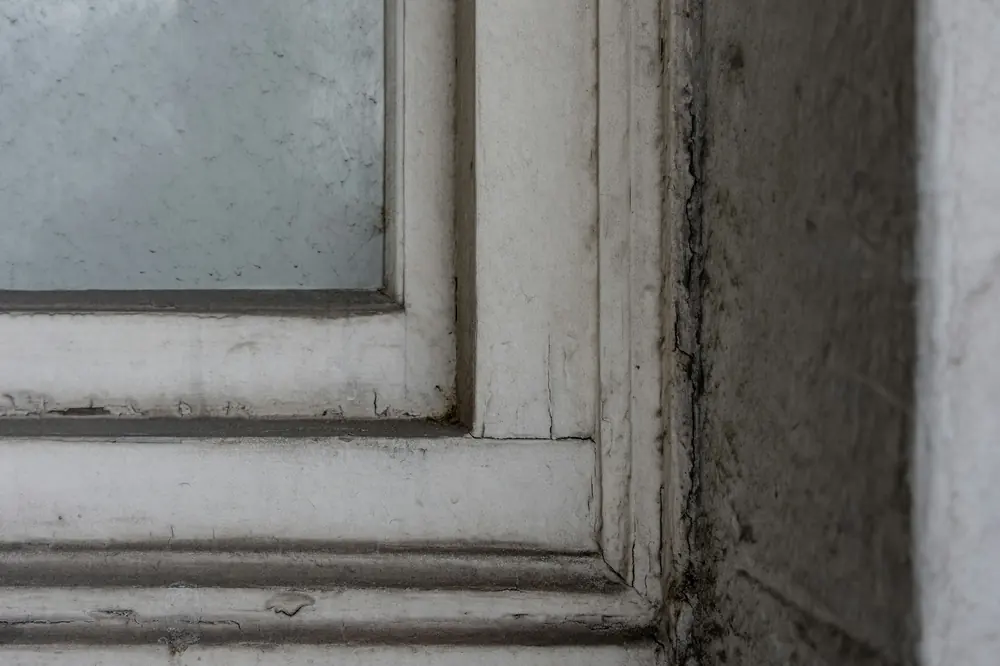
A self-adhesive rubber or foam strip goes on quickly with no special tools, but it does not last as long: the glue gives way to cold and damp and the foam flattens. It suits a window you will replace soon. A routed groove with a profile seal is far neater and more durable, but it needs sound, dry timber; whether we take on the routing, we settle by phone. Before sealing, the sash must lie flat in the frame. If it has swollen, the hinges are loose or the bottom is rotten, a seal will not help, and rotten wood is a job for a joiner.
When it is not the seals
If the sash is tight, the seals are new and it is still cold around the window, the cause lies in the joint between frame and wall, in the reveal or in the glass unit.
- The fitting joint. The foam round the frame must be protected from sun and water outside and from room humidity inside. Unprotected foam crumbles and lets air through; the crumbled foam is removed, new foam laid and the joint covered. See window reveals.
- The glass unit. If it is misted between the panes or cracked, new seals do not help: see double glazing unit replacement.
- Work outside. We do not take on the joint on the outside above the second storey; that needs a company with access at height.
What to tell us by phone, and what the price depends on
We give the price for window seal replacement by phone, after a short description. Tell us:
- how many sashes there are and how many of them are balcony doors;
- uPVC, aluminium or timber, and whether the seals are on the sash, on the frame or both;
- a close-up photo of the seal, and a section view if you can get one: the profile is chosen from it;
- where it draughts: all round, one corner or beside the frame.
The price depends on the metres of seal, the number of sashes, the type of profile and how easily a seal for your system is found. If the sash also needs setting, that is done in the same visit. We work every day from 06:00 to 23:00 and issue an invoice.
Frequently asked questions
Can you replace the seal on just one sash?
Yes. Often the cold comes through a single sash, usually the balcony door, because it is opened most. If the seals on the other sashes are still springy, they need no replacing. It is wise to check the seal on the frame of the same sash too, so that both press equally.
Can I fill the gap with silicone instead of a seal?
No. Silicone sticks to both sash and frame, so either the window stops opening or the silicone tears the first time you open it. A seal is made to compress and spring back many times; silicone is not. Leftover silicone also stops a new seal from lying in its groove.
Why does it still draught after the seals were replaced?
Most often the sash is not set and does not press the new seal everywhere; then window adjustment helps. Another cause is a seal of the wrong profile. If the wall beside the frame is cold although the sash is tight, the draught comes from the joint around the frame, not from the window.
I let my flat out and live abroad. Can you deal with draughty windows?
Yes. Email us the address and photos of the seals and of the windows, and tell us who can open the door: a neighbour, the building manager or the person who holds the keys. Write to us in English and we reply in English; you get the price before any work starts.
Related pages
Does it draught along the closed window?
Tell us how many sashes there are and what the seals look like; a photo helps. On the phone you find out whether and when we can come and how the price is made up.
📞 +359 52 993 333or email info@kanalvarna.com — write in English and we reply in English.
Send us a message
Leave your name and a phone number with the country code. Add your email if you prefer a written reply — write in English and we reply in English. We confirm the price before any work starts.