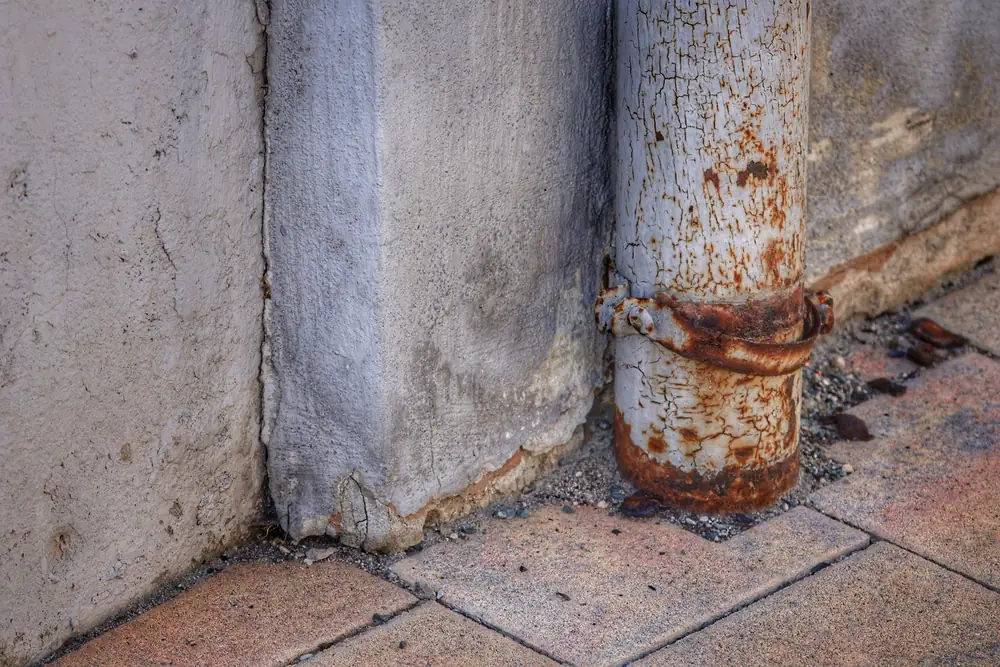
Riser pipe replacement in a block of flats in Varna
A riser is the vertical pipe that runs through every floor of a block of flats. When the old steel or cast-iron one rusts, cracks or leaks between floors, the whole run is replaced floor by floor, coordinated with the neighbours. A water riser is from €79 per floor.
Our clients on video · all videos (in Bulgarian)
Riser pipe replacement in a Varna block of flats means taking out the old vertical pipe on every floor and fitting a new one: PPR for water, PVC for the drain. A water riser is from €79 per floor; for a soil stack or a combined job, we tell you the price before we start, after we have looked at the risers on every floor. Because a riser is a shared pipe, the building's owners' association and the building manager have to agree the work, so the first conversation is usually with them. We coordinate the schedule with the residents, and the work is done by the plumbers we work with. Call +359 52 993 333 or email info@kanalvarna.com — write to us in English and we reply in English. If a riser has already burst, see burst pipe; for the full range of repairs see plumber in Varna.
Updated November 2026What a riser is and why it gets replaced
A riser runs vertically through all the floors of a block of flats and joins the horizontal branches of each flat to the shared water or drain pipework. A typical panel block has two kinds: a water riser (cold and hot) and a soil stack, the vertical drain that carries waste water down.
Most blocks in Varna were built in the 1970s and 1980s, so the original pipes are forty years old or more, well beyond their design life. Steel water pipes rust from inside, narrow and lose pressure. Cast-iron drain pipes wear out, crack and start to leak into the slabs between floors. Putting the work off makes it harder; replacing a burst riser in an emergency is more complicated than a planned job. If a drain is merely blocked and the pipe is whole, the first job is unblocking the soil stack with a camera check; replacement is for when the camera shows damage.
Signs that a riser needs replacing
- Rust or brown water when you open a tap: corrosion inside the steel pipes.
- Low pressure on the upper floors: the pipe has narrowed with deposits and rust.
- Damp patches around the riser, on the wall or ceiling next to the pipes.
- Repeated leaks: repairs do not last, because the pipe is worn throughout.
- A drain smell from a cracked soil stack letting gas between floors.
- Noise in the pipes: rattling, whistling or knocking when water runs.
- Age: a building over thirty years old with its original pipes.
If a neighbour's ceiling is wet from your riser or theirs, the leak from the flat above page explains how the source is found and who does what.
Water riser, hot-water riser and soil stack
| Riser | Old material | New material |
|---|---|---|
| Cold-water riser | Galvanised steel | PPR (polypropylene), which does not rust and has a smooth bore |
| Hot-water riser | Galvanised steel, which corrodes faster in the heat | Reinforced PPR, made for high temperature |
| Soil stack (drain) | Grey cast iron | PVC, lighter and smoother, with an inspection point and a vent pipe |
PPR pipes are joined by heat welding, so the joint is one piece with no nuts or seals. That, and the fact that they do not rust or collect limescale, is why they are used for water. For the drain, PVC gives a smooth bore, and rubber seals keep the joints tight. Blocks with central heating may also have a heating riser; that is a separate pipe.
Riser pipe replacement, floor by floor
- Survey and offer. We look at the riser on every floor and give an offer with the materials, the schedule and the price.
- Coordination with neighbours. All the residents are told. The schedule is agreed: when we need access to each flat and when the water will be shut off.
- Removing the old riser. A small opening is made in the floor slabs. The old pipes are cut and taken out floor by floor, and the waste is taken away.
- Fitting the new pipes. PPR or PVC pipes with new fittings and a stub for each flat. The openings are filled with fire-resistant foam.
- Testing. Water risers are tested under pressure and drains with water. Every joint is checked for tightness.
In a panel block the riser normally runs in a duct in the bathroom or toilet, so access is relatively easy: we take off the inspection panel and work in the duct. In an older brick block the riser may be built into a wall, which takes more breaking out. If a new opening in a floor slab is needed in a panel block, it is made by core drilling and after a structural engineer's opinion, because the slab is load-bearing. Afterwards the riser is boxed in with plasterboard and an inspection hatch. When the bathroom is being redone anyway, see bathroom renovation.
Send us the block's address, how many floors there are and what is going wrong — we tell you the price before we start.
📞 +359 52 993 333A shared pipe: who decides and who pays
A riser is a shared part of the building, not one flat's property. In practice that means the owners' association decides on the replacement, normally by a vote at a meeting, and the cost is shared between the owners according to their share of the building, from the building's repair fund or by a one-off collection. The owners are expected to give access to their flats for work on shared parts, and good communication usually settles the rest. The building manager can tell you how the vote works in your building; this page is not legal advice.
We help with the practical side, such as the offer and the schedule, so the owners have something concrete to vote on. For more on how blocks organise this, see property check for building managers. The pipes inside your own flat, after its stop tap, are a different job: see pipe replacement.
Schedule and noise
Replacing a riser is disruptive for the residents, so we keep to a fixed schedule and tell everyone beforehand:
- Working hours are normally 08:00–13:00 and 15:00–19:00, with no noisy work on Sundays; weekends are by agreement.
- The water is shut off only during working hours and restored in the evening.
- Notice: all residents are told in advance.
- Cleaning: the shared stairwell is cleaned each day after the work.
- Duration: for an eight-storey block, two to three working days.
Why replace the whole riser instead of a patch
Owners often ask whether one failed spot can be repaired. It can, but it rarely pays in the long run. If the pipe has corroded in one place it has usually corroded everywhere, and the next leak is a matter of months. A patch also creates a join between old and new pipe, which is a weak point. Replacing a single floor's section is technically possible, but we do not recommend it, for the same reason. For the water that is already running, see burst pipe.
What the price covers and what it depends on
A water riser is from €79 per floor. The price covers taking out the old riser, the new pipes and fittings, fitting and a pressure test; closing the openings in the slabs is included in the quote. It does not cover painting or tiling. For a soil stack, a hot-water riser or a combined replacement, we tell you the price before we start, after we have looked at the risers. It depends on how many floors there are, whether the riser is in an accessible duct or built into a wall, and how many risers are replaced together. Payment is in cash, by card or by bank transfer after the work, and an invoice is issued on request.
If you own a flat but live abroad
A riser replacement is decided by the owners together, so you may be asked to vote or pay your share without being in Varna. Ask the building manager to send you the offer, the schedule and your share, and send us the block's address and the building manager's contact. We write to you in English and you can pay your share by bank transfer to whoever collects it; ask the manager how. If your own flat is let, tell the tenant or property manager the dates, because someone has to open the door when we need access to your duct.
Frequently asked questions
How much does riser replacement cost?
A water riser is from €79 per floor. For a soil stack, a hot-water riser or a combined job we tell you the price before we start, after we have looked at the risers. Our price list has the other plumbing prices.
How long does it take in a block?
For an eight-storey block, two to three working days. The water is shut off only during working hours and restored in the evening.
Do all the neighbours have to agree?
As a rule, no. A riser is a shared pipe, so the owners' association decides, normally by a majority vote at a general meeting; ask your building manager how it works in your building. We help with the practical side so the owners have a clear offer to vote on.
Can the riser be replaced only on my floor?
Technically yes, but we do not recommend it. A join between new and old pipe is a weak point. It is more effective to replace the whole run at once.
What does the price not include?
Painting and tiling. The price covers taking out the old riser, the new pipes and fittings, fitting and pressure testing; closing the openings in the slabs is included in the quote.
How noisy is it?
Breaking out makes noise, so we work in the agreed hours, normally 08:00–13:00 and 15:00–19:00, and tell all residents in advance.
I'm not in Bulgaria — can you still deal with it?
Yes. Send us the block's address and the building manager's contact. We agree the plan with them, tell you the price first, and you can pay your share by bank transfer. You can write to us in English and we reply in English.
Planning a riser replacement?
Send us the block's address, how many floors there are and what is going wrong — we tell you the price before we start.
📞 +359 52 993 333or email info@kanalvarna.com — write in English and we reply in English.
Send us a message
Leave your name and a phone number with the country code. Add your email if you prefer a written reply — write in English and we reply in English. We confirm the price before any work starts.