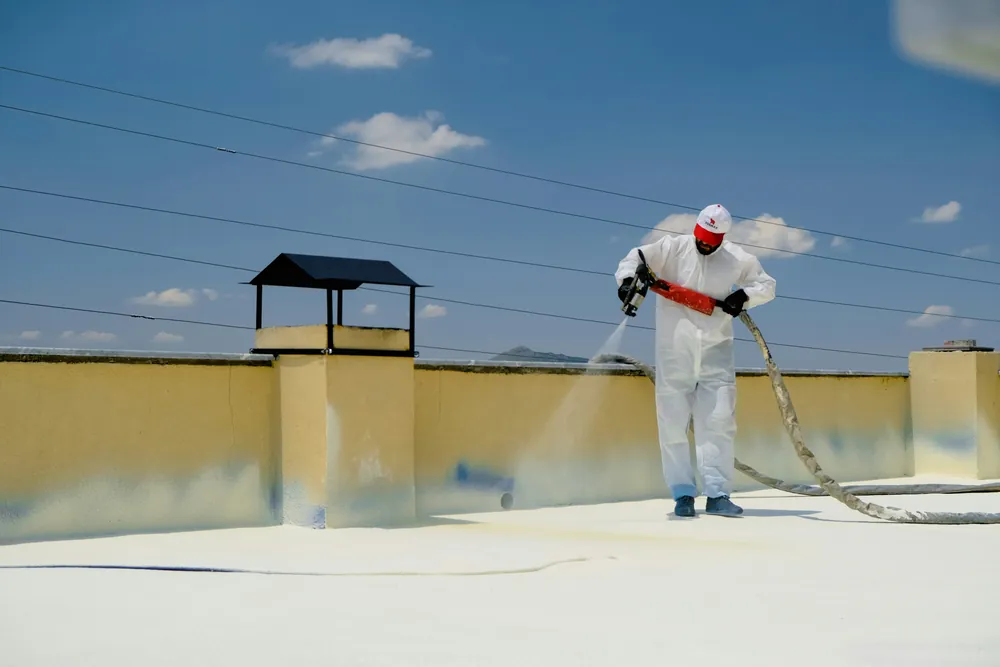
Flat roof waterproofing in Varna: bitumen and PVC membrane
Wet patches on the top-floor ceiling after rain, a blistered or cracked roof covering, puddles that never dry: on a flat roof these mean the waterproofing layer has failed. We repair or replace it with bitumen or a PVC membrane, and we say honestly which one your roof needs.
Our clients on video · all videos (in Bulgarian)
Flat roof waterproofing in Varna is the repair or replacement of the layer that keeps rain out of a flat roof: torch-on bitumen rolls, a PVC membrane or a liquid polyurethane coating, chosen for the roof, its condition and your budget. It is a different job from finding a roof leak: leak detection says where the water gets in, waterproofing is the repair that stops it, and often both are needed, in that order (see roof leak detection). A local patch is enough for a single damaged spot; blisters, many cracks or an old layer call for replacement. The work is carried out with the craftsmen we work with, in dry weather. We tell you the price once we have seen the roof or your photos. This page belongs to waterproofing in Varna. Ring +359 52 993 333 or email info@kanalvarna.com — write to us in English and we reply in English.
Updated November 2026Flat roof leak or failed waterproofing: how to tell
The roof is the first line of defence against rain, snow and wind. When its waterproofing fails, water gets into the structure, stains ceilings, spoils the insulation and rusts the reinforcement. The trouble is usually noticed months late, when the damage is already large.
- Wet patches on the top-floor ceiling. The stain may be far from the actual hole, because the water runs along the slab before it drips.
- Blisters on the covering. Moisture has got under the layer and the sun turns it into steam that lifts it.
- Cracks and splitting. Old bitumen cracks in sun and frost, and every crack lets water in.
- Moss, grass or shrubs on the roof. Roots go through the layer and make it worse.
Do not confuse the two jobs: finding the leak tells you where, repairing the layer stops it. We do both and they usually go in that order. If you only need to know where the water comes in, see roof leak detection.
Flat roof repair and pitched roofs
A flat roof is typical for blocks of flats and commercial buildings. Despite the name it must have a slight fall so the rain runs off. The weak spots are the drains, the upstands round the edge, aerials and expansion joints. It should be looked at every few years.
A pitched roof has the membrane under the tiles, sheet metal or shingles, on the boarding. For a leak the tiles in the problem area may have to be lifted. Typical faults are broken tiles, displaced ridge tiles and water getting in round roof windows. We take on both kinds of roof, with the craftsmen we work with.
Roof membrane options compared
Torch-on bitumen rolls. The classic choice for flat roofs here. The roll is heated with a gas torch so that the bitumen melts and bonds to the base. Polymer-modified versions are more elastic and heat-resistant. A thickness of at least 4 mm is what we advise on homes, or two layers on exposed roofs. The seams are the usual weak point, so they are overlapped and welded carefully.
PVC membrane. A synthetic sheet of 1.2 to 2 mm, welded at the seams with hot air into one continuous layer. It resists sun well, moves with the temperature and weighs much less than bitumen. It lasts longer but costs more, and is usually chosen for new buildings and commercial roofs.
Liquid polyurethane. A coating applied with a roller or a trowel that forms a seamless elastic skin. It suits awkward shapes and the points where pipes come through, and it can go over the old layer if that is sound.
Bitumen is the usual answer for blocks of flats and refurbishments, PVC where the longest life is wanted. Which one is right depends on the roof, its state and your budget.
Send photos of the ceiling stains and tell us which floor is under the roof — we tell you the price once we have seen it, and before we start.
📞 +359 52 993 333Patch the roof or replace the whole layer?
A single point of damage, such as a puncture or a seam that has come unstuck, is repaired locally with a patch of the same material. With several faults, blisters, or an old layer that has reached the end of its life, we recommend replacing it. If the old layer is blistered or broken up it comes off first. If it is in good condition and the base is sound, a new layer can go on top, but not more than two layers over each other because of the weight.
After the job the next step against the cold on the top floor is insulating the ceiling, and that only makes sense once the ceiling is dry.
How a roof job goes
- Visual check. The whole roof is checked for blisters, cracks, lifted seams, standing water, damaged upstands and drains.
- Thermal scan. A thermal camera shows hidden moisture in the insulation that the eye cannot see.
- Assessing the base. Is the concrete stable, what is the fall and are the outlets clear?
- Removal, if needed. A blistered or broken old layer comes off; a sound one can stay.
- Laying. Primer, then the membrane with attention to the seams, upstands and drains. Each critical point gets extra reinforcement.
- Final check. A thermal check of the finished work and a test of the seams for watertightness.
The work is done in dry weather. Bitumen goes on at about 5 °C or above, and PVC can go on at lower temperatures. In winter an emergency fix is possible as a temporary measure, with the main job planned for spring.
A roof over a block of flats: who is involved
In a block of flats the roof is shared. The top-floor owners see the stains first, but the roof belongs to all the owners, so the building manager or the owners' association has to agree the work. Tell us which floor is under the roof and who arranges access, and we agree the day with them. Tell us what you see in your flat: how many patches, where, and whether they grow after rain.
A typical case: a four-storey block with an old flat bitumen roof and leaks in the last two flats. The old membrane comes off, the concrete base is repaired, a levelling screed gives a fall to the drains, a modified bitumen membrane goes on in two layers, and the edge flashings and the drain bowls are renewed.
If the flat is yours but you live abroad
Email us the address, the floor, photos of the ceiling stains and, if you can, of the roof from the person who has access. We tell you the price once we have seen the roof or your photos, and before we start. Payment is after the work: cash, card (Visa, Mastercard) or bank transfer, and an invoice on request. We work every day from 06:00 to 23:00.
Frequently asked questions
How much does flat roof waterproofing cost?
It depends on the roof area, the material, whether the old layer has to come off and how many details there are, such as drains and upstands. We tell you the price once we have seen the roof or your photos, and before we start.
Bitumen or PVC membrane?
Bitumen costs less and is common on blocks of flats and refurbishments. PVC lasts longer, is lighter and goes down faster, and is chosen for new and commercial buildings. We recommend one for your roof once we have seen it.
Can a new layer go over the old one?
Yes if the base is stable, with no blisters and no damp underneath. If it is in bad condition the old layer comes off first. We do not advise more than two layers on top of each other, because of the weight.
Can a roof be waterproofed in winter?
Bitumen needs about 5 °C or more and dry weather. PVC can be fitted in lower temperatures. In winter a temporary fix is possible, with the main job planned for spring.
What is the difference between waterproofing and leak detection?
Leak detection finds where the water gets in; waterproofing repairs it. Often both are needed. See roof leak detection.
I'm not in Bulgaria — can you still deal with it?
Yes. Email us the address and photos and the name of whoever can give access to the roof, and we agree the price and the day with you. Payment can be by bank transfer after the work.
Who pays in a block of flats — me or the building?
The roof of a block belongs to all the owners, so it is normally agreed through the owners' association or the building manager. Speak to them first; we explain the problem and the work.
Roof leaking?
Send photos of the ceiling stains and tell us which floor is under the roof — we tell you the price once we have seen it, and before we start.
📞 +359 52 993 333or email info@kanalvarna.com — write in English and we reply in English.
Send us a message
Leave your name and a phone number with the country code. Add your email if you prefer a written reply — write in English and we reply in English. We confirm the price before any work starts.