Non-return valve for a drain in Varna: when sewage backs up into the cellar
Sewage coming back into the cellar or ground floor? There are two quite different causes and only one is helped by a valve. We check with a camera first, then choose the valve and the place for it. Every day from 06:00 to 23:00.
Our clients on video · all videos (in Bulgarian)
A non-return valve for a drain (an anti-flood or backflow valve) lets waste water out and closes when the street sewer overflows and the water tries to run back, so it helps if sewage comes back into the cellar or ground floor in heavy rain. If it comes back because the pipe towards the street is blocked, a valve does nothing and the pipe must be unblocked. So Kanal Varna looks with a CCTV camera first (from €59), then chooses the valve and where to fit it. We work every day from 06:00 to 23:00. Call +359 52 993 333 or email info@kanalvarna.com — write to us in English and we reply in English. You pay after the job.
Updated November 2026Sewage backing up into the cellar: two different causes
When a drain backs up, there are two possible causes with different solutions. Either the pipe towards the street is blocked and the building's water has nowhere to go, or the street sewer is overloaded in heavy rain and the water is pushed back up towards you. A non-return valve helps only with the second. With a blockage, unblocking helps.
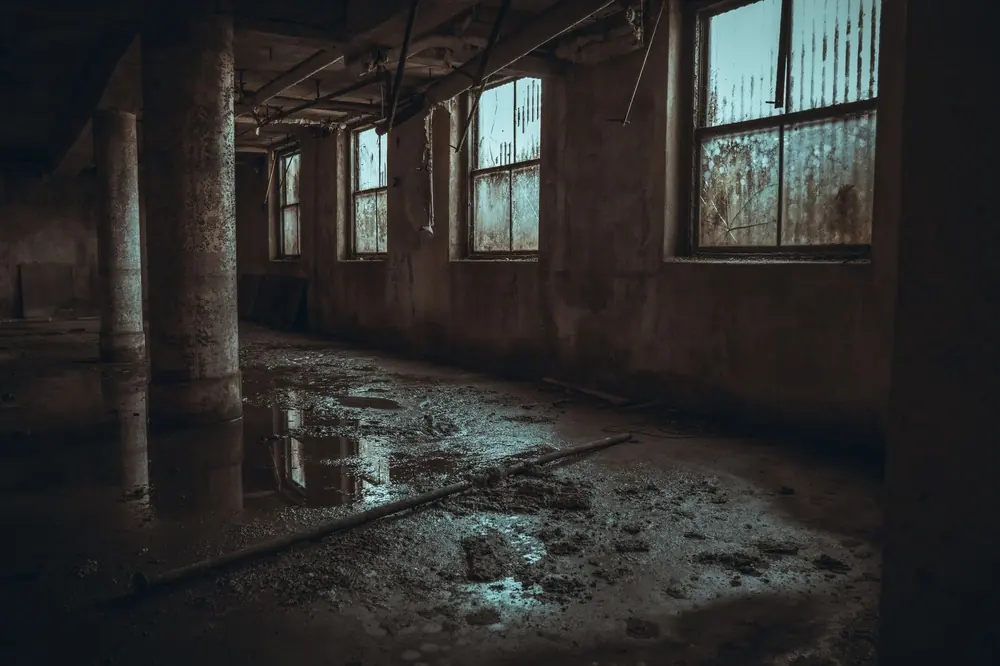
If sewage comes into another fitting in the house, such as the bath, sink or toilet, even in dry weather, see why a drain backs up. For the ordinary cases, blocked drains is the starting point.
| What you notice | Likely cause | What helps |
|---|---|---|
| Comes back whenever someone in the building runs water, also in dry weather | Blockage downstream towards the street | Unblock the drain, then check with a camera |
| Comes back only in heavy rain, even when nobody uses water | Overloaded street sewer pushes water back up your pipe | A valve on the line from the lower points |
| Comes back in rain and is slow in dry weather too | Often both: partly blocked line and a flooded street sewer | Unblocking and camera first, then a valve |
| Comes out of the cellar floor drain or inspection point and smells of sewage | That is the lowest point of the line: water comes out there in both cases | Camera, to see which cause it is |
| Water in the cellar with no sewage smell | Probably not from the drain: a pipe, rain from outside or groundwater | Look at where it comes from before anything else |
In Varna this is typical of older blocks of flats with cellars and low ground floors: in heavy rain the level in the street sewer rises and water comes out at the lowest point of the building — the cellar floor drain, the inspection point or the ground-floor toilet. Outside Varna, see also Provadia and Devnya.
Why we do not start with the valve
We do not start with the valve because with a blockage it does not help; it only hides the problem, as the water still has nowhere to go. So we look inside the drain with a camera first: is there a blockage, a pipe sloping the wrong way, a broken pipe or an old valve that has jammed? Only then is it clear whether you need a valve, and where.
The camera also shows where there is room for a valve with a cleaning lid. It cannot see through standing water, so a full pipe has to be cleared first; see CCTV drain survey. Before the inspection, tell us:
- When it comes back: only in rain, or also in dry weather.
- Where the water comes out: floor drain, inspection point, toilet or a basin in the cellar.
- Whether the neighbours in the same entrance or street have the same problem.
- Whether a valve is already fitted and where.
- Photos or video from the moment it comes back, if you have them.
How a non-return valve works, and what it cannot do
A non-return valve (also called a backflow valve) is a housing with a hinged flap, fitted into the drain pipe. In normal flow the waste water opens the flap and goes out. When the street sewer overflows and the water turns back, the flap is pressed against its seat and closes the pipe. The higher the water outside rises, the harder the flap is pressed.
- While it is closed, nothing flows out. A sink, washing machine or toilet in the cellar connected through it cannot drain. So in heavy rain, don't use them until the level in the street sewer has dropped.
- It closes tightly only when it is clean. Wipes, hair, grease or sand under the flap hold it slightly open and water passes back.
- It does not unblock and does not protect against a blockage. It stops only the water that comes from outside.
Tell us when it comes back and where the water comes out — we look at the cause first, tell you the price before we start and when we can come.
📞 +359 52 993 333Single, double and manual-shut-off valves
Valves differ in how many flaps they have and whether they can be shut by hand. The choice depends on what goes through the pipe, how often the street sewer backs up and how much damage there would be if the valve failed. There are models to fit straight into the pipe and models to build into a chamber.
- Single valve. One flap that closes by itself. The simplest and most compact; suitable when backflow is rare and only a sink, washing machine or floor drain is connected. Weak point: if something catches under the flap, there is no second barrier.
- Double valve. Two flaps one after the other, working independently. If one does not seal because of sediment or a worn seal, the other takes over. Usually preferred when there are valuables or living rooms in the cellar.
- With manual shut-off. In addition to the automatic flap, a lever or screw closes the pipe by hand: when you are away for a long time, before expected heavy rain, or while the valve is cleaned. It is often combined with a double valve.
A toilet below street level needs special attention: not every valve is meant for waste water with solids. If there is a toilet in the cellar or on a low ground floor, the model is chosen for that, and sometimes the safer solution is a pump; we say so after the inspection, not from a catalogue. See sewage pump.
Where it goes, and what must not pass through it
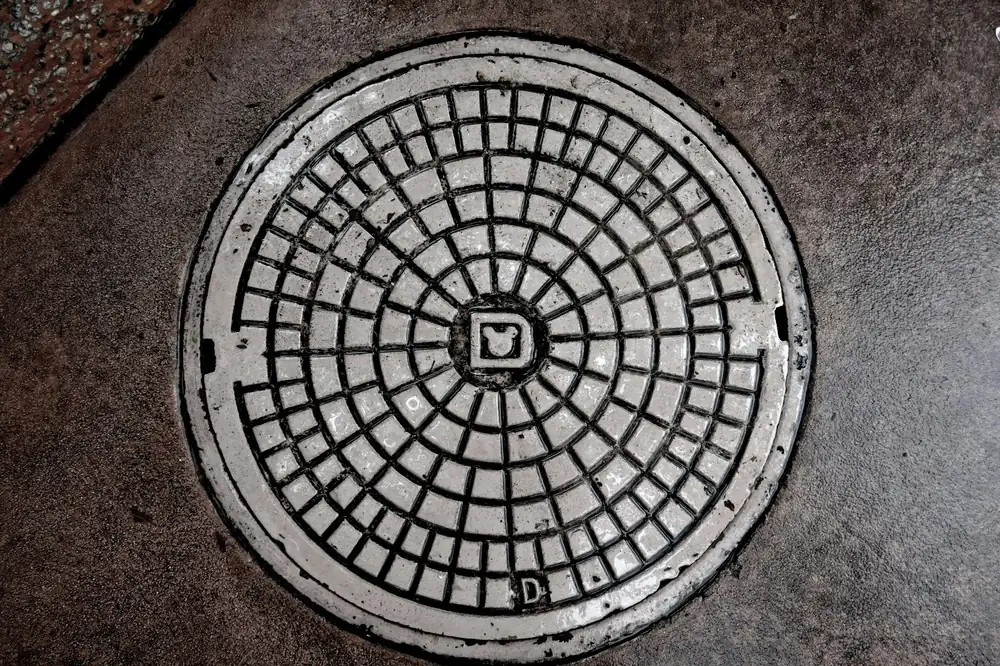
The valve is fitted on the horizontal pipe in the cellar or in an inspection chamber, before the line leaves for the street sewer. Only the water from the lower points should pass through it: those below street level, usually the cellar and sometimes a low ground floor. The upper floors should drain through a separate line that bypasses the valve.
The reason is simple. When the valve is closed, water from the upper floors has nowhere to go and collects behind it, at the lowest point. The valve would then flood the cellar from inside with the building's own water.
- The valve is on the line from the cellar and ground floor, before it meets the soil stacks from the upper floors.
- All lower outlets go through it: a floor drain or sink that bypasses it stays open to the water from outside.
- It is fitted in the direction of flow, with the arrow on the body pointing to the street, in the position the maker requires.
- Access from above: the lid opens without breaking tiles or concrete.
In a block of flats the line in the cellar often serves the whole entrance (stairwell), and then the valve is usually a matter for the building's owners' association, not one owner: ask the building manager (domoupravitel). We can describe the state of the line in a note with photos for the owners' meeting.
Fitting and looking after a valve
- Phone. When it comes back, where the water comes out, whether there is a toilet in the cellar. We tell you the price of the inspection before we come.
- Camera and unblocking. We check the line, the slope and the place for a valve. If it is blocked, it is cleared first.
- Proposal. Which model and where, and if needed how the upper floors and rainwater are routed separately. The price of the valve depends on the model and we give it in advance.
- Fitting. The plumber cuts out a section of the line and fits the valve in the direction of flow, as the maker requires, with an access lid.
- Test. We run water from the lower points and check that it drains freely and the flap moves without sticking.
- Handover. We show you where it is, how the lid opens and how to use the manual shut-off, if it has one.
A valve closes tightly only when it is clean. Open the lid, clean the flap and check the seal and that it moves freely. The interval is in the maker's instructions; it makes sense to check before the autumn and winter rains and after every backflow.
If you are not in Bulgaria
In older blocks it is the cellar and low ground-floor flats that get the water in heavy rain, and it is often a guest, a cleaner or a neighbour who finds it. If you let a flat like this, tell us the address, the name and phone number of whoever can open the door, and send any photos from the day it came back. We arrange the visit with them, look at the line with the camera, keep you updated by email, and you can pay by bank transfer. Whether a valve is worth it, or a pump is safer, we tell you after the inspection.
Frequently asked questions
It only comes back in heavy rain. Will a valve help?
Most likely yes: this is how backflow from an overloaded street sewer looks. Before fitting we still check with a camera that the line is not also partly blocked, because then it comes back even more easily. The valve goes on the line from the lower points, and the upper floors pass beside it.
How much does fitting a non-return valve cost?
A CCTV camera inspection starts from €59, and unblocking a main drain from €69; see the price list. The price of the valve depends on the model, the pipe diameter, the access and whether the upper floors have to be separated. We give it after we have seen the line with the camera, before we start, and you pay after the job.
I'm not in Bulgaria. Can you still deal with it?
Yes. Send us the address, photos of the cellar and of where the water comes out, and the contact details of someone who can let us in. We arrange the visit with them, keep you updated by email, and you can pay by bank transfer.
We have a valve and it still comes back. Why?
Most often the valve is clogged and does not close tightly: sediment, wipes or hair under the flap. Other causes: a worn seal, a valve fitted the wrong way round, a lower outlet that bypasses it, upper floors that pass through it, or a blocked line. We open the valve and look at the line with a camera.
Can I contact you in English?
Yes — write to us in English by email at info@kanalvarna.com or through the form on this page, and we reply in English. The phone number is +359 52 993 333.
Sewage coming back into the cellar?
Tell us when it comes back and where the water comes out — we look at the cause first, tell you the price before we start and when we can come.
📞 +359 52 993 333or email info@kanalvarna.com — write in English and we reply in English.
Send us a message
Leave your name and a phone number with the country code. Add your email if you prefer a written reply — write in English and we reply in English. We confirm the price before any work starts.