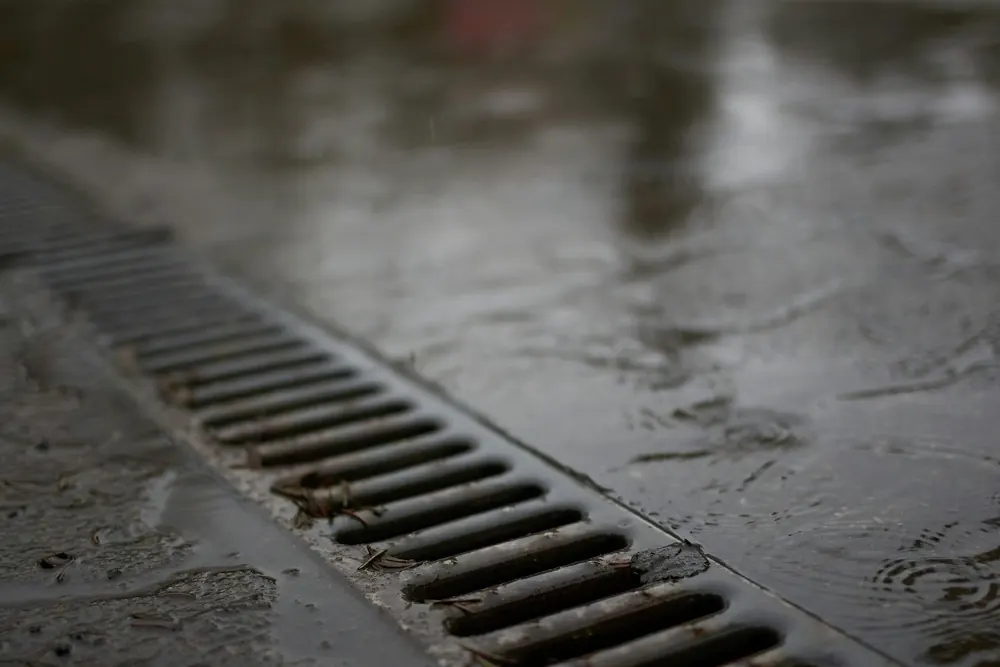
Garden drainage in Varna: channels, gullies and a way out for the rainwater
Puddles that stay for days, water running under the garage door, mud at the front step after every downpour? We work out where the water is coming from, then give it a way out: a fall in the paving, a channel, a gully or a pipe. You hear the price before we start.
Our clients on video · all videos (in Bulgarian)
Garden drainage in Varna usually means a combination of four things: a fall in the paving that leads water away from the building, a linear drainage channel in front of the garage or front door, yard gullies in the low spots, and an underground pipe that takes the water from the downpipes somewhere it is allowed to go. Before we cut anything we find out whether the wet patch is rain, a leak or an overflowing manhole. We tell you the price once we have seen the yard or your photos, before we start. It is part of our wider drainage and water pumping service in Varna. Call +359 52 993 333 or email info@kanalvarna.com — write to us in English and we reply in English.
Updated November 2026Why the water stays in your garden
Nearly every waterlogged garden or yard comes down to one of five causes, often two at once: paving that falls towards the house, a downpipe that empties beside the foundations, a clogged gully or manhole, clay soil that does not soak up water, or new paving laid with no fall and no outlet. Around Varna it shows most in autumn downpours. On sloping plots in villa areas such as Avren, Kichevo, Zvezditsa, Topoli and Izvorsko, water also arrives from above, from the neighbouring plot or the road, and the street often has no surface-water drain.
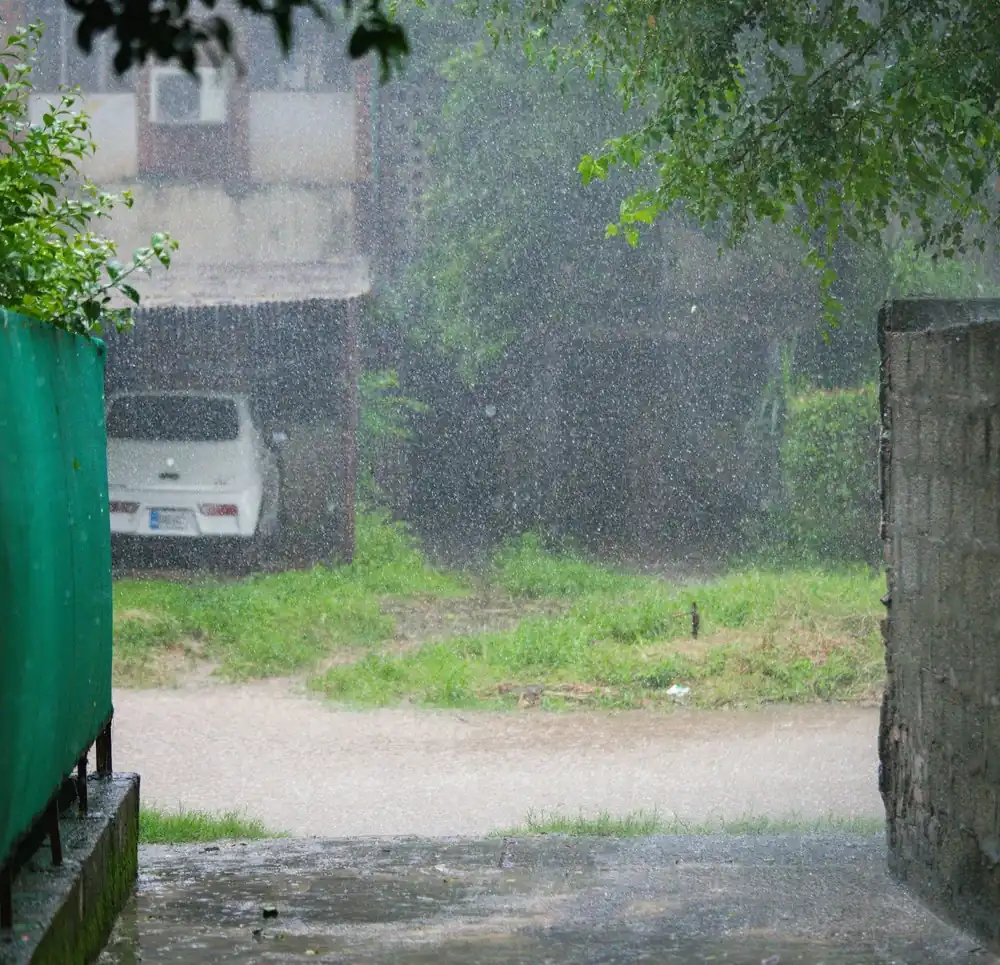
If what comes up in the yard is dirty water rather than rainwater, the pipe from the house to the manhole is blocked: that is unblocking an outside drain, not drainage.
Where the water collects: cause and fix
The place where the puddle forms usually points to the cause. The table is a guide only; which fix suits your yard is clear once we have seen it, ideally in the rain or after a test with a garden hose.
| Where the water collects | Most likely cause | Usual fix |
|---|---|---|
| In front of the garage or under the garage door | The ramp or drive slopes towards the garage | A linear channel across the full width of the door, piped to an outlet |
| At the front door and steps | The landing has no fall, or falls towards the threshold | A channel in front of the threshold and/or a corrected fall |
| Against the wall, under a downpipe | The downpipe empties onto the ground next to the foundations | Connect it to an underground pipe with an inspection point and a sand trap |
| A puddle in the middle of the paving | The base has settled and left a dip | A gully at the lowest point, or relaying that section |
| The lawn stays wet for days | Clay or compacted soil, nowhere for the water to go | A gravel strip (a shallow land drain) to a lower point, or a soakaway |
| The rainwater manhole overflows | Leaves, sand or roots in the manhole and pipe | Clean it and check the pipe with a camera |
| Water comes in from the street or the neighbour | Your plot is lower than the ground around it | A channel at the entrance on the uphill side and a route past the building |
Drainage channels in front of the garage, door and drive
A linear drainage channel is a narrow trough with a grating, set into the paving, that catches water along its whole length. It goes where water has to be cut off: in front of a garage door, in front of the entrance, or at the bottom of a sloping drive. It only collects, so we decide first where the water will end up, then where the channel runs.
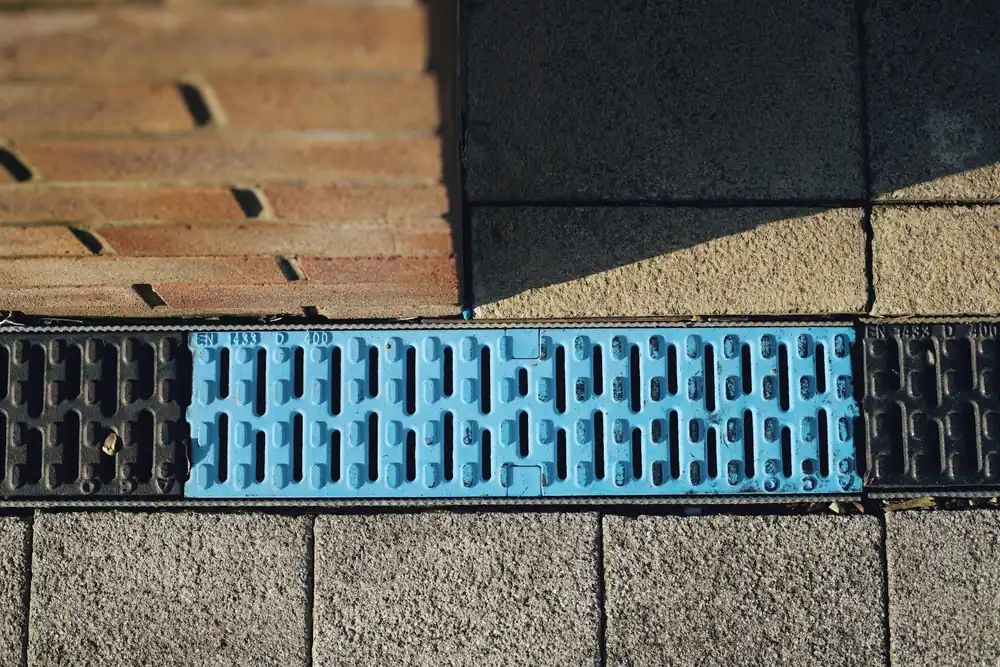
- Width. For most yards about 100 mm inside is enough; wider where a big area or downpipes feed into it.
- Load class. People only, or cars as well: see the next section.
- Installation. We cut a strip out of the paving, set the channel on a concrete base and surround it with concrete at the sides, especially where cars cross it.
- Sand trap. A unit at the end of the channel where sand settles before it reaches the pipe.
Already chosen a channel in a shop? Tell us the model at the visit and we say whether its class, width and outlet suit your yard.
Which load class: A15, B125 or C250
The load class tells you how much weight a channel and its grating can carry. You choose by the heaviest vehicle that will really drive over it.
| Class | Test load | Typical place in a yard |
|---|---|---|
| A15 | 15 kN | Footpaths, areas for people only, around a pool |
| B125 | 125 kN | Drive and ramp to a garage, parking space, a yard where cars enter |
| C250 | 250 kN | Next to the kerb on the street side, entrances for the occasional heavier vehicle; for regular lorries a still higher class is needed |
Higher classes are for streets and heavy traffic and are normally not needed in a private yard. Where cars manoeuvre and you are unsure, take the higher class. The class only counts with correct installation: a B125 channel laid in sand without a concrete base is, in practice, not B125.
Yard gullies and the fall of the paving
A correct fall is the simplest drainage there is: paving should lead water away from the house at about 2 cm per metre, never less than 1 cm. Where water still collects in one low spot, a yard gully with a sand and leaf basket, piped to the outlet, takes it. On a wet lawn, a gravel strip leads surface water to a lower point.
This is not drainage around the foundations. If water enters a basement through the walls or the floor, you need a perimeter drain: see drainage around the house.
Describe where the water collects, or send photos and the address by email. We tell you where it comes from and what makes sense before we cut into the paving, and the price before we start.
📞 +359 52 993 333Downpipes: into an underground outlet, not onto the foundations
A downpipe that empties against the wall is one of the commonest causes of damp foundations. The cure is to put the water into a smooth underground pipe, usually PVC DN110 with a continuous fall and an inspection point with a leaf trap at the foot, and take it well away from the building. Roof water is never connected to a perforated drain around the foundations: in a downpour that drain overflows and sends the water back to where it should be leaving.
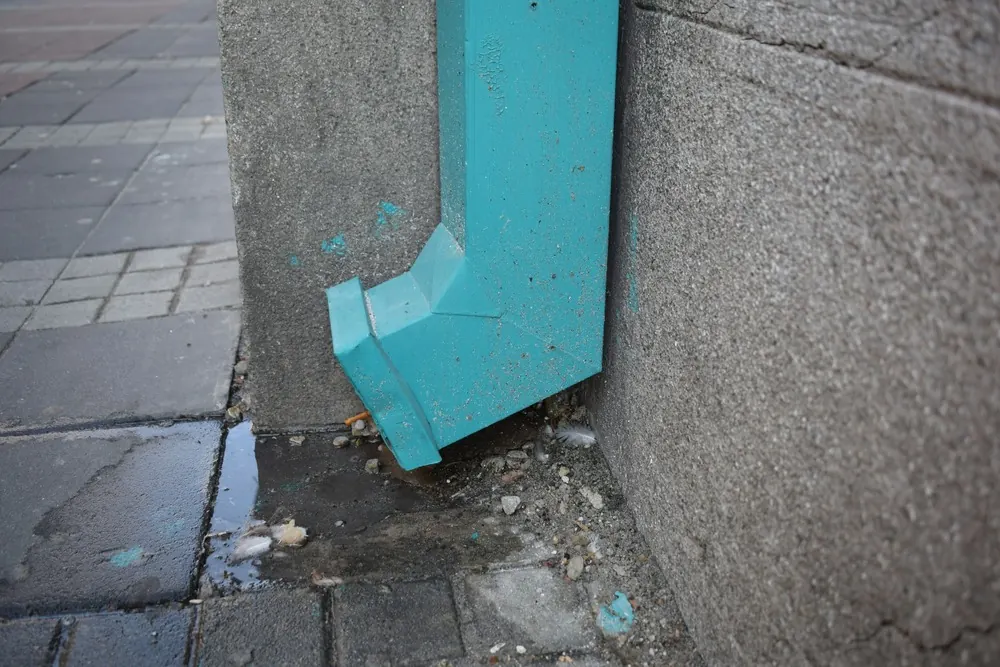
If an underground pipe already exists but water still comes out on the ground, we look inside it with a camera first (see CCTV drain survey). The gutters above are a separate job, gutter cleaning; so is a terrace that holds water, balcony and terrace drainage.
Where can the water go?
The hard question is not how to collect the water but where to put it: a lower point on your own plot (never onto the neighbour or the pavement), a soakaway, or a surface-water drain in the street, where there is one and the water company allows a connection. That is the company's decision, depending on whether the network is combined or separate, and we do not connect without its permission.
A soakaway is a pit of gravel or plastic crates from which water slowly soaks into the ground, a few metres from the foundations and the boundary. It works in permeable soil, fills and stands in dense clay, and is not built on landslide ground, because water put into the soil can set a slope moving. Many villa areas around Varna have no rainwater network, so the answer stays inside the plot, and a trial pit shows how fast the ground takes water. A soakaway is not a water well; for that see well cleaning.
Keeping it working: leaves, gratings and the sand trap
Clean the gratings and the sand trap in late autumn once the leaves have fallen, and look at them after every heavy downpour; in front of a garage, more often. Water run into the channel from a hose should drain at once. If it stands or comes back while the grating is clean, silt and sand are sitting in the pipe further down: that is land drain cleaning.
How we work on garden drainage
First we find out where the water comes from, then we lead it away. A wet patch can be rain, but it can also be a leak on the pipe between the meter and the house, or an overflowing manhole, so we do not start by digging.
- Photos after rain. If you are abroad, email us photos or a short video of the water after rain, with the address.
- A look at the yard. We check the falls, downpipes, manholes and where the water can go. Old pipes and rainwater manholes we check with a camera.
- Proposal and price. We tell you the price before we start. It depends on the metres of channel and pipe, the paving, the load class and where the water ends up.
- Work and test. We install the channels, gullies and pipes, then run water through and check that it goes where it should.
For a rented-out house or a holiday home, tell us who will open the gate and we arrange the visit around that. We work every day from 06:00 to 23:00 in Varna and the villages around it.
When this is not what you need
- A wet patch in the yard when it has not rained, or a water meter that keeps turning with everything off, points to an underground leak: see underground water leak in the garden.
- Water in the basement is a different job: flooded basement.
Frequently asked questions
Can rainwater from the garden go into the sewer?
Only if the water company allows it; that depends on the network in your street and on the plot. We do not connect without permission. Where the street has a separate rainwater network, the connection follows its conditions. Where it does not, the water is dealt with inside the plot: a soakaway, or a pipe to a lower part of the garden.
Which drainage channel should I choose for a drive in front of the garage?
For a drive or parking space used by cars, class B125 is normally chosen; for footpaths A15 is enough. For most yards an internal width of about 100 mm is enough, wider when a big area or several downpipes feed into it. At the visit we tell you which class and width fit, and how to lead the water away.
How much does garden drainage cost?
There is no set price, because every yard is different. We tell you the price before we start, once you have described the job or sent photos. It depends on the metres of channel and pipe, the type of paving, the load class, the number of downpipes to connect and where the water will go.
I'm not in Bulgaria. Can you still deal with it?
Yes. Write to us in English by email with the address, photos of the water after rain and a note of who can open the gate, and we reply in English. We tell you the price before we start, and you pay after the work in cash, by card (Visa, Mastercard) or by bank transfer; an invoice is available on request.
Related pages
Where the water comes from and all the ways to lead it away Drainage around the house
When water comes in through the basement walls Balcony and terrace drainage
Outlets and gullies from the terrace Blocked manhole
A rainwater or sewer manhole that overflows Underground water leak
A wet patch in the yard when it has not rained
Water standing in your garden after rain?
Describe where the water collects, or send photos and the address by email. We tell you where it comes from and what makes sense before we cut into the paving, and the price before we start.
📞 +359 52 993 333or email info@kanalvarna.com — write in English and we reply in English.
Send us a message
Leave your name and a phone number with the country code. Add your email if you prefer a written reply — write in English and we reply in English. We confirm the price before any work starts.