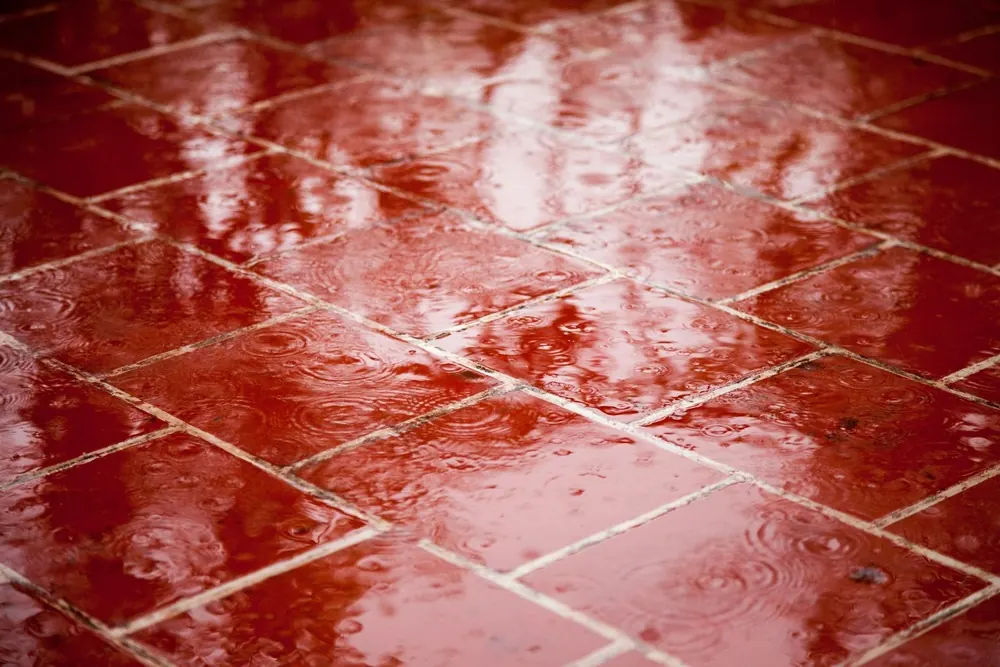
Terrace drainage in Varna: when water pools on the balcony or runs down the facade
Water that stays on the terrace, creeps to the door or runs down the facade onto the neighbour below? We check where it goes and give it a proper way out: an outlet through the parapet, a floor gully or a downpipe. We tell you the price before we start.
Our clients on video · all videos (in Bulgarian)
Terrace drainage gives rain an exit: an outlet pipe through the parapet (a scupper), a gully with a grating in the floor, or a linear channel at the threshold, and from there a downpipe. If puddles stay after rain, if water reaches the door or runs down the facade, the exit is missing, blocked or in the wrong place. First we pour water to see where it goes, then we propose a fix and tell you the price before we start. It is one of the jobs in our drainage service in Varna. Call +359 52 993 333 or email info@kanalvarna.com — write to us in English and we reply in English.
Updated November 2026When a terrace needs drainage
A terrace needs drainage when puddles are left on the floor after rain, not just damp tiles. Water that cannot leave looks for another way: to the threshold, down the facade, or through the slab to the flat below. Look for these signs.
- Puddles in the same places after every rain, later with white limescale marks and green grout.
- Water reaching the door and, in a downpour, coming in under it.
- Dark streaks on the facade under the terrace: water is going over the edge instead of out of an opening.
- Dripping onto the neighbour below, onto their balcony or window, or onto the entrance and pavement.
- Ice on the floor and in the downpipe elbow in winter.
- A damp patch on the ceiling of the flat below, or flaking paint under the terrace.
The last sign is different: the water is no longer just standing but passing through the slab. Then we first find where it gets in, see balcony leak detection, and only afterwards decide how to lead the water out.
Why the water stands: no exit, a blocked exit or the wrong place
- No exit at all. A solid parapet, so water leaves only over the edge. Common in houses built in a hurry and where the parapet was built up later.
- A blocked opening. Leaves, sand, soil from plant pots. From outside it looks fine and inside there is a plug.
- An outlet that is too small or too high. A thin tube clogs at the first leaves; one left a few centimetres above the floor drains only the top layer and leaves a permanent puddle.
- A gully without a grating. Leaves enter the pipe and block it further down where you cannot see.
- Fall the wrong way. After new tiles, especially tiles on tiles, the floor often slopes towards the wall or the threshold instead of the outlet.
- A blocked downpipe. The outlet is connected, but the pipe is clogged at the elbow below or underground.
- A terrace like a tray. Raised edges on all sides and a single floor gully with no overflow: when it clogs, water rises to the door.
| What you see | Likely cause | Usual fix |
|---|---|---|
| A puddle in one place, far from the outlet | The outlet is not at the lowest point, or the fall is reversed | A new outlet or gully where the water stands |
| Water stands round the gully and drains slowly | A clogged grating or pipe beyond it | Cleaning, a water test, a leaf grating |
| Water reaches the threshold or enters the room | No exit, or the only gully is blocked; a low threshold | A channel at the threshold, an overflow, a second exit |
| Dark streaks on the facade | Water overflows the edge, or the outlet is short with no drip edge | An extended outlet with a drip edge, or a downpipe connection |
| Dripping onto the neighbour's terrace | The outlet pours water straight down | A hopper head and downpipe instead of an open drop |
The scupper through the parapet: how it should be made
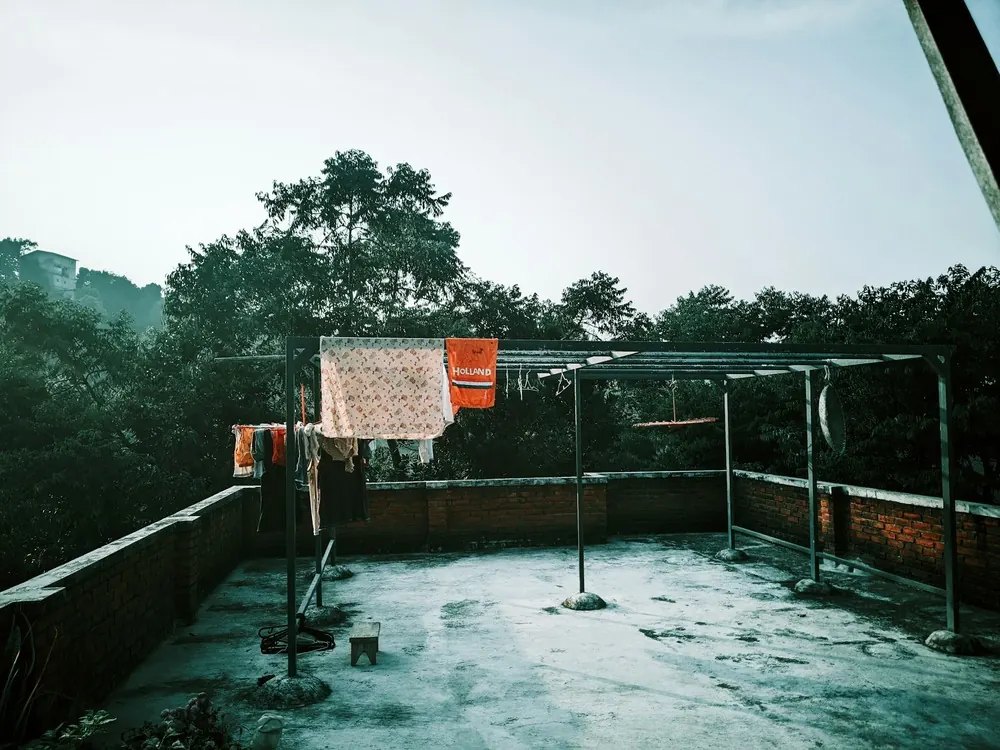
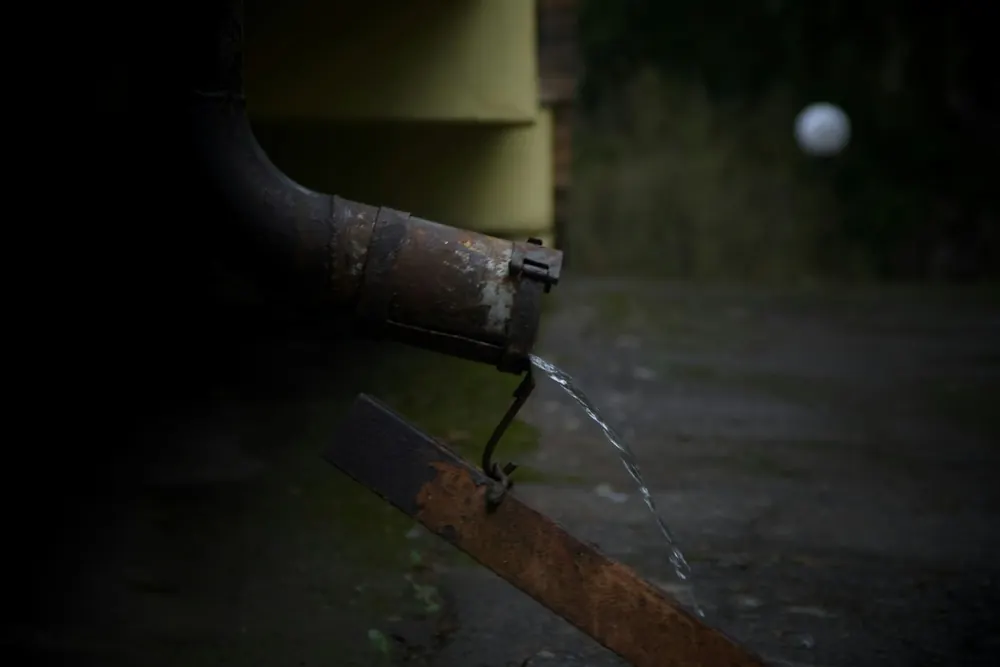
A scupper (Bulgarian builders call it a barbakan) is an opening with a pipe through the parapet. It works when it is wide enough, at the lowest point, level with the floor, and when it carries the water away from the facade.
- Size. At least DN50, a pipe about 5 cm across. Narrower ones clog. On a bigger terrace, more than one.
- Height. The lower edge of the pipe is level with the finished floor, or slightly below, and its flange sits at the level of the waterproofing under the tiles.
- Place. The lowest point, normally where the puddle is now, not where it is easier to drill.
- Exit. The pipe projects a few centimetres beyond the facade and ends with a drip edge so water does not run back along the wall.
- Seal. Where the pipe passes the parapet it is joined to the waterproofing with a collar or flange; otherwise water goes in around the pipe, not through it.
On a terrace with raised edges and only a floor gully, we add an emergency overflow: an opening through the edge a little above the gully, so that when the gully clogs, water leaves before it reaches the door.
Floor gully, channel at the threshold and downpipe
When an outlet through the parapet is not possible or not enough, water is collected in the floor, by a gully or a linear channel, and taken away by pipe. The goal is always the same: the water goes down a downpipe, not down the facade or onto the neighbour.
- Floor gully. At the lowest point, with a leaf grating and a flange joined to the waterproofing. The pipe goes to a rainwater downpipe, not to the soil stack. Good for roof terraces and terraces with raised edges all round.
- Linear channel at the threshold. A narrow channel with a grating across the width of the door catches water before it reaches the sill; useful when the sill is low and cannot be raised.
- Hopper head and downpipe. The outlet pours into a hopper head and the water goes down a pipe to the ground, so the terraces below stay dry.
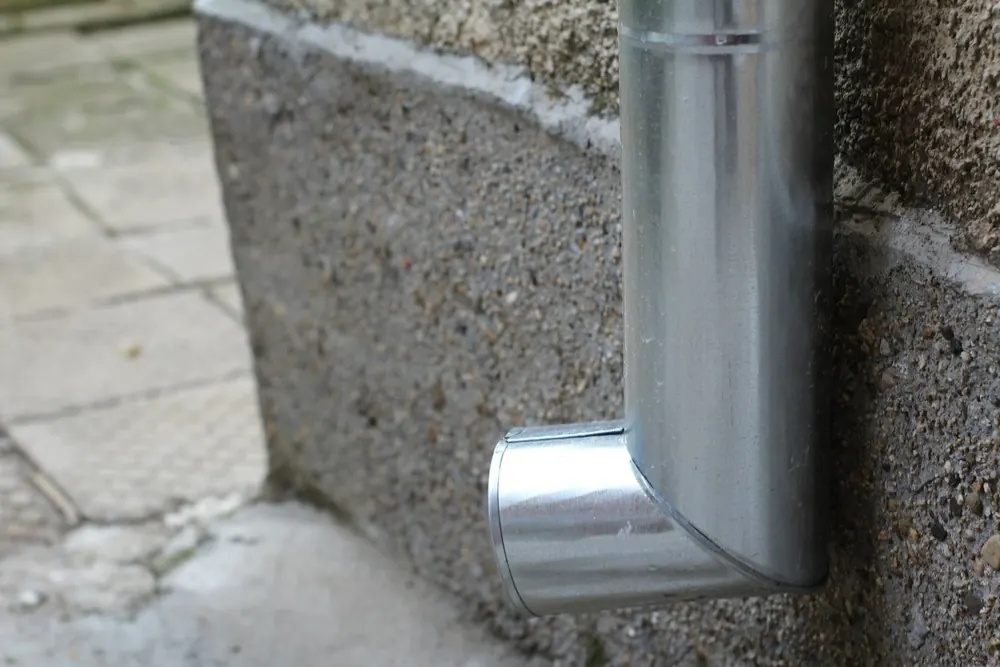
A blocked downpipe is cleared from the top or through the bottom elbow. Where the pipe ends in the garden, the water must carry on away from the foundations: see garden drainage. A fall of 1.5 to 2 cm per metre towards the opening is the usual rule; if it is reversed, we first look for a new place for the opening, and if that is not enough, the fall is rebuilt together with the waterproofing.
Photograph the puddle, the opening and the facade underneath and send them with the address by email. We tell you the price before we start.
📞 +359 52 993 333Check it yourself before you call
- With a glove, clear the gully grating or the outlet entrance of leaves, sand and soil.
- Pour a bucket of water into the corner furthest from the opening. Does it reach the opening or stop on the way?
- See where it comes out: into the pipe, down the facade or onto the terrace below.
- Look at the elbow at the foot of the downpipe, if there is one: does water come out there, or overflow at the top?
- Photograph the puddle, the opening and the facade underneath, and send them to us by email.
Do it on a dry day, standing firmly on the terrace and never on the railing. Do not drill the parapet yourself: an opening in the wrong place, or one not sealed to the waterproofing, makes the leak worse. If the water drains but the tiles are dark and slippery with moss, the terrace needs washing, not drainage.
How we work on terrace drainage
We start with where the water goes, not with the drill. We test with water, check the whole downpipe, and look at the slab and the ceiling below with a moisture meter and, if needed, a thermal camera. If there is a leak we say so at once, because drainage alone will not stop it.
- Water test. We pour water, see where it stops and where it comes out.
- Proposal and price. Cleaning, a new outlet, a gully, a channel or a downpipe connection: what, where and why. We tell you the price before we start.
- The work. An opening at the lowest point, sealed to the waterproofing, with a drip edge or a hopper head and pipe.
- Test again. We pour water once more in front of you.
With several terraces we look at them together: water from the upper one must not fall onto the lower, and all should reach one downpipe. We work in Varna and the villages around it, and it is best to have the exit ready before the winter rains and frosts, when a puddle freezes.
A terrace in a block of flats: the facade and the neighbour below
In a block of flats an outlet through the parapet is not only your business: it passes through the facade, a shared part of the building, and the water falls towards the neighbour below. So agree it with the building's owners' association or the building manager before drilling, and check with the manager how the decision is taken. An open jet from the third floor wets the terraces and windows below, so a hopper head and downpipe is almost always better. If the neighbour below already has a damp patch, we first find where the water actually gets in.
If you are abroad and let the flat, tell us who has the key and the manager's contact; we arrange the visit with them and you pay after the work, by card, bank transfer or cash.
When drainage is not what you need
- Water passes through the slab and wets the ceiling below: first balcony leak detection, then an exit for the water.
- The waterproofing under the tiles is old or cracked and the fall must be rebuilt: balcony waterproofing.
Frequently asked questions
What is a scupper on a terrace?
It is an opening with a pipe through the parapet or edge of a terrace through which rainwater leaves. It should be at the lowest point, level with the floor, and carry water out in front of the facade, with a drip edge or into a hopper head and downpipe.
Can an outlet be made without breaking up the tiles?
Often yes: if the lowest point is next to the parapet, the opening is made through it level with the floor and sealed to the waterproofing. If the fall is reversed and the water stands in the middle, a floor gully or a new fall may be needed. We say which after a water test.
Do I need the neighbours' agreement for an outlet in a block of flats?
The opening passes through the facade, a shared part of the building, so it is normally agreed with the owners' association. Ask the building manager how the decision is taken. We can explain what we propose, where the opening goes and where the water will run.
Will an outlet stop a leak into the flat below?
It stops standing water, which is a common cause of leaks. If water already passes through the slab, the waterproofing is damaged and an opening alone will not stop it. That is why we check the slab and the ceiling below with a moisture meter and, if needed, a thermal camera.
How much does terrace drainage cost?
We have no general price, because it depends on the number of terraces, the parapet material, the distance to the downpipe, access and whether the waterproofing is affected. We tell you the price once we have seen it or your photos, before we start.
Related pages
Water standing on your terrace?
Photograph the puddle, the opening and the facade underneath and send them with the address by email. We tell you the price before we start.
📞 +359 52 993 333or email info@kanalvarna.com — write in English and we reply in English.
Send us a message
Leave your name and a phone number with the country code. Add your email if you prefer a written reply — write in English and we reply in English. We confirm the price before any work starts.