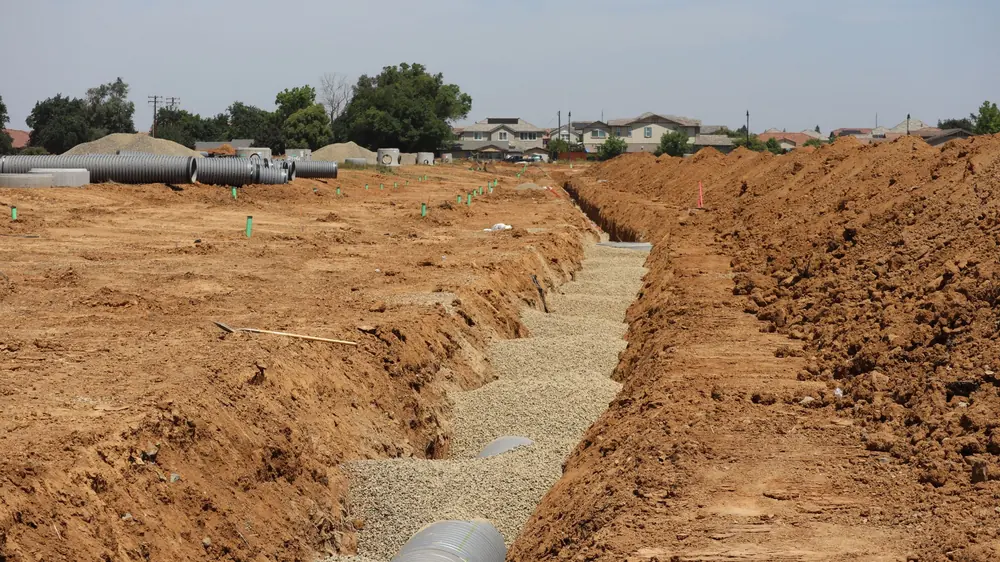
Land drain cleaning in Varna: camera first, then the silt flushed out
You have a land drain and the cellar still gets wet after rain? We look inside the pipe with a camera and tell you honestly whether flushing will bring the drain back to life. Silt and sand are washed out with pressurised water to the manhole. It is a new service for us, so we confirm by phone whether and when we can take the job.
Our clients on video · all videos (in Bulgarian)
Land drain cleaning (also called French drain or perimeter drain cleaning) washes silt and sand out of the perforated pipe with pressurised water, towards the manhole or outlet where the mud is scooped out. We look in the pipe with a camera before and after. If the pipe turns out to be clean and still collects no water, the problem is the gravel around it and the drain has worn out. It is a new service for us, so by phone we say whether and when we can take your job. It sits within our drainage service in Varna. Call +359 52 993 333 or email info@kanalvarna.com — write to us in English and we reply in English.
Updated November 2026What land drain cleaning is
Land drain cleaning means washing a perforated pipe from the inside with pressurised water, so that the silt and sand leave it for the manhole or outlet. Usually nothing is dug up: the work is done through the manholes and the end of the pipe. It is one of the jobs in the drainage of a building, alongside drainage channels and the underground runs in the yard.
A land drain is a pipe with holes or slots in its wall, usually about 100 mm across, laid in gravel around the foundations or in the garden. Water from the soil passes through the gravel, enters through the holes and runs along the fall to a manhole or outlet. It is most often corrugated and wrapped in geotextile, a filter cloth that lets water through but holds back soil.
Over the years silt and sand get in. It happens fastest when there is no geotextile, or it was torn when the pipe was laid: fine soil comes through the holes, settles in the corrugations and narrows the pipe from the bottom. Water still runs, but less and less, and in heavy rain it cannot cope and rises towards the wall. Flushing restores the pipe's cross-section. The silt goes down to the manhole or outlet and is scooped out, and the water above it is pumped out with our submersible pump.
A clogged drain: signs, causes and what we do
| What you notice | Likely cause | What we do |
|---|---|---|
| Water in the cellar after rain despite the drain | Silt in the pipe, or clogged gravel and geotextile outside it | Camera and flushing; if the pipe is clean, a new drain |
| The drain manhole is full of silt | Sand settles on the bottom and blocks the pipe entrances | Scoop out and pump out, then flush the pipes towards the manhole |
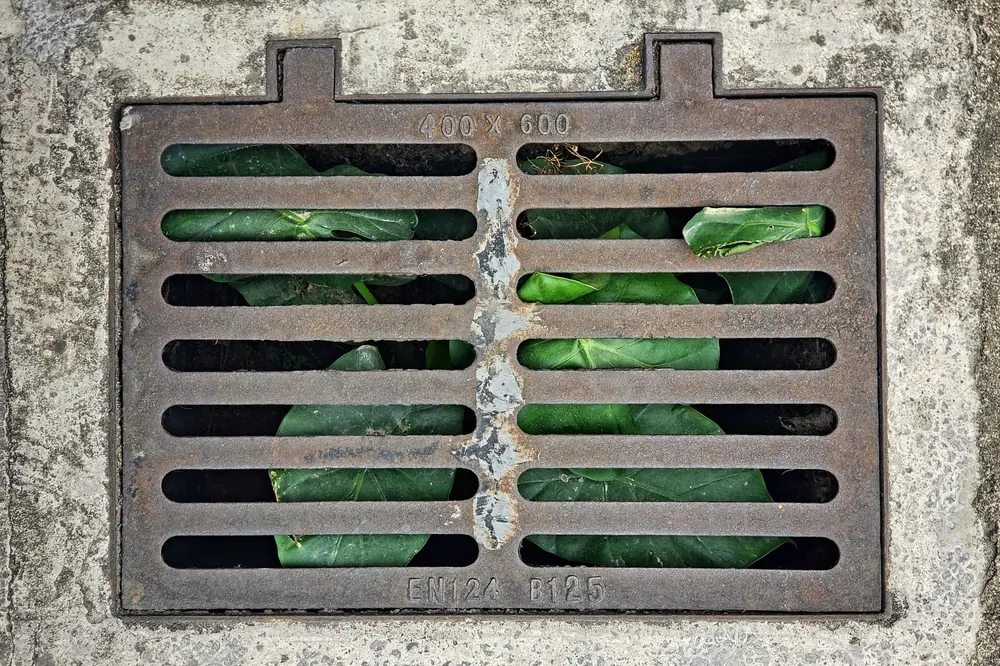
| A channel with a grating overflows in a downpour | Leaves and sand in the trough, a full sand trap, a blocked outlet | Lift the gratings, scoop out the trough, flush the outlet |
| A downpipe overflows at the elbow in the ground | A blocked underground run between the elbow and the manhole | Flush from below, from the inspection point or the manhole |
| Nothing comes out of the drain's outlet after rain | A blocked or crushed outlet | Camera from the outlet, then flushing or repair of that section |
| A puddle stays right above the pipe line | A sagged or crushed section | Camera to locate it: a repair, not flushing |
Why a drain snake is not enough and jetting is
A drain snake (an auger) bores a path through silt but does not carry it out: sand stays in the corrugations and the holes and settles on the bottom again at the next rain. Pressurised water lifts the sediment and the flow carries it to the manhole. In a corrugated pipe the snake also catches in the ridges and can tear the thin wall, so a machine snake goes into a drain only after a camera look, and roots are dealt with by partners. A household drain from the house is a different job, grease and soap rather than silt: see drain jetting.
Water has its limits as well: pressure drops along a long thin hose, so a long drain is flushed from several manholes or by a partner with a bigger machine; the nozzle has to enter from the lower end, or the silt is pushed to the blind end and stays; and where there is no manhole we look for the outlet, and if there is no way in, the pipe is opened at one point after we have seen it.
What the camera shows in a drain, and what it does not
The camera shows the inside of the pipe: silt, a crushed section, roots, a displaced joint, a place with no fall where water stands. It does not show what is going on outside the pipe, namely the clogged gravel and the geotextile around it.
That is the most common surprise. The pipe is clean, water from the hose runs through freely, and after rain the cellar is still wet. It means water from the soil no longer reaches the pipe: the gravel has filled with clay and the cloth is blocked. Such a drain is worn out and flushing will not bring it back; a new one is needed, described under drainage around the house.
We use the camera before and after. Before, to know whether the pipe can take the water and where the silt is. After, so that you can see on the screen on site how far the pipe is clean and what is left. A crushed section is found from the metres of cable from the entry point, so the dig is there, not along the whole run. More on the method is in CCTV drain survey.
Tell us when the drain was built, how many manholes there are and where the water comes out. With photos of the open manholes we say where to start and what the price depends on.
📞 +359 52 993 333Channels, rainwater manholes and underground downpipe runs
These clog with the same things as a drain, sand, leaves and mud, and are flushed with the same hose; only the entry point differs. A channel starts with its gratings, not with water: the gratings come off, the trough is scooped out by hand, then the outlet to the manhole is flushed, and the sand trap at the end is emptied. In a rainwater manhole in the yard the sediment is scooped out and the pipes in and out of it are flushed. An underground downpipe run, the elbow in the ground and the pipe to the manhole, is flushed from below, from the inspection point or the manhole, not from above.
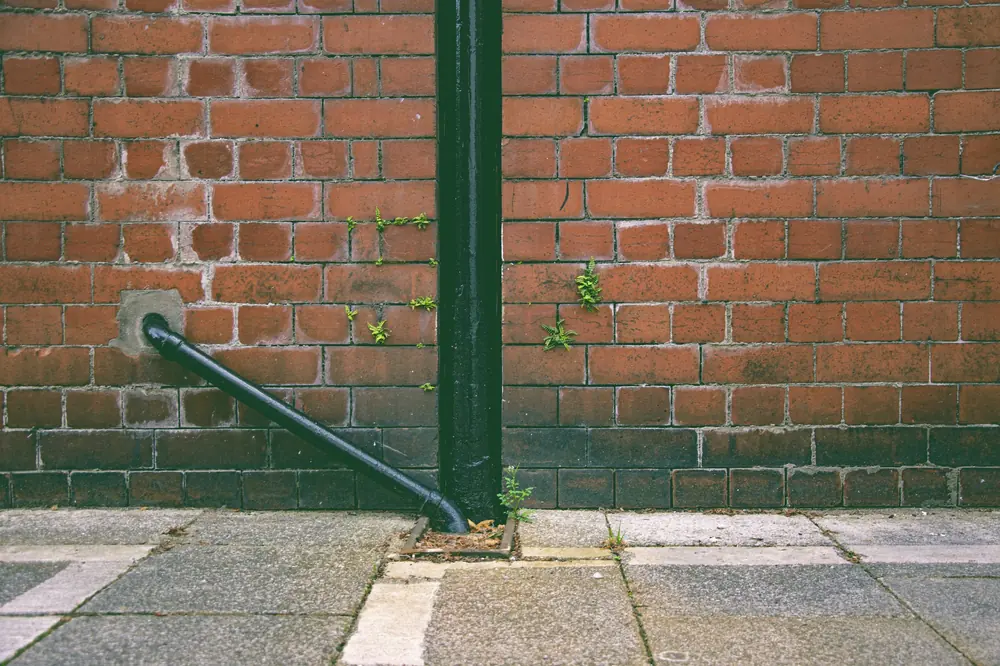
The gutter above is another task, done by hand: gutter cleaning. How the yard should be laid out so that water does not stand is covered in garden drainage. The mud from manholes and channels is waste: it is not pushed with the water into the street network, where it would settle and block further down. It is scooped into bags and taken away, and the cloudy water is left to settle and pumped from the top.
How the job goes
- A phone call. When the drain was built, whether there are manholes, where the water comes out, when water last entered the cellar. Photos of the manholes help. Because this is a new service, we say on the phone whether we can take the job and when.
- A look at the manholes and outlet. We open the covers, see how much silt there is and where the pipes run. If the outlet is not known, we look for it.
- Camera. We go along the pipe and note silt, crushed sections, roots and places with no fall.
- Flushing. The nozzle goes in from the lower manhole or the outlet and is pulled up the pipe; the loosened silt flows back to the entry. We work section by section.
- Scooping and pumping out. Mud is scooped from the manholes and cleared water is pumped away. The mud is taken away, not sent to the street network.
- Test. We run water in at the top of the pipe and see that it comes out at the manhole. Then we go through with the camera again and tell you what we saw.
We do not flush in frost: the water freezes in the hose and on the paving. Autumn, after the leaves have fallen and before the winter rains, is the convenient time, and after a downpour that has brought mud.
When you do not need it
- The water in the cellar smells of sewage, or has chlorine in it: it is not from the soil, so the source is a pipe or the sewer. See water in the cellar.
- The cellar fills from groundwater that stays for weeks: a pump sump is the answer, not flushing a pipe.
- The camera shows a clean pipe that collects no water: the drain is worn out and a new one helps.
A cellar pump does not replace the drain: it throws out water that has already arrived, while a working drain catches it earlier, outside.
What to tell us, and what the price depends on
We tell you the price on the phone, after a short description or photos; if you are abroad, email them with the address.
Please tell us whether it is a house, yard, block of flats or hotel, when the drain was built, how many manholes there are, where the water comes out, when water last entered, and send photos of the open manholes.
The price depends on the number of manholes and the length of the pipes, how much silt must be scooped out, whether the camera is needed before and after, and whether both ends can be reached. We issue an invoice, and you pay after the work in cash, by card or by bank transfer. In a block of flats the yard drain and manholes are shared, so the decision belongs to the owners' association or the building manager.
Frequently asked questions
How often should a land drain be flushed?
It depends on the soil and on whether there is geotextile. A well-made drain may not need it for a long time; an old one without geotextile silts up faster. The surest way is to open the manholes each autumn: a thick layer of silt on the bottom suggests the pipe is filling too, and it is time for a camera and flushing.
I have no manholes. Can the drain still be flushed?
It can, if we find the lower end, the outlet: in a manhole in the yard, a ditch or the lower part of the plot. If the drain ends blind, the silt has nowhere to go and flushing only moves it. Then the pipe is opened at one point and a manhole fitted so it can be maintained. We decide that after seeing it.
Will you dig up the garden?
Usually not: we work through the manholes and the outlet. A dig is needed if there is no access at all to the pipe or the camera finds a crushed section. Then we dig where the camera shows it, by the metres of cable, not along the whole run. We tell you how much will be dug before the work starts.
I'm not in Bulgaria. Can you still deal with it?
Yes. Write to us in English and we reply in English. Email the address, photos of the open manholes and a note about who can open the gate, and we tell you by phone or email whether we can take the job and what it would cost.
Is the drain manhole full of silt?
Tell us when the drain was built, how many manholes there are and where the water comes out. With photos of the open manholes we say where to start and what the price depends on.
📞 +359 52 993 333or email info@kanalvarna.com — write in English and we reply in English.
Send us a message
Leave your name and a phone number with the country code. Add your email if you prefer a written reply — write in English and we reply in English. We confirm the price before any work starts.