Window adjustment in Varna: a sash that rubs, sags or will not lock
The sash catches the frame, the balcony door has dropped onto its threshold, or the handle only turns if you push the window shut. On uPVC and aluminium windows this is usually a matter of turning a few screws and cams, not buying anything new.
Our clients on video · all videos (in Bulgarian)
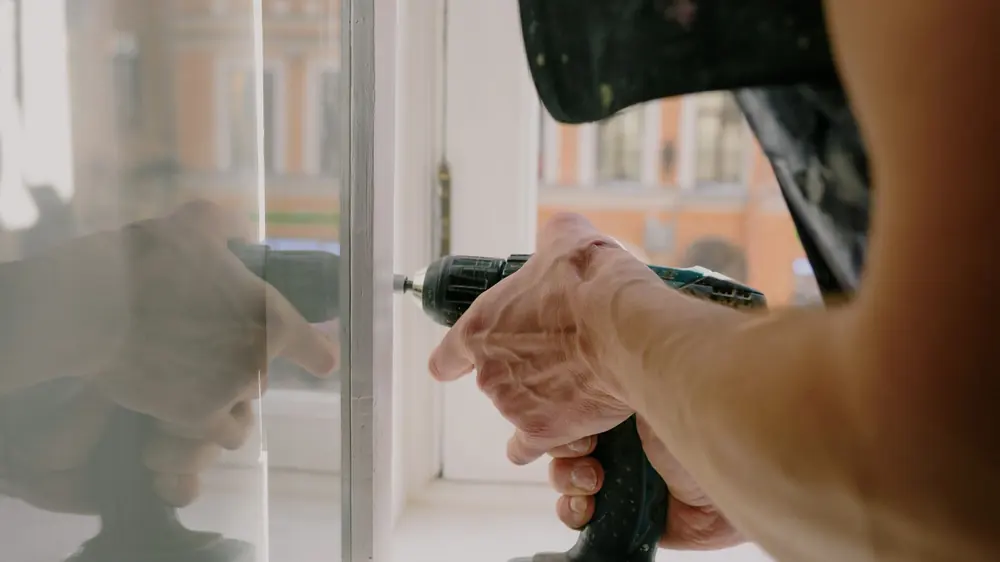
Window adjustment in Varna puts a sash back where it belongs in its frame, so that it stops rubbing, locks without force and presses the seal evenly all the way round. A sash can be moved in three ways: up and down, left and right, and in how hard it presses. The first two are set at the hinges, the third with the locking cams along its edge. Nothing is replaced: the hardware is cleaned, oiled and set again. The work is carried out by the craftsmen we work with; we organise it and remain your one phone number. Call +359 52 993 333 or email info@kanalvarna.com — write to us in English and we reply in English.
Updated November 2026When a window needs adjusting
A sash that no longer sits square in its frame is normal, not a sign of a bad window. The sash is heavy, it is opened every day, and the hinges slowly give under the weight of the glass. Sooner or later one corner rubs, the handle sticks or a gap opens at the top.
Window adjustment. Setting the hardware of a window or door again: the hinges, the locking cams and the keepers they engage with. The sash then stands exactly in the frame and presses the seal evenly. No parts are replaced; their position is changed.
Adjustment is the first step in almost every window repair. If the sash is not where it should be, a new seal will not press evenly either. For the other jobs on windows and doors see the window and door repair hub.
What you see, what is behind it and which setting changes
| What you notice | Likely cause | What is done |
|---|---|---|
| Sash rubs at the bottom, on the handle side | The sash has dropped; the lower hinge has given | The sash is raised with the vertical screw of the lower hinge and its top corner drawn back towards the hinges |
| Sash rubs on the side, on the handle side | The sash has shifted sideways | Moved back with the horizontal screws of the top and bottom hinge |
| Will not lock, or the handle stops half-way | Cams miss their keepers; hardware is dry or dirty | Cleaned, oiled and the cams set; the keepers moved if needed |
| Gap at the top corner by the hinges | Weak pressure from the top hinge, the scissor arm | Top hinge adjusted; on some systems that corner has its own pressure screw |
| Balcony door has dropped and catches the threshold | The heavy sash has pulled the lower hinge down; screws in the profile have worked loose | Door lifted and squared, hinge screws tightened, threshold checked |
If the sash is set correctly and cold air still comes in all the way round, the seals are the usual cause. That is a different job: see window seal replacement.
Why the balcony door drops first
The balcony door is the tallest and heaviest sash in the flat, and it is opened many times a day. The whole weight of the glass unit hangs on two hinges. Over time the lower hinge gives, the sash leans towards the handle and its bottom corner starts to catch the threshold. Left alone, the rubbing wears the bottom seal away and a gap opens at the top corner, letting in cold air and slanting rain.
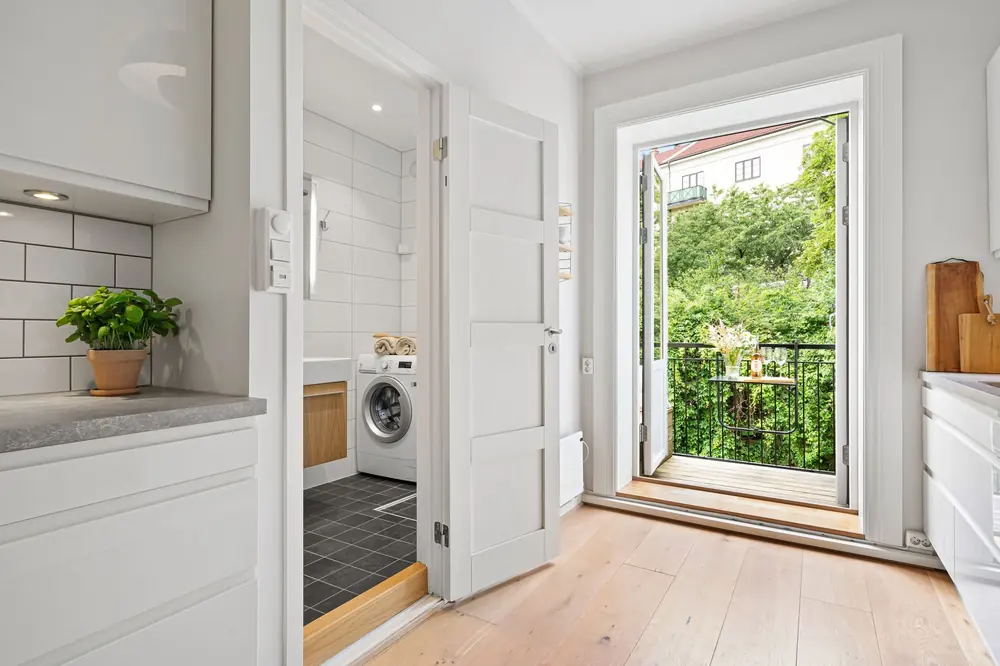
Do not leave the door wide open in a draught, do not hang bags or washing on the handle, and oil the hardware at least once a year, more often near the sea. If water comes in under the threshold when it rains, the door is not always to blame: the water may arrive from the balcony slab, and then the job is finding the leak, see balcony leak. A misted or cracked glass unit is not cured by adjustment either: see double glazing unit replacement. A uPVC front door of a house adjusts the same way; whether we can take it on, we say from a photo.
Tell us how many sashes and balcony doors there are and what is wrong. By phone we say whether and when we can come and how the price is made up.
📞 +359 52 993 333What you can do yourself: winter and summer setting
If your window has adjustable cams, you can switch it to a winter setting for firmer pressure and back to a summer setting yourself. You need an Allen key or pliers and a few minutes per sash. The cams are the small round or oval pegs on the edge of the sash on the handle side, and on larger sashes along the top and bottom as well. When the window closes they slip behind the keepers on the frame and pull the sash against the seal.
- Find the cams. Open the sash and look along its edge. The bigger the sash, the more cams it has.
- Check that they adjust. An oval cam, or one with a socket for a key, adjusts. A plain cam that will not move with light force probably does not; leave it.
- Turn them all the same way. Every cam to the same position by the same angle; a mix of winter and summer settings presses the sash unevenly. Which way presses harder depends on the hardware, so test after each turn.
- Test with a sheet of paper. Close the sash on a sheet of paper in several places. The harder the pressure, the harder the paper is to pull out.
- Watch the handle. If it turns stiffly after the change, back the cams off a little. A stiff handle wears the mechanism.
Do not force a cam: if it does not move with light effort, leave it, because it breaks easily and a spare has to be found for that hardware. Leave the hinge screws alone unless you know what each one does; a wrong turn makes the sash rub more. Many uPVC windows also have a micro-ventilation position, with the sash a few millimetres off the seal. It airs a bedroom or kitchen, but the window then keeps out neither cold nor noise, so close it fully when it turns cold. For wet glass see mould and damp.
How a window adjustment goes
- Looking at every sash. Each one is opened, tilted and closed to see where it rubs, where a gap is left and whether the profile is straight.
- Cleaning and oiling. Dust and grit come off the moving parts, which are then lubricated with oil or grease made for window hardware, never cooking oil.
- Setting in three directions. First the sash is raised or lowered at the bottom hinge, then moved left or right with the horizontal screws, and last the pressure is set with the cams.
- Paper test. A sheet of paper is pressed at the top, bottom and both sides of every sash. It should pull out equally hard everywhere; where it slides out easily, the setting is refined.
- Thermal camera if there is doubt. When it is cold enough outside and the sash still feels cold, we photograph it with our thermal camera. A cold line along the edge shows whether the fault is in the pressure, the seal or the joint around the frame. The camera needs outside air roughly 10–15 °C colder than inside; on a warm autumn day we tell you so.
At the end you try every handle yourself and are shown which cams turn on your hardware. Somebody has to be at the flat, at least at the start and the end. If you live abroad, email us photos and the address and tell us who will open the door: a neighbour, the building manager or whoever holds your keys. Clear the window boards and pull the curtains back.
When adjustment is not enough
Screws move a sash but they do not straighten it. Adjustment does not help when a part is broken or the profile is bent.
- Broken hinge. The hinge is cracked, the screw thread is stripped, or the sash drops when you open it. The hinge is replaced, and it has to be ordered for your system, so we need a photo.
- Worn hardware. The handle spins without catching, the sash will not lock in any position or sticks half-way. A part of the mechanism, sometimes the handle itself, is replaced.
- Bent profile. A tall sash, especially a dark one in long sun, can bow. Then the gap is in the middle of a side, not in the corners, and no setting closes it.
- Frame fitted crooked. If the frame is not straight, the sash has nowhere to sit. That is an installation fault. We do not fit new windows, but we can tell you what to ask the window company.
Replacing a hinge, handle or other hardware is a separate job, because the part is chosen by the profile system. We keep no stock of hardware; whether we take it on, we tell you by phone after a photo. For tired seals see window seal replacement.
What to tell us by phone, and what the price depends on
We give the price for window adjustment by phone after a short description; there is no list price. It helps to know:
- how many sashes there are and how many of them are balcony doors;
- which sashes open and tilt and which only open;
- what exactly is wrong: rubbing, will not lock, stiff handle, sagging;
- which floor you are on and whether the top hinges can be reached from inside without a tall ladder.
The price depends on the number of sashes, how far they have shifted, whether the hardware needs a thorough clean and whether a part has to be replaced. If you feel cold coming through the seals too, say so and we look at them during the same visit. We work every day from 06:00 to 23:00 and issue an invoice.
Frequently asked questions
Why is my window handle stiff?
Most often the sash has dropped and the cams meet the keepers at an angle, or the hardware is dry and dirty. Sometimes the cause is too much pressure, such as the winter setting together with a new, taller seal. If the handle is stiff even with the sash open, the fault is in the mechanism or the handle itself.
Can you adjust aluminium windows and doors?
Aluminium with a tilt-and-turn sash has hardware similar to uPVC and is adjusted the same way. On sliding systems the setting is on the rollers in the bottom track. Whether we can take on your particular system, we tell you by phone once we have seen a photo.
Can you adjust the front door of the block?
The entrance door of a block of flats is a shared part of the building, so the order has to come from the building manager or the owners' association. Whether we can take it on, we tell you by phone; see also what we do for building managers.
I let my flat out and live abroad. Can you sort out a sticking window?
Yes, as long as somebody can open the door at the start and the end: a neighbour, the building manager or the person who holds the keys. Email us the address, a photo of the sash and of the bottom hinge, and what is wrong; write to us in English and we reply in English. You get the price before any work starts.
Related pages
Everything we repair on windows and balcony doors Window seal replacement
When cold air still comes in after the sash is set Double glazing unit replacement
A balcony door with a misted or cracked glass unit Balcony leak
Water under the balcony door when it rains Mould and damp
Wet glass and black spots around the window
Does the sash rub, sag or refuse to lock?
Tell us how many sashes and balcony doors there are and what is wrong. By phone we say whether and when we can come and how the price is made up.
📞 +359 52 993 333or email info@kanalvarna.com — write in English and we reply in English.
Send us a message
Leave your name and a phone number with the country code. Add your email if you prefer a written reply — write in English and we reply in English. We confirm the price before any work starts.