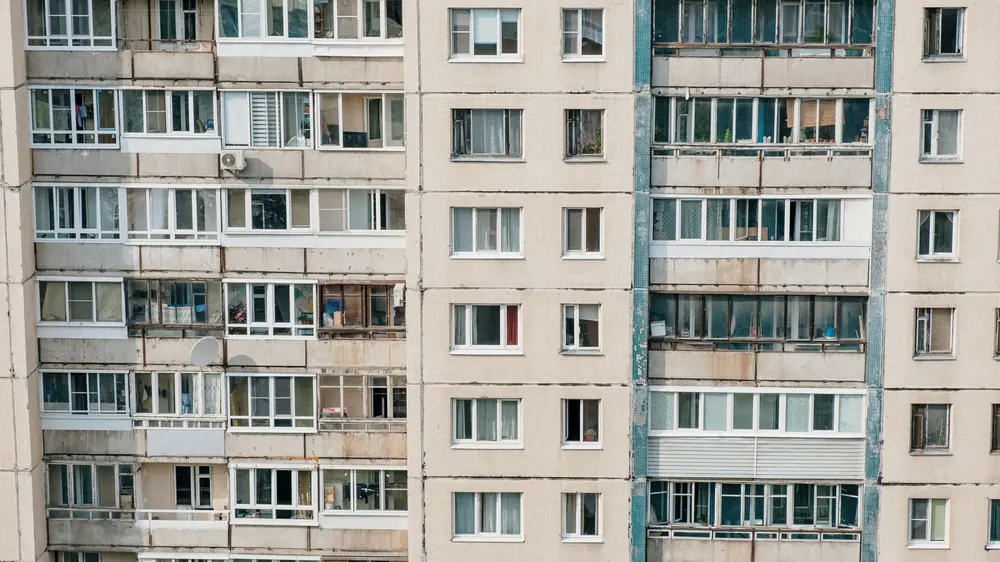
Panel joint sealing in Varna: find the leaking seam, then seal it from outside
A cold stripe along the corner, black mould in a straight line, or a wet patch after rain with a gusty wind: in an old panel block the cause is often a failed seam between two concrete panels. We find the seam that is leaking, and rope-access partners seal it from outside.
Our clients on video · all videos (in Bulgarian)
Panel joint sealing in Varna means closing, from outside, the seams between the concrete panels of a block, because that is where cold air, wind and rain get in. Our part is inside: in winter we photograph the flats with a thermal camera, check the suspect spots with a moisture meter and mark every leaking seam on a sketch of the facade. The seams themselves are sealed by rope-access partners with their own equipment; above the second storey that is only from ropes or scaffolding, and we do not go up the facade. The facade belongs to all the owners, so the owners' association decides. This is a newer line of work for us: we tell you by phone whether and when we can take your building on, and we give the price of our part after a short description. It is part of our insulation in Varna work. Ring +359 52 993 333 or email info@kanalvarna.com with photos — write to us in English and we reply in English.
Updated November 2026What panel joints are and why they open
A panel block is assembled from large reinforced-concrete panels. The vertical and horizontal lines you see on the facade at every floor are the joints between them. When they were built they were filled with a cord pushed deep in, sealant on top and sometimes a skim of render outside. The joint has to absorb the small movements of the panels in frost and in heat.
The sealant sits outdoors in sun, frost, rain and salty wind from the sea. Over the years it loses its elasticity and peels away from the concrete along the panel edge. That is why the corner next to the ceiling in an old panel flat is often cold, and why a wet patch can appear on an outside wall after rain with a strong wind and stay dry in still weather.
This page is only about the seams between facade panels. The grout between bathroom tiles is a different job, covered under leaking tile grout.
Signs, likely causes and what we do
An open joint shows itself by cold, mould or a damp patch on an outside wall, but other things cause the same signs. Water often runs down inside the seam and appears to the side or a floor lower, so we photograph the neighbouring rooms too.
| What you see | Likely cause | What we do |
|---|---|---|
| A cold stripe along a corner or along the ceiling by an outside wall | An open horizontal or vertical joint letting cold air through | Thermal image in cold weather; the stripe is marked on a sketch of the facade |
| Black mould in a straight line in the corner | A cold seam plus damp indoor air, so water condenses along the cold line | Thermal camera and moisture meter to separate cold from water; for condensation see mould and damp |
| A wet patch after rain with wind, dry in calm weather | Water driven through the open joint by the wind | Moisture readings in the first days after the rain, compared with dry spots |
| A draught from a socket or switch on an outside wall | Air moving through the joint and the voids in the panel | Thermal image around the socket; we do not touch the wiring, that is for an electrician |
| A stain in the flat below only after rain | Water from a facade joint, not from the pipes | We compare with the rainfall and check both flats; if it turns out to be plumbing, see a leak from the flat above |
| A crack or fallen render along the seam outside | The render over the joint has cracked together with the sealant | A photo from below; the close look belongs to the rope-access partners |
The thermal image from inside: which seam leaks
A leaking seam shows up as a colder stripe on the corner, ceiling or wall. Every seam is a little colder than the wall, even a sound one, so we compare: the leaking one is colder than the same seam in the next room or on the next floor. This inside part is ours: we photograph the flats we can enter with the thermal camera, check with the moisture meter, and mark each cold seam on a facade sketch. Cold only around a window, a warm pipe or mould on an inner wall we note separately, so nobody pays for rope access for nothing.
The camera reads surface temperature only. The picture is reliable when the flat is heated and it is clearly colder outside, which in Varna means winter, best early in the morning. Out of season we arrange the photographing for the first frosts. The conditions are explained on the thermal imaging survey page.
The partners then seal the seams that show signs, not the whole facade just in case, and judge each one up close from the rope.
Sealing from outside: what the rope-access partners do
Joints are sealed from outside because wind and water enter there; from inside a seam cannot be closed. The work is done by rope-access partners with their own equipment. Above the second storey it is done only from ropes or scaffolding, and we do not go up the facade.
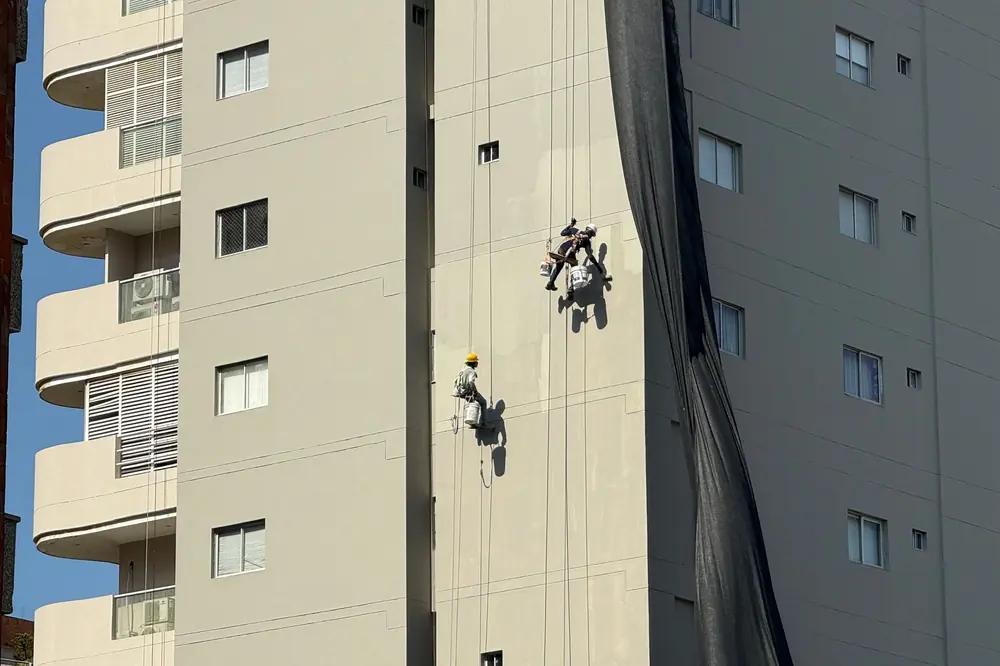
- The old sealant and any crumbling render over the seam are cut out right through, not just on the surface.
- The panel edges are cleaned back to sound, dry concrete.
- Where the material calls for it, the edges are primed.
- A cord goes in deep, so that the sealant has the right thickness and does not stick to the bottom of the joint.
- A new elastic sealant is applied and smoothed to the edges; if needed the seam is painted in the facade colour with a paint the material allows. Hard render is not put over an elastic seam, because it cracks the first time the panels move.
If the block is due for an energy-efficiency renovation soon, the joints are normally dealt with in the design and the insulation covers them, so ask the designer first. If water is coming in now, a wet seam must not be left shut in under the insulation. Washing the facade is a separate job: up to 3–4 metres from the ground see facade cleaning; higher up it again needs rope access or a cherry picker and a decision of the owners.
Tell us the floor, which wall is affected and how many flats in the entrance have the same problem; we tell you by phone whether and when we can take it on.
📞 +359 52 993 333The owners' association: who decides and who pays
The facade of a block is a common part of the building, so sealing the panel joints is decided by the owners' association, through the general meeting or through the building manager acting on its decision. That is true even when only the seam beside one flat leaks.
How the cost is split is for the meeting to decide, and in a dispute for a lawyer; we do not give legal advice. Our role is technical: a report for the entrance (the stairwell and the flats it serves) with the thermal images, the moisture readings and a sketch of the facade showing which seams leak. It is a technical document, not an official one. With it the owners vote on a defined amount of work, and the partners quote against the same list.
If you are the building manager, see also what we do for building managers. If you own a flat and there is no decision yet, the thermal image still helps: you go into the meeting with facts instead of a complaint. We issue an invoice for our part, also to the owners' association if it is the client.
How panel joint sealing goes, step by step
The job runs over two seasons: photographing in winter, sealing in drier, milder weather. This is a newer line of work for us, so in the first conversation we tell you whether and when we can take it on.
- Phone call. The building manager or an owner gives the floor, the wall, the number of flats affected and photos of the stains.
- Thermal image and moisture meter. On a cold day we photograph the affected flats from inside and measure the doubtful spots. If it is warm, we agree a date for the first frosts.
- Technical report for the entrance. Thermal images, readings and a sketch of the facade with the seams that leak.
- Quote and decision. The rope-access partners quote from the sketch, and the owners' association decides.
- Sealing from outside. Done in dry weather, with the zone below the work fenced off.
- Check image. In the next cold spell we photograph the same places again and compare them with the earlier images.
When you do not need panel joint sealing
Not every cold spot in a panel flat comes from a joint. Check these first.
- The draught is only around the window. The cause is usually the rubber seals of the sash or the seam around the frame; see window seal replacement.
- Mould behind a wardrobe on an inner wall. There is no seam to the street there; damp air and poor ventilation are more likely.
- A stain on the ceiling under the neighbour's bathroom. If it appears after their shower and not after rain, the source is the bathroom, not the facade.
- The building has already been insulated and the thermal image is even. The insulation covers the seams and sealing is not needed.
If the thermal image shows the seams are fine, we say so plainly.
What to tell us and what the price depends on
We give the price of the thermal survey by phone after a short description, and the sealing is priced by the partners once they have seen the sketch. Tell us:
- which floor the flat is on and which wall is cold or wet: facing the street, the courtyard, or a corner flat;
- how many flats in the entrance have the same problem;
- whether the patch appears after rain with wind or stays all the time;
- whether the building has been insulated, fully, partly or not at all;
- whether the owners' association has already decided anything or the matter is still to be raised;
- photos of the stains inside and of the facade outside. You can email them to us at info@kanalvarna.com.
If you let the flat out or live abroad, tell us who will open the door: a tenant, a neighbour or the building manager.
Frequently asked questions
Can only the joints around my flat be sealed?
Technically yes, but the facade is common property, so even that needs the consent of the owners' association. The thermal image shows exactly which seams leak, so nothing is sealed in vain.
Does the building have to decide even if I pay?
Yes. Even if you pay yourself, work on the facade goes through the owners' association, usually the building manager and the general meeting. How costs are split is for the meeting; in a dispute, ask a lawyer.
How long does the new sealing last?
We do not promise a number of years. It depends on the material, on whether the old sealant was cut out right through, whether the edges were dry and whether the cord was set properly. That is why we photograph again in the next cold spell; the image shows whether the seam now holds the heat.
Do you go up the facade yourselves?
No. Our part is inside: the thermal camera, the moisture meter, the report and the check image. Sealing from outside is done by rope-access partners with their own equipment. If you live abroad, write to us in English and we reply in English, and tell us who has the keys.
Related pages
Walls, loft and renovation: where to start Thermal imaging survey
When the camera shows the cold places correctly For building managers
A report and a quote for the general meeting Leak from the flat above
When the stain comes from the neighbour's pipes Window seal replacement
When the draught comes past the window
Cold corner or a patch after rain?
Tell us the floor, which wall is affected and how many flats in the entrance have the same problem; we tell you by phone whether and when we can take it on.
📞 +359 52 993 333or email info@kanalvarna.com — write in English and we reply in English.
Send us a message
Leave your name and a phone number with the country code. Add your email if you prefer a written reply — write in English and we reply in English. We confirm the price before any work starts.