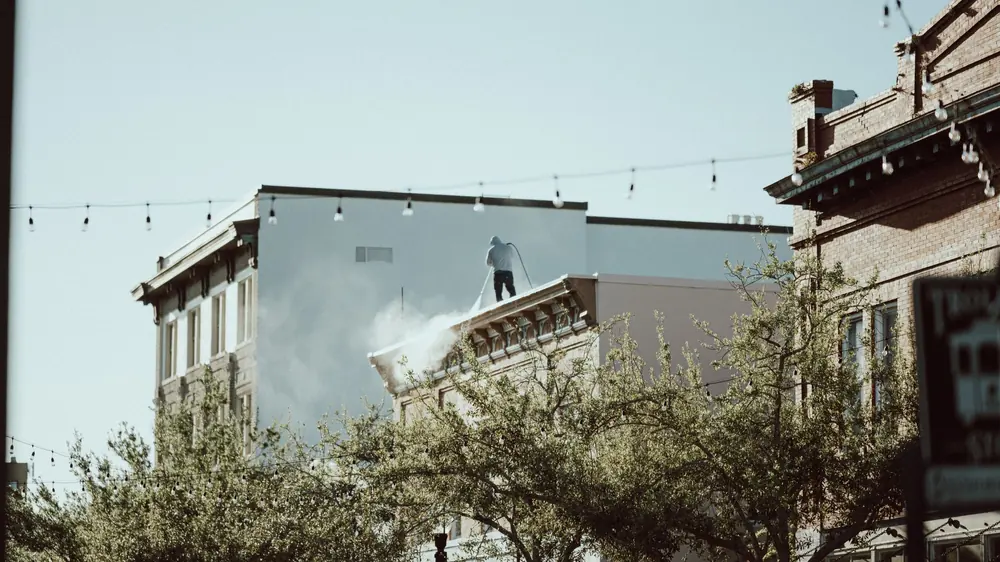
Facade cleaning in Varna: soft washing of render, fences and stone up to 3–4 m
Green patches on the north wall, black streaks under the window sill, a darkened stone fence? Walls are washed with a cleaning product and low pressure, up to 3–4 m from the ground, and only after a test on a spot nobody will see. This is a newer line of work for us, so we tell you by phone whether and when we can come.
Our clients on video · all videos (in Bulgarian)
Facade cleaning in Varna here means washing the part of a wall that can be reached from the ground, up to about 3–4 m: the ground floor of a house or small block, fences, retaining walls, plinths and stone cladding. Painted walls and render get soft washing, which is a cleaning product, a wait, then a gentle rinse; only concrete, granite and sound brick take a stronger jet, and always after a test patch. Anything higher is work for a partner with a cherry picker or for rope-access partners. It is part of our pressure washing in Varna, a newer service, so we tell you by phone whether and when we can come. Call +359 52 993 333 or email info@kanalvarna.com — write to us in English and we reply in English.
Updated November 2026What facade cleaning covers, and what soft washing is
We take on the ground floor of a house or a low building, the fence facing the street or the neighbour, a retaining wall in the yard, plinths, and stone cladding on stairs, columns and walls. The work is done from the ground, with the top edge reached by a lance extension or from a stable platform.
Soft washing. Washing a wall without a hard jet. The product goes on at low pressure and is left to work, then the wall is rinsed at low pressure with a wide jet. The algae and dirt come away because of the product, not the force of the water, so the render and the paint stay whole.
We use cold water. The pressure is cut with the nozzle and with distance, never run at full on render. You get a washed wall, photos taken before and after, and a short note of what we saw: cracks, hollow-sounding patches, stains that come from water.
What the wall is made of decides the pressure
A wall is only as strong as its weakest layer: the paint, the thin render or the mortar between the stones. So we first find out what the wall is made of, then choose the nozzle.
| Surface | How it is washed | The risk |
|---|---|---|
| Render with facade paint | Soft washing, wide jet, from a distance | Flaking paint comes off in flakes and leaves patches |
| Textured mineral or silicate render | Low pressure and product, never lingering in one spot | The grains are pulled out and leave paler streaks |
| Insulated facade (boards under thin render) | Soft washing only, jet at a shallow angle | A hole in the reinforced layer lets water into the insulation |
| Facing brick | Medium pressure along the brick face | The mortar joints wash out and white salts come back |
| Limestone, sandstone | Low pressure, neutral product, test patch | It crumbles; acid leaves pale blotches |
| Granite, concrete | A stronger jet with a fan nozzle | A rotary nozzle leaves marks and rough stripes |
The test patch tells more than any description. Somewhere out of sight, behind a bush or low by a corner, we try the product and the jet from different distances and watch whether the paint lifts, whether the grain stays and whether the stone pales. Near cracks we tap the render: a hollow, dull sound means water can get in behind it. If the wall cannot take even low pressure, we say so and do not wash it.
Stains on a wall: what they mean and what we do
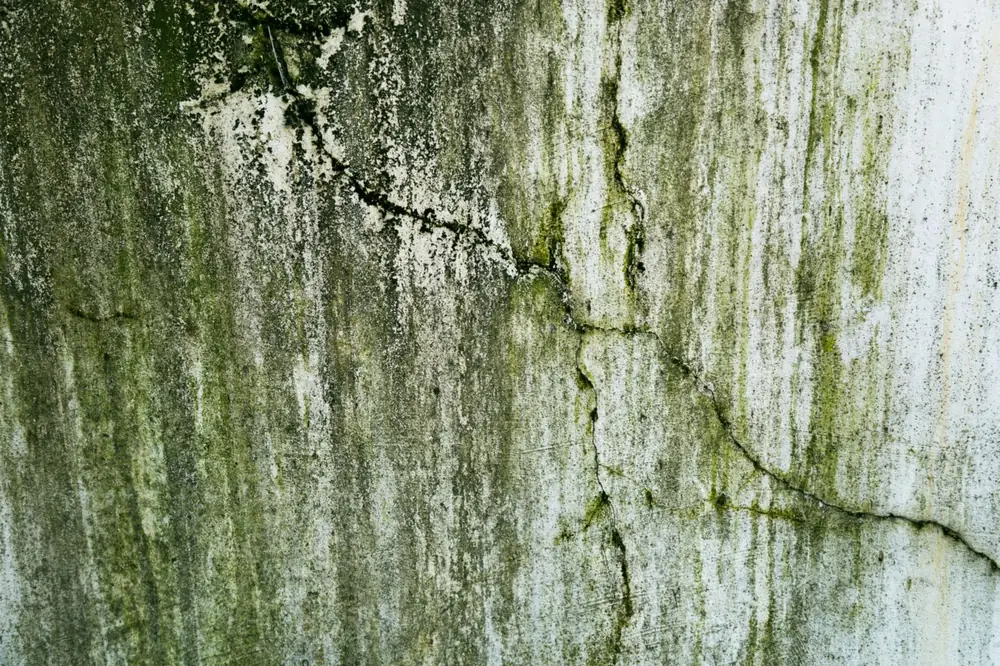
A stain shows where the water comes from: green grows where a wall dries slowly, and black runs down from the edge above.
| What you see | Likely cause | What we do |
|---|---|---|
| Green patches on a north or shaded wall | Algae: the wall stays damp in the shade | Algae product, a wait, soft washing |
| Black streaks under a sill or cornice | Dust and soot that rain washes off the edge | Soft washing; they return if the sill throws the water onto the wall |
| Rust marks under anchors and metal covers | Rust carried down by rain | A special product after a test; the metal needs cleaning or painting or the mark returns |
| Green and dark only at the foot of the plinth | Splashing from paving, or rising damp | We wash, but first measure with a moisture meter at several heights |
| The mark returns in the same place after months | Overflowing gutter, broken downpipe, a terrace with no drip edge | A look at the gutter, then readings with the moisture meter |
If the green is in one place only, we measure there and on a dry part of the same wall with our moisture meter. The difference shows whether the wall is permanently wet or only shaded. A wall that is damp all the time is a different job: see rising damp and the damp survey. An overflowing gutter is a gutter cleaning matter.
Tell us what the wall is made of, how high it is and whether it is insulated. Email photos from close and from far away, and we tell you what pressure it can take and whether and when we can come.
📞 +359 52 993 333Fence cleaning, retaining walls, plinths and stone cladding
Fences and retaining walls follow the same rules as a wall, each with its own trap.
- Metal fence. Flaking paint comes off with the dirt. If you plan to repaint, washing is good preparation; if not, the fence can look blotchier afterwards. Rust, primer and replacing rotten parts belong with metalwork.
- Retaining wall. Washed from the top down without soaking the soil behind it. The weep holes at the foot are often blocked with earth; if we see that, we tell you. Flushing the drain behind the wall is a separate task.
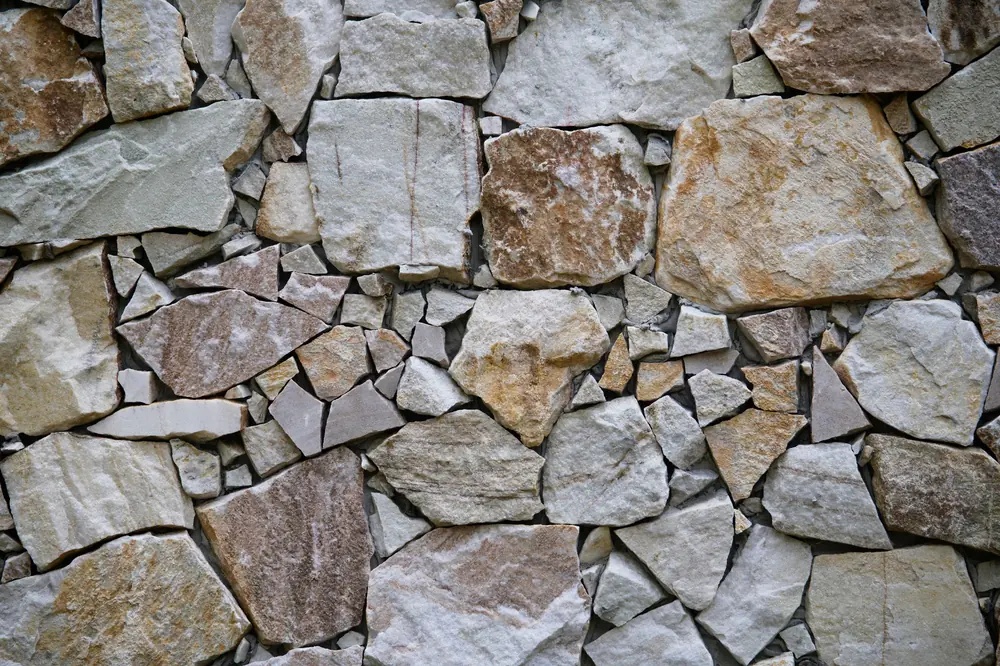
- Stone cladding and plinth. The jet is kept on the stones, not the joints, because the mortar is softer than the stone. Limestone and sandstone are washed gently, granite takes more. Cracked joints are photographed and shown to you before washing.
The paving in front of the wall is washed separately: see patio and driveway cleaning.
Height, blocks of flats, insulated walls and electrics: where we stop
- Above 3–4 m. The jet pushes the lance back, and a person on a ladder can lose their balance. Higher up the work goes to a partner with a cherry picker and a qualified operator, or to rope-access partners (abseilers). How that is arranged and paid for, we explain by phone.
- A block of flats. The facade belongs to everyone. Even washing just the ground floor is a decision for the owners' association. The building manager can email us photos and the decision, and we start from there.
- Insulated facade. There are boards under the thin render. Only soft washing, never lingering on edges or around fixings. If the render is cracked, that gets repaired first; more on the system is on the insulation page.
- Windows, doors and vents. The jet is never aimed at window seals, roller shutter boxes or ventilation grilles, because water gets behind the frame. Windows are closed and grilles covered.
- Electrics. Outdoor lights, sockets and the doorbell are covered and switched off at the consumer unit. If something is damaged, an electrician looks at it before we carry on. An air-conditioning outdoor unit is not hosed.
- Graffiti. It needs hot water and special products, and on porous stone a shadow often stays. We wash the rest and name a specialist firm for the lettering.
The dirty water with product does not go to the street gully or the rainwater drain.
How a facade cleaning job goes
- Photos and sizes. You email a photo of the wall from far and close, with the height, the material and whether it is insulated. Because this is a newer service, we tell you on the call whether and when we can take it.
- Test patch. On a hidden spot we try the pressure and the product, and tap the render around cracks. The result decides the nozzle and the distance.
- Protection. Windows are closed, lights, sockets and grilles covered and their power switched off. Cars are moved, plants wetted with clean water and the ground below the wall fenced off.
- Product and wait. The product goes on from the bottom up, so pale runs do not appear on a dry wall. It is not left to dry in the sun, so we wash in the shade or in the cool part of the day.
- Rinse and a note. We rinse from the top down, take photos and tell you what we saw. If you are going to paint, we measure with the moisture meter to see when the wall has dried.
If you live abroad, tell us who will be at the property: a neighbour or whoever keeps the keys.
When you do not need a wall washed, and what to tell us
- The marks are on the inside face of the wall. That is condensation or a leak, not dirt from outside: see mould and damp.
- The render is loose, cracked or sounds hollow. Washing would knock off more; repair it first, then paint.
We give the price by phone, after a short description and photos. Tell us:
- a house or a block, and which part: ground floor, fence, retaining wall, cladding;
- the height from the ground and the length of the wall;
- the material and when it was last painted;
- what is on it: green, black streaks, rust, white salts;
- whether there is a tap and a socket close by, and where the water will drain: paving, garden, the neighbour's yard;
- for a block, whether the owners have made a decision.
The price depends on the area and height, the material, the product and how much protection the windows and plants need, and the access. We can issue an invoice.
Frequently asked questions
Will it damage the paint on my facade?
Sound paint takes soft washing: the product loosens the dirt and the jet only carries it off. Paint that has already come away from the render does flake off at the first rinse. That is why we test a hidden spot first, and tell you beforehand if the paint is old and the wall will need repainting afterwards.
Can you wash the whole facade of a block of flats? Who decides?
From the ground we reach 3–4 m, which is usually the ground floor. Higher up, partners with a cherry picker or rope access do the work, and whether and how we can arrange it, we say by phone. In both cases the facade is a shared part of the building, so the owners' association must decide first. The building manager can email us photos and the decision.
My house has insulated walls. Can it be washed at all?
Yes, but only softly: product, a wait and low pressure. Under the thin render there are boards, and a hard jet breaks the reinforced layer and puts water into the insulation, where it stays for a long time. If the render is cracked or has blisters, those are repaired first. The older the insulated facade, the more the test patch matters.
How long before I can paint?
When the wall is dry inside, not when the surface feels dry. It depends on the material, the thickness of the render, the shade and the weather; brick and lime render hold water longer. So we do not give a number of days by eye. We measure with a moisture meter, the washed spot against a spot the water never reached.
I live abroad and let the house out. Can you deal with it?
Yes. Email photos and the address, and tell us who can open the gate: a neighbour, the building manager or whoever keeps the keys. We say by phone whether and when we can come.
Related pages
Pressure, nozzles and where the water goes, for every surface Patio and driveway cleaning
The paving in front of the same wall: washing and fresh sand Insulation in Varna
What lies under the render of an insulated facade Rising damp
When the green and the marks sit only at the plinth Damp survey
Is the wall dry enough to paint after washing
Has the wall gone green or the stone dark?
Tell us what the wall is made of, how high it is and whether it is insulated. Email photos from close and from far away, and we tell you what pressure it can take and whether and when we can come.
📞 +359 52 993 333or email info@kanalvarna.com — write in English and we reply in English.
Send us a message
Leave your name and a phone number with the country code. Add your email if you prefer a written reply — write in English and we reply in English. We confirm the price before any work starts.