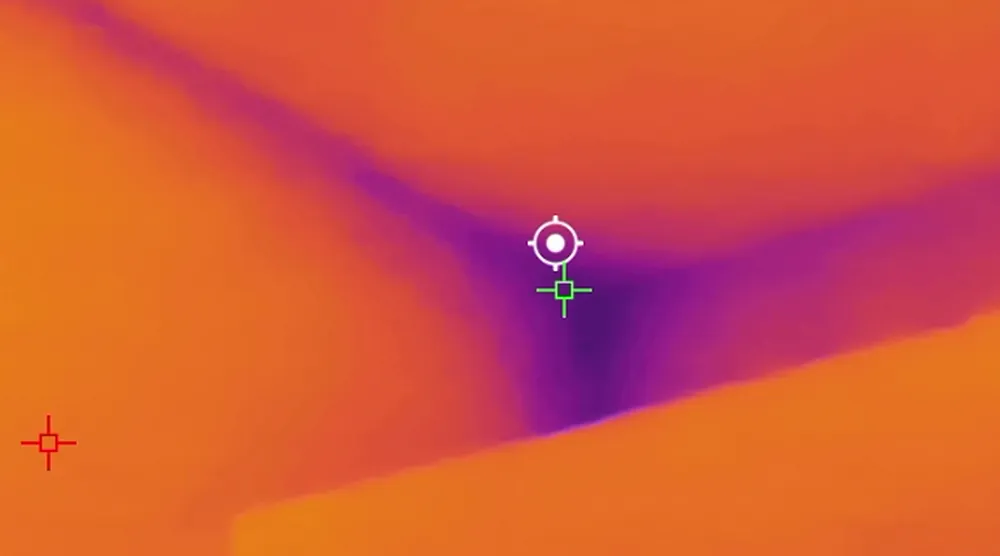
Leak detection in Izgrev, Varna: where old pipes meet new ones
Izgrev is a district where 1970s-80s blocks stand next to new apartment complexes, and many flats in the old blocks have been renovated only in part. The risk is the joint where an old steel pipe was connected to a new plastic one. The leak at that joint can be slow, quiet and hidden for months. A thermal camera shows it in minutes.
Our clients on video · all videos (in Bulgarian)
For leak detection in Izgrev, Varna we look first at the places that a mixed district produces: the joint between old galvanised steel and new PPR pipe in a part-renovated flat, a failed bathroom waterproofing or a broken underfloor-heating loop in a new flat, and a corroded riser in an old block. A thermal camera check is €52 for the first flat and €26 for each further flat, acoustic leak detection is from €36 and combined diagnostics from €55. The methods are in our leak detection hub. We work every day 06:00–23:00; call +359 52 993 333 or email info@kanalvarna.com — write to us in English and we reply in English.
Updated November 2026Izgrev: old blocks, new complexes and the risk between them
Izgrev is one of the fastest-developing residential districts of Varna. Blocks from the 1970s and 1980s stand beside apartment complexes and cooperatives built in the last twenty years. This mix of building periods gives a specific water problem that you seldom see in a district built all in one period.
Take an old block flat that has been renovated in part: the old steel pipework was replaced up to a certain point and then new polypropylene (PPR) was connected on. Those transitions between different materials are the highest-risk spots. If you are letting a flat that a previous owner renovated a room at a time, this is the first thing to suspect.
Incompatible pipes: the common mistake
When pipes are renovated in stages, a frequent mistake is joining old galvanised steel directly to new PPR or copper. Steel and polypropylene expand differently when hot water runs through them. After thousands of heating and cooling cycles the joint slowly loses its seal.
The result is a slow leak that can run for months, even years, before it shows as a wet patch on a wall or ceiling. The damp gets behind the filler, loosens the tile adhesive, and floods a neighbour's cellar or ceiling with nobody knowing where it comes from. This is where the thermal camera shows the source in minutes.
The three most common cases in Izgrev
- A leak at the old-to-new joint. The commonest after a part-renovation. The connector or transition fitting between galvanised and PPR loses its tightness; the water goes behind the bathroom tiling or into the kitchen wall. The camera shows a temperature anomaly in a few minutes.
- Faulty underfloor heating in a new flat. Underfloor heating is standard in the new Izgrev buildings. With a poor soldered joint or a damaged manifold the water seeps slowly into the screed. The thermal image shows the shape of the loop and where it is broken.
- A hidden leak in the riser of an old block. The vertical risers are original galvanised steel. After 40 years or more the pipe corrodes from the inside, and a leak in it can soak a series of flats in the same stair. An acoustic method together with the thermal camera finds the floor where the fault is.
A new-build bathroom that is damp may have a waterproofing defect rather than a pipe problem; the camera shows which square metre of floor is wet, and bathroom waterproofing covers what is done about it.
Send the address, the floor, a photo of the stain and say whether the flat was renovated in parts. We tell you the price before we start.
📞 +359 52 993 333Old building, new building: a different way to look
In the older blocks the main trouble is corroded steel pipework inside the walls, where you cannot see it. The thermal camera finds damp behind the wall by its temperature, and the ultrasonic detector hears the water in a pipe under pressure.
In the new buildings the leak is most often from waterproofing, underfloor heating or a poor joint, and here the camera sees to the centimetre which part of the wall or floor is wet, without taking anything down. In a mixed flat, one that is old in one part and renovated in another, we combine the methods: the thermal camera for the zones behind walls and floors, the ultrasonic detector for pipes under pressure, and a moisture meter to confirm how wet it is. We show you on site what we found.
Leak detection in Izgrev: prices, who decides, and owners abroad
- Thermal camera: €52 for the first flat, €26 for each further flat.
- Acoustic leak detection: from €36.
- Combined diagnostics: from €55.
The final figure depends on the number of flats and the type of pipework; we tell you it before we start. You pay after the job in cash, by card (Visa, Mastercard) or by bank transfer, and an invoice is available on request. If a riser serves several flats, the owners' association or building manager has to agree to any work on the shared pipe, and the leak is then best found with everyone concerned present. If you are abroad, email the address, the floor and photos, and the name of the person who will open the door.
What to do before you ring
- If you have only partly renovated, ask where the new pipe joins the old one and tell us; a scan before filling and tiling costs much less than a repair after a leak.
- Look at the meter with every tap closed; a moving dial means a hidden leak.
- A stain on your ceiling is not always from the flat directly above; see leak from the flat above.
- Send us a photo of the stain with something in the picture for scale.
Frequently asked questions
How do you find a leak behind tiles and plaster in Izgrev?
With a thermal camera, which shows temperature differences without demolition. An ultrasonic detector helps with pipes under pressure inside walls, and an acoustic method locates the floor in a riser.
How much does leak detection cost in Izgrev?
A thermal camera check is €52 for the first flat and €26 for each further flat. Acoustic leak detection is from €36 and combined diagnostics from €55. We tell you the final price before we start.
Why do leaks appear after a part-renovation?
When old galvanised steel is joined directly to new PPR or copper, the materials expand differently with hot water, and over many cycles the joint loses its seal. The leak is slow and hidden.
Can you find a leak in underfloor heating?
Yes. The thermal image shows the loop and where it is broken, so the screed need not be broken up everywhere.
I'm not in Bulgaria — can you still deal with it?
Yes. Send the address, floor and photos, and the contact of someone who can let us in. We arrange the visit with them and you can pay by bank transfer.
Can I write to you in English?
Yes: write to us in English and we reply in English, at info@kanalvarna.com or through the form below. You can also ring +359 52 993 333.
Related pages
The methods and the prices in one place Thermal imaging leak detection
How the camera finds the leak Underfloor heating leak
Finding the break in the loop Bathroom waterproofing
When the floor under the tiles has failed Leak from the flat above
When the water comes from a neighbour
A hidden leak in Izgrev?
Send the address, the floor, a photo of the stain and say whether the flat was renovated in parts. We tell you the price before we start.
📞 +359 52 993 333or email info@kanalvarna.com — write in English and we reply in English.
Send us a message
Leave your name and a phone number with the country code. Add your email if you prefer a written reply — write in English and we reply in English. We confirm the price before any work starts.