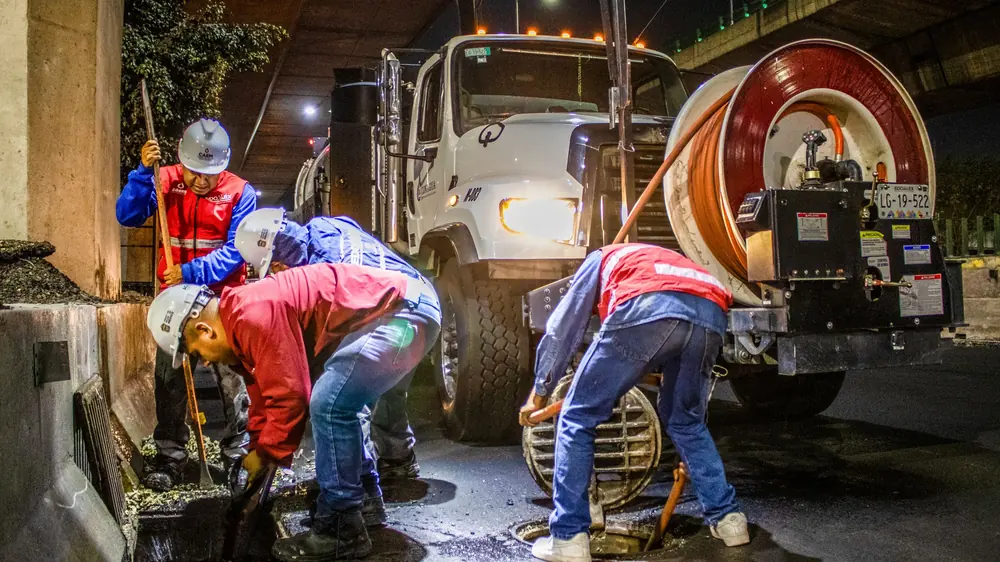
Drain jetting in Varna: washing grease, soap and sludge off the pipe walls
The kitchen drain gets slow again soon after it was cleared with a spiral? Jetting washes the pipe walls along their whole length, and the camera before and after shows what was there and what is left.
Our clients on video · all videos (in Bulgarian)
Drain jetting, or high-pressure water jetting, washes the inside of a pipe with water from a nozzle with rear jets on a thin hose, carrying grease, soap and sludge down towards the manhole. It works best on a soft layer of grease and soap, and it starts from €79. Wet wipes, roots and limescale are not removed by water: they need a spiral. Jetting is a new service for us, so we first tell you whether we can take on your job and when. Write to us in English and we reply in English: info@kanalvarna.com, or call +359 52 993 333. We work every day from 06:00 to 23:00.
Updated November 2026What is drain jetting?
Jetting is washing a pipe from the inside with pressurised water, along its entire length and not only where the plug is. A thin hose goes into the pipe with a nozzle on the end. The nozzle has one opening at the front and several angled ones at the back. The rear jets pull the nozzle forward through the pipe and at the same time beat against the walls, the front jet breaks what is in the way, and the water carries the loosened material down along the slope towards the stack or the manhole.
The difference from unblocking is the aim. A spiral opens a passage through the plug and the water runs again, but the layer on the walls from which the plug grew stays behind. Jetting takes that layer off, so the pipe does not narrow again so soon. The two often go one after the other: see machine drain unblocking and the wider blocked drains page. A small household pressure washer has no pipe hose and does not clean a drain.
Water or spiral: when jetting helps
| What you notice | Likely cause | What we do |
|---|---|---|
| Kitchen sink drains more and more slowly for weeks | Grease built up on the walls of the kitchen branch | Jetting from the sink towards the stack or manhole |
| Blocks again soon after a spiral | The spiral broke the plug but the layer on the walls stayed | Jetting, then a camera to see what is left |
| Toilet or main branch blocked with wet wipes or rags | A fibrous plug that water only compacts | A spiral, not jetting: see drain pipe unblocking |
| A yard pipe near a tree blocks from time to time | Roots entering at a joint | Root cutter (arranged with partners), then camera: tree roots in drains |
| Sand and silt in a yard pipe after a repair or a downpour | Sediment on the bottom of the pipe | Jetting towards the manhole; the silt in the manhole is scooped out |
| Blocks in the same place every time | A sagging or displaced section holding water | Camera and repair of the section — more jetting only postpones it |
In a bathroom the layer is different: grey and soft, from soap, washing powder and hair. Hair winds round a spiral, while soap washes off with water.
How far jetting reaches, and where we go in
Jetting cleans sinks, baths, the kitchen branch and the main branch of a house or restaurant as far as the first manhole. Further than that the jet weakens, because the hose is thin to fit into narrow pipes, and in wider pipes there is not enough water to carry the sediment away. So we are straightforward about what we take on:
- Wide pipes with sand and sludge — the street connection, a block's main drain. A bigger jetting machine is needed, arranged with partners.
- Roots, limescale, wet wipes — a spiral; dense roots need a root cutter, arranged with partners.
- Long runs — washed from several entry points or with a bigger machine, again with partners.
Where we enter decides how easy the job is. For a sink we take off the trap and put the hose straight into the wall pipe. The best entry is an inspection hatch on the stack or the horizontal pipe, or a manhole in the yard. A toilet is difficult and we do not promise it; the bend in the ceramic will not let the hose through, so we usually go in from a hatch.
Why the camera comes before and after
The camera before jetting tells us whether to jet at all: it looks for wipes, roots, a broken or sagging section and displaced joints. If the pipe is cracked, a strong jet can finish it off, so we wash more gently or not at all, and the section goes for repair. The camera afterwards shows the pipe walls, not just that water runs: whether the layer is gone along the whole length or only a channel was cut through the middle. You watch the screen with us on site; see CCTV drain survey.
Jetting helps the camera too: you cannot see a crack under a greasy crust. That is why, before buying a property or starting a renovation, a pipe is often washed first and then checked with the camera.
Tell us which sink or branch, where the manhole or hatch is and when it was last cleared — we tell you whether jetting is the answer, the price before we start and when we can come.
📞 +359 52 993 333Safety and old pipes
The biggest risk is the hose leaving the pipe under pressure, and the most common damage is to old, cracked pipes. So we stop the machine before the nozzle reaches the entrance, the person working wears goggles, and we check for open outlets on the way (a floor drain, a bath in the flat below, a hatch without its cap) before we start. Old cast iron, clay and asbestos-cement pipes are checked with the camera first; if they hold, a gentler jet, and if not, a repair rather than water.
If you have poured a drain cleaner into the pipe, tell us before we start. The jet splashes it back. In a block of flats the water from jetting flows into the horizontal pipe in the cellar and out through the manhole or hatch, so we need cellar access and somebody to unlock it. Read about the shared parts of a building on blocks of flats.
How a jetting job goes
- You tell us. Which sink or branch, since when it has been slow, what you tried, and whether a cleaner was poured in. Because this is a new service, we tell you first whether we can take the job and when.
- Entry and camera. We find where to enter: trap, hatch or manhole. If there is any doubt about wipes, roots or a broken pipe, the camera goes first.
- Spiral if there is a plug. A solid plug is opened with a spiral first, so the jetting water has somewhere to go.
- Jetting towards the manhole. The nozzle travels along the pipe and the loosened material runs down with the water. Thick lumps of grease and the silt in the manhole are scooped out, not pushed towards the street sewer.
- Check and summary. We run water from the sinks and go through the pipe with the camera, then tell you what we saw and what to watch for, such as a sagging section that will need a repair.
In a restaurant the line after the grease trap is washed when the kitchen is not working. How the trap itself is looked after is on grease trap cleaning. The price depends on the entry point, the length of the run, whether a spiral is needed first, whether we run the camera before and after, and how much silt is in the manhole. We give you the price before we start, once you have described the job or sent photos.
When you do not need jetting
- Only one sink or bath is slow: it is almost always the trap. Take it off and wash it, then see blocked sink.
- It smells but everything drains: the cause is a trap, a seal or the ventilation of the stack; see drain smell.
- The toilet blocked once: that needs unblocking, not washing the whole branch.
- Water in the cellar only in a downpour: usually the street sewer coming back, and a non-return valve helps, not washing.
If you own a property here and are not in Bulgaria
Email us the address, whether it is a flat, house or restaurant, a photo of the sink or manhole, when it was last cleared and with what, and the name and phone of whoever can let us in. We tell you whether we can take the job and when, arrange the visit with that person and let you know what we found and what we did. You can pay by bank transfer. A rental flat with a kitchen drain that keeps slowing is a typical case.
Frequently asked questions
How much does drain jetting cost?
High-pressure jetting starts from €79. The final price depends on where we enter, how long the pipe is, whether a spiral is needed first, whether we run the camera before and after, and how much silt there is in the manhole. We give you the price before we start. See our price list.
Will jetting damage old pipes?
A sound pipe takes water without a problem. The risk is with old cast iron, clay and asbestos-cement pipes with cracks or displaced joints, where a strong jet can break off a piece. So with an old pipe we run the camera first and decide whether to jet gently or whether the section needs a repair.
How often should a kitchen drain be jetted?
There is no general rule: it depends on how much is cooked and what goes down the sink. In a home it is often enough when the drain starts to slow. In a restaurant the interval is set by the camera: if the layer is thick again after a few months, you jet more often. A strainer in the sink and fat from pans in the bin lengthen the time.
Isn't a shop-bought drain cleaner easier?
A cleaner eats away a little grease near the sink but does not take the layer off the whole pipe, and if the pipe is completely blocked it simply sits there. It then splashes back at anyone who opens the trap or jets the pipe. If you have already poured one in, tell us before we start.
I'm not in Bulgaria. Can you still deal with it?
Yes. Send us the address and the contact of whoever can let us in. We arrange the visit with them, let you know what we found and what we did, and you can pay by bank transfer.
Can I contact you in English?
Yes — write to us in English by email at info@kanalvarna.com or through the form on this page, and we reply in English. The phone number is +359 52 993 333.
Kitchen drain slow again?
Tell us which sink or branch, where the manhole or hatch is and when it was last cleared — we tell you whether jetting is the answer, the price before we start and when we can come.
📞 +359 52 993 333or email info@kanalvarna.com — write in English and we reply in English.
Send us a message
Leave your name and a phone number with the country code. Add your email if you prefer a written reply — write in English and we reply in English. We confirm the price before any work starts.