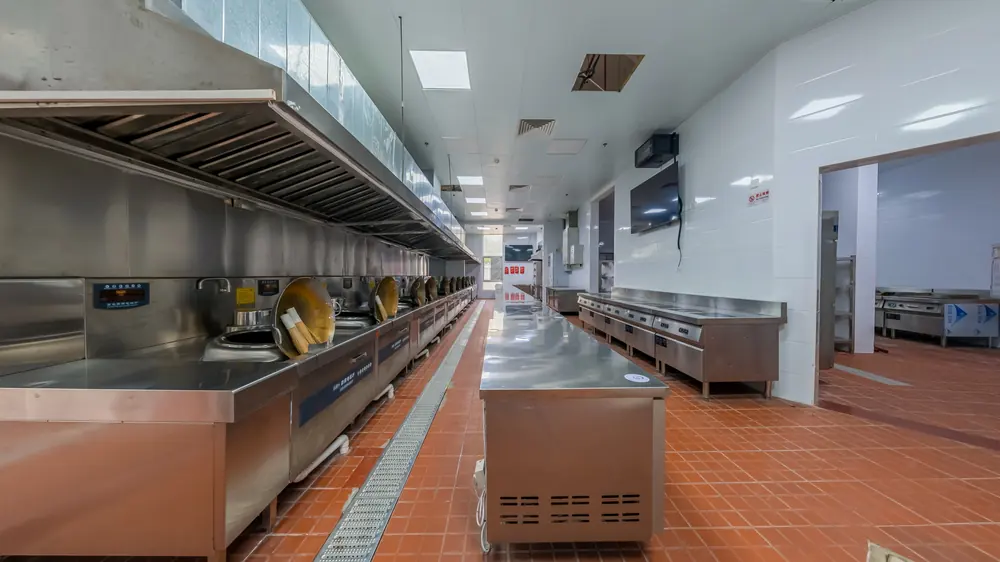
Grease trap cleaning in Varna: the trap, and the pipes either side of it
Kitchen sinks draining slowly and a smell around the trap lid? We clear the pipe with a machine, check it with a drain camera and agree with you who empties the trap. This is a new service for us, so we confirm by phone whether and when we can take the job on.
Our clients on video · all videos (in Bulgarian)
Grease trap cleaning in a restaurant, hotel kitchen or canteen in Varna has two parts: emptying the trap, and clearing the pipes before and after it. We clear those pipes with a machine and check them with a drain camera (camera survey from €59). Emptying the trap and taking the grease away is arranged through partners, because the grease is waste and has to go to a company with a waste permit. Grease trap work has no list price: we give you the price before we start, once you have described the kitchen. This is a new service for us, so we confirm by phone whether and when we can come. We work every day from 06:00 to 23:00, weekends included. Call +359 52 993 333 or email info@kanalvarna.com — write to us in English and we reply in English.
Updated November 2026What a grease trap is and why it fills up
A grease trap is a tank between the kitchen drains and the sewer. The water slows down inside it, the grease floats to the top, heavy scraps of food sink to the bottom, and the cleared water leaves through an outlet that sits below the layer of grease.
There are two common kinds. A small one sits under or next to the sink, in plastic or stainless steel, with a lid you lift by hand. A large one is buried in the yard, the cellar or under the floor and is opened through a manhole cover.
A trap works only while it has room. When grease and sludge fill most of it, water carries grease on down the pipe, where it cools and sets on the walls. That is why the blockage in a restaurant is often not in the trap at all but in the pipes around it — from the sinks to its inlet, and after a full trap, in the line beyond it.
What we do and what we arrange
We keep the two apart, because they are different jobs needing different equipment. Other kinds of blockage are on our blocked drains page.
| Job | Who |
|---|---|
| Clearing the pipe from the sinks to the trap and after it, with a machine and spiral | We do this |
| Looking at the trap and its lid, and a drain camera along the line | We do this |
| Advice on how often to check the trap | We do this |
| Emptying the trap and taking away the grease and sludge | Arranged with partners — confirmed by phone for each site |
| Fitting or replacing a trap | Confirmed by phone — size and position come from the design, not from a quick look |
Grease and sludge from a trap are waste. They must not go down the drain, into the yard manhole or into the bin; they go to a company with a permit for that kind of waste. If you already use such a company, we take the pipe and the camera and they take what is inside the trap. If you do not, tell us on the phone and we say who to contact.
If the bar sink, floor drains or guests' toilets are the problem rather than the kitchen, see restaurants and bars. A home kitchen usually has no grease trap at all — a slow sink there is a blocked sink.
Signs, likely cause, and what we do
Most kitchen problems come from one of three places: a full trap, a blocked inlet, or a blocked line after the trap. The table helps tell them apart, even over the phone.
| What you notice | Likely cause | What we do |
|---|---|---|
| Kitchen sinks drain slowly | Full trap, or a blocked pipe between the sinks and the trap | Open the trap and look at the level; clear the inlet with a machine |
| Smell in the kitchen or dining room | Full trap, a lid without a seal, or a dried-out trap under a sink | Check the lid and the traps; if it smells with an empty trap, see drain smell |
| Water around the trap lid | Blocked outlet, or a blocked line after the trap | Clear the line beyond it and check it with the camera |
| White greasy mass in the yard manhole | Grease has passed the trap and set in the chamber | Clear the manhole and its line, and look for why the trap lets grease through — see blocked manhole |
| Blocks again after a few weeks | Long gap between cleanings, hot water and detergents, enzymes used instead of emptying | Camera along the line and a shorter inspection schedule |
| Neighbours or the water company complain | Grease in the shared line after the trap | Clear the line, check it with the camera up to the public sewer connection, and tell you what we saw |
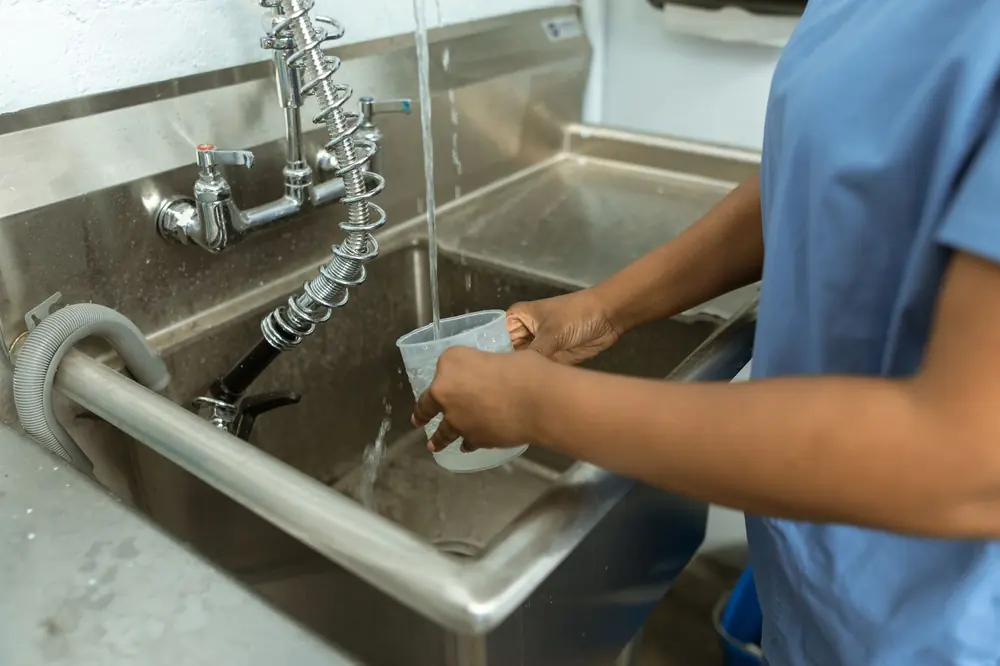
Tell us what kind of business it is, where the trap is and when it was last emptied — we tell you where we start, and whether and when we can come.
📞 +359 52 993 333How often should it be emptied?
It depends on the kitchen, not on the calendar. One restaurant fills a trap in weeks, another in months, and a seaside kitchen in July runs at a different pace from February. What matters is how much you cook, what you cook (frying and grilling give far more grease than salads), the size of the trap and the maker's instructions.
The surest way is to look. In the first month open the trap every two weeks, note how far the grease has built up, and after a few checks you will see how long yours lasts. Keep the dated invoices and records of each emptying: an inspector may ask when the trap was last cleaned and who took the grease.
What does not help
Grease does not disappear. It either stays in the trap until someone takes it out, or it moves further down the drain. Products that promise to "dissolve" it usually just move it on.
- Hot water and detergent. They melt grease for a moment and push it past the trap. Lower down the pipe cools, and the grease sets where it is harder to reach.
- Enzymes and bacteria. They break down some of the grease but do not remove the sludge or empty the trap. They can stretch the time between cleanings, but they do not replace them.
- A waste disposal unit in the sink. Ground food falls into the trap as sludge and fills it faster.
- Fryer oil. Collect it separately in a closed container and hand it to a company that collects it. It does not belong in the sink or the trap.
- Sink strainers do help. Scraps go in the bin.
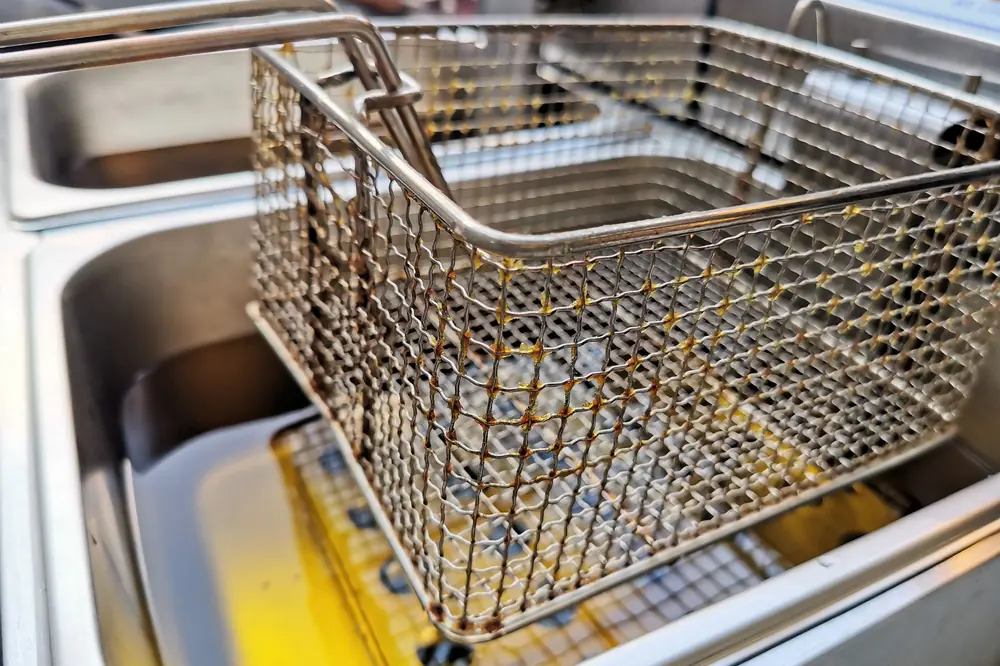
Before you book, check that emptying is really what you need. If the trap was emptied recently and the drain still blocks, the grease is probably in the line after it — that needs drain pipe unblocking and a camera, not a second emptying. Grease already stuck to the walls of a long pipe is a job for drain jetting.
How a visit goes
- A phone call or an email. You tell us the kind of business, where the trap is and when it was last emptied. As this is a new service for us, we say there and then whether and when we can come, and who will empty the trap.
- Looking and opening. We lift the lid and check the level of grease and sludge, the inlet and the outlet. Opening a large trap or a manhole releases gases, some of them flammable, so the room is aired, nobody smokes, there is no naked flame and nobody climbs into the chamber.
- Clearing the line. With a spiral machine we clear the pipe from the sinks to the trap and from the trap onwards. Emptying the trap is done as agreed with you.
- Camera in the pipe. We put the camera into the line after the trap and see how much grease is left on the walls and whether any section has sagged or a joint has shifted. How the camera works is on the CCTV drain survey page.
- Test and advice. We run water from all the sinks, watch how it drains, and tell you what we saw and how often to check the trap.
If the camera shows a cracked or sagging pipe, the repair is a job for our plumber, quoted separately once we know where the fault is. We work every day from 06:00 to 23:00; after 23:00 we do not go out.
What to tell us, and what the price depends on
We give the price before we start, once you have described the kitchen and the trap. A few lines are enough:
- what the business is and roughly how many covers a day;
- how much frying there is;
- where the trap is and how big, if you know;
- when it was last emptied, and by whom;
- what is happening now — slow sinks, water by the lid, a smell;
- which hours the kitchen is closed;
- whether you already work with a company that takes the grease.
The price depends on the size of the trap and how easy it is to get to, how long and how blocked the line is, whether a camera is needed, and whether emptying is done by us and our partners or by another company. Our standard drain prices are on the price list. You pay after the work, in cash, by card or by bank transfer, and we issue an invoice. If you manage the kitchen from abroad, send photos of the trap and the lid by email, with the address and the name and phone number of someone who can open the door, and we agree the visit with that person.
Frequently asked questions
How much does grease trap cleaning cost?
Grease trap work has no list price: we give you the price before we start, once you have described the kitchen and the trap. Clearing the pipes is charged like any drain unblocking, and the camera survey is from €59 — see the price list.
How often should a grease trap be emptied?
It depends on how fast your kitchen fills it. Open it several times in the first month and see how far the grease has built up; that tells you how long it lasts. A big kitchen with a lot of frying may need it far more often than a small café.
Do you empty the trap and take the grease away?
We confirm that by phone for each site. We clear the line and run the camera through it ourselves. Emptying and removal depend on the size of the trap and on a company with a waste permit taking the grease, because it is waste and must not go down the drain. If you already work with such a company, we coordinate the visits.
Can you come when the restaurant is closed?
We work every day from 06:00 to 23:00. For restaurants early morning before opening or a quiet weekday is usually best. Tell us your opening hours and we look for a time when the kitchen is not working.
I own the premises but I'm not in Bulgaria — can you still deal with it?
Yes. Send us the address, photos of the trap and the lid, and the name and phone number of the manager or tenant who can open the door. We arrange the visit with them and tell you what we found, and you can pay by bank transfer.
Can I contact you in English?
Yes — write to us in English by email at info@kanalvarna.com or through the form on this page, and we reply in English. The phone number is +359 52 993 333.
Related pages
Slow kitchen sinks?
Tell us what kind of business it is, where the trap is and when it was last emptied — we tell you where we start, and whether and when we can come.
📞 +359 52 993 333or email info@kanalvarna.com — write in English and we reply in English.
Send us a message
Leave your name and a phone number with the country code. Add your email if you prefer a written reply — write in English and we reply in English. We confirm the price before any work starts.