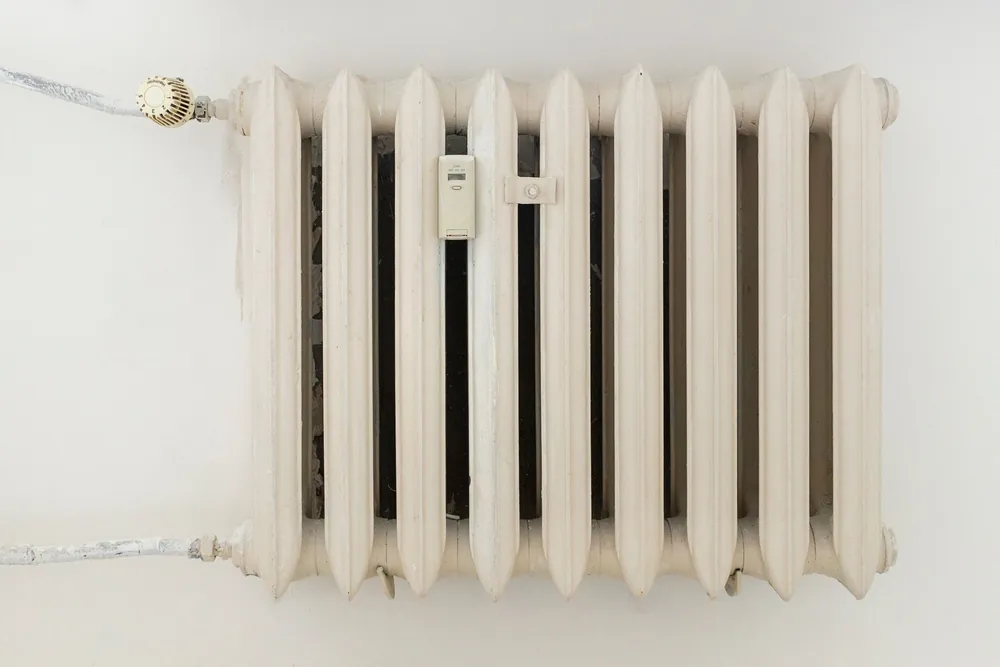
Radiator leak in Varna: bleed valve, radiator valve or the radiator itself
A drip from the radiator valve, a wet patch on the floor under it, or rust on the pipe? We find out whether it is the small bleed valve, the radiator valve, a fitting or the radiator itself, and we work on the isolated radiator, so the rest of your heating keeps going. Every day from 06:00 to 23:00.
Our clients on video · all videos (in Bulgarian)
A radiator leak in Varna usually comes from one of four places: the bleed valve, the radiator valve, a pipe fitting or the radiator itself. We find which one — at home, on the coast or in your holiday flat — then repair it or tell you honestly if replacing it would cost less. We work on the isolated radiator, so the rest of the heating stays on. Fixing a leak starts from €40; diagnosis is €52 for the first flat and €26 for each further flat. We work every day from 06:00 to 23:00, weekends included. Call +359 52 993 333 or email info@kanalvarna.com — write to us in English and we reply in English. You pay after the job, in cash, by card or by bank transfer.
Updated November 2026Radiator leak: what to do now
Radiators work under pressure (about 1.5–2 bar in a flat's own system, more in some central systems) and at temperatures that swing between 20 and 80 °C, with water that often carries salts and oxygen. Seals wear, metal corrodes and a slow drip appears — at first a few drops a day, then more.
- Put a bowl or towel under the leak and mop the floor, especially if it is laminate or parquet.
- Find where exactly it drips: the small bleed valve at the top (in Bulgaria often called a Mayevsky tap), the valve at the bottom, the pipe connection, or the body of the radiator between sections.
- Close the radiator's own valves on the inlet and outlet if they turn easily; the other radiators keep working. Do not force a stiff valve — one that breaks makes things worse.
- If water is dripping onto sockets or wiring, switch off the power to that area.
- Look at the pressure gauge on the system, if you have one, and note it down. A system that loses pressure between heating seasons has a leak somewhere.
- Photograph the drip point, the valves and the floor, and send them with a short description.
Where radiators leak
| Where it drips | Usual cause | Repair or replace? |
|---|---|---|
| From the small bleed valve at the top | The rubber seal is worn out; it lasts about 5–10 years | A quick repair: replace the valve |
| Under the valve head (thermostatic head) | The seal in the valve spindle is damaged by hot water and minerals | Replace the seal or the valve |
| At the connection on the pipe | The sealing tape or flax has broken down from vibration and heat | A repair: new sealing |
| Between sections, mostly cast iron | The gaskets between sections have worn or deformed; often in two or three places | Re-gasket; with many sections, replacing the radiator may cost less |
| A crack in a section | A knock or long metal fatigue | Cannot be repaired; the radiator is replaced |
| A pinhole in an aluminium radiator | Corrosion from the inside, caused by unsuitable water, at the thinnest point | Replace |
Cast iron radiators are the longest-lasting, often 40 years and more, and usually leak at the gaskets between sections. Steel panel radiators tend to leak at a welded seam. Aluminium radiators can corrode from the inside at a weak point, and bimetal radiators, when they do leak, usually do so at the seals or fittings rather than the sections.
Send us a photo of the drip point — we tell you the price before we start and when we can come.
📞 +359 52 993 333How we find and fix it
- Look at everything visible. The bleed valve, valves, fittings, sections. We look for rust, drops and dry mineral stains.
- Thermal camera. It shows the temperature of the radiator: cold zones can mean an air pocket or a blockage, and a wet wall behind the radiator shows as a cooler patch.
- Pressure reading. If the system loses pressure, there is a leak. We note the starting pressure and check again after 48 hours.
- Testing the radiator on its own. In hard cases we isolate the radiator from the rest of the system and test it under pressure to locate the leak.
- Repair or replacement. We repair the component or replace the radiator, and tell you honestly when replacing is cheaper than repeated repairs. You hear the price before we start.
We work with the radiator isolated, so the rest of the heating stays on in winter. Fixing a leak starts from €40; diagnosis is €52 for the first flat and €26 for each further flat. If you are not sure whether the water is coming from the radiator or from a pipe, see leak detection for the general methods.
If the flat is empty or you are abroad
A radiator that drips quietly in an empty flat can leave a swollen floor and a stain on the ceiling below before anyone looks. If a guest, tenant or cleaner mentions a damp floor by a radiator, ask them to put a bowl under it and send a photo.
Send us the address and the name and phone number of whoever can open the door. We arrange the visit with them, let you know what we found and what we did, and you can pay by bank transfer. If the flat stands empty through the winter, a property check can catch a leak early.
Frequently asked questions
How much does it cost to fix a leaking radiator?
Fixing a leak starts from €40, and diagnosis is €52 for the first flat and €26 for each further flat. The exact price depends on whether it is a valve, a seal or the radiator, and we tell you before we start. See the price list.
Do you have to switch off all the heating?
No. We work with the radiator isolated from the rest of the system, so you can stay warm while it is repaired.
My radiator valve drips. Is it serious?
Usually it is a worn seal in the valve or in the bleed valve, which is a small repair. A drip that keeps coming back, or spreading rust, needs a proper look.
Is it better to replace the radiator?
Sometimes. A cracked section cannot be repaired, and an old cast iron radiator with many leaking sections may be cheaper to replace. We tell you which it is.
I'm not in Bulgaria. Can you still deal with it?
Yes. Send us the address and the contact of whoever can let us in. We arrange the visit with them, let you know what we found, and you can pay by bank transfer.
Can I contact you in English?
Yes — write to us in English by email at info@kanalvarna.com or through the form on this page, and we reply in English. The phone number is +359 52 993 333.
Radiator leaking?
Send us a photo of the drip point — we tell you the price before we start and when we can come.
📞 +359 52 993 333or email info@kanalvarna.com — write in English and we reply in English.
Send us a message
Leave your name and a phone number with the country code. Add your email if you prefer a written reply — write in English and we reply in English. We confirm the price before any work starts.