Water heater leaking in Varna: finding the source, then repair or replacement
Water under the water heater, a drip from the pipe underneath, or rust on the casing? We find where it comes from and tell you honestly whether it can be repaired or the heater has to be replaced. Every day from 06:00 to 23:00 in Varna and along the coast.
Our clients on video · all videos (in Bulgarian)
If your water heater is leaking — in Varna, on the coast or in your holiday flat — we find out whether the water comes from the safety valve, a joint, the flange or the tank itself, then tell you whether it is a repair or a replacement. Fixing a leak starts from €40 and installing a new water heater from €49; we tell you the price before we start. We work every day from 06:00 to 23:00, weekends included. Call +359 52 993 333 or email info@kanalvarna.com — write to us in English and we reply in English. You pay after the job, in cash, by card or by bank transfer.
Updated November 2026Water heater leaking: what to do now
A note on words: in Bulgaria a "boiler" (boyler) is the electric storage tank on the bathroom or kitchen wall — what a British reader would call a water heater or hot water cylinder, not a gas central heating boiler. This page is about that tank. A slow drip and a split tank are very different things, so first see how bad it is.
- Switch off the power to the heater, at the switch or the fuse, before you touch anything near wet parts.
- Close the cold water tap on the pipe going into the heater. That stops it refilling.
- Put a bowl or towels under it. A heater that drips only while it is heating up may simply be releasing pressure through its safety valve, which is normal; a drip that continues all the time is not.
- Look for rust: a rusty patch or drops on the casing itself usually means the tank is corroded.
- Photograph the heater, the pipes underneath and the label with the model, and send them to us with a short description.
Where the water comes from
A water heater works under pressure and at high temperature, so it wears out in a few predictable places. Finding which one decides whether this is a small repair or a replacement.
| Where you see water | What it usually is | Repair or replace? |
|---|---|---|
| Dripping from the small valve at the bottom | The safety valve. It is meant to release water when pressure goes up. If it never stops, the valve may be faulty, the mains pressure too high or the thermostat overheating the water | Usually the valve is replaced; if the pressure is too high, a pressure reducer may be needed |
| Wet fittings where the pipes connect | Worn seals or ageing flexible hoses | A repair: new seals or hoses |
| Leak at the flange (the round plate holding the heating element) | A damaged flange gasket | A repair: new gasket |
| Drops or a rusty mark on the casing | Corrosion of the steel tank inside. The anode that protects it wears out over time | Replace. A corroded tank cannot be repaired |
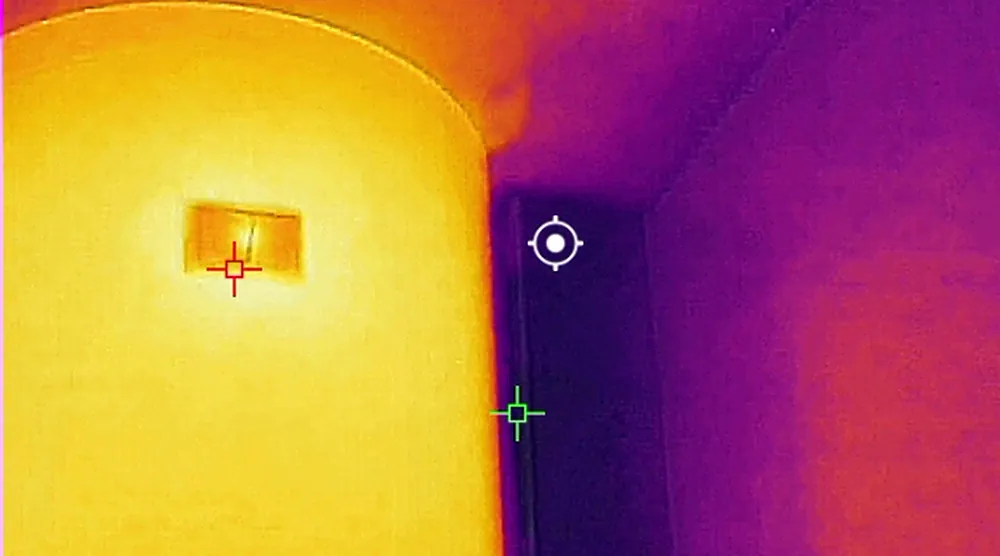
| Water running down the wall behind the heater | Hidden leak from a joint, or from the tank | Thermal camera first, then repair or replace |
Replacement is usually the answer when the tank is corroded, when the heater is more than 10–12 years old, when it leaks from several places or when the casing is visibly rusty. Limescale build-up also distorts the heating element and the seals over time, which lets water through. We tell you honestly when a repair is worth it and when it is not.
Send a photo of the heater and the pipes underneath — we tell you the price before we start and when we can come.
📞 +359 52 993 333How we check a leaking water heater
- Visual check. We look at every joint, the safety valve, the underside of the heater, the pipes and the hoses.
- Finding the true source. Dripping water can come from the tank, from a joint or from the valve. We work out which.
- Pressure check. We measure the water pressure in the mains. If it is above 6 bar, the safety valve will drip as designed, and a pressure reducer is the answer rather than a new valve.
- Tank assessment. If the tank is corroded, we explain that a repair is not possible and that the whole heater needs replacing.
- Repair or new heater. You hear the price before we start. A new water heater is installed from €49.
When the water runs down the wall behind the heater or into a service duct where you cannot see it, we follow it with the thermal camera and a moisture meter — see leak detection. Thermal camera diagnosis is €52 for the first flat and €26 for each further flat; fixing a leak starts from €40.
How to stop it happening again
- Check the anode every two to three years. The magnesium anode protects the tank from corrosion; when it is used up, the steel starts to rust.
- Descale and service once a year. It keeps the element and seals in better condition.
- Fit a pressure reducer if the mains pressure is above 4 bar. It reduces the strain on the tank and the safety valve.
- Put a tray under the heater. A cheap measure that catches the water and can lead it to a drain.
A slow, unnoticed drip also raises the water bill and creates the damp conditions in which mould appears. If you can already see a damp patch on the wall or floor, see mould and damp.
Heater in a flat you let out or are away from
A water heater holds a lot of water, so a failure in an empty flat can soak the floor and the flat below before anybody notices. If a guest, the cleaner or a neighbour reports water, ask them to switch off the power and close the cold water tap as described above, and to send you or us a photo.
Send us the address and the name and number of whoever can open the door. We arrange the visit with them, let you know what we found and whether it should be repaired or replaced, and you can pay by bank transfer. If water has reached the flat below, you will probably need to talk to the neighbour and perhaps your insurer; if you need a written report for your insurer, ask when you book. For flats that stand empty, a regular property check can catch this sort of thing early.
Frequently asked questions
How much does it cost to fix a leaking water heater?
Fixing a leak starts from €40 and installing a new water heater from €49. The exact price depends on what is wrong, and we tell you before we start. For a hidden leak behind the heater, thermal camera diagnosis is €52 for the first flat. See the price list.
My water heater drips from the bottom. Is that normal?
A little water from the safety valve while the heater warms up can be normal, because the valve releases pressure. If it drips all the time, the valve, the mains pressure or the thermostat is the problem. Send us a photo and tell us how often it drips.
Can you tell me honestly if it is worth repairing?
Yes. A faulty valve, worn hoses or a flange gasket are repairable. A corroded tank, a heater more than 10–12 years old or leaks from several places usually mean replacement.
I'm not in Bulgaria. Can you still deal with it?
Yes. Give us the address and the contact of the person who can let us in. We arrange the visit with them, let you know what we found and what we recommend, and you can pay by bank transfer.
Water reached the flat below. What now?
Switch off the power and close the cold water tap to the heater. We then find the source and fix the leak. If you need a written report for your insurer, ask when you book.
Can I contact you in English?
Yes — write to us in English by email at info@kanalvarna.com or through the form on this page, and we reply in English. The phone number is +359 52 993 333.
Water heater leaking?
Send a photo of the heater and the pipes underneath — we tell you the price before we start and when we can come.
📞 +359 52 993 333or email info@kanalvarna.com — write in English and we reply in English.
Send us a message
Leave your name and a phone number with the country code. Add your email if you prefer a written reply — write in English and we reply in English. We confirm the price before any work starts.