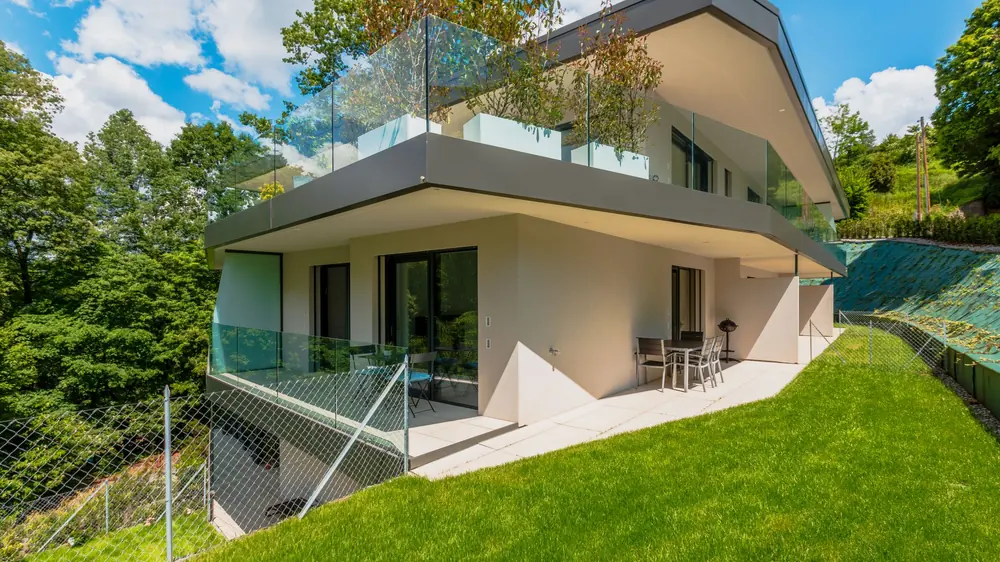
Radon testing in Varna: radon and gamma background against 300 Bq/m³
A house with a basement, a flat on the ground floor or a new granite worktop in the kitchen. We leave a radon monitor with you for a few days, measure the gamma background in the rooms and outside, and show you the numbers beside the limit, in plain words.
Our clients on video · all videos (in Bulgarian)
Radon testing in Varna: we leave our electronic radon monitor in the lowest room you use for three to seven days, and measure gamma background in µSv/h room by room, over granite and outside with a dosimeter. You get a report by e-mail with each value beside 300 Bq/m³, the Bulgarian and WHO level for the annual average. A few days gives a guide, not an annual average, and our report is not an official document; for that we arrange a long-term detector read by an accredited laboratory. Part of our home testing. Call +359 52 993 333 or e-mail info@kanalvarna.com - write to us in English and we reply in English.
Updated November 2026Radon testing in Varna: what radon is and how it gets into a house
Radon is a colourless, odourless radioactive gas that forms all the time in soil and rock. Outdoors it thins out quickly; the question is what happens when it gets into a closed room. A heated house is warmer than the ground beneath it and, like a chimney, draws air up from the soil through every gap. The usual routes:
- cracks in a concrete basement floor and walls, and the joint where floor meets wall;
- openings around pipes and cables that pass through the slab or the foundations;
- dry floor drains in a basement, which let air in from the sewer and the fill around the pipes;
- an earth floor in an old cellar, store or outbuilding.
Building materials give off a little radon too, but the soil is usually the main source. Radon in your own well water is a separate matter; see water testing.
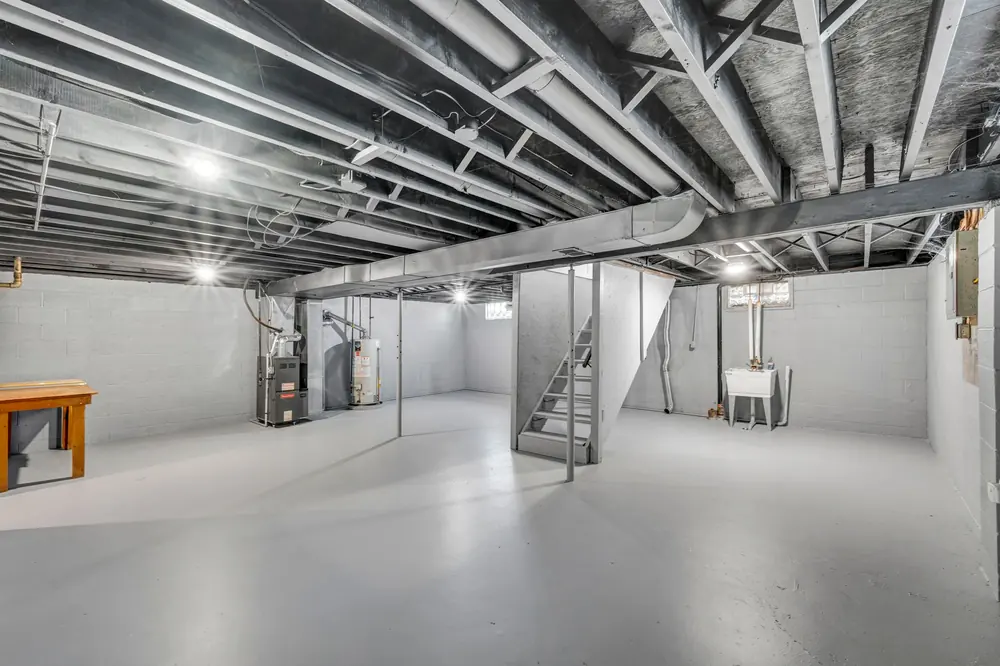
Becquerel per cubic metre (Bq/m³). The unit for radon in air. One becquerel is one radioactive decay per second, so 300 Bq/m³ means 300 decays a second in every cubic metre of room air.
The 300 Bq/m³ level: why it is an annual average
The Bulgarian reference level for homes and public buildings is 300 Bq/m³ as an annual average of radon in the air, and the WHO indoor air guidelines recommend a level no higher than that. The word that matters is average. Radon changes through the day and the seasons: higher with closed windows and heating, lower in warm months, and a basement or ground floor usually gives more than the upper floors. A reading from one afternoon can differ a good deal from the yearly average.
The reference level is not a line between good and bad. It is the point above which measures are taken: ventilation, sealing the entry routes. So each value in our report stands next to 300 Bq/m³, not next to a judgement.
A short test with our monitor, or a long-term detector: which and when
The short test is done with our electronic radon monitor. It stays in the room for several days, usually three to seven, and records the level hour by hour. You see the curve: when it rises, how it reacts to airing, how much higher the basement is than the rooms above. It tells you whether radon is a subject in this home at all, but it is not an annual average.
The long-term test uses a passive detector, a small capsule with no battery that sits in the room for a few months, best through the heating season. An accredited laboratory then reads the average for the whole period, a value that can be compared with the reference level. We arrange the laboratory, place the detectors in the right spots and collect them.
Start with the short test. If the average comes out far below 300 Bq/m³ with the windows shut, there is usually no point waiting for months; if it is near the limit or above, the long-term test is worth doing before you decide on floor repairs or ventilation.
Houses, ground floors and basements around Varna: a new build or a purchase
Radon matters mostly for rooms that sit on or in the ground: basements, ground floors, houses with the floor straight on the slab, extensions and workshops in the yard. How much there is depends not on the district but on the soil under that building and how tightly it is cut off from the ground. Two neighbouring houses can give quite different figures.
In a new house it is easiest to think of radon before the floor is poured. In a finished house a short test shows whether anything needs doing while the basement is still unfurnished. When buying, the test can fit between the viewing and the signing, but the monitor stays several days, so agree access with the seller. Leaks and damp belong to the survey before buying.
- You sleep or work in a ground-floor or half-buried room.
- You use the basement as a room: office, gym, playroom, guest room.
- The basement floor is cracked, or smells of damp or sewer from below.
Tell us how the building is built, how you use the lowest rooms and whether there is granite or stone inside. From that we decide where the monitor goes and for how many days.
📞 +359 52 993 333Granite worktops and cladding: gamma background in µSv/h
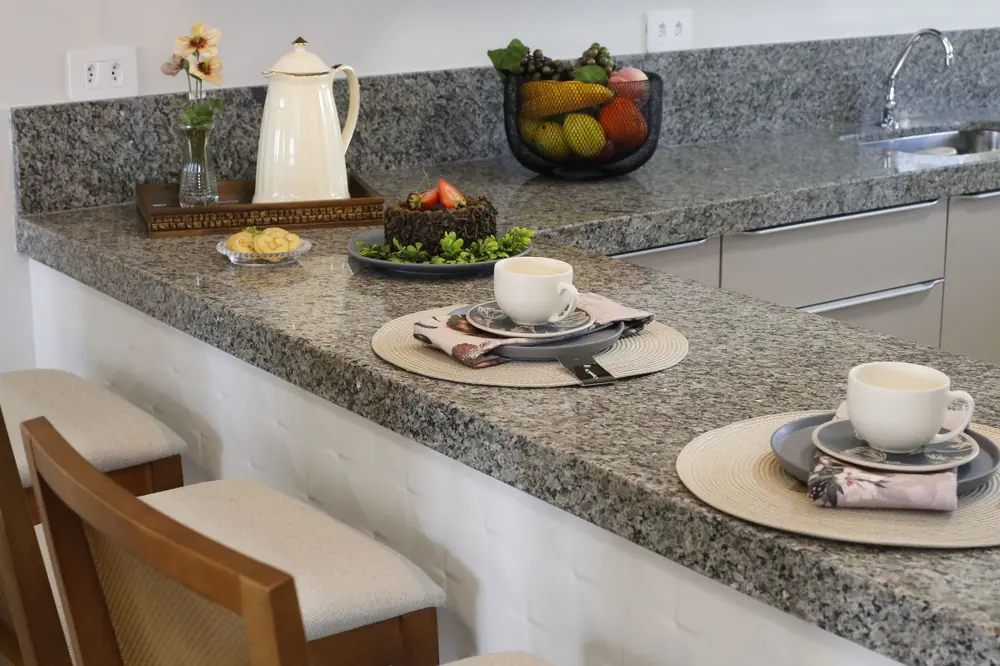
Some natural stones contain more potassium, radium and thorium and give off a little more gamma radiation. Granite, basalt, fly ash, phosphogypsum and slag are the materials where a check makes sense; that does not mean every granite worktop is a problem.
With a dosimeter we measure the gamma dose rate in microsieverts per hour (µSv/h) over the worktop, the floor, a fireplace cladding or a wall. We take the same reading in the middle of the room, in another room and outside in front of the building, with the same instrument, so you see whether the material differs from the background and by how much.
What we do not measure is the radioactivity index of a material. It cannot be found with a dosimeter at the property; it is worked out in a laboratory by gamma spectrometry on a sample. If a worktop clearly stands out from the background, the next step is a piece from the same batch or an offcut sent to the laboratory, which we arrange and whose price we tell you beforehand. With new tiles or granite, ask the seller for the material's test first.
Radiation from radon and stone, or from antennas: not the same
Radon, gamma background and the natural radioactivity of stone are ionising radiation, measured in Bq/m³ and µSv/h; that is this page. Mobile antennas, WiFi routers and electricity substations create a non-ionising field, measured in µW/cm² and µT with other instruments; see EMF testing. Both can be done in one visit, but they are separate.
How the visit goes, and what the report contains
- A conversation. Tell us about the property, the basement and whether granite or stone is a concern; from that we decide where the monitor goes and for how many days.
- Placing the monitor. It goes in the lowest room you use, away from windows, doors and heaters. At the same visit we measure the gamma background in rooms, over materials and outside.
- A few days of measuring. Live normally, but keep the windows in that part of the house mostly shut, as in winter, or the figure comes out lower than usual.
- Collecting and reading. We take the monitor back, download the record and show you the curve: the average, the highest hours and how the radon responded to airing.
- The report. We e-mail the measured values against the limit and say whether a long-term test is worth it.
The report gives the address, room, monitor position, start and end; the average radon in Bq/m³ with an hourly graph; the gamma dose rate by room and over materials beside the outdoor background; and what we suggest. It is not an official document; it is for your decisions about a repair, a purchase or ventilation. For an official document we arrange the laboratory and tell you its price beforehand.
A visit takes about an hour and the monitor stays with you for several days. We come by arrangement every day between 06:00 and 23:00. If you live abroad or let the property out, tell us who will let us in and be there when the monitor is collected. Write to us in English and we reply in English.
When it is not worth calling us, and what happens after the test
- You live on the fifth floor of a panel block: radon comes mainly from the ground and is rarely an issue on high floors.
- You ask about mineral water or spa treatments: radon in springs is another subject. We measure the air in the home.
- You want the radioactivity index of tiles or granite before buying: that is a laboratory test of a sample; ask the seller first.
- You need an annual average for a document: start directly with a long-term detector read by an accredited laboratory, which we arrange.
If the numbers are low, we stop there. If they are high or close to 300 Bq/m³, the measures go from simple to more serious: regular ventilation, sealing cracks and openings (partly the work of basement waterproofing), checking floor drains, and at higher values drawing the air out from under the slab, which is designed for the particular building. A room without a working extractor is covered by bathroom extractor fan. After each measure we repeat the short test in the same place so you can see in numbers what it achieved.
What the price of radon testing depends on
The price depends on the number of rooms and points, and on whether we measure only radon or materials as well. We give it by phone once you have described the property. A laboratory detector or material test costs what the laboratory charges, told to you in advance. We work in Varna and the villages of the area, issue an invoice, and you can pay by cash, card or bank transfer.
Frequently asked questions
How many days does a radon test take?
The short test with our monitor takes a few days, usually three to seven, and gives a guide with the hourly changes. For a value comparable with the annual reference level, a detector sits for a few months and an accredited laboratory reads it.
Does the granite worktop in my kitchen give off radiation?
Granite, like many natural stones, can read slightly above the background. We measure the dose rate in µSv/h over the worktop and compare it with the room and outdoors. If it clearly stands out, the radioactivity index is determined in a laboratory from a sample, which we arrange. Whether any level matters to you is a question for a doctor.
Can your report be used as an official document?
No. The report shows the measured values against the limit and is for your own decisions. An official result comes from an accredited laboratory: a long-term test with its detector or a test of a material sample, whose price we tell you beforehand.
I live abroad and let the property out. Can you still do it?
Yes, if someone can let us in and be there when the monitor is collected: a tenant, a neighbour or the building manager. E-mail the address and a few words about the basement or ground floor to info@kanalvarna.com.
A house with a basement or a ground-floor flat?
Tell us how the building is built, how you use the lowest rooms and whether there is granite or stone inside. From that we decide where the monitor goes and for how many days.
📞 +359 52 993 333or email info@kanalvarna.com — write in English and we reply in English.
Send us a message
Leave your name and a phone number with the country code. Add your email if you prefer a written reply — write in English and we reply in English. We confirm the price before any work starts.