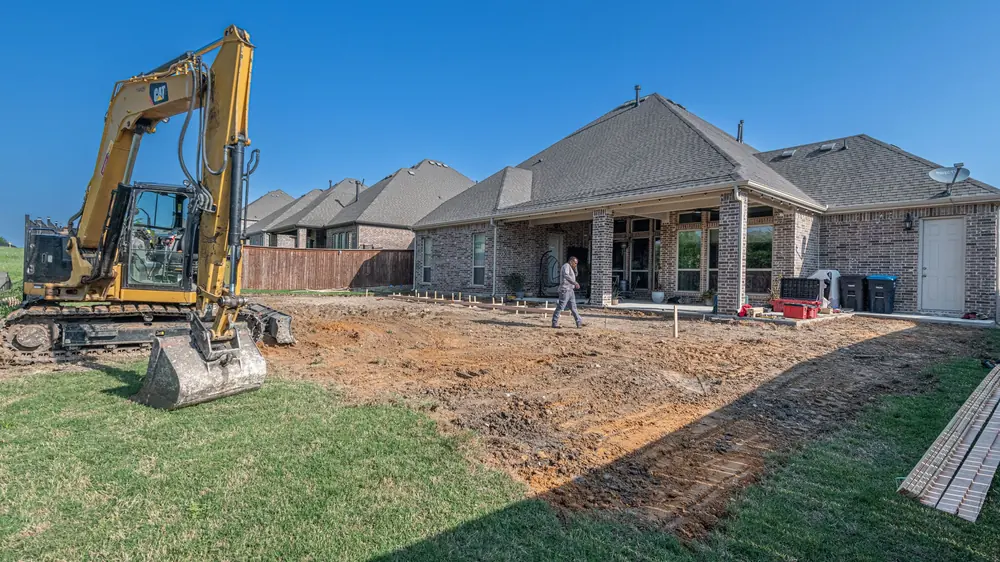
Drain tracing in Varna: finding where your drain and water pipe run in the garden
About to dig in the garden and nobody knows where the drain and the water pipe run? We follow the drain with our own camera and tell you which part of the route was traced and which is a guess. Other locating equipment, when needed, is arranged with partners. Every day from 06:00 to 23:00.
Our clients on video · all videos (in Bulgarian)
Drain tracing means finding and marking on the ground the route of an underground pipe — a drain, a water pipe or another line — before you dig for a fence, a pool, an extension or a new line. Kanal Varna follows the drain with its own CCTV camera from the manhole or inspection point (a camera inspection is from €59), and arranges other locating equipment with partners when needed. You get a mark on the ground that is approximate, so a small test hole is dug by hand before any machine digs. Plastic water pipes without a tracer wire cannot always be found. We work every day from 06:00 to 23:00. Call +359 52 993 333 or email info@kanalvarna.com — write to us in English and we reply in English.
Updated November 2026Drain tracing: when you need it and what you get
You need it when you are going to dig in the garden and do not know what is under the spade, or when the drain keeps blocking and nobody remembers where it runs. You get the route marked on the ground: where the line starts, where it turns, and where not to dig blind.
The reasons differ: a fence with concrete footings, a pool, an extension, an irrigation system. The pipe was buried long ago and the plan, if there is one, often does not match the garden. We usually start with the drain, because we can look inside it with the same camera we use for blocked drains and the CCTV drain survey.
Drain or water pipe: why they are found differently
A drain can be entered and a water pipe cannot. A drain is wide and has openings, such as a manhole or an inspection point, through which the camera goes in. A water pipe is narrow, full of water and closed; a drain camera is not made for it.
- Drain. The easiest case: the camera goes in through the manhole or inspection point and shows the bends, branches and any place where another pipe joins.
- Metal water pipe. Metal is easier to detect, as locators for underground lines respond to it. Two lines side by side may give one signal, and the lower one can be missed.
- Plastic water pipe. The hardest case. Without a metal tracer wire laid beside it, ordinary instruments do not sense it, and the wire may be broken. We do not promise to find it.
For water pipes and for lines the camera cannot reach, the equipment is different, and we arrange it with partners. Whether it is worth it, we say once we hear what the pipe is made of and what it runs under.
Fence, pool, new line: what we look for
| Job | What we look for | How |
|---|---|---|
| Fence, pool or extension | Does a drain or water pipe pass under the spot | Camera, locator, marks; a test hole before the footings |
| A new line to the street | Where the old pipe leaves the house and where the manhole is | Camera from the manhole towards the house; the work itself is new drain installation |
| It blocks and there is no inspection point | How far the line goes and where an entrance would be useful | Camera from the nearest opening; unblocking is blocked outside drain |
| The water meter runs, the garden is wet | That is a leak, not tracing | Found another way: underground water leak |
| Pipe to a tank | Where it enters the tank and where it comes from the house | Camera from the inspection point; emptying is separate: septic tank emptying |
| The old plan does not match the garden | Where the line really is | Camera, locator and a test hole; the plan is only a hint |
Where the line goes: what the camera sees and how far it gets

The camera shows the drain from inside: the bends, the branches, the point where an unknown pipe joins, cracks and displaced joints. It enters through the manhole or inspection point and follows the line while the way is clear. On the screen you can see how far from the entrance a bend or a defect is and where the line carries on.
If the camera reaches a branch where the plan shows nothing, a pipe has been connected that nobody knows about: from an old gutter, a summer kitchen or a building that no longer exists. The camera does not go everywhere: it stops at a plug, a crushed section or a very sharp bend, and in a pipe full of water it sees nothing. So a blocked line is first cleared with the spiral. If the manhole is full to the cover we start there: see blocked manhole.
The camera tells us how far along the line a point is. Where that is in the garden is marked from above with a suitable instrument, which we arrange with partners when it is needed; the method is decided on site.
Tell us what you will dig, whether you are looking for a drain or a water pipe and whether there is a manhole — we tell you the price before we start and when we can come.
📞 +359 52 993 333Why plans and "Grandad said it runs here" are not enough
- A drawing may be wrong in scale, depth and position, so it is a hint of where to start, not a measure of distances and depths.
- Not being on the plan does not mean not in the ground. An old branch, a temporary pipe from the building works or a cable to a shed are easily left out of the documents.
- Pipes do not always run straight. They go round a tree, an old foundation or a rock, and a section may have been replaced along a new route.
- Instruments can be wrong too. They show that something is down there, not what; a stone or an old embankment can give the same signal as a pipe. So one method is not enough; the result is checked with another.
- Memories still help and we ask: where was the old tap in the garden, where did water enter the house, where did the digger work during the build. That narrows the search, but it is checked before digging.
How the tracing goes
- Phone and photos. You tell us what you will dig and where. Photos of the garden, the manhole, the inspection point and the water meter chamber show us where to begin.
- Getting into the line. We open the manhole or inspection point. A blocked drain is cleared first with a spiral, without breaking anything, or the camera has nothing to show.
- Camera and instrument. We run our camera through the line; other equipment, when needed, is arranged with partners.
- Marking. The route is marked on the ground according to what the camera showed, and we tell you which part was traced and which is assumed.
- Test hole. Before any machine digs on a marked spot, a small hole is dug by hand until the pipe shows. Who digs it, we agree beforehand.
- What next. We tell you what we saw: whether the line is sound, where an inspection point would help, and whether it will get in the way of the building work.
We come with the camera every day from 06:00 to 23:00, and on the phone we tell you which day and when once we hear what you are looking for and where you are.
Before you dig: test hole, cables and the street
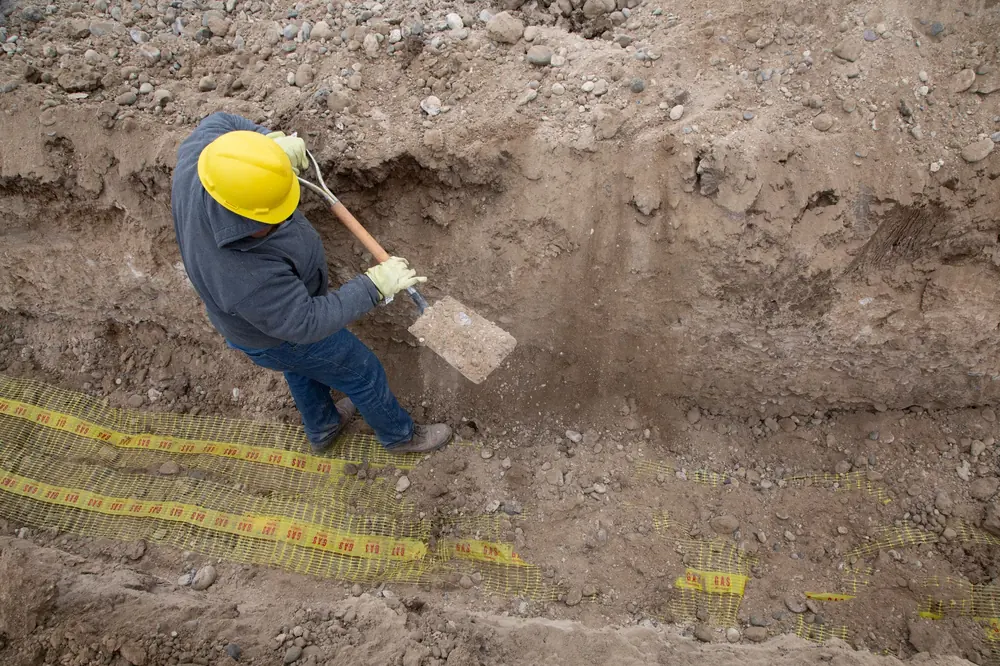
Before a machine digs, check by hand: a small hole at the marked place shows whether the pipe is there and how deep. Near the marks, dig by hand and carefully, with no pick and no digger. If you see a cable, stop and do not touch it; work near it is for an electrician. If you smell gas, light nothing, move away and call 112 or the gas company. Outside your plot — pavement, street, public road — ask the municipality and the companies whose networks run there before digging. The street sewer and street water main belong to ViK Varna.
Shallow services are the most dangerous: a pipe laid higher than expected, or a cable buried straight in the soil, is hit by the first blows. If the pipe is not where it is marked, do not dig at random — call us.
If you are not in Bulgaria
If you are planning a pool, a fence or an extension for a house near Varna from abroad, you do not have to come over: send us the address, photos of the garden, the manhole and the water meter chamber, a sketch of what you plan to build, and the name and phone number of a person who can open the gate. We arrange the visit with them and keep you updated by email. Payment can be by bank transfer after the work.
Frequently asked questions
What do you use to find the pipe?
For the drain, our CCTV camera, which goes in through the manhole or inspection point and shows the line from inside. A marking instrument for the ground, for the water pipe or for harder pipes is arranged with partners when needed. What we use depends on what the pipe is made of and what it runs under.
Can you find a plastic water pipe?
Not always, and we say so beforehand. Plastic gives no signal for ordinary instruments unless a metal tracer wire was laid beside it and is intact. Sometimes it helps that we know where it leaves the meter and where it enters the house. If the chance is small, you'll hear it on the phone, before we come out.
How accurate will the marking be?
Approximate, not to the centimetre. From above the pipe may appear in one place and be slightly to the side or deeper. So the mark shows where to be careful, not where the digger goes. A small hole is dug by hand at the marked place first, and the machine comes only when the pipe is visible.
We have no manhole or inspection point. How do you get in?
First we look for an opening that cannot be seen: a cover buried in the grass, a capped pipe by the wall, a hatch in the cellar or garage floor. Sometimes an inspection point exists but was covered when the garden was redone. If there truly is none, we tell you the options on site; sometimes the line is opened in one place and an inspection point is fitted there.
How much does it cost to find my pipe?
We do not quote a sum without knowing the garden. On the phone, after a description or photos, we tell you the price of the camera work (a camera inspection starts from €59); if equipment from a partner is needed, after a site visit. The length of the line, the number of entrances, the surface and whether the drain must be cleared first weigh most. See the price list. You pay after the job, and we issue an invoice.
I'm not in Bulgaria. Can you still deal with it?
Yes. Send us the address, photos of the garden and the manhole, and the contact details of someone who can let us in. We arrange the visit with them, keep you updated by email, and you can pay by bank transfer.
Can I contact you in English?
Yes — write to us in English by email at info@kanalvarna.com or through the form on this page, and we reply in English. The phone number is +359 52 993 333.
Related pages
All types of blockage and the general prices CCTV drain survey
What the camera shows inside the line New drain installation
A new line once the old route is known Underground water leak
When the water meter runs and the garden is wet Drain relining
Repairing a cracked pipe from the inside
Not sure where the pipe runs?
Tell us what you will dig, whether you are looking for a drain or a water pipe and whether there is a manhole — we tell you the price before we start and when we can come.
📞 +359 52 993 333or email info@kanalvarna.com — write in English and we reply in English.
Send us a message
Leave your name and a phone number with the country code. Add your email if you prefer a written reply — write in English and we reply in English. We confirm the price before any work starts.