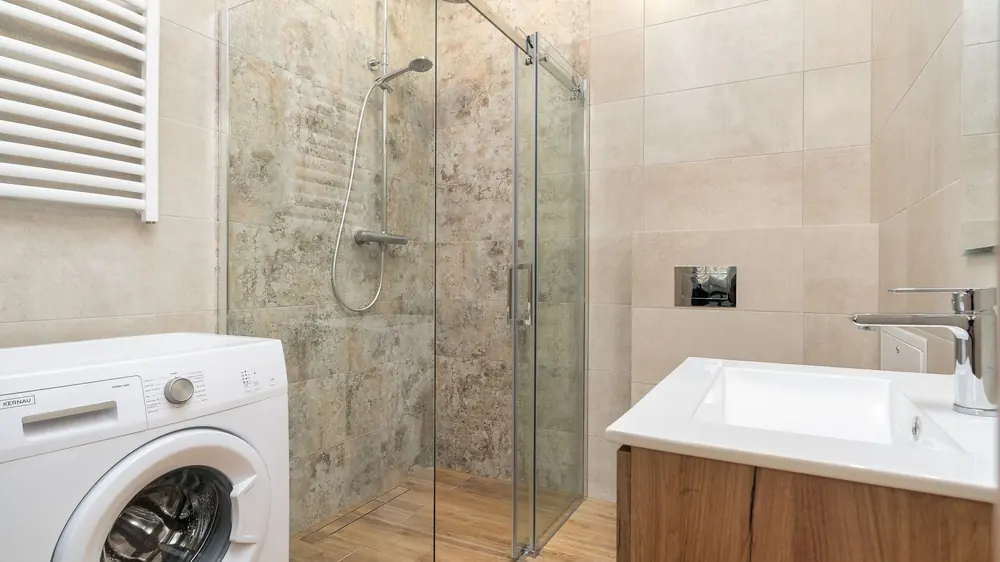
Washing machine or dishwasher not draining in Varna: the appliance or the pipe?
You run the washing machine and the water comes up in the kitchen sink, or the dishwasher fills when you turn on the tap? Often it is the shared pipe behind the sink trap, not the machine. We tell you how to check, and we clear the pipe. Every day from 06:00 to 23:00.
Our clients on video · all videos (in Bulgarian)
Washing machine not draining, or water coming up in the kitchen sink when the dishwasher empties? In flats in Varna and on the coast, the culprit is often the shared pipe behind the sink trap, not the machine. Kanal Varna clears that pipe with a spiral, without breaking anything; a drain pipe is from €49. If the machine will not drain even into a bucket, it is a job for an appliance repairer, and we say so. We work every day from 06:00 to 23:00. Call +359 52 993 333 or email info@kanalvarna.com — write to us in English and we reply in English. You pay after the job, in cash, by card or by bank transfer.
Updated November 2026Washing machine not draining: stop and check before anything else
A washing machine or dishwasher does not have a drain of its own. Its hose is connected to the trap under the sink, to the floor drain or to an outlet in the wall, and from there the water goes down the same pipe as the sink or the shower. When that pipe narrows, the appliance shows it first, because it pumps out the most water in the shortest time.
- Do not run the machine 'one more time to see'. The water will come out where it came out before.
- Turn the machine off at the socket before touching the hose, with dry hands and without standing in water. If the socket is wet, switch off the fuse at the board.
- Mop up any water, especially on a wooden or laminate floor.
- Do not pour drain cleaner into the drum or the dishwasher, and not into a full sink either: we would have to work with our hands in that water. Never mix cleaners; if you have used one, tell us which.
- Do not open the appliance or touch its electrical parts. The machine is for an appliance repairer, a wet socket for an electrician.
Machine or pipe? The bucket test
It is quick, and it can save a wasted visit. If the machine pumps its water out normally into a bucket or the bath, the problem is in the pipe and we can clear it. If it does not, you need an appliance repairer.
- Switch off and protect the floor. Unplug the machine and put towels down. The hose always holds some water.
- Bail the sink. If there is water in the sink, scoop it out first, or it will pour out of the hose connector on the trap.
- Put the hose in a bucket or the bath. Take it off the trap or the wall outlet and hold it firmly: it jerks about when the machine pumps. Only switch the machine back on if the floor and the socket are dry.
- Run only the pump-out or spin. As the manual describes. Stop before the bucket is full.
- Watch the flow. If the water comes out strongly and evenly, the machine is fine and the pipe after the trap (or the hose connector on the trap) is blocked. That is our job. If it comes out in drips, the pump hums or the display shows an error, the fault is in the filter, the pump or the electronics.
A dishwasher hose is often too short for a bucket. In that case clean the filter at the bottom as the manual says. If it still will not drain and the sink drains normally, the cause is the hose connector on the trap or the machine itself. We clear a blocked connector; a kinked hose you can straighten yourself; a blocked hose or pump is for the appliance repairer. We do not repair washing machines or dishwashers.
What you see and what it means
| What you notice | What it usually means | What we do |
|---|---|---|
| Run the sink and the dishwasher fills, sometimes the floor too | The pipe after the trap is blocked, so water returns along the hose into the machine | Clear the pipe from the trap, check the hose connector and the hose |
| When the washing machine empties, water comes up in the kitchen sink or the floor drain | The shared pipe is narrowed by fat and cannot take the sudden rush | Spiral from the trap or inspection point, then a test with full pump-out |
| The dishwasher does not drain, but the sink does | Blocked hose connector, kinked hose, filter or pump | Bucket test: we clear a blocked connector; the pump is for the repairer |
| The trap gurgles while the machine empties | The pipe is narrowed and air comes back up through the water | We clear it before it blocks completely |
| Water stays in the drum, the pump hums, or the display shows an error | A fault in the appliance | Not us — an appliance repairer |
| Water comes back in the kitchen and bathroom, more when someone above runs water | The building's shared soil stack is blocked | See blocked soil stack |
| It drains normally but the machine smells of drains | A hose without a trap, or a dried-out water seal | Not a blockage — see drain smell |
In all of these cases, where the water appears is rarely where the blockage is — it is simply the lowest opening. Our drain backing up page explains why.
Tell us which appliance it is, where the water comes up and what the bucket test showed — we tell you the price before we start and when we can come.
📞 +359 52 993 333Where the machine is connected matters
The longer the run from the machine to the stack, the more often the pipe clogs and sends water back, so the first thing we ask is where the machine stands.
- Washing machine in the bathroom. Connected to a trap on the wall, to the basin trap or to the floor drain. The route to the stack is short, but hair and soap from the shower go down the same pipe. When it backs up, water comes out of the lowest opening, usually the floor drain.
- Washing machine and dishwasher in the kitchen. Often both hang off one trap under the sink. Fat from dishes and water from laundry go through one pipe; the blockage usually starts with fat.
- Kitchen moved into the living room. After a conversion the sink may be far from the stack, with a long pipe along the wall and a gentle slope. Fat settles more easily, and every pump-out pushes water back towards the sink.
A hose pushed straight into the pipe with no seal is not a blockage; it is a plumbing connection job. If the sink is slow even without the machine running, see blocked sink.
How we clear the pipe behind the machine
- Questions first. Which appliance returns water, where it is connected, where the water comes up and what you tried. If it sounds like a fault in the appliance, we tell you at that stage.
- Price before we start. Once you have described the job or sent photos, we tell you the price. Nothing starts until you agree.
- Trap and hose stub. We take off and clean the trap and its hose connector, and check the hose.
- Spiral through the pipe. The spiral from our drain machine goes in from the trap or the inspection point and is guided through the bends towards the stack until it is through the blockage.
- Test with water and the appliance. We run the tap and, if the machine works, a pump-out, and check that the pipe takes the water without sending it back.
- Camera if it returns. If the camera head can get through the pipe, it shows fat on the walls, a back-fall or a broken section — see CCTV drain survey. A broken or collapsed pipe is a repair, which is a separate job, and we say so honestly.
Most of these blockages take 15–30 minutes of work once we have started; a long or old pipe takes longer. When you call or write, we tell you when we can come. We work every day from 06:00 to 23:00 in Varna, Golden Sands, St. Constantine and Helena, Balchik, Kavarna, Byala and Obzor. You pay after the job, in cash, by card or by bank transfer, and we issue an invoice on request.
When you do not need us
- The filter of the washing machine is full. It is usually at the bottom front behind a small flap. Clean it as the manual says, with a shallow dish and towels underneath.
- The hose is kinked behind the machine, after it was moved.
- The display shows a drain error and no water comes out even into a bucket: an appliance repairer.
- A new dishwasher has never drained. Sometimes the blanking cap inside the hose connector on the trap was never removed when it was fitted — that is an installation matter.
- There is no trap with an appliance outlet under the sink, and the hose is pushed straight into the pipe: the trap needs replacing.
For all other kinds of blockage see blocked drains in Varna.
If you are not in Bulgaria
A guest runs the washing machine and finds water on the floor, or the cleaner reports that the dishwasher will not drain. You do not need to be there. Send us the address, tell us which appliance and where the water appears, and give us the name and phone number of the person who can open the door — the property manager, the cleaner or a neighbour. If you can, ask them to try the bucket test above and send us a photo.
In a block of flats, a blockage in the pipe behind your own sink or machine affects only your flat. If water also comes back in other flats, it is the shared stack, which is usually a matter for the whole building — ask the building manager (the 'domoupravitel'). We keep you informed by email, and you can pay by bank transfer.
Frequently asked questions
How much does it cost?
Clearing the drain pipe behind the machine starts from €49; cleaning the trap alone from €29. We tell you the price before we start, and you pay after the job. All prices are on our price list.
Do you repair washing machines and dishwashers?
No. If the machine does not drain even into a bucket, you need an appliance repairer. We clear the pipe, and the bucket test tells you which of us you need.
The dishwasher fills up when I run the kitchen tap. Why?
The pipe after the sink trap is blocked, and the water returns along the dishwasher hose. The machine is probably fine; the pipe has to be cleared.
I'm not in Bulgaria. Can you still deal with it?
Yes. Send us the address, tell us which appliance and where the water appears, and give us the contact of whoever can let us in. We arrange the visit with them, keep you informed by email, and you can pay by bank transfer.
Who pays — me or the building?
If the blockage is in the pipe behind your own sink or machine, it affects only your flat, and you book the work. If it is in the shared stack serving several flats, that is usually a matter for the whole building — ask the building manager. Once we have seen it, we can tell you which it is.
Can I contact you in English?
Yes — write to us in English by email at info@kanalvarna.com or through the form on this page, and we reply in English. The phone number is +359 52 993 333.
Machine not draining?
Tell us which appliance it is, where the water comes up and what the bucket test showed — we tell you the price before we start and when we can come.
📞 +359 52 993 333or email info@kanalvarna.com — write in English and we reply in English.
Send us a message
Leave your name and a phone number with the country code. Add your email if you prefer a written reply — write in English and we reply in English. We confirm the price before any work starts.