Sewage pump in Varna: pump shaft overflowing, pump humming or a basement toilet unit
Is the pump shaft overflowing or smelling, or does the pump just hum? We look at the shaft, the pump, the valve and the pipe to the sewer, and tell you whether cleaning is enough or the pump needs replacing. Every day from 06:00 to 23:00 in Varna and the area around it.
Our clients on video · all videos (in Bulgarian)
A sewage pump is needed where the toilet, bathroom or whole house is lower than the street sewer, so waste water cannot run down by itself. It sits in a shaft in the yard or the basement; for a single basement toilet a compact macerator unit is enough. Kanal Varna checks the shaft, pump, non-return valve and the pipe to the sewer, clears a blocked pipe with a spiral machine (from €69), and arranges a tanker and the fitting of a new pump with partners. We work every day from 06:00 to 23:00. Call +359 52 993 333 or email info@kanalvarna.com — write to us in English and we reply in English. You pay after the job.
Updated November 2026When waste water has to be pumped
Waste water has to be pumped when the toilet, bathroom or whole house is lower than the street sewer and the water cannot get there by itself: a basement bathroom, a house on low ground, a plot that does not slope to the street. The water collects in a shaft or a unit, and a sewage pump lifts it up to the sewer.
A sewage pump is a submersible pump for waste water from toilets, bathrooms and kitchens. Unlike a pump for clean water it lets solids through, either chopping them with a cutting mechanism or passing them whole through a wide channel. It usually switches on by itself with a float. A shaft with a sewage pump is a watertight chamber in the yard or the basement; the pump sends the water along a pressure pipe with a non-return valve to the nearest manhole, from where it runs on by itself.
Under the Bulgarian rules for building installations, a toilet, bathroom or sink below the level the street sewer can rise to when it is full (usually street level) has to be connected through a pump. A non-return valve on its own is acceptable only in certain cases, for instance when the toilets are above that level; see non-return valve. For ordinary blockages, start from blocked drains.
Pump stopped or the shaft overflows: what you notice and what we do
| What you notice | Likely cause | What we do |
|---|---|---|
| Pump hums but does not pump | A wipe has jammed the impeller, the inlet is blocked or a valve on the pipe is closed | We take the pump out, clean it and check the pipe |
| Does not switch on and the level rises | Stuck float, no power, or a burnt-out motor | We check the float; the socket and cable are a job for an electrician |
| Switches on often, for short bursts | The valve on the pressure pipe leaks and water runs back | We clean or replace the valve and check the float's travel |
| Runs for a long time, level does not drop | Grease and wipes in the pressure pipe or the line after it | We clear the pipe with the machine, and use the camera if needed |
| Overflows only in heavy rain | Rainwater from a downpipe, a grate or a lid that does not seal | We show you where the rainwater gets in; diverting it is agreed on site |
| Smell in the yard or basement | Sludge and a greasy crust, a lid without a seal, blocked ventilation | A partner's tanker takes the sludge, then we clean and check the lid |
| Pump burnt out | Ran dry, was overloaded or was not meant for waste water | Replaced by the tradesmen we work with; the new pump is chosen from the old one's nameplate |
A typical call: a house on low ground with a pump shaft in the yard, the pump has burnt out and the yard floods for the third time. The shaft is emptied first — it holds waste water, so a partner's tanker comes — and then we look for why the pump burnt out, so that the new one does not do the same. For when a tanker is needed and when unblocking is enough, see sewage tanker. If it is an ordinary garden manhole after the pump that overflows, see blocked manhole.
How we work on a pump shaft
- Phone and photos. You tell us where the shaft or unit is, since when, and what the pump does. A photo of the shaft and of the pump's nameplate helps us prepare.
- Inspection. We look at the level, the smell, the sludge, the access and where the pressure pipe goes, and whether the pump has power. We do not touch the electrical installation.
- Emptying and cleaning. Waste water and sludge are pumped out by a tanker arranged beforehand with a partner. Then the walls and bottom are cleaned as far as access from above allows.
- Pump, float, valve, pipe. We take out the pump, clean it, and check the float and the valve. A blocked pipe to the sewer is cleared with the spiral machine, with the camera if we suspect more.
- Repair or replacement. If the pump has to be replaced, the new one is fitted by the tradesmen we work with. A new socket, cable or panel is for an electrician.
- Water test. We fill the shaft with clean water: the pump must start and stop by itself, the valve must hold and the water must reach the sewer.
How long it takes depends on whether the shaft is emptied by a tanker and whether the pump is cleaned or replaced; we tell you after the inspection. If you have bought a new pump, clean the shaft first: a new pump sucks in the old sludge and can stall.
Tell us where the shaft or unit is, what the pump does and where it pumps to — we tell you the price before we start and when we can come.
📞 +359 52 993 333A macerator toilet or a compact unit for a basement bathroom
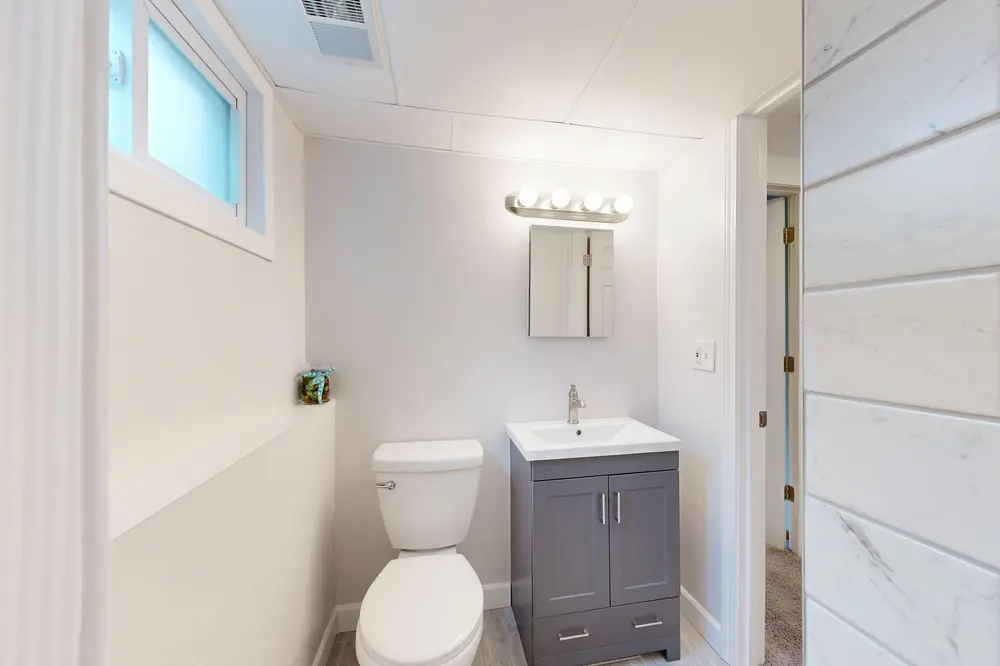
A compact macerator unit stands next to or behind the toilet and lifts waste water to the sewer when the bathroom is lower than the sewer. It is convenient for one basement bathroom, because no shaft has to be dug. In Bulgaria any unit of this kind tends to be called a "sololift", after one well-known make.
- It handles: water from the toilet, basin and shower, and toilet paper. Its built-in valve stops water flowing back.
- It does not handle: wet wipes, dressings, tampons, cotton buds, cotton wool and cooking grease. They jam the mechanism or the valve and the unit stops.
- Power and ventilation. Without power it does not work; do not run water in the bathroom until it is back. It also needs ventilation, or it smells.
- Repair or replacement. Fitting is a plumber's job, which we do with the tradesmen we work with. Whether a unit can be repaired or must be replaced becomes clear once it is opened.
For several fittings downstairs — a bathroom, a kitchen and a washing machine — a pump shaft is usually the safer choice; that is decided on site.
Pump shaft checks that stop it overflowing again
A shaft overflows less often when the valve holds, the float moves freely, the pump comes out easily and only waste water gets in. Before you open the shaft, switch the pump off at the fuse board, do not touch a wet socket or cable, and never pull the pump out by its cable. Do not go down into a shaft with waste water: hydrogen sulphide and methane can be there, and hydrogen sulphide dulls the sense of smell and can make you pass out. No flame or cigarettes over an open lid.
- The valve on the pressure pipe, so water does not run back.
- The float, with room to move without touching the wall or the cable.
- A rope or chain to lift the pump, not the cable.
- A lid that is accessible and seals, so that smell does not come out and rain does not get in.
- A high-level alarm, which sounds before the shaft overflows — especially if overflow means water in the basement.
- Gutters and yard grates should not be connected to the shaft: in a downpour the pump cannot keep up.
- Wet wipes: they do not break down and stop every pump.
When you do not need a sewage pump
- The water in the basement is clear and comes from the ground: that needs a clean-water pump, not a sewage pump.
- The drain backs up only in heavy rain and the toilets are above street level: a non-return valve is often enough.
- There is no sewer in the street and the water goes to a pit: see septic tank emptying.
If you are not in Bulgaria
With a basement flat or a villa on a pump shaft, the first sign of trouble is often a smell or a wet floor that a guest or neighbour reports. Send us the address, a photo of the shaft or unit, a photo of the pump's nameplate if someone can get to it without climbing in, and the name and phone number of whoever can let us in. We arrange the visit with them, keep you updated by email, and you can pay by bank transfer.
Frequently asked questions
I bought a new sewage pump — will you fit it?
Yes, we fit sewage pumps together with the tradesmen we work with. First we look at the nameplate: whether the pump is for waste water, and whether it is strong enough for the height and the length of the pipe to the sewer. If the shaft is full of sludge, it is emptied and cleaned first. If there is no socket by the shaft, power is a job for an electrician.
Can I put a drainage pump in a shaft that takes waste water?
It is not a good idea. A drainage pump is for clean or slightly cloudy water and has a narrow inlet. Paper, wipes and grease block it, and its motor overheats. It may cope for a while, then stop just when the shaft is full. For waste water you need a sewage pump, with a cutting mechanism or a wide channel.
How much does it cost?
We don't quote a figure for pump work without knowing the job. Clearing the pipe after the pump starts from €69 and a camera inspection from €59; see the price list. For the rest, the price depends on whether the shaft has to be emptied by a tanker, how much sludge there is, whether the pipe is blocked and whether the pump is cleaned, repaired or replaced. A new pump is charged separately. We give you the price before we start, and you pay after the job.
What happens if the power goes off?
The pump and the macerator unit stop, and the shaft fills with all the water you run downstairs. Until the power is back, do not run the washing machine, shower or dishwasher down there. A non-return valve stops sewer water coming back, but it does not pump.
I'm not in Bulgaria. Can you still deal with it?
Yes. Send us the address, photos of the shaft and the pump's nameplate, and the contact details of someone who can let us in. We arrange the visit with them, keep you updated by email, and you can pay by bank transfer.
Can I contact you in English?
Yes — write to us in English by email at info@kanalvarna.com or through the form on this page, and we reply in English. The phone number is +359 52 993 333. We work every day from 06:00 to 23:00.
Related pages
Pump shaft overflowing?
Tell us where the shaft or unit is, what the pump does and where it pumps to — we tell you the price before we start and when we can come.
📞 +359 52 993 333or email info@kanalvarna.com — write in English and we reply in English.
Send us a message
Leave your name and a phone number with the country code. Add your email if you prefer a written reply — write in English and we reply in English. We confirm the price before any work starts.